I. The Total Cost Framework: Beyond Unit Price
The superficial comparison of a purchased brick’s price tag versus the raw material cost of a homemade brick is misleading. A professional analysis requires a full breakdown of both models using a Total Cost of Acquisition and Utilization framework.
A. The True Cost of Buying from a Supplier (The Procurement Model)
This model involves purchasing finished bricks or blocks from a manufacturer or distributor.
- Direct Costs:
- Unit Purchase Price: The invoice price per brick, block, or pallet.
- Transportation and Logistics: Freight costs from the supplier’s yard to the construction site. This cost escalates with distance, fuel prices, and project scale. For remote sites, it can dwarf the product cost.
- Handling and Offloading: Labor and equipment (cranes, forklifts) needed to receive and place the materials.
- Indirect and Strategic Costs:
- Supply Chain Risk: Vulnerability to supplier price fluctuations, material shortages, production delays, or quality inconsistencies.
- Lead Time and Scheduling Inflexibility: Dependence on the supplier’s production and delivery schedule, which can delay projects.
- Limited Customization: Constrained to standard sizes, colors, and shapes offered by suppliers.
B. The True Cost of On-Site Production (The Production Model)
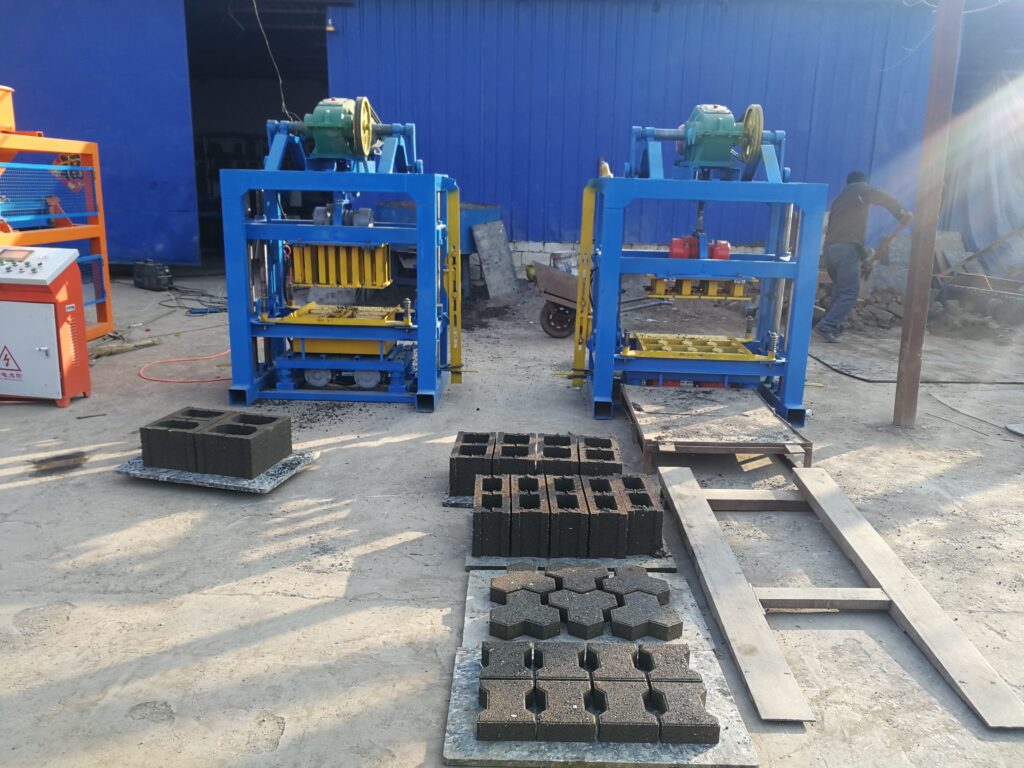
This model involves investing in machinery to manufacture bricks or blocks at or near the point of use.
- Capital Expenditure (CapEx):
- Machine Investment: The purchase price of the brick making machine, mixer, and essential ancillary equipment.
- Site Preparation: Cost of preparing a production area (leveling, compaction, possibly a simple shed).
- Operational Expenditure (OpEx):
- Rou Materiaal: Bulk purchase of cement, aggregates, soil, stabilizers, and water.
- Direct Labor: Skilled operator and helper wages for production, curing, and handling.
- Energy: Electricity or fuel to run the machine and mixer.
- Maintenance & Wear Parts: Ongoing costs for upkeep, lubrication, and replacement of mold liners, hydraulic parts, etc.
- Quality Control & Waste: Cost of testing, potential waste from imperfect batches during the learning curve, and rejected units.
- Curing Space & Time: The cost of dedicating land area for curing and the capital tied up in inventory during the curing period (typically 14-28 days).
II. Key Variables Determining Cost-Effectiveness
The economic winner in this comparison is not universal; it is dictated by a set of specific project and market variables.
A. Project Scale and Duration (The Volume Driver)
This is the most critical factor. The high fixed CapEx of machinery must be amortized over a sufficient number of units.
- Small/Short-Term Projects: For a single home or a small wall, the CapEx cannot be justified. Buying is almost always cheaper.
- Large/Long-Term Projects: For a housing development, a large commercial complex, or a multi-year infrastructure project, the volume of materials required can absorb the machine’s fixed cost, making the per-unit OpEx of on-site production lower than the all-in purchase + delivery cost from a supplier.
B. Geographic and Logistical Factors
- Distance from Suppliers: If the construction site is remote, with high transportation costs for heavy bricks, on-site production gains a massive advantage by eliminating freight.
- Local Availability of Raw Materials: If suitable aggregates or soil are available on-site or very locally, raw material costs are minimized. If all raw materials also need to be transported in, the advantage diminishes.
C. Technical and Operational Capacity
- Access to Skilled Labor: Operating a machine and managing curing requires skill. Lack of expertise leads to high waste, poor quality, and machine damage, eroding cost benefits.
- Access to Capital: The production model requires upfront investment. Clients with cash flow constraints may find the procurement model’s pay-as-you-go structure more feasible, even if the long-term cost is higher.
III. Strategic Advantages Beyond Direct Cost
The decision matrix extends beyond pure cost-per-unit into areas of business strategy and control.
A. Advantages of On-Site Production
- Total Cost Control: Mastery over the two largest cost drivers: raw materials and logistics.
- Supply Chain Independence and Schedule Certainty: Elimination of supplier risk. Production is dictated by the project’s own timeline.
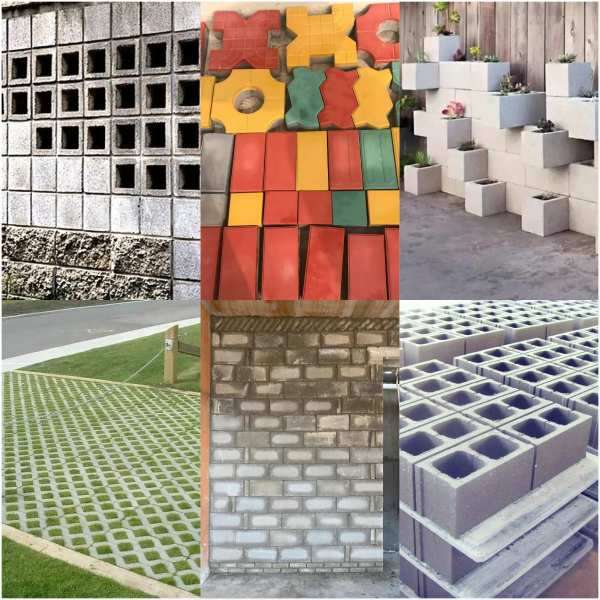
- Customization and Design Flexibility: Ability to produce non-standard sizes, interlocking shapes, or specific colors to meet architectural demands.
- Spoed van Konstruksie: For certain technologies (e.g., interlocking blocks laid without mortar), the overall construction timeline can be compressed, reducing financing and labor costs.
- Business Diversification: The machine can produce materials for future projects or for sale to other local builders, creating a new revenue stream.
B. Advantages of Buying from a Supplier
- Zero Capital Risk: No large upfront investment or debt.
- Instant, Guaranteed Quality: Access to consistently high-quality, code-compliant materials from a professional producer.
- No Operational Burden: The builder can focus on core construction activities, not on managing a manufacturing process, labor, quality control, and equipment maintenance.
- Scalability Without Investment: Ability to source massive quantities immediately without scaling up internal production capacity.
IV. The Pivotal Role of Technology Choice
The feasibility of the on-site model hinges on the type of machinery selected.
- Small Mobile Machines (“Egg-Layers”): Lower CapEx, perfect for producing directly on the slab. Ideal for medium-scale projects and for eliminating transport costs. They make on-site production viable at a lower volume threshold.
- Stationary Production Plants: High CapEx, high output. Only justifiable for very large-scale projects or for entrepreneurs establishing a permanent local supply business, not a single project.
- Stabilized Earth Block (SEB) Machines: Can drastically lower raw material costs by using on-site soil, making the on-site model compelling in specific soil conditions and for affordable housing projects.
V. Commercial Implications for Distributors and Dealers
For B2B professionals, this analysis provides a powerful consultative framework.
- Client Profiling: Identify which clients are viable candidates for machinery investment.
- Candidate: A developer with a 100+ unit housing project in a remote area.
- Non-Candidate: A small contractor building occasional garden walls in a city with multiple nearby suppliers.
- The Consultative Sales Process: Shift the conversation from “machine price” to “total project cost savings.”
- Action: Help the client build a Project-Specific Cost-Benefit Model. Input their project volume, local transport quotes, and supplier prices. Model the CapEx and OpEx of a recommended machine. Calculate the breakeven volume and total project savings.
- Positioning as a Solution Provider: For clients where buying is better, remain their trusted supplier. For clients where making is better, become their technology and support partner. Offer packages that include training, mix design advice, and maintenance support to ensure their production cost model succeeds.
Conclusion
The question of whether it is cheaper to make bricks or buy them is fundamentally a question of scale, location, and strategic intent. For a one-off, small-scale project in a well-served market, procurement is invariably the lower-cost, lower-risk option. However, as project scale increases, transportation costs rise, and the need for schedule control intensifies, the economics shift decisively in favor of strategic investment in on-site production technology.
For the construction materials distributor, the key insight is that the most profitable and enduring client relationships are built on providing the right solution to this cost equation. By possessing the expertise to perform this analysis for clients—to move beyond selling commodities or machines to selling optimized material acquisition strategies—you elevate your role. You become an indispensable consultant who helps clients minimize their total project costs and maximize their operational control, whether that solution is a reliable supply contract or a productive new machine on their job site.
Frequently Asked Questions (FAQ)
Q1: Can you provide a simple formula to decide between making and buying?
A: A foundational calculation is the Breakeven Volume Analysis.Breakeven Volume = Total Capital Cost of Machine & Setup / (Cost per Unit to Buy - Cost per Unit to Make)
Where “Cost per Unit to Buy” includes delivery. “Cost per Unit to Make” includes all raw materials, labor, and energy, but excludes the machine cost itself (which is in the numerator). If your total project volume exceeds the Breakeven Volume, making becomes financially attractive.
Q2: How does the quality of on-site produced bricks compare to those from an established plant?
A: Quality is operateur-afhanklik. A well-operated machine with good mix design and proper curing can produce blocks that meet or exceed ASTM/EN standards. However, an established plant has years of process refinement, automated quality control, and consistent raw material sourcing, which an ad-hoc site operation may struggle to match immediately. Quality risk is a cost factor for the on-site model.
Q3: What are the hidden costs of on-site production that are most often overlooked?
A: The most commonly underestimated costs are:
- Curing Time & Space: The capital tied up in green bricks for weeks and the physical space required.
- Waste and Rejects: A typical 5-10% loss from early production, breakage, and off-spec units.
- Technical Labor: The cost and challenge of finding/retaining a skilled, reliable machine operator.
- Masjien Stilstand: The cost of project delays if the machine breaks and parts/service are not readily available.
Q4: Is the “make or buy” decision different for concrete blocks vs. clay bricks?
A: Yes, profoundly. On-site production of fired clay bricks is virtually impossible for a single project due to the need for sophisticated drying and high-temperature kilns, which are massive capital investments. The “make” option for clay is only for establishing a permanent factory. For concrete blocks or stabilized earth blocks, the technology is mobile and scalable, making on-site production a realistic option for large projects. Therefore, the “make vs. buy” analysis is primarily relevant to concrete and soil-based products.
Q5: As a distributor, if a client determines buying is better, how do I retain their business?
A: Compete on total value, not just price. Emphasize your strengths within the procurement model:
- Reliability & Consistent Quality: Guaranteed supply of certified, uniform products.
- Logistics Expertise: Efficient, just-in-time delivery to keep their site clear and organized.
- Tegniese Ondersteuning: Provide mix design advice for mortars, on-site product knowledge.
- Produkreeks: Offer a wide selection of blocks, bricks, and pavers for all their needs.
Position your company as the low-risk, high-service partner that allows them to focus on building.