
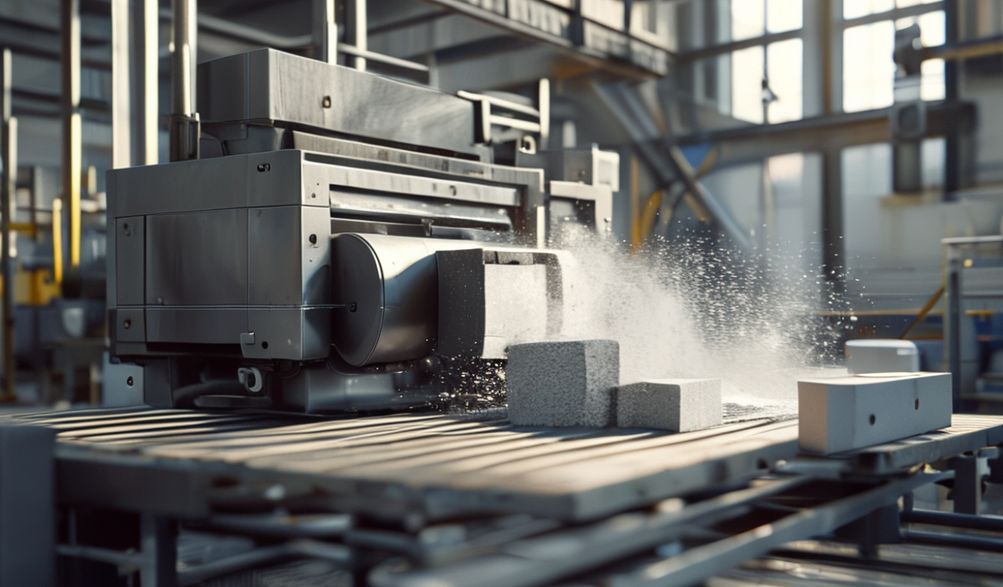
Die Volledige Gids vir Masjiene vir die Maak van Betonblokke: Tipes, Koste & Hoe om te Kies
As jy soek na "masjien wat betonblokke maak," is jy waarskynlik op 'n kritieke beslispunt. Jy mag dalk 'n entrepreneur wees wat 'n winsgewende vervaardigingsonderneming in die oog het, 'n konstruksiemaatskappy wat koste wil besnoei en voorsiening wil beheer, of 'n toegewyde bouer wat poog om jou vermoëns te vergroot. Dit gaan nie net oor die aankoop van 'n stuk toerusting nie; dit gaan oor die maak van 'n strategiese belegging wat jou produktiwiteit, kwaliteit en winsgewendheid beïnvloed.
Hierdie gids is gebaseer op industriële spesifikasies, operasionele beste praktyke en werklike finansiële oorwegings. Ons doel is om jou toe te rus met die omvattende kennis wat nodig is om hierdie komplekse mark te navigeer—van die begrip van basiese meganika tot die ondertekening van 'n aankooporder met selfvertroue. Ons sal die tipes masjiene ontraaisel, die ware koste uiteensit en 'n duidelike raamwerk vir keuse bied, wat uiteindelik tyd, geld en duur foute sal bespaar.
Laat ons 'n stewige grondslag van kennis bou.
Verstaan Betonblokmaakmasjiene: Kernkonsepte
Voordat jy modelle en pryse vergelyk, is dit noodsaaklik om te verstaan wat hierdie masjiene doen en hoekom hulle 'n transformerende hulpmiddel vir blokproduksie is.
Wat is 'n Betonblokvervaardigingsmasjien?
'n Betonblokmasjien is 'n gespesialiseerde toerusting wat ontwerp is om die produksie van betonsteen-eenhede (BSE's) te outomatiseer en te standaardiseer. Dit omskep 'n rou mengsel van sement, aggregaat (soos sand en gruis) en water in presies gevormde, digte en konsekwente blokke deur 'n proses van gemeganiseerde vorming en verdigting.
Die kernproses, wat die masjien stroomlyn, behels vier sleutelstadiums:
1. Meng:Samestelling van rou materiale in 'n homogene, halfdroë betonmengsel.
2. Vorming:Voer die mengsel in 'n vormholte van 'n spesifieke vorm (bv. holblok, plaveisel) in.
3. Verdigting:Deur vibrasie, hidrouliese druk, of 'n kombinasie te gebruik om lugblasies te verwyder en hoë digtheid te verkry.
4. Kuuring:Om die pas uitgestote blokke in 'n beheerde omgewing te laat versterk, 'n proses waarvoor die masjien voorberei, maar gewoonlik nie self uitvoer nie.
Sleutelvoordele van die Gebruik van 'n Toegewyde Blokmasjien
Om van handearbeid of uitgeskontrakteerde voorraad na interne masjienproduksie oor te skakel, bied dwingende voordele:
- Konsekwentheid & Kwaliteit:Masjiene produseer blokke met uniforme afmetings, gewig en digtheid. Hierdie strukturele betroubaarheid is ononderhandelbaar vir konstruksie-integriteit en om boukodes te slaag.
- Hoë Produksie-uitset en Doeltreffendheid'n Enkele masjien kan in 'n uur produseer wat 'n handspan dae kan neem. Hierdie skaalbaarheid is die sleutel tot die nakoming van projekdeadlines of markvraag.
- Koste-effektiwiteit:Alhoewel die aanvanklike belegging noemenswaardig is, daal die langtermynkoste per blok dramaties. Jy verminder afhanklikheid van derdepartyverskaffers en hul prysfluktuasies.
- Beduidende Arbeidsbesparings:Outomatisasie verminder die fisiese las en die aantal werkers wat nodig is drasties, en herlei menslike hulpbronne na meer geskoolde take.
- Veelsydigheid:Met verwisselbare vorms kan een masjien 'n verskeidenheid produkte vervaardig—hol blokke vir mure, soliede blokke vir fondamente, teëls vir tuinmaak, en spesiale vorms—wat jou bedryf aanpasbaar maak by markbehoeftes.
Tipes Betonblokmaakmasjiene Verduidelik
Die mark segmenteer masjiene hoofsaaklik volgens hul vlak van outomatisering, wat direk verband hou met uitset, koste en operasionele kompleksiteit. Die keuse van die regte tipe is jou eerste en mees deurslaggewende besluit.
1. Manual or Hand-Operated Block Machines
These are the simplest and most fundamental type of block press. They rely entirely on human power, typically using a lever mechanism to compress the concrete mix into a mold.
- Ideaal Vir: Extreme small-scale projects, hobbyists, startups in regions with very low labor costs and no electricity, or producing blocks for a single, personal construction project.
- Voordele:
- Laagste Kapitaalkoste:Die mees bekostigbare toegangspunt.
- Portability & Simplicity: No power required; easy to move and operate.
- Lae Instandhouding: Fewer mechanical parts mean fewer things that can break.
- Nadele:
- Very Low Output: Production is slow and physically exhausting.
- Konsekwente Kwaliteit: Block strength and size depend heavily on the operator’s effort.
- Not for Business: Impractical for any commercial production goal.
2. Semi-Automatiese Blokvervaardigingsmasjiene
This category strikes the optimal balance for many small to medium enterprises. The core compaction process is mechanized (using a powerful vibration motor and/or hydraulic press), but tasks like feeding raw material, moving pallets, and stacking green blocks are done manually.
- Ideaal Vir: Growing construction businesses, block manufacturers supplying local markets, and medium-sized development projects.
- Voordele:
- Uitstekende Balans: Offers significantly higher output than manual machines without the steep price of full automation.
- Improved Quality: Mechanized compaction ensures consistently dense, strong blocks.
- Lower Labor than Manual: Reduces physical strain and allows operators to manage the process rather than provide all the force.
- Nadele:
- Requires Operator Involvement: Still dependent on a steady crew for material handling.
- Needs Power Source: Requires a reliable electrical connection or diesel generator.
- Output Ceiling: Production speed is limited by human handling steps.
3. Volledig Outomatiese Blokvervaardigingsmasjiene
These are industrial-grade production lines. Controlled by programmable logic controllers (PLCs), they automate the entire process: raw material batching and feeding, molding, compaction, block ejection, pallet handling, stacking, and even curing rack handling in advanced systems.
- Ideaal Vir: Large-scale block manufacturing plants, high-volume infrastructure projects, and businesses where labor costs are high and output is paramount.
- Voordele:
- Maximum Output: Can produce thousands of blocks per hour with minimal downtime.
- Minimal Labor: Often requires only 1-2 operators for monitoring and supervision.
- Peak Consistency & Quality: Computer-controlled processes eliminate human error from the production cycle.
- Integrated Operation: Can be linked with automatic mixers and stackers for a seamless workflow.
- Nadele:
- High Initial Investment: The capital outlay is substantial.
- Space & Infrastructure Needs: Requires a large, solid factory floor and three-phase power.
- Technical Knowledge: Operation and troubleshooting require more skilled technicians.
Comparison Table: Manual vs. Semi-Auto vs. Fully Auto
| Feature | Manual | Semi-Automatic | Fully Automatic |
| :— | :— | :— | :— |
| Initial Cost | Very Low ($1,500 – $5,000) | Medium ($8,000 – $40,000) | High ($50,000 – $250,000+) |
| Output (Blocks/Hr) | 100 – 500 | 500 – 2,500 | 2,500 – 10,000+ |
| Arbeid Vereis | High (2-3 people) | Moderate (1-2 operators) | Low (1-2 supervisors) |
| Power Needs | None | Electric / Diesel Generator | Industrial Electric (3-Phase) |
| Best Suited For | DIY, Micro-businesses | SMEs, Growing Businesses | Large Factories, Major Projects |
Critical Features to Evaluate When Choosing a Machine
Beyond the automation level, drill down into these technical specifications. They determine the machine’s capability, durability, and suitability for your specific operation.
Produksiekapasiteit & Uitset
Don’t just look at the “max output” claim. Calculate your real daily requirement based on your business plan or project needs. Understand the siklustyd—how many seconds it takes to produce one block or one mold of blocks. A machine with a faster cycle time and multiple mold cavities will have a higher output. Ensure the machine’s capacity has a 20-30% buffer above your average need to handle peak demand.
Block Type and Mold Versatility
What will you sell? Standard 4″, 6″, 8″ hollow blocks? Solid blocks? Interlocking pavers? Curbs? Verify the machine can accommodate the mold sizes you need. Interchangeable molds are a valuable feature, allowing you to switch products based on demand without buying a new machine. Check the cost and lead time for additional molds from the supplier.
Power Source and Consumption
- Elektries Most common, cleaner, and often more efficient for fixed locations with grid access. Check the voltage (single or three-phase) and power (kW) requirements.
- Diesel/Dual Power: Essential for sites with unreliable or no electricity. While offering mobility, they have higher fuel costs and require ventilation.
Always factor in energy consumption into your operational cost analysis. A more efficient machine may have a higher price tag but lower running costs.
Machine Durability and Build Quality
This is where you assess long-term value. Inspect:
* Raam: It should be heavy-duty steel, welded (not just bolted) for rigidity.
* Vibrasie Stelsel: The heart of compaction. Look for durable, balanced vibration motors mounted on a robust vibration table.
* Hidrouliese Stelsel: For semi- and fully-auto machines. Are the pumps, cylinders, and valves from reputable brands? A poor system leads to leaks and downtime.
* Surface Treatment: Critical components should be hardened or coated for wear resistance.
After-Sales Support and Service
This is non-negotiable. A machine is a long-term asset. You must have answers to:
* What is the warranty period and what does it cover?
* How readily available are spare parts (wear plates, springs, sensors)? Are they stocked locally?
* Is technical support available via phone, video, or on-site? What are the response times?
A supplier with a strong service network is often a better choice than one offering a slightly cheaper machine with no support.
The Real Cost of a Concrete Block Making Machine
The purchase price is just the first part of the financial picture. A clear understanding of the total cost of ownership is vital for budgeting and calculating ROI.
Upfront Purchase Price Breakdown
Prices are highly variable based on capacity, brand, and origin.
* Handmatige Masjiene: $1,500 – $5,000
* Halfoutomatiese Masjiene: $8,000 – $40,000
* Volledig Outomatiese Lyne: $50,000 – $250,000+
Always clarify what’s included: Standard molds (how many?), pallets (how many sets?), a basic training manual, and local delivery.
Hidden and Operational Costs
Failing to budget for these can cripple a new operation.
* Versending & Installasie: International freight, customs duties, and professional installation/commissioning fees.
* Foundation & Site Prep: Cost of preparing a level, reinforced concrete floor to support the machine.
* Rou Materiaal: The ongoing cost of cement, sand, aggregate, and water. Consistency in material quality is key to block quality.
* Arbeid: Wages for operators and maintenance staff.
* Utilities: Electricity or diesel fuel for running the machine and site lighting/water.
* Maintenance: Regular servicing, replacement of wear parts, and potential repairs.
Cost Per Block Analysis Example:
For a semi-automatic machine, your cost per block might break down as: Raw Materials ($0.50) + Labor ($0.10) + Power & Maintenance ($0.05) + Machine Depreciation ($0.05) = $0.70 per block. Compare this to your local market purchase price of, say, $1.20 per block to see your gross margin.
ROI Calculation: Is It a Profitable Investment?
A simplified framework:
1. Total Investment: Machine cost + setup costs.
2. Monthly Profit: (Selling price per block – Cost per block) x Monthly production volume.
3. Simple Payback Period: Total Investment / Monthly Profit.
Voorbeeld: $30,000 investment / $3,000 monthly profit = 10-month payback period. Factors like local demand consistency, your block pricing strategy, and operational efficiency dramatically influence this.
Step-by-Step: Operating a Block Making Machine
Understanding the operational workflow ensures you can plan your site and train your team effectively.
1. Site and Foundation Preparation
The machine must be installed on a perfectly level, high-strength concrete foundation as per the manufacturer’s drawings. Ensure adequate space around it for material handling, block stacking, and pallet return. Verify power supply compatibility before installation.
2. Raw Material Selection and Mixing Ratio
The quality of the block is born here. A standard mix ratio might be 1 part cement : 3 parts sand : 3 parts aggregate, with just enough water to achieve a semi-dry, cohesive mix (low slump). The aggregates must be clean, sharp, and properly graded. Invest in a consistent mixing process, whether using a pan mixer or a batching plant.
3. The Production Cycle: From Mix to Curing
- Voeding: The prepared mix is fed into the machine’s hopper.
- Meting en Vorming: The mix is measured into the mold box on a pallet.
- Verdigting: The mold is subjected to high-frequency vibration and often simultaneous hydraulic pressure from above.
- Uitskiet: The freshly formed “green” block is raised and ejected onto a transfer cart or conveyor.
- Kuuring: Blocks are moved to a curing area, kept moist (by spraying or steam) for at least 7 days to develop strength, then air-dried before sale or use.
4. Essential Maintenance for Longevity
- Daily: Clean the machine thoroughly, check hydraulic oil levels, inspect molds and pallets for damage.
- Weekly: Lubricate all moving parts, tighten bolts and fasteners, check vibration motor mounts.
- Monthly: Inspect hydraulic hoses for leaks, check electrical connections, test safety systems.
Common issues like blocks sticking in the mold often point to a worn mold liner, incorrect mix (too wet), or insufficient vibration.
How to Select the Right Machine for Your Needs: A Buyer’s Checklist
Use this actionable framework to guide your purchasing journey.
- Define Your Project Scope: Be specific. How many blocks do you need per day/month? What types? Is this a one-off project or an ongoing business?
- Set a Realistic Total Budget: Account for the machine price, shipping, installation, foundation, initial raw material stock, and 3-6 months of operating capital.
- Research Reputable Suppliers: Look for manufacturers with a proven track record, industry certifications (like CE, ISO), and genuine customer testimonials or case studies. A factory visit is invaluable.
- Prioritize Key Features: Match the machine’s specs to your #1 priority. Is it maximum output? Product versatility? Ease of operation? Fuel efficiency?
- Demand a Live Demonstration: Never buy based on a brochure alone. See the machine run, preferably using a concrete mix similar to what you’ll use. Assess build quality, noise, and ease of operation.
- Clarify Support Terms in Writing: Get a detailed offer sheet that includes warranty duration, a list of included spare parts, training provisions, and the supplier’s commitment to after-sales service.
Frequently Asked Questions (FAQ)
Q1: What is the average price of a concrete block making machine?
A: There’s no single “average.” Small manual machines start around $1,500, semi-automatic models typically range from $8,000 to $40,000, and fully automatic production lines can cost from $50,000 to over $250,000. The final price is determined by capacity, automation level, brand, and included accessories.
Q2: Can I use a block making machine for a one-time home project?
A: For a single, small project like a garden wall, purchasing a machine is rarely cost-effective. Renting a small machine or simply buying ready-made blocks from a local supplier is usually more economical. A manual machine might only make sense for a DIYer planning several projects over years.
Q3: What is the most important factor for block strength?
A: While the machine provides essential compaction, the raw material mix design—specifically the correct cement-to-aggregate ratio and a low water-cement ratio—is paramount. Following this with proper curing (keeping the blocks moist for at least 7 days) is what allows the concrete to achieve its designed compressive strength.
Q4: How much space do I need to set up a block manufacturing operation?
A: Space needs vary. A micro-operation with a semi-automatic machine might manage with 2,000-3,000 sq ft for the machine, mixing, and curing. A serious commercial plant needs space for material storage (sand, stone, cement), production, a large curing yard, and finished goods storage—easily requiring 10,000 to 50,000+ sq ft.
Q5: Is specialized training required to operate these machines?
A: Yes, especially for semi- and fully-automatic models. Reputable suppliers should provide comprehensive operational and safety training upon installation. Understanding the machine’s controls, basic troubleshooting, and daily maintenance procedures is crucial for safety, productivity, and the machine’s lifespan.
Conclusion
Selecting the right concrete block making machine is a pivotal decision that balances your immediate production needs with your long-term business vision. As we’ve explored, there is no universal solution. The ideal choice for a rural builder is vastly different from that of an urban block manufacturer.
Your path to a successful investment is methodical: honestly assess your required output and budget, prioritize durability and supplier support over the lowest sticker price, and never skip the step of seeing your shortlisted machines in action. Use the checklist provided as your roadmap.
Your success hinges not just on the metal and motors of the machine itself, but on the reliability of the partnership you form with its manufacturer. Make your investment with confidence, backed by research and a clear understanding of the journey from raw mix to profitable, high-quality block.
<