
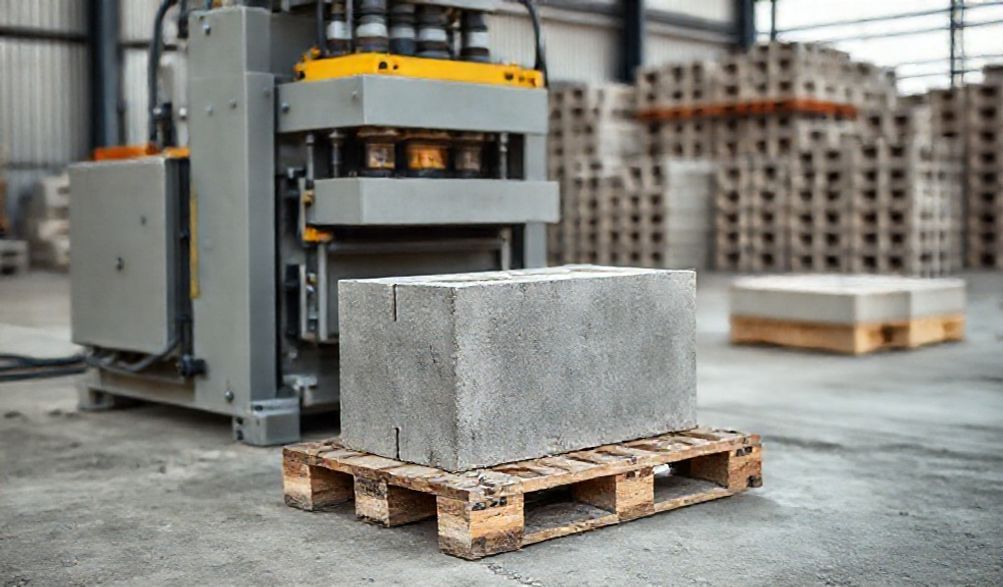
The Ultimate Guide to Choosing the Right Machine to Make Cement Blocks
Inleiding
From towering skyscrapers to humble family homes, the global demand for durable and affordable construction materials is ceaseless. At the heart of meeting this demand lies a fundamental component: the cement block. Known interchangeably as concrete blocks or Concrete Masonry Units (CMUs), these versatile building blocks form the backbone of modern infrastructure. Yet, the path from raw material to reliable wall is fraught with challenges, especially for those relying on outdated, manual production methods.
If you’ve struggled with the labor intensity, frustrating inconsistency, and sheer physical limits of hand-making blocks, you’re not alone. Scaling a construction business or launching a block manufacturing venture with such methods is an uphill battle. Today, the solution is clear: investing in a dedicated machine to make cement blocks. However, navigating the market—from simple manual presses to sprawling fully automatic plants—can feel overwhelming. How do you choose the right one without risking a poor investment?
This guide cuts through the noise. Built on industry expertise, technical analysis, and practical insights, our goal is to demystify the machinery landscape. We prioritize your success by adhering to the principles of E-E-A-T (Experience, Expertise, Authoritativeness, Trustworthiness), ensuring the advice you receive is both credible and actionable.
By the end of this comprehensive guide, you will possess a clear understanding of:
* The different types of block-making machines and their ideal applications.
* Die kritieke faktore om te oorweeg voor aankoop.
* The operational process from raw material to finished block.
* How to maximize your return on investment through smart maintenance and business practices.
Laat ons 'n stewige grondslag vir jou besluit bou.
Verstaan Sementblokmasjiene: Tipes en Toepassings
Not all block-making machines are created equal. Your choice will fundamentally shape your production capacity, product quality, and business model. Here’s a breakdown of the primary types available.
Handmatige Blokmaakmasjiene
- Beskrywing: These are the most basic units, entirely operated by human force. A lever is pulled to compress the concrete mix within a mold, after which the freshly formed block is manually ejected.
- Beste Vir: Extremely small-scale projects (e.g., a personal garden wall), DIY enthusiasts, or micro-entrepreneurs in regions with very low labor costs and minimal capital.
- Voordele:
- Uiters lae aanvangsbelegging.
- No power requirement, making them usable anywhere.
- Simple design with minimal maintenance needs.
- Highly portable.
- Nadele:
- Very low output (typically 100-500 blocks per day).
- Extremely labor-intensive and physically demanding.
- Inconsistent block density and strength due to variable human pressure.
- Not viable for any commercial or scalable operation.
Semi-Automatiese Blokmaakmasjiene
- Beskrywing: This category strikes a crucial balance. While the feeding of raw material and sometimes the removal of blocks may be manual, the core compaction process is powered. Electric or diesel engines drive high-frequency vibrators and hydraulic compression systems, ensuring uniform density.
- Beste Vir: Small to medium-sized businesses (SMEs), growing construction firms, and entrepreneurs looking to supply local markets.
- Voordele:
- Aansienlik hoër en meer konsekwent uitset as handmasjiene.
- Greatly improved block quality, strength, and surface finish.
- Reduced physical strain on operators.
- Offers a favorable cost-to-performance ratio for many startups.
- Nadele:
- Output is still limited by the pace of manual feeding/ejection.
- Requires operators with some basic technical skill.
- Not as efficient as fully automated systems for very high volume.
Volledig Outomatiese Blokvervaardigingsmasjiene
- Beskrywing: These are industrial-grade production lines. Controlled by Programmable Logic Controllers (PLCs) or computers, they automate the entire process: feeding raw material from a hopper, precise mixing, molding, high-pressure compaction, curing, and even stacking pallets of finished blocks.
- Beste Vir: Large-scale commercial block manufacturing plants, major construction companies supplying large projects, and industrial operations focused on maximum volume.
- Voordele:
- Maximum possible output (thousands of blocks per shift) and operational efficiency.
- Unmatched consistency in block dimensions and compressive strength.
- Dramatic reduction in manual labor requirements.
- Often include advanced features like automatic color dosing for pavers.
- Nadele:
- Baie hoë aanvangskapitaalbelegging.
- Requires significant space, stable power supply, and technical expertise for operation and maintenance.
- Less flexibility for very short, custom production runs.
Mobiele Blokmaakmasjiene
- Beskrywing: These are self-contained, trailer-mounted units that can be towed directly to a job site. They are typically semi-automatic or automatic in function but are designed for mobility and rapid setup.
- Beste Vir: Massive, remote infrastructure projects (e.g., dams, highways, remote housing), disaster relief and rapid deployment construction, or contractors who move between large sites.
- Voordele:
- Eliminates the enormous cost and logistical hassle of transporting ready-made blocks over long distances.
- Produces blocks exactly where and when they are needed, reducing waste and delay.
- Provides a controlled, on-site supply chain.
- Nadele:
- Per-hour output is generally lower than a stationary plant of equivalent automation.
- Requires a capable vehicle for transport and a prepared, level site for operation.
Key Factors to Consider When Choosing Your Machine
Selecting a machine is more than just picking a type. It’s about aligning specifications with your concrete goals. Ignore these factors at your peril.
Produksiekapasiteit & Uitsetvereistes
This is your starting point. An oversized machine drains capital, while an undersized one stifles growth.
* Bereken Jou Behoeftes: Estimate the blocks required for your known projects or assess local market demand. How many standard (8x8x16 inch) blocks do you need per day or week?
* Understand Machine Specs: Look for “cycles per hour” and “blocks per cycle.” A machine with a 10-second cycle time that produces 3 blocks per cycle can theoretically make 1,080 blocks in a single hour (360 cycles x 3 blocks). Remember, real-world output is lower due to setup, breaks, and maintenance.
* Match to Scale: A manual machine suits a village supplier. A semi-automatic unit fits a town-level business. An automatic plant serves a city or export market.
Block Types, Sizes, and Mold Compatibility
Your product line determines your market reach.
* Algemene Blok Tipes: Beyond standard hollow and solid blocks, can you produce popular variants like paving stones, interlocking bricks for retaining walls, grass pavers, or curbstones? Each opens a new revenue stream.
* The Power of Interchangeable Molds: Ensure the machine you choose has a mold system that allows for relatively quick changes. Investing in additional molds is far cheaper than buying multiple machines.
* Versatility vs. Specialization: A versatile machine with multiple molds is excellent for a diverse product catalog. A specialized machine dedicated to one high-volume block type (like standard hollow blocks) may offer faster cycles and lower per-unit cost.
Power Source: Electrical, Diesel, or Hybrid?
The heart of your machine’s operation has practical implications.
* Elektries Clean, quiet, and efficient for indoor or urban operations. Requires a reliable and powerful grid connection. Operating cost is typically lower.
* Diesel: Offers complete independence from the electrical grid. Essential for remote sites or areas with frequent power cuts. Higher fuel costs and noise/pollution are trade-offs.
* Hibried: Some machines offer the flexibility to switch between power sources, providing a valuable contingency plan.
Automation Level: Balancing Investment with Labor Costs
This is a fundamental financial calculation.
* Cost-Benefit Analysis: A fully automatic machine may cost 5x more than a semi-automatic one. However, if it produces 10x the output with 80% less labor, the payback period and long-term profitability can be significantly better. Create a realistic projection.
* Labor Skill Assessment: Do you have access to (and can you afford) skilled technicians to run and maintain a complex automatic line? A semi-automatic machine might be more manageable initially.
Machine Durability, Build Quality, and After-Sales Support
Dit is waarBetroubaarheid in a manufacturer becomes non-negotiable.
* Bougehalte: Inspect the frame (heavy-duty steel is best), the quality of the vibrator motors (they define block density), and the mold material (hardened, precision-machined steel lasts longer).
* The Critical E-E-A-T Point: Always vet the manufacturer.
* Waarborg: What is covered and for how long?
* Onderdele: Are they readily available, and what is the lead time? A machine is useless if a broken part halts production for months.
* Tegniese Ondersteuning: Do they offer installation guidance, troubleshooting, and operator training? A reputable supplier is a partner in your success.
The Operational Process: From Raw Material to Finished Block
Understanding the process helps you appreciate what your machine must do and how to optimize it.
Raw Material Preparation (Aggregate, Cement, Water)
The quality of the block is born here. A perfect machine cannot compensate for poor materials.
* Mix Ratios: A common standard mix for medium-strength blocks is 1 part cement, 6 parts aggregate (a blend of sand and gravel), with just enough water for workability. Higher cement ratios (e.g., 1:4) yield stronger, more expensive blocks for load-bearing applications.
* Aggregate Quality: Use clean, well-graded, and hard aggregates. Dirty or poorly sized aggregate leads to weak blocks and can damage machine molds.
The Molding and Compaction Cycle
This is the core function of your machine to make cement blocks.
1. Voeding: The prepared concrete mix is fed into the machine’s mold box.
2. Vibrasie: High-frequency vibrators pack the mix tightly, removing air pockets—this is crucial for strength.
3. Kompression: A hydraulic or mechanical head applies intense pressure to the vibrating mix, further consolidating it into the precise shape of the mold.
4. Uitskiet: The compacted block is pushed out of the mold onto a pallet or the ground. In automatic systems, a conveyor moves it to the curing area.
Curing and Drying: Achieving Maximum Strength
A freshly molded block is only green. Curing develops its full strength.
* The Hydration Process: Cement hardens through a chemical reaction with water, not simply by drying. This process must continue uninterrupted.
* Curing Methods:
* Water Sprinkling: Blocks are kept moist under burlap or plastic sheeting for 7-14 days.
* Steam Curing Chambers: Used in advanced plants, steam heat accelerates curing to within 24 hours, allowing for rapid reuse of pallets and space.
* Timeline: Blocks generally reach sufficient strength for handling after 24-48 hours. They continue to gain strength for weeks. They should not be subjected to full structural load for at least 28 days.
Maximizing ROI: Cost, Maintenance, and Business Tips
Your machine is an asset. Proper management turns it into a profit center.
Understanding the Total Cost of Ownership
Look beyond the sticker price.
* Cost Breakdown:
* Machine Purchase Price & Shipping
* Installation & Foundation Work
* Initial Raw Material Inventory
* Labor Wages
* Ongoing Power/Fuel Consumption
* Planned and Unplanned Maintenance
* Calculate Cost Per Block: Add all monthly costs and divide by the number of blocks produced. This is your baseline for setting a profitable sale price.
Essential Maintenance for Longevity
Preventative care is cheap; repairs are expensive.
* Daily: Clean the machine thoroughly after each shift, especially all mold surfaces. Check for loose bolts or hydraulic leaks.
* Weekly: Lubricate all moving parts as per the manual. Inspect mold liners for wear and vibrator mounts for tightness.
* Monthly: Check hydraulic fluid levels and filters. Inspect electrical connections. Perform a more thorough inspection of all critical components.
Business Considerations for Block Manufacturing
- Bulk Sourcing: Negotiate with cement and aggregate suppliers for bulk delivery discounts. Your material cost is your largest variable expense.
- Marketing: Don’t just sell blocks; sell reliability, strength, and local supply. Offer samples to contractors, get your blocks certified for strength at a local lab, and use that certification in marketing.
- Strategic Scaling: Start with a machine that meets proven demand. Use profits to finance additional molds first, then a larger or second machine when your order book consistently exceeds capacity by 30-40%.
FAQ: Your Cement Block Machine Questions Answered
Q1: What is the average cost of a cement block making machine?
A: There is no single “average.” Prices range from $1,000 to $2,000 for a basic manual machine, $10,000 to $50,000 for a robust semi-automatic system, and can easily exceed $100,000 to $250,000+ for a high-output, fully automatic production plant. The cost is a direct reflection of type, capacity, automation, and brand.
Q2: Can one machine produce different block sizes and styles?
A: Absolutely. This is one of the key features to look for. Most quality machines are sold with a standard mold, but manufacturers offer a catalog of additional, interchangeable molds for different block types (hollow, solid, pavers, etc.). Swapping molds typically takes 30 minutes to an hour with proper tools.
Q3: How much space is needed to set up a block manufacturing operation?
A: Space is needed for four areas: 1) The machine itself (a small semi-auto may need 200 sq ft, a plant needs 1,000+ sq ft), 2) Raw material storage (covered), 3) Curing area (the largest, often open yard space), and 4) Finished product storage. A viable small-scale operation might require a 5,000-10,000 sq ft plot.
Q4: What is the typical lifespan of a well-maintained block machine?
A: With diligent preventative maintenance and operation within its rated capacity, a quality machine can last 10 to 20 years. Critical wear parts like mold liners and vibrators will need replacement during this time, but the core frame should last for decades.
Q5: Is block manufacturing a profitable business?
A: Yes, it can be a highly profitable and stable business, given proper planning. Success is not automatic. It hinges on three pillars: controlling your input costs (materials, labor, power), ensuring consistent, high-quality output, and executing effective sales and marketing to secure steady demand. This Ervaring-based realism is crucial for setting realistic expectations.
Conclusion
Choosing the right machine to make cement blocks is a pivotal decision that bridges your ambition with tangible results. We’ve journeyed from understanding the core types of machines—manual, semi-automatic, automatic, and mobile—to drilling down into the key selection criteria of capacity, versatility, power, and automation. We’ve outlined the operational process that transforms raw aggregate into sturdy blocks and provided a framework for maximizing your return on investment through smart costing, maintenance, and business strategy.
The central lesson is this: The “best” machine does not exist in a vacuum. The optimal machine is the one that aligns precisely with your specific production goals, budget, local market conditions, and growth trajectory. A manual press is a masterpiece for a rural DIY builder but a disaster for an aspiring industrialist.
As your final step, we strongly encourage you to use this guide as a framework. Conduct thorough research, request live demonstrations or videos from suppliers, and scrutinize the after-sales support offered. Prioritize partnerships with reputable manufacturers who demonstrate GesaghebbendheidenBetroubaarheid through transparent communication, proven track records, and robust customer service networks. This due diligence is your greatest insurance for long-term productivity, safety, and success.
Call to Action: Assess your needs against the factors outlined above. Then, proactively seek out detailed specifications, references, and quotes from 3-5 trusted suppliers. Your future in efficient, profitable block production starts with an informed next step.
<