
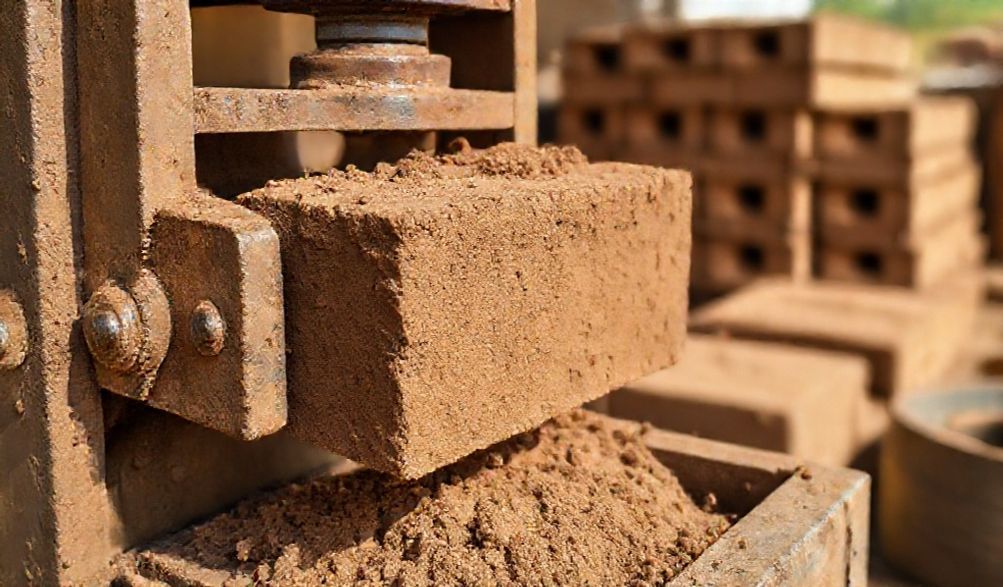
The Ultimate Guide to Mud Brick Making Machines: Build Sustainably & Efficiently
For millennia, humanity has built shelters, homes, and monuments from the very earth beneath our feet. Mud bricks, or adobe, represent one of the oldest and most universal building materials, cherished for their natural insulation, affordability, and low environmental impact. Today, amidst a growing global emphasis on sustainable construction and self-reliance, this ancient technique is experiencing a powerful resurgence.
However, the traditional method of hand-forming adobe bricks is notoriously labor-intensive, time-consuming, and often yields inconsistent results. The dream of building with earth can quickly fade under the weight of physical strain and variable brick quality. This is where modern innovation elegantly intersects with timeless tradition.
Gaan diemud brick making machine: the engineered solution that automates and perfects the age-old process. This guide is designed to be your comprehensive expert resource. We will cut through the noise to provide unbiased, practical information on how these machines work, their undeniable benefits, and how to choose and operate one successfully. Whether you’re a DIY homesteader, an eco-conscious builder, or an entrepreneur eyeing a sustainable business, understanding this technology is the first step toward building your vision with efficiency, strength, and purpose.
Why Choose a Mud Brick Making Machine? Key Benefits Unveiled
Transitioning from manual mud brick production to a machine-operated system isn’t just a minor upgrade; it’s a transformative leap. The advantages extend far beyond simple time savings, impacting project quality, economics, and even community development.
Unmatched Efficiency & Speed
The contrast in output is staggering. A skilled artisan working manually might produce 100-150 high-quality bricks in a full, exhausting day. A basic manual press machine can triple that output. Stepping up to a semi-automatic electric model can enable a small team to produce 1,000 to 3,000 bricks in a single day.
- Vinniger Projekvoltooiing: What might take months of manual labor can be condensed into weeks. This speed is crucial for meeting construction timelines, whether for a single home or a community project.
- Scalable Production: Machines allow you to scale output to match demand simply by increasing operational hours, a flexibility nearly impossible with purely manual methods.
Superior Consistency & Structural Integrity
This is perhaps the most critical technical benefit. Hand-made bricks vary in density, moisture content, and dimensions.
- Uniform Pressure: A machine applies a calibrated, consistent pressure every single cycle. This creates bricks with identical size, density, and internal structure.
- Enhanced Strength: Consistent compaction directly translates to higher compressive strength, meaning the bricks can bear more load, leading to safer, more durable structures.
- Simplified Construction: Uniform bricks are easier and faster to lay, with consistent mortar joints, resulting in straighter walls and a more professional finish.
Significant Cost Reduction Over Time
While there’s an initial investment, the long-term economics are compelling.
- Dramatic Labor Cost Savings: The machine drastically reduces the person-hours required per brick. This is the single largest cost saving, freeing up budget for other materials or labor.
- Reduced Material Waste: Precise molding and consistent mixtures minimize breakage and unusable bricks common in manual processes.
- Return on Investment (ROI): For anyone producing bricks for sale or for multiple projects, the machine often pays for itself quickly through these savings and increased output.
Empowerment for Small Businesses & Communities
The impact goes beyond individual projects. A mud brick machine is a tool for economic and social empowerment.
- Micro-Enterprise Creation: It enables the start-up of a small, local brick manufacturing business, supplying sustainable materials for eco-homes, landscapers, and local builders.
- Community-Led Development: NGOs and community cooperatives can use these machines to facilitate affordable, sustainable housing projects, putting construction capability directly into the hands of residents.
- Skill Development & Ownership: It modernizes a traditional skill, making it more accessible and less physically taxing, encouraging wider adoption.
Types of Mud Brick Making Machines: Finding Your Perfect Match
Not all machines are created equal. The right choice depends entirely on your scale, budget, power availability, and goals. Here’s a breakdown of the three main categories.
Manual Press Machines: Entry-Level Efficiency
These are human-powered devices, typically using a lever mechanism to compress the soil mix into a mold.
- Operasie: The operator fills the mold box with the prepared soil mix, then pulls a long lever to engage a piston or platen that compresses the mix. The brick is then ejected, often by lifting the machine off it.
- Voordele:
- Low Cost: The most affordable entry point.
- Zero Power Required: Ideal for remote or off-grid locations.
- Draagbaarheid: Lightweight and easy to move around a site.
- Nadele:
- Laer Uitset: Production is limited by operator stamina.
- Physical Labor: Still requires significant effort.
- Beste Vir: DIY enthusiasts building a small home or outbuilding, hobbyists, NGOs working in areas with unreliable electricity, and very small-scale personal use.
Semi-Automatic Machines: The Balanced Performer
These machines use an external power source (electric motor or diesel engine) to drive a hydraulic or mechanical press, automating the compression force.
- Operasie: The operator manually loads the soil mix into the chamber. The powered mechanism then compresses the brick. The operator often manually unloads or ejects the finished “green” brick.
- Voordele:
- High-Quality Output: Delivers excellent, consistent compression with less effort.
- Good Production Rate: A significant step up from manual presses.
- Reduced Operator Fatigue: The machine provides the force, the operator provides the process.
- Nadele:
- Higher Cost: A greater initial investment than manual presses.
- Power Dependency: Requires a reliable electricity supply or fuel.
- Beste Vir: Small-to-medium brick-making businesses, larger homesteads or eco-villages, and construction companies specializing in sustainable builds.
Fully Automatic Machines: High-Volume Production
These are the industrial workhorses of mud brick production, automating the entire cycle from feeding to ejection.
- Operasie: A conveyor or feed system automatically delivers soil mix to the press. The machine automatically compresses, ejects, and sometimes even stacks the finished bricks. Operator involvement is primarily supervisory.
- Voordele:
- Maximum Output: Can produce thousands of bricks per hour.
- Minimal Labor: Requires only 1-2 operators to manage the process.
- Peak Consistency: Complete automation ensures every brick is identical.
- Nadele:
- High Initial Investment: Significant capital expenditure required.
- Komplekse Infrastruktuur: Needs stable, high-capacity power and more space.
- Beste Vir: Commercial brick manufacturing plants, large-scale housing developments, government infrastructure projects, and any operation where brick production is the core business.
Critical Features to Consider Before You Buy
Once you’ve identified the type of machine that fits your needs, dive into these specific features to make a smart purchase.
Production Capacity (Bricks Per Hour/Day)
Don’t just go for the biggest number. Be realistic.
* Calculate Your Need: Estimate the total bricks for your project and your desired timeline. Add a 10-15% buffer.
* Match Your Goals: A DIY builder might need 200 bricks/day, while a business needs 2,000+. Choose a machine that meets your peak demand without over-investing.
Brick Size & Mold Customization
- Standaard Groottes: Most machines offer molds for common sizes (e.g., 10″x4″x14″ or metric equivalents).
- Spesiale Vorms: Can the supplier provide custom molds for special shapes (e.g., interlocking bricks, curved bricks for arches)? This flexibility is key for architectural creativity.
Power Source: Electric, Diesel, or Manual?
- Elektries Cleaner, quieter, and lower operating cost per brick. Requires reliable grid or generator power.
- Diesel: Offers full mobility and power independence. Higher fuel cost, noise, and emissions.
- Handleiding: As discussed, total independence but limited by human power.
Build Quality & Durability
This is where you assess long-term value. Inspect:
* Raam & Struktuur: Heavy-duty steel is essential to withstand constant pressure.
* Hydraulic/Press System: Quality components (pumps, cylinders, valves) are critical for reliability.
* Manufacturer Reputation: Research the brand. Are spare parts readily available? Is technical support offered?
Portability & Ease of Use
- Weight & Wheels: Will you need to move it around a site? Look for models with a sturdy axle and wheels.
- Operator Interface: Are controls intuitive? Is training required? A simpler machine often has fewer breakdowns.
The Raw Material: Preparing Your Soil Mix for Machine Pressing
The machine is only as good as the material you feed it. Perfecting your soil mix is a science in itself.
The Ideal Soil Composition
A good brick soil is a balanced blend:
* Clay (15-30%): The binder that holds the brick together.
* Silt (10-25%): Fills voids but too much causes shrinkage.
* Sand (55-75%): The aggregate that provides strength and reduces cracking.
* Simple Jar Test: Fill a clear jar 1/3 with soil, 2/3 with water, shake, and let settle. The layers will show the approximate proportions of sand, silt, and clay.
Additives for Strength & Durability
- Stabilizers: Adding small percentages (3-10%) of cement, lime, or asphalt emulsion can dramatically improve weather resistance, reducing erosion from rain.
- Natural Fibers: Chopped straw or other fibers provide tensile strength, helping to control shrinkage cracks during drying.
Moisture Content: The Key to Perfect Bricks
This is the most critical variable for machine pressing.
* The “Plastic” Range: The mix must be damp enough to bind under pressure but dry enough to hold its shape when ejected. It should feel like “modeling clay.”
* Too Wet: The brick will deform or stick in the mold.
* Too Dry: The brick will crumble or not compact properly, resulting in weak edges.
Step-by-Step: Operating Your Mud Brick Machine
Site Setup & Safety Precautions
- Choose a Level Area: A flat, stable surface is crucial for safe operation and brick handling.
- Prepare Curing Space: Have a shaded, well-ventilated area ready for drying bricks, protected from direct sun and rain.
- Safety First: Always wear sturdy gloves, closed-toe footwear, and eye protection. Keep loose clothing and hair secured.
The Production Cycle: From Mix to Curing
- Preparation: Thoroughly mix your soil, sand, and any stabilizers. Gradually add water until the ideal “plastic” consistency is achieved. Let the mix temper for 24 hours if possible.
- Laai tans... Fill the machine’s mold or feed hopper with the prepared mix. Avoid overfilling or underfilling for consistent brick height.
- Pers: Engage the press mechanism (pull the lever, activate the power). Hold for the recommended compression time (usually a few seconds).
- Ejection & Handling: Gently eject the “green” brick onto a pallet or drying rack. Handle with care, as it is fragile before curing.
- Kuuring: Stack bricks in a shaded, airy location. Allow them to dry slowly and evenly for a minimum of 2-4 weeks before use in construction. Cover with tarps during rain.
Routine Maintenance for Longevity
- Daily: Clean all soil residue from the mold, piston, and frame with a brush and damp cloth. Never let mud harden on the machine.
- Weekly/Monthly: Lubricate all moving parts (pivots, guides) as per the manufacturer’s manual. Check for loose bolts or hydraulic leaks.
- Seisoenale: For hydraulic machines, check fluid levels and filter conditions.
FAQ: Your Mud Brick Machine Questions Answered
Q1: How many bricks can a typical machine make in a day?
A: Output varies widely. A manual press can produce 300-500 bricks/day with a dedicated operator. A semi-automatic machine can produce 1,000-3,000 bricks in an 8-hour shift. Fully automatic machines can exceed 5,000-10,000 bricks per day. Actual output depends on operator speed, mix preparation efficiency, and workflow.
Q2: Do machine-made mud bricks require firing in a kiln?
A: No. Unlike fired clay bricks, compressed mud bricks (also called Compressed Earth Blocks or CEBs) gain their strength through mechanical compression and subsequent air-drying (curing). They are not kiln-fired, which saves immense energy.
Q3: Can I use any type of soil with these machines?
A: Not successfully. Pure clay will shrink and crack; pure sand won’t bind. Most soils require testing and modification—usually by adding sand to a clay-heavy soil or clay/binder to a sandy soil—to achieve the ideal ratio for compression.
Q4: What is the average cost range for a mud brick making machine?
A: Prices span a broad spectrum. Basic manual presses start around $500 – $1,500. Semi-automatic electric or diesel models typically range from $2,500 to $8,000. Industrial-grade fully automatic machines can cost $15,000 and go far upwards. Always request detailed quotes based on your specifications.
Q5: Are there any business opportunities with this equipment?
A: Absolutely. A mud brick machine can be the foundation of a viable micro-enterprise. Opportunities include manufacturing and selling bricks for eco-homes, landscapers (for garden walls, paths), community housing projects, and even producing specialty bricks for architectural features.
Conclusion
Diemud brick making machine stands as a powerful symbol of appropriate technology—it doesn’t replace the wisdom of building with earth but enhances it with precision, efficiency, and scalability. It bridges the gap between a beautiful, sustainable ideal and a practical, achievable reality.
By automating the most laborious aspect of earth construction, these machines unlock the potential for stronger, more consistent buildings, significant cost savings, and genuine local empowerment. They transform mud brick building from a niche, artisan craft into a viable mainstream construction method for the eco-conscious age.
As a final piece of expert advice: start with clarity. Define your project scope, test your local soil thoroughly, and invest time in researching manufacturers with proven reliability and good customer support. The right machine is a long-term partner in building.
Ready to build your sustainable future? The next step is yours. Research trusted manufacturers, request performance demos or videos, and take the first step toward revolutionizing your building process with the timeless strength of earth, perfected for the modern world.
<