
The Ultimate Guide to Strapping Machines for Brick: Secure, Efficient, & Cost-Effective Bundling
Inleiding
If you’re in the brick manufacturing or distribution business, you know the drill. Piles of finished bricks need to be bundled securely for shipping. For decades, this meant manual labor—workers bending, tying, and banding by hand. It’s slow, physically demanding, and fraught with issues: inconsistent tension leading to broken bricks upon arrival, high labor costs eating into margins, and the very real risk of workplace injuries from repetitive strain or tool accidents.
In today’s competitive market, that manual process isn’t just tedious; it’s a liability. Secure bundling is the unsung hero of the brick supply chain. It’s what ensures your product arrives at the construction site in pristine condition, protecting your reputation and your bottom line from the damage and claims caused by shifting loads.
The solution is clear: automation. A dedicated strapping machine for brick is the modern answer to these age-old challenges. This specialized equipment transforms bundling from a bottleneck into a seamless, efficient, and safe operation. This comprehensive guide is designed to be your authoritative resource. Compiled from industry best practices, engineering insights, and operational data, our goal is to provide the expertise you need to make a confident, informed decision for your operation.
We’ll explore what a brick strapping machine is, its undeniable benefits, the different types available, and how to choose the right strapping material. We’ll also cover key selection features, implementation tips, and answer your most pressing questions. Let’s dive in.
What is a Brick Strapping Machine & Why is it Essential?
Kernfunksie en Definisie
A brick strapping machine is a piece of specialized packaging equipment designed to automatically apply tensioned straps—typically made from plastic (polypropylene or polyester) or steel—around bundles of bricks. Its primary function is to replace the manual process of banding, creating a tight, secure, and uniform package ready for palletizing and transport.
The process is elegantly simple and highly repeatable:
1. Voeding: The machine dispenses strap from a large coil.
2. Looping: The strap is formed into a loop around the brick bundle (manually in semi-auto models, automatically in full-auto models).
3. Tensioning: The machine pulls the strap to a pre-set, consistent tension, compressing the bricks tightly together.
4. Sealing & Cutting: The strap ends are fused together (via heat seal or friction weld) and the strap is cut, leaving a clean, secure bundle.
The Critical Role in Modern Brick Manufacturing & Distribution
The shift from manual banding to automated strapping is a cornerstone of modern industrial efficiency. For brick producers, it’s not merely a convenience; it’s a strategic necessity for scaling operations and maintaining competitiveness.
This machine plays a critical role in protecting your product integrity through the entire logistics chain. From the moment bricks leave the kiln to their final destination at a job site, they face vibration, shifting, and potential impacts during handling and transit. A consistently high-tension strap applied by a machine prevents movement within the bundle, drastically reducing chipping, cracking, and breakage. This directly translates to fewer customer complaints, reduced claims for damaged goods, and a stronger brand reputation for delivering quality.
Key Benefits of Automating Your Brick Bundling Process
Investing in a brick strapping machine delivers measurable returns across your operation. Here are the core benefits that drive the decision.
Enhanced Operational Efficiency & Throughput
- Spoed: A semi-automatic machine can apply a strap in seconds, while a fully automatic system can strap bundles in rapid succession without pause. This dramatically outpaces even the most skilled manual labor.
- Konsekwentheid: Machines don’t get tired or distracted. Every bundle receives the same optimal tension and seal quality, creating predictable, reliable output that keeps your shipping line moving smoothly.
Superior Bundle Security & Reduced Product Damage
- Optimal Tension: Manual tension is variable. Machine-applied tension is precise and repeatable, creating a tighter, more rigid bundle that can withstand the rigors of transport.
- Reduced Loss: By minimizing in-transit damage, you directly reduce product loss and the associated financial waste, protecting your profit on every load shipped.
Beduidende Arbeids- en Koste-besparings
- Labor Reduction: Automating the strapping process can reduce direct labor requirements by 50% or more for this task. Workers can be redeployed to more value-added activities.
- Materiële Doeltreffendheid: Machines use strap more efficiently than manual methods, minimizing waste from overruns or incorrect tension that leads to rework.
Improved Workplace Safety
- Eliminates Repetitive Strain: No more constant bending, pulling, and tying, which are leading causes of back, shoulder, and wrist injuries.
- Reduces Acute Hazards: Automated systems remove workers from direct contact with the high-tension strapping process, eliminating risks from strap snap-back and the use of manual cutting tools.
Types of Strapping Machines for Brick: Choosing the Right Model
Selecting the right machine hinges on your production volume, budget, and desired level of automation. Here are the three primary categories.
Semi-Automatic Strapping Machines
- Beskrywing: The operator manually places the strap around the brick bundle and initiates the cycle. The machine then automatically tensions, seals, and cuts the strap.
- Beste Vir: Small to medium production volumes, facilities with varied bundle sizes, or operations taking the first step into automation. It offers an excellent balance between upfront cost and productivity gain.
Fully Automatic Strapping Machines
- Beskrywing: Integrated directly into a conveyor line. A sensor detects the brick bundle, and the machine automatically applies one or more straps without any operator intervention. It then ejects the bundled product to continue down the line.
- Beste Vir: High-volume brick manufacturing plants where maximizing throughput and minimizing labor are critical. It’s the engine of a streamlined, continuous production process.
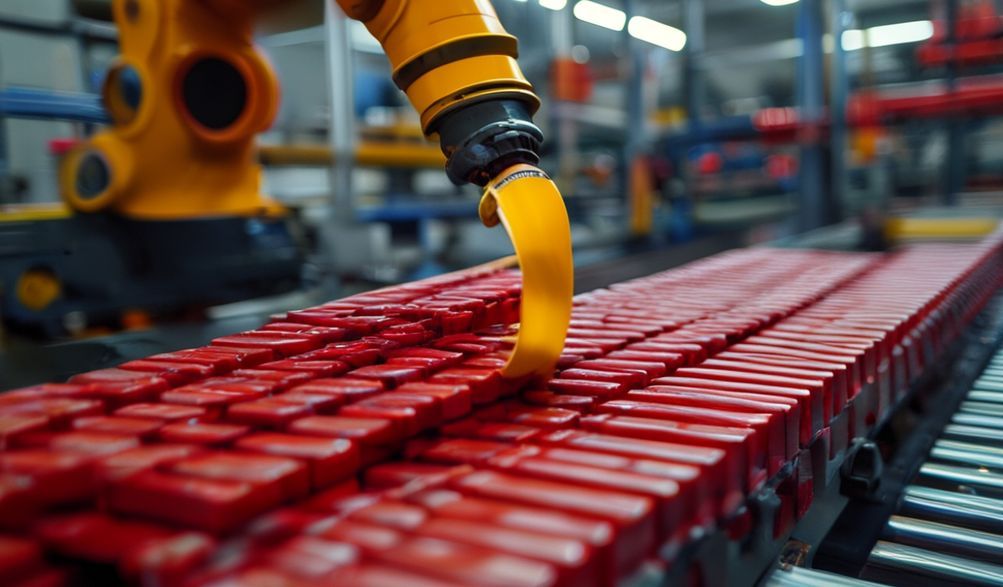
Robotic Strapping Systems
- Beskrywing: Utilize advanced robotic arms equipped with strapping heads. They offer extreme flexibility, capable of applying straps in complex patterns or handling non-standard bundle configurations with precision.
- Beste Vir: Highly flexible production environments that run many different brick types or bundle patterns, or for premium product lines where presentation is paramount. This is a high-end solution for specialized needs.
Key Decision Factors: Volume, Bundle Size, and Strap Material
Use this simple checklist to guide your initial assessment:
* Daily/Weekly Output: Low volume (<500 bundles/day) suggests semi-auto. High volume (>1000 bundles/day) demands full-auto.
* Brick Type & Bundle Size: Standard face bricks and pavers are straightforward. Large, heavy engineering bricks or irregular shapes may require a more robust machine with higher tension capabilities.
* Strap Material: Ensure the machine model is compatible with your chosen strap type (PP, PET, or steel), as sealing mechanisms differ.
Choosing the Right Strapping Material: PP, PET, or Steel?
The strap is just as important as the machine. The right material ensures your bundles stay secure from your dock to the jobsite.
Polypropylene (PP) Strapping
- Characteristics: The most economical option. It’s lightweight, has good elasticity, and is easy to handle. It’s suitable for medium-duty applications but can be susceptible to UV degradation and has lower tensile strength than PET.
- Ideale Gebruiksgeval: Internal handling, short-distance transport of standard clay or concrete bricks, and environments where cost is the primary driver.
Polyester (PET) Strapping
- Characteristics: Offers higher tensile strength and excellent durability. It has minimal stretch (maintains tension better) and superior resistance to weather and UV rays. It’s becoming the standard for heavy-duty brick strapping.
- Ideale Gebruiksgeval: Long-distance shipping, outdoor storage of brick pallets, bundling heavy-duty bricks like pavers or engineering bricks, and any situation where maximum security is required.
Steel Strapping
- Characteristics: Provides the absolute maximum strength and security. It is virtually inelastic and offers superior resistance to abrasion.
- Ideale Gebruiksgeval: Export packaging where containers face extreme handling, or for securing exceptionally heavy and dense loads of brick that exceed the capacity of plastic strapping.
Matching Strap to Machine and Application
Crucially, your machine must be designed to work with your chosen strap. Heat-seal machines require a specific strap coating to melt and fuse. Friction-weld machines work differently. Always consult with your machinery supplier to ensure compatibility between your desired strap material and the machine’s sealing system.
Critical Features to Look for in a Brick Strapping Machine
Beyond the type of automation, these engineering features separate adequate machines from exceptional, long-lasting investments.
Durability & Build Quality
Brick plants are tough environments—dusty, with constant vibration. Look for machines with heavy-duty, welded steel frames, hardened guide rails, and industrial-grade components. A robust build minimizes downtime and extends the machine’s operational life.
Tension Control & Sealing Mechanism
- Adjustable Tension: A machine with a wide, easily adjustable tension range (e.g., 50-600 lbs) allows you to perfectly secure everything from delicate face brick to heavy pavers.
- Reliable Sealing: Whether heat seal or friction weld, the seal is the bundle’s weakest point. A consistent, high-strength sealing mechanism is non-negotiable for security.
Ease of Maintenance & Serviceability
Downtime is lost revenue. Prioritize machines with:
* Quick-access panels for cleaning and simple fixes.
* A readily available inventory of common wear parts (sealing elements, blades).
* Strong manufacturer or distributor support for technical service.
Safety Features
Ensure the machine complies with relevant industrial safety standards (e.g., CE, OSHA guidelines). Essential features include emergency stop buttons, physical guards around tensioning and cutting areas, and clear safety labeling.
Implementing & Maintaining Your Strapping Machine
A successful installation goes beyond just purchasing the machine.
Site Preparation and Installation Best Practices
- Ruimte: Allow ample space around the machine for operator access, bundle handling, and maintenance.
- Utilities: Confirm power requirements (standard electrical or compressed air) and have them ready at the installation point.
- Integrasie: For automatic models, work with your supplier to ensure smooth integration with your existing conveyor width, height, and speed.
Operator Training for Safety & Efficiency
Proper training is the key to ROI. Ensure operators are trained on:
* Safe daily operation and emergency procedures.
* Basic troubleshooting (clearing jams, adjusting tension).
* Simple routine maintenance tasks.
Routine Maintenance Checklist
A little maintenance prevents major repairs:
* Daily: Visually inspect for wear, clean dust and debris from strap tracks and seals.
* Weekly: Lubricate moving parts as per the manual, check strap feed for smooth operation.
* Monthly: Inspect sealing elements and cutting blades for wear, and verify tension calibration.
Troubleshooting Common Issues
- Weak Seals: Often caused by dirty sealing elements, incorrect temperature setting, or incompatible strap.
- Strap Jams: Usually due to misaligned strap coils, debris in the feed path, or worn guides.
- Inconsistent Tension: Check for air pressure fluctuations (on pneumatic machines) or wear in the tensioning brake system.
Frequently Asked Questions (FAQ)
Q1: How much does a brick strapping machine cost?
A: Costs vary widely based on automation and features. A semi-automatic machine can start from $3,000 to $8,000. A fully automatic system integrated into a conveyor line typically ranges from $15,000 to $40,000+. Robotic systems are a custom investment. It’s most accurate to view this as a capital investment with a clear ROI, rather than just an expense.
Q2: What is the typical ROI (Return on Investment) for a strapping machine?
A: ROI depends on your current labor costs, damage rates, and production volume. Most operations calculate payback based on labor savings alone. With added savings from reduced product damage and increased throughput, many facilities see a full return on their investment within 12 to 24 months.
Q3: Can one machine handle different brick sizes and bundle patterns?
A: Yes, within limits. Most semi- and fully-automatic machines have adjustable strap placement and tension settings to accommodate a range of bundle heights and widths. However, switching between vastly different patterns (e.g., from stacked to cube bundles) may require mechanical adjustment or, in the case of robotic systems, reprogramming.
Q4: How do I choose between polypropylene (PP) and polyester (PET) strapping for bricks?
A: For most brick applications, PET strapping is the recommended choice. Its superior strength, tension retention, and weather resistance provide the security needed for shipping and outdoor storage. Reserve PP strapping for very light-duty, internal, or cost-sensitive applications where long-term outdoor exposure is not a factor.
Q5: Where can I find reliable service and parts for my machine?
A: This is a critical pre-purchase consideration. Choose a supplier with a proven track record, a dedicated technical support team, and a readily available inventory of common wear parts. Local or regional support is invaluable for minimizing potential downtime.
Conclusion
A strapping machine for brick is far more than a piece of packaging equipment; it is a strategic investment in the efficiency, security, and profitability of your operation. By automating the critical bundling process, you directly address the core pain points of labor cost, product damage, and workplace safety, transforming a logistical challenge into a competitive advantage.
We’ve outlined the key considerations—from machine types and strap materials to essential features and maintenance. Your next step is to assess your specific needs: evaluate your daily volume, brick types, and operational goals against the criteria discussed here.
As your authoritative guide, we encourage you to use this information as a foundation for informed discussions. The right solution is one tailored to your unique workflow.
Ready to streamline your brick bundling operation and secure your bottom line? Contact a trusted industrial packaging machinery supplier today for a personalized consultation or to request a live demonstration tailored to your specific products.
<