
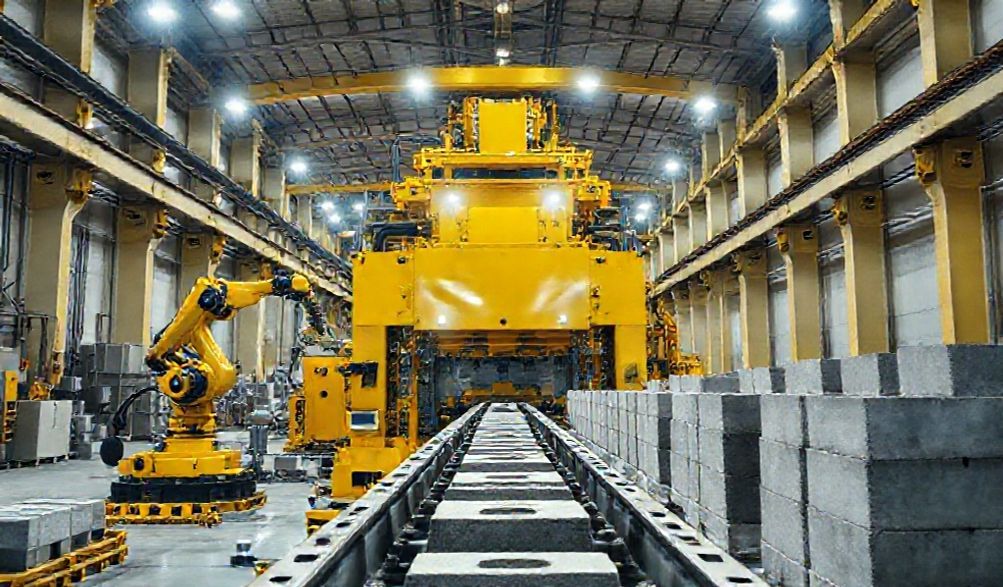
Your Ultimate Guide to Block Bricks Making Machine Factories: Spotlight on FUDA
The global construction industry is the backbone of modern development, from housing and infrastructure to commercial spaces. At the heart of this progress lies a critical, yet often overlooked, component: the humble concrete block. Producing these essential building elements reliably, efficiently, and at scale requires more than just raw materials—it demands precision-engineered machinery. This brings us to the core of modern construction supply chains: block bricks making machine factories.
Navigating this specialized market can be daunting. With countless manufacturers worldwide, how do you distinguish between a marketing claim and a genuinely reliable production partner? The stakes are high—your choice of machinery impacts your project timelines, product quality, and long-term profitability.
This guide serves as your comprehensive resource. We will dissect what makes a top-tier block making machine factory, providing you with a clear evaluation framework. As a case study, we will focus on the FUDA block making machine factory, a prominent name in the sector, to illustrate the hallmarks of a credible manufacturer. With years of analytical experience in the construction machinery industry, our aim is to provide factual, unbiased information to empower your investment decision.
Understanding Block Making Machine Factories: What to Look For
Choosing a factory is not merely about buying a machine; it’s about entering a long-term partnership. The factory’s capabilities directly influence the performance, durability, and support you will receive for years to come.
Core Capabilities of a Top-Tier Factory
A reputable factory is built on more than just assembly lines. Its core strengths are foundational to the value it delivers.
-
In-House R&D and Engineering Expertise: True innovation happens on the drawing board and in the testing lab. A factory with dedicated R&D invests in:
- Advanced mold design for precise block dimensions and smooth demolding.
- Optimized vibration systems that ensure high-density, strong blocks with minimal voids.
- Automation integration, which enhances output consistency and reduces labor dependency.
-
Manufacturing Scale and Quality Control: Capacity and consistency are key.
- Look for evidence of structured production processes and modern manufacturing facilities.
- ISO-sertifisering (like ISO 9001) are a strong trust signal, indicating adherence to international quality management standards.
- Rigorous quality assurance—from material inspection to final performance testing—is non-negotiable.
-
Material and Component Sourcing: The machine is only as good as its weakest part.
- High-grade, wear-resistant steel for frames, molds, and pallets is essential for longevity.
- The use of premium hydraulic components (from brands like Bosch Rexroth or Yuken) and reliable electrical systems (Siemens, Schneider Electric) reduces breakdown risk and ensures stable operation.
Types of Machines Produced by Leading Factories
A versatile factory typically offers a range of solutions to meet different production needs. Understanding these types is your first step in matching a machine to your project.
- Stilstaande Blokmaakmasjiene: These are high-output powerhouses designed for large-scale, fixed-location production plants. They often form the core of a fully automatic production line, including mixers, conveyors, and stackers.
- Mobiele / Eierleënde Blokmasjiene: Prized for their flexibility, these machines produce blocks directly on the ground at the construction site, eliminating the need for pallet conveyors. They are ideal for smaller batches or decentralized production.
- Automatic vs. Semi-Automatic Models:
- Heeltemal Outomaties: Maximizes output (often thousands of blocks per hour) with minimal manual intervention. Higher initial investment but lower long-term labor cost.
- Semi-outomaties: Requires some manual operation (e.g., feeding raw material, removing blocks). Offers a lower entry price and is suitable for medium-scale production.
- Gespesialiseerde Masjiene: Leading factories also produce equipment for niche products, such as:
- Paving block machines.
- Interlocking brick machines for dry-stack construction.
- Curb stone and hollow block production machines.
Deep Dive: Evaluating the FUDA Block Making Machine Factory
As a well-known manufacturer in the global market, FUDA provides a relevant case study for applying the evaluation criteria discussed above.
FUDA’s Legacy and Market Position
Established as a professional manufacturer in the block making machinery sector, FUDA has built its reputation over years of operation. The company has developed a significant export footprint, supplying machines to construction markets across Africa, Southeast Asia, the Middle East, and South America. This geographic reach is a testament to its ability to adapt machinery to varied local conditions and material availability.
Reportedly, their core philosophy centers on providing durable, efficient, and cost-effective solutions, backed by accessible customer support—a crucial balance for buyers in growth markets.
Analyzing FUDA’s Product Portfolio
A review of FUDA’s offerings shows a product line designed to cater to a spectrum of customers, from entrepreneurs to large-scale industrial block producers.
- Key Machine Series: Their portfolio typically includes:
- Fully Automatic Block Production Lines: High-capacity systems for uninterrupted, large-volume manufacturing.
- Mobiele Blokmasjiene: Rugged, diesel or electric-powered machines for on-site production flexibility.
- Halfoutomatiese Masjiene: A range of models offering a balance between output and manual control.
- Technical Specifications Highlights: While specifics vary by model, FUDA machines generally emphasize:
- Uitset: Capacities can range from several hundred to over 10,000 blocks per 8-hour shift, depending on the model and block type.
- Druk Kapasiteit: High hydraulic pressure is a common feature, crucial for producing high-compression strength blocks.
- Kragopsies: Many models offer flexibility between electric motor and diesel engine drives to suit different site conditions.
- Differentiating Features: Factories like FUDA often highlight features such as heavy-duty vibration motors, reinforced structural welding, and user-friendly PLC control systems to differentiate their machines in a competitive market.
FUDA’s Manufacturing and Service Ethos (Critical for E-E-A-T)
This is where a factory’s claims meet reality. The post-sale relationship defines the true cost of ownership.
- Expertise in Action: Credible manufacturers like FUDA operate from defined manufacturing facilities equipped with CNC cutting, automated welding, and assembly lines. Their engineering team’s role is to translate design into robust machinery.
- Vertroue Bou: A transparent service structure is vital.
- Waarborg: Standard warranties often cover key components for a defined period (e.g., 12-18 months).
- Onderdele: A readily available parts inventory and clear catalog ensure maintenance continuity.
- After-Sales Network: The availability of training, installation supervision (optional), and remote technical support is a critical factor for international buyers.
- Evidence of Experience: Industry presence is demonstrated through a history of installations. Prospective buyers are often encouraged to review project portfolios or, ideally, speak to existing clients in similar regions or applications to gauge real-world performance.
Key Factors When Choosing Your Block Machine Factory
Your decision matrix should extend far beyond the initial quotation. Consider these strategic factors to ensure a sound investment.
Beyond the Price Tag: Total Cost of Ownership
The cheapest machine can become the most expensive asset you own.
- Initial vs. Long-Term Costs: Factor in energy consumption, routine maintenance costs, and the expected lifespan of wear parts (molds, pallets, hydraulic seals).
- The Cost of Downtime: In production, time is money. A machine that breaks down frequently or lacks accessible service support can cripple a project. The value of reliability and strong after-sales service must be quantified in your decision.
Technical Support and Training
Comprehensive support is not an add-on; it’s a necessity for operational success.
- Proper installation guidance (detailed drawings, foundation plans) is crucial for machine stability and performance.
- Operator and maintenance training—whether on-site or via detailed manuals and videos—empowers your team to run the machine efficiently and perform basic troubleshooting.
- Confirm the channels for remote support (phone, video call) and the feasibility of dispatching service technicians to your location if needed.
Customization and Scalability
Your needs are unique. A good factory partner listens and adapts.
- Material Adaptation: Can they adjust the machine design for your specific raw material mix, such as high fly ash content, crushed stone, or local sand properties?
- Product Customization: If you need a unique block size, shape, or surface texture, does the factory have the engineering capability to produce custom molds?
- Future Expansion: As your business grows, can your semi-automatic line be upgraded to a fully automatic one? Does the factory offer modular systems that allow for capacity increases?
Frequently Asked Questions (FAQ) About Block Machine Factories & FUDA
Q1: What is the minimum factory space and power required for a standard automatic block making machine?
A: Requirements vary significantly by model. A typical medium-to-large automatic block making plant, including space for the machine, a curing area, raw material storage (sand, aggregate), and finished block storage, may require 1,000 to 2,000 square meters or more. Electrical power requirements often range from 30 kW for smaller lines to over 100 kW for large, fully integrated plants. Always request the detailed factory layout and power specifications from your manufacturer.
Q2: How does FUDA ensure the durability of its block making machines?
A: According to industry best practices followed by reputable factories, durability is achieved through robust design and quality materials. This includes using high-grade steel for critical stress points, employing precision welding techniques, and integrating reliable, brand-name components in hydraulic and electrical systems. For any factory, inquiring about the specific material grades and component brands used is a recommended due diligence step.
Q3: Can these machines use different types of raw materials?
A: Most standard block making machines are engineered for a conventional concrete mix (cement, sand, and aggregate). However, many leading factories, including FUDA, design their machines with adaptability in mind. They can often be configured to work efficiently with alternative materials like fly ash, slag, or certain types of crushed stone. It is essential to discuss your exact raw material composition and ratios with the factory’s technical team before purchase.
Q4: What kind of after-sales support should I expect from a factory like FUDA?
A: You should expect a structured support package. This typically includes detailed installation manuals and drawings, comprehensive operator training (on-site or at the factory), a complete spare parts catalog, and a clear warranty document. Post-installation, support usually involves access to technical consultants via phone or email for troubleshooting. It is crucial to confirm the specifics, especially the responsiveness and reach of their service network in your geographic region.
Q5: What is the typical lead time for manufacturing and shipping a block making plant?
A: Lead times are not universal and depend on the machine’s complexity (custom vs. standard) and the factory’s current production schedule. For a standard automated production line, manufacturing can take approximately 30 to 90 days after final order confirmation and receipt of deposit. Shipping time must be added to this, which varies by destination and chosen logistics method (sea freight is common for full plants). Always secure a detailed production and shipping timeline in your contract.
Conclusion: Making an Informed Investment
Selecting the right block bricks making machine factory is a strategic decision that influences your operational success for years. As we’ve outlined, this choice hinges on a balanced assessment of factory credibility (their expertise and track record), machine suitability (for your output goals and materials), totale eienaarskosteen diedepth of technical and after-sales support.
Your due diligence is paramount. We encourage you to use this guide as a framework. Request client references, scrutinize component lists, review warranty terms, and, if feasible, arrange a visit to the factory. Seeing the manufacturing process firsthand is invaluable.
Partnering with an established manufacturer like the FUDA block making machine factory should be a decision based on verified expertise and a demonstrated commitment to partnership—a relationship that extends beyond a simple transaction to support your growth.
Final Note: We strongly advise consulting with independent industry experts or engineers, verifying all technical claims directly with manufacturers, and preparing a detailed list of your production requirements, site conditions, and long-term goals before initiating contact with any factory. This preparation ensures you ask the right questions and can accurately compare proposals.
<