
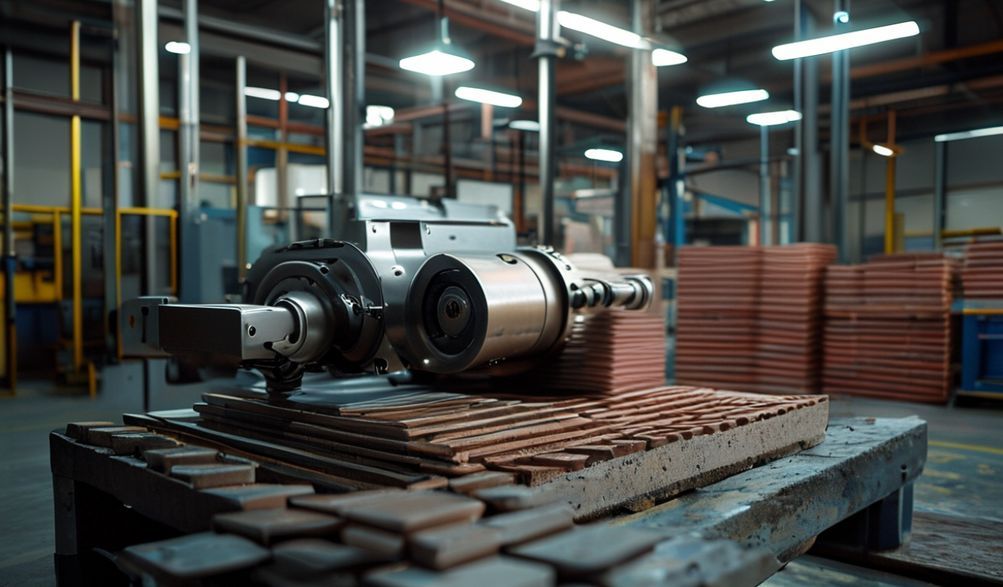
Your Ultimate Guide to Fly Ash Brick Machine Manufacturers in Morbi
Inleiding
Nestled in the heart of Gujarat, Morbi isn’t just a name on the map; it’s the pulsating engine of India’s ceramic and clay product industry. For decades, this industrial powerhouse has been synonymous with quality, scale, and manufacturing excellence, supplying tiles, sanitaryware, and traditional bricks across the globe. This established ecosystem has naturally evolved, positioning Morbi as a critical hub for a new wave of sustainable construction technology.
The traditional clay brick industry, while long-standing, faces mounting pressures. Its reliance on topsoil contributes to land degradation, the firing process consumes vast amounts of coal, releasing significant CO2, and operational costs are increasingly volatile. In this landscape, the demand for a smarter, greener alternative has moved from niche to necessity.
Enter the fly ash brick: a high-strength, cost-effective building block that turns industrial waste—fly ash from thermal power plants—into a premium construction material. And where does one find the machinery to build this sustainable future? The answer, increasingly, is Morbi. The city’s engineering prowess has pivoted to become a leading center for fly ash brick machine manufacturing.
This guide serves as your comprehensive resource. Whether you’re an entrepreneur eyeing a lucrative business opportunity, a construction firm aiming to secure its material supply, or an industry professional seeking to upgrade technology, finding the right machinery partner is a pivotal decision. We’ve compiled insights from industry veterans, technical specifications, and market analysis to provide reliable, actionable guidance. Let’s navigate the landscape of fly ash brick machine manufacturers in Morbi together.
Why Morbi is the Epicenter for Fly Ash Brick Machinery
Morbi’s dominance in this sector isn’t accidental. It’s the result of a perfect storm of legacy, location, and competitive drive.
The Legacy of Ceramics and Manufacturing
- Deep-Rooted Expertise: For over half a century, Morbi has been machining the heart of the ceramics industry. This history means a ready availability of specialized engineering talent, from foundry workers to precision fabricators and hydraulic system experts.
- Ecosystem Advantage: The city thrives on a dense network of ancillary industries. Need a specific gear, a custom mold, or a hydraulic component? It’s available locally, reducing lead times and fostering innovation through collaboration.
- Vaardige Arbeidsmagpoel: Generations of workers have grown up in manufacturing, creating a skilled labor pool that understands heavy machinery, quality standards, and production line discipline.
Nabyheid aan Grondstowwe en Markte
- Fly Ash Access: Gujarat and its neighboring states host numerous coal-based thermal power plants, generating millions of tons of fly ash. Morbi’s strategic location minimizes the logistics cost of sourcing this primary raw material.
- Connectivity: Excellent road and rail links connect Morbi to major consumption markets across western and northern India. The proximity to ports like Kandla and Mundra also facilitates the growing export of both machines and finished bricks.
A Cluster of Innovation and Competition
- When dozens of manufacturers operate in close proximity, competition thrives. This benefits you, the buyer, through:
- Mededingende Prysstelling: The cluster effect ensures market-driven, transparent pricing.
- Rapid Innovation: Manufacturers are pushed to improve machine efficiency, automation, and durability to stand out.
- Wide Choice: From budget-friendly manual machines to high-tech fully automatic plants, every need is catered to within a few square miles.
Key Factors to Evaluate Fly Ash Brick Machine Manufacturers
Choosing a manufacturer is about more than just price. It’s about investing in a long-term partner for your business. Evaluate them across these three critical pillars.
Tegniese Kennis en Masjienkwaliteit
The machine’s build dictates your product’s quality and your plant’s uptime.
-
Core Components & Build:
- Raam: Look for heavy-duty, welded steel frames that can withstand constant vibration and pressure without deformation.
- Hidroulika: The heart of the machine. Insist on reputed brand pumps, valves, and cylinders for consistent pressure and longevity.
- Skimmels: Precision-engineered, hardened steel molds are non-negotiable for producing bricks with sharp edges, consistent dimensions, and smooth finish.
- Controls: User-friendly PLC (Programmable Logic Controller) panels in automatic machines allow for easy operation and troubleshooting.
-
Production Capacity & Automation Levels:
- Output is measured in bricks per hour or per shift. Be clear about your target.
- Handleiding: Low output (500-1500 bricks/day), high labor, lowest capex.
- Semi-outomaties: Balanced choice (2000-8000 bricks/day). Processes like mixing and feeding are automated, but brick ejection or stacking may be manual.
- Heeltemal Outomaties: High-volume (10,000+ bricks/day). Features automated material handling, pressing, curing, and stacking with minimal human intervention.
-
Versatility & Customization:
- Can the machine produce different types? Solid, hollow (for insulation), paving blocks, and interlocking bricks?
- Will the manufacturer tweak the design to suit your specific raw material mix (e.g., higher sand or slag content)?
Manufacturer’s Credentials and Experience
Past performance is the best indicator of future reliability.
- Industry Tenure & Portfolio: A company with a 15-year history has likely seen market cycles and refined its designs. Ask for a client list and, if possible, visit a running plant they supplied.
- Certifications & Compliance:'nISO 9001:2015 certification is a strong signal of a systematic quality management process. Compliance with relevant Bureau of Indian Standards (BIS) for machinery is a plus.
- R&D and Innovation: Inquire about their recent improvements. Are they working on energy-efficient motors, IoT-based monitoring, or faster cycle times? It shows a forward-thinking mindset.
After-Sales Support and Service
This is where many manufacturers are separated from the suppliers. The real relationship begins after the sale.
- Installasie & Inbedryfstelling: Do they send engineers for on-site installation, calibration, and hands-on training for your operators?
- Waarborg & Onderdele: What is the warranty period (typically 1 year)? Is there a clear, stocked inventory of critical spares (like seals, valves, sensors) to minimize your downtime?
- Technical Support Network: How do you reach them? A dedicated helpline, WhatsApp support, or remote diagnostics capability can save days of lost production.
Types of Fly Ash Brick Machines Available from Morbi Manufacturers
Morbi’s portfolio caters to every stage of business growth.
Manual Fly Ash Brick Making Machines
- Ideaal Vir: First-time entrepreneurs, very small-scale production, or regions with very low labor costs.
- Operasie: Raw material is manually fed into a mold, and a lever-operated mechanism applies pressure. Bricks are manually removed and stacked for curing.
- Voordele: Lowest investment, simple operation, easy maintenance.
- Nadele: Low output, physically demanding, product consistency depends heavily on the operator.
Semi-Automatic Fly Ash Brick Machines
- Ideaal Vir: Small to medium-scale businesses looking for a balance between investment and output.
- Operasie: Features like raw material mixing, conveyor feeding, and compression are motorized. The bricks may still be manually collected and stacked.
- Voordele: Significantly higher and more consistent output than manual machines, reasonable pricing, less physical labor.
- Nadele: Still requires a fair amount of manual handling.
Fully Automatic Fly Ash Brick Plants
- Ideaal Vir: Large-scale commercial production, corporate ventures, or entrepreneurs targeting major construction projects.
- Operasie: A complete system. From automatic batching of raw materials, mixing, and conveying to pressing, curing (in accelerated chambers), and robotic stacking/palletizing—the entire process is automated.
- Voordele: Highest output, exceptional consistency, minimal labor costs, optimal use of space.
- Nadele: High capital investment, requires stable power supply, more complex maintenance.
Mobile Fly Ash Brick Machines
- Ideaal Vir: Large infrastructure companies (dam builders, road contractors) who want to produce bricks directly at the project site.
- Operasie: Compact, containerized, or trailer-mounted units that can be transported and set up quickly.
- Voordele: Eliminates brick transportation costs over long distances, ensures just-in-time supply.
- Nadele: Limited production capacity compared to stationary plants.
The Business Case: ROI and Sustainability
Investing in a fly ash brick plant is both an economic and an environmental decision.
Cost Analysis: Investment vs. Long-Term Savings
- Capital Expenditure (CapEx): Ranges from ₹ 3-5 lakhs for a basic manual setup to ₹ 25-50 lakhs for a robust semi-automatic plant, and can go into crores for a fully automatic line.
- Operational Expenditure (OpEx): Primarily includes:
- Rou Materiaal: Fly ash (often low-cost or free), sand/stone dust, and a small amount of cement/lime.
- Krag: Consumption varies from 10-15 HP for semi-auto to 100+ HP for full-auto plants.
- Arbeid: Significantly lower than clay brick units, especially for automated plants.
- Revenue & ROI: Fly ash bricks command a market price comparable to or slightly higher than good-quality clay bricks. With lower input costs, the profit margin is attractive. A well-run semi-automatic plant can often see a full return on investment within 2-3 years. Explore state-level subsidies for fly ash utilization units, which can improve ROI further.
Environmental and Regulatory Advantages
- Green Building Compliance: Using fly ash bricks contributes directly to points under LEED (Leierskap in Energie en Omgewingsontwerp)enGRIHA green building rating systems, a major selling point for modern projects.
- Afvalbenutting: Your business provides a solution by consuming a hazardous industrial waste (fly ash), reducing landfill burden and environmental pollution.
- Reduced Carbon Footprint: The process uses curing (steam or water) instead of fossil-fuel firing, slashing CO2 emissions by up to 90% compared to clay brick manufacturing.
A Step-by-Step Guide to Selecting Your Manufacturer in Morbi
Follow this actionable checklist to make an informed decision.
- Define Your Requirements: Be specific. What is your daily production target? What is your budget ceiling? Which brick types do you want to make? What is your available space and power connection?
- Shortlist Manufacturers: Use online B2B portals (IndiaMART, TradeIndia), industry directories, and associations. Search for “fly ash brick machine manufacturers in Morbi” and note companies with strong digital profiles and client testimonials.
- Conduct Background Checks: Visit their websites. Look for technical details, photo galleries of their workshop and machines, and client videos. Check for consistent branding and professionalism.
- Factory Visit is Crucial: Dit is nie onderhandelbaar nie. Travel to Morbi. Inspect the manufacturing facility—see the quality of welding, assembly, and housekeeping. Ask to see machines under production and, if possible, a local running plant.
- Request Detailed Quotations & Compare: Ask for a breakdown that includes machine price, taxes, transportation, installation charges, and initial spare parts cost. Compare specifications line-by-line, not just the bottom line.
- Clarify Support Terms: Get the after-sales service package—warranty duration, response time for breakdowns, spare parts pricing policy—in the purchase agreement.
- Check Financial & Legal Standing: A brief check for the company’s financial stability and any major legal disputes can prevent future partnership pitfalls.
Frequently Asked Questions (FAQ)
Q1: What is the average price range for a fly ash brick machine from Morbi manufacturers?
A: Prices vary dramatically based on automation. Manual machines start around ₹ 3-5 lakhs, semi-automatic plants range from ₹ 10-25 lakhs, and fully automatic production lines can cost ₹ 50 lakhs to several crores. Always correlate price with capacity and component quality.
Q2: Can these machines use only fly ash, or can other waste materials be used?
A: Most machines from Morbi are designed for versatility. They can effectively use a mix of fly ash, sand, quarry dust, cement, lime, and even other industrial wastes like pond ash or slag. Some advanced models can incorporate processed plastic waste.
Q3: How much power and space is required to operate a semi-automatic plant?
A: A typical semi-automatic plant with a production capacity of 4000-6000 bricks per 8-hour shift would require a 30-50 HP electrical connection and a covered shed area of approximately 5,000 to 8,000 square feet, including space for raw material storage and brick curing.
Q4: Do Morbi manufacturers provide raw material guidance and brick testing support?
A: Reputable manufacturers do. They provide a basic mix design formula to get you started and guide you to local construction material testing labs to verify the compressive strength and water absorption of your bricks as per IS 12894:2002 (the BIS standard for fly ash bricks).
Q5: What is the typical lead time for machine delivery and installation after order?
A: For standard semi-automatic models, the lead time is usually 4 to 8 weeks from the date of advance payment. Fully automatic or highly customized plants may take 10-16 weeks. Always get a written commitment on the delivery schedule.
Conclusion
Morbi stands as a testament to Indian manufacturing’s adaptability, offering a unique blend of legacy engineering and modern sustainable technology for the fly ash brick industry. The choice of your machinery partner is a cornerstone decision that will impact your productivity, product quality, and profitability for years.
Remember, the goal is not merely to find a vendor offering the lowest price tag, but to identify a true partner. Prioritize manufacturers who embody the principles of Ervaring (a solid track record), Kundigheid (deep technical knowledge), Gesaghebbendheid (industry respect and certifications), and Betroubaarheid (transparent communication and unwavering after-sales support).
Use this guide as your roadmap. Conduct diligent research, insist on factory visits, and ask the hard questions. By doing so, you’ll secure more than just a machine; you’ll gain a reliable ally in building a successful, sustainable business that contributes to a greener future. Start your journey in Morbi with confidence.
<