
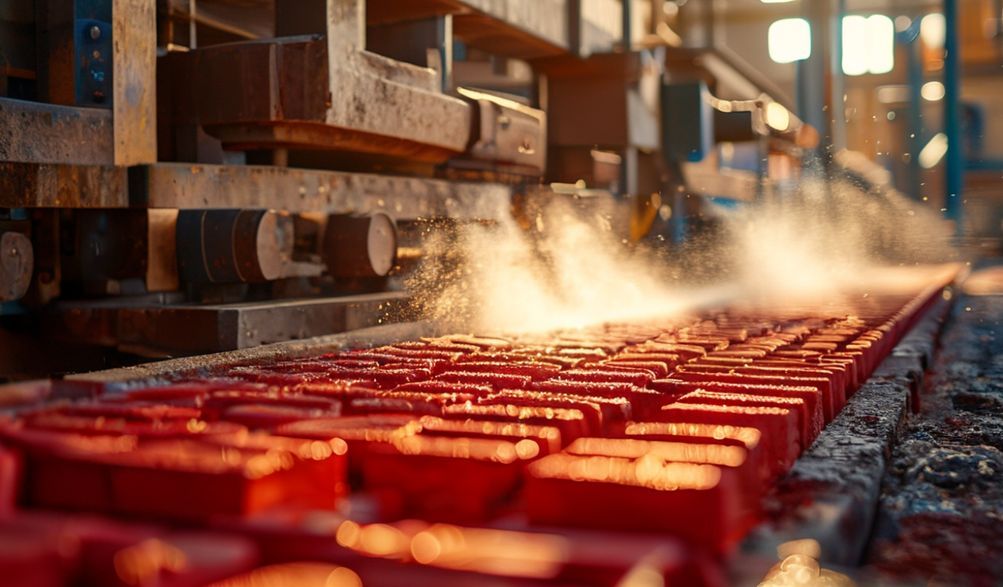
دليلك النهائي لإيجاد أفضل آلة طوب للبيع في جنوب إفريقيا | رؤى من مصنع فودا
مقدمة
يُعد قطاع البناء في جنوب إفريقيا حجر زاوية في تنميتها الاقتصادية، حيث يدفع التزام الحكومة بمشاريع البنية التحتية والإسكان الطلب بشكل مستمر. وفي صميم هذا النشاط يكمن مكون أساسي: الطوبة المتواضعة. بالنسبة للمقاولين والمطورين ورجال الأعمال، فإن اختيار آلات صنع الطوب ليس مجرد شراء لمعدات، بل هو قرار تجاري حاسم يؤثر على الإنتاجية والتكلفة وجدوى المشروع. يمكن أن يكون التنقل في سوق آلة الطوب المعروضة للبيع في جنوب إفريقيا أمرًا شاقًا، مع خيارات تتراوح بين المصنعين المحليين والواردات الدولية.
يُعد هذا الدليل مصدرك الشامل والحيادي. مستندين إلى خبرة تزيد عن عقد في تقييم معدات البناء عبر منطقة جنوب إفريقيا - بما في ذلك زيارات المصانع وتحليلات الأداء الميداني - سنساعدك على تجاوز الضجيج. يركز هدفنا على تزويدك بالمعرفة اللازمة لاتخاذ قرار مستنير، مع نظرة مفصلة وشفافة على عروض مصنع فودا لصناعة الطوب. سواء كنت تستهدف مشروعاً صغيراً أو عملاً تجارياً كبيراً، ستساعدك هذه المقالة على مواءمة استثمارك مع احتياجات مشروعك وميزانيتك والواقع الفريد للسياق الجنوب إفريقي.
فهم احتياجاتك في صناعة الطوب في السياق الجنوب أفريقي
قبل مقارنة العلامات التجارية أو الموديلات، فإن الخطوة الأكثر أهمية هي تقييم واقعي واضح لمتطلباتك الخاصة. فآلة قد تكون مثالية لمطور تجاري كبير يمكن أن تكون كابوساً مالياً ولوجستياً لجمعية تعاونية مجتمعية. دعنا نحلل الاعتبارات الرئيسية.
مشروع النطاق ومتطلبات الإخراج
يحدد نطاق مشروعك مستوى أتمتة الآلة وقدرتها.
- Small-Scale / Start-Up Projects: Think community builds, backyard renovations, or supplying a local neighbourhood. Here, آلات يدوية أو شبه آلية shine. They require more hands-on operation but have a lower capital outlay. Output might range from 500 to 2,500 blocks per day.
- Medium to Large-Scale Projects: This encompasses RDP housing developments, private estate construction, and commercial building. For these, fully automatic block making machines are essential. They integrate mixing, molding, pressing, and stacking, requiring minimal manual intervention and producing 8,000 to 30,000+ blocks per shift. The investment is higher, but the ROI is justified by volume and consistency.
Brick Types and SABS Standards
Not all bricks are created equal, and neither are the machines that make them. The South African market commonly requires:
- الطوب المجوف:للجدران الحاملة وغير الحاملة.
- Paving Bricks (Interlocking & Standard):للممرات، والمشايات، والمساحات العامة.
- Solid & Interlocking Blocks: For robust construction.
Crucially, your machine must produce bricks that meet South African Bureau of Standards (SABS) quality benchmarks. This relates to dimensions, compressive strength, and water absorption. A machine’s vibration system and pressure capacity are directly responsible for achieving this SABS-compliant density and strength. Always verify a machine’s capability to produce to the relevant SABS specification (e.g., SABS 227).
Local Factors: Power, Materials, and Skill
- مصدر الطاقة: Consider your site’s reality. Is grid electricity reliable? Diesel-powered or hybrid (electric/diesel) machines can be a lifesaver in areas with load-shedding or no grid access.
- المواد الخام: The machine must be compatible with locally available materials—river sand, crusher dust, ash, or cement-stabilised soil. Some advanced models are fussier about mix consistency than robust, simpler machines.
- Labour Skills: A fully automatic line needs technically minded operators for maintenance. A semi-automatic machine relies more on manual labour. Match the technology to the skills you have or can feasibly train.
Key Features to Evaluate in a Brick Making Machine
Once you know your needs, use this framework to assess any machine.
Automation Level: Manual, Semi-Automatic, and Fully Automatic
| Automation Level | Pros | Cons | Ideal For | Approx. Price Range (ZAR) |
| :— | :— | :— | :— | :— |
| يدوي | Lowest cost, simple operation, easy maintenance. | Very low output, labour-intensive, inconsistent quality. | Micro-enterprises, very small, irregular projects. | R15,000 – R80,000 |
| شبه آلي | Good balance of cost and output, better quality control than manual. | Requires more operators than full-auto, cyclical operation. | Small to medium contractors, start-up block yards. | R80,000 – R400,000 |
| تلقائي بالكامل | Highest output, consistent quality, minimal manual labour, best ROI at scale. | High initial investment, complex maintenance, needs skilled operator. | Large block yards, major construction firms, high-volume suppliers. | R400,000 – R2,000,000+ |
مواصفات الجهاز الأساسية
- القدرة الإنتاجية: Don’t just look at “blocks per hour.” Ask for the output based on a standard 6-8 hour shift for a specific block type (e.g., 220x110x70mm hollow block). Factor in time for mold changes and maintenance.
- تعدد استخدامات القوالب: How easily can you change molds to produce different block types? Quick-change systems save hours of downtime. Check the cost and availability of additional molds.
- Pressure/Bearing Capacity: This is non-negotiable for strength. It’s measured in Newtons (N)أوMegaPascals (MPa). A higher vibration force and hydraulic pressure create denser, SABS-compliant bricks.
- متطلبات الطاقة: Match this to your site assessment. Electric motors are cleaner but vulnerable to outages. Diesel engines offer independence but have higher running costs.
Durability & Build Quality
In South Africa’s climate and tough working conditions, build quality is paramount. Inspect:
- درجة الفولاذ والإطار: The frame should be heavy-duty, welded steel, not lightweight bolted assemblies.
- نظام الاهتزاز: Look for durable, high-frequency vibrator motors mounted on a robust vibration table.
- Hydraulic Components: Are the pumps, cylinders, and valves from reputable brands (e.g., Bosch Rexroth, Parker)? Generic hydraulics fail faster.
- مقاومة التآكل: Is there protective painting or coating, especially for coastal regions?
Spotlight on FUDA Brick Making Factory: An Objective Analysis
FUDA is a name you will encounter in your search. Here’s a balanced, factual look based on market presence and user feedback.
نظرة عامة على شركة فودا كشركة مصنعة
FUDA is a Chinese manufacturer of brick and block making machinery with a significant global export footprint. They position themselves in the mid-range, cost-competitive segment, offering a wide catalogue of models from semi-automatic to large fully automatic lines. They cater to buyers looking for more features than basic manual machines but at a lower price point than European or premium brands.
Popular FUDA Machine Models for the South African Market
Two models frequently marketed in SA are:
- آلة صناعة البلوك شبه الآلية من نوع FUDA QT4-25: A workhorse for small to medium businesses. It can produce hollow blocks, solid blocks, and pavers. Output is roughly 6,000-8,000 blocks per 8-hour shift (for a standard hollow block). It’s electrically powered and requires a feeding system and manual pallet handling.
- FUDA QT6-15 Fully Automatic Block Making Plant: A more integrated production line. It includes a mixer, automatic conveyor, block machine, and stacker. Output can reach 12,000-15,000 blocks per shift. This suits larger block yards or developers.
Advantages of Considering a FUDA Machine
- التسعير التنافسي: The primary advantage. You get a higher level of automation for your budget compared to many other brands.
- نطاق موديلات واسع: There is likely a FUDA model at almost every price and automation tier.
- Adequate Basic Functionality: For standard brick and block production, they are generally capable of performing the core task.
Important Considerations & Potential Challenges
- After-Sales Service & Parts Availability in South Africa: This is the single most critical factor. FUDA sells primarily through local agents. The quality of your experience is 90% dependent on this agent. You must verify:
- Do they have a physical workshop and parts inventory in SA?
- Do they employ trained, in-country technicians?
- What is their average response time for breakdowns?
- Never assume parts are easily available. Verify stock levels for wear-and-tear items like molds, vibrator motors, and hydraulic seals.
- Long-Term Durability: While functional, some users report that over 5+ years of heavy use, components may require more frequent replacement compared to heavier-built, premium machines. This makes the local agent’s role even more vital.
- اللوجستيات: Factor in 8-12 weeks for shipping and navigate customs clearance and import duties (typically 5-20% depending on the HS code, often 8474.80.90 for molding machinery). A reliable local agent should handle this for you.
Making a Smart Purchase: Beyond the Machine Price
The invoice price is just the start. Smart buyers plan for the Total Cost of Ownership (TCO).
التكلفة الإجمالية للملكية (TCO)
A comprehensive budget must include:
* Machine Price (FOB or CIF)
* Shipping & Marine Insurance
* Import Duties & VAT (15%) – Use HS Code 8474.80.90 as a starting point, but consult a customs broker.
* Agent Commission/Fee
* Inland Transportation to your site
* Site Preparation & Foundation (concrete slab)
* Installation & Commissioning fees
* Operator Training
* Annual Maintenance & Spare Parts budget (allocate 3-5% of machine cost per year)
The Critical Role of a Local Agent or Supplier
Your local agent is your lifeline. Vet them with this checklist:
– [ ] Ask for references from past clients (especially those who bought 2+ years ago).
– [ ] Visit their premises to see parts stock and workshop.
– [ ] Request a detailed breakdown of their after-sales support package in writing.
– [ ] Confirm warranty claim procedure. How are faulty parts replaced?
– [ ] Check if they provide training on operation and basic maintenance.
Sourcing and Comparing Quotes
When requesting quotes, demand detail to enable like-for-like comparison:
* Full technical specifications sheet.
* Clear INCOTERMS (e.g., CIF Durban Port).
* Itemized list of what is included (e.g., 3 molds, training, 1-year warranty).
* Detailed after-sales support terms.
* Proposed delivery timeline.
Site Preparation and Installation
Prepare your site to avoid delays:
* Foundation: You’ll need a level, reinforced concrete slab. The supplier should provide foundation drawings.
* Utilities: Ensure correct 3-phase power or diesel supply points are ready.
* الفضاء Allow space for raw material storage, mixing, block curing, and finished product storage.
Frequently Asked Questions (FAQ) About Brick Machines in SA
Q1: What is the price range for a brick making machine in South Africa?
أ: Prices vary wildly. A basic manual machine can start around R15,000. A robust semi-automatic machine typically ranges from R150,000 to R400,000. Fully automatic production lines start from R500,000 and can exceed R2 million. FUDA machines generally occupy the low to mid-range of these brackets. Remember, the final landed cost includes shipping, duties, and VAT.
Q2: Are FUDA brick machines reliable and good quality?
أ: They offer good value for money for standard applications and can be a solid entry-point into automated production. Their reliability is highly dependent on three factors: 1) Adherence to a strict preventive maintenance schedule, 2) The competence and responsiveness of your local South African agent, and 3) Not overstressing the machine beyond its designed capacity.
Q3: Can I get spare parts easily in South Africa for a FUDA machine?
A: Only if the local supplier/agent you purchase from stocks them or has a proven, fast supply channel. This is the most important question to ask. Before signing any contract, get a written commitment on parts availability and lead times for common wear items. Do not buy a FUDA machine from an agent without a verifiable parts inventory.
Q4: What warranty is typically offered, and how does it work from overseas?
أ: Typical warranties are 12 months on core components (frame, vibration table) and 6 months on electrical and hydraulic parts. Crucially, the warranty is almost always administered through the local agent. The factory ships replacement parts to the agent, who then fits them. Ensure your warranty terms explicitly state this process and the response time commitments.
Q5: Besides FUDA, what other reputable brands should I consider?
أ: It’s wise to compare. Look at other international brands like Zenith (Germany)أوColumbia (USA) for high-end options. More importantly, research well-established South African manufacturers or long-standing local suppliers of imported machinery. Brands like Hydraform (interlocking block specialists) or local agents with 20+ year histories often provide unparalleled local support, even if the upfront price is higher.
خاتمة
Choosing the right brick machine for sale in South Africa is a strategic decision that hinges on honestly assessing your project scale, understanding the technical features that drive quality, and, above all, prioritising long-term support over short-term savings. While cost-competitive options like those from the FUDA factory can be attractive, their success in your operation is inextricably linked to the capability of the local agent standing behind them.
Let this guide be your checklist. Conduct thorough due diligence: Visit supplier showrooms, speak directly to other local business owners using the machines you’re considering, and scrutinise after-sales promises. In the demanding South African construction environment, the right partnership with a reliable supplier is an asset as valuable as the machine itself. Invest the time upfront to secure not just a piece of equipment, but a foundation for your productivity and growth.
<