
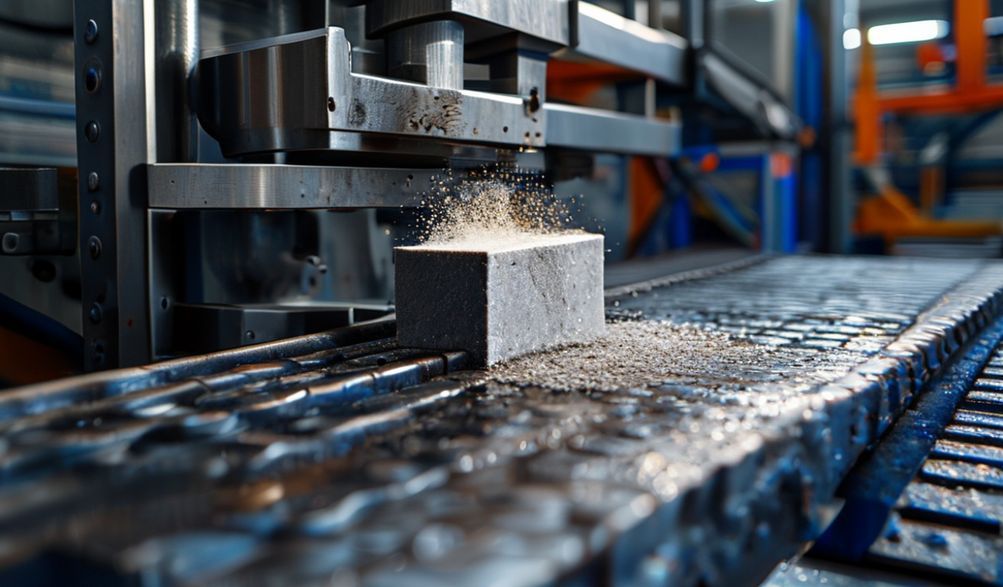
الدليل الشامل لآلات تصنيع الطوب المجوف: الأنواع، التكاليف، وكيفية الاختيار
مقدمة
هل أنت رائد أعمال تتطلع إلى قطاع البناء المتين؟ ربما تكون صاحب عمل في مجال البناء تتطلع إلى التكامل الرأسي والتحكم في تكاليف المواد. أو ربما تكون مستثمرًا تبحث عن فرصة عمل ملموسة ومطلوبة. إذا كان الأمر كذلك، فمن المحتمل أن يكون عالم تصنيع الطوب المجوف قد ظهر على رادارك.
ومع ذلك، يمكن أن يكون التنقل في هذا المجال شاقًا. فمجموعة الآلات، والمصطلحات التقنية، والاستثمار الكبير المطلوب، تتطلب أكثر من مجرد نظرة عابرة. أنت بحاجة إلى مرشد متجذر في الواقع، وليس مجرد نظرية.
هذا الدليل الشامل مكتوب من منظور خبراء صناعة ذوي خبرة تزيد عن عقدين في مجال آلات الخرسانة وتشغيل مصانع البلوك. هدفنا هو إزالة الغموض عن العملية بأكملها - بدءاً من اختيار آلة تصنيع البلوك المجوف المناسبة، وصولاً إلى تشغيلها بكفاءة وبناء مشروع مربح. سنتجاوز الضجيج التسويقي ونقدم الرؤى الموثوقة القائمة على الخبرة التي تحتاجها لاتخاذ قرار واثق ومستنير. سواء كنت تهدف إلى تزويد قطاع البناء المحلي المزدهر أو تحسين خط إنتاجك الحالي، اعتبر هذا دليلك التأسيسي.
ما هي آلة تصنيع البلوك المجوف؟
في صميمها، آلة تصنيع البلوك المجوف هي قطعة متخصصة من المعدات مصممة لأتمتة إنتاج البلوك الخرساني المجوف. تُعد هذه البلوكات مادة بناء أساسية، وتُقدَّر لقوتها، وطبيعتها خفيفة الوزن (بسبب الفراغات)، وخصائصها العازلة للحرارة، وفعاليتها من حيث التكلفة مقارنة بالطوب التقليدي.
الوظيفة الأساسية والمنتج النهائي
الوظيفة الأساسية للآلة هي تحويل المواد الخام—الإسمنت، والركام (مثل الرمل أو الحجر المكسر)، والماء—إلى بلوكات مجوفة عالية الكثافة ومشكلة بدقة. فهي تؤتمت المراحل الأكثر أهمية والأكثر استهلاكاً للجهد في الإنتاج:
* خلط:إنشاء خليط خرساني متجانس ومتناسق.
* صبتشكيل الخليط الرطب إلى كتل باستخدام قوالب دقيقة.
* الضغط:استخدام الاهتزاز عالي التردد لإزالة جيوب الهواء وضمان سلامة الهيكل.
* التداويتسهيل عملية الإعداد الأولية، غالباً من خلال تطبيق الضغط أو الحرارة.
يضمن هذا الأتمتة جودة متسقة، وإنتاجية عالية، وتوفيراً كبيراً في العمالة مقارنة بالطرق اليدوية.
المكونات الرئيسية وكيفية عملها
فهم الأجزاء الرئيسية لآلة صناعة البلوك يزيل الغموض عن طريقة عملها. إليك تفصيلاً لآلة قياسية شبه آلية أو آلية:
- هوبر:نقطة دخول المواد الخام (الأسمنت، الرمل، غبار الحجر).
- الخلاط: A pan or planetary mixer that blends dry materials first, then adds water to form a uniform concrete mix.
- نظام الناقلينقل الخرسانة المخلوطة إلى منطقة الصب.
- القالب وطاولة الاهتزاز The heart of the machine. The mold, often interchangeable, defines the block’s shape (hollow, solid, paver). The vibrating table subjects the filled mold to intense vibration for compaction.
- النظام الهيدروليكي: Provides the immense pressure (measured in tons) to compress the concrete within the mold, creating dense, strong blocks. It also powers the ejection of the finished block.
- لوحة التحكم: Houses the electrical systems and PLC (Programmable Logic Controller) that automates the machine’s cycle sequence.
دورة الإنتاج الأساسية: Raw materials are fed into the hopper, mixed, and conveyed to the mold. The mold is filled, vibrated, and hydraulically pressed. The freshly formed “green” block is then ejected onto a pallet or curing rack to gain initial strength before final curing.
أنواع آلات صناعة البلوك المجوف
The market offers a range of machines tailored to different scales of operation and levels of investment. Choosing the right type is your first critical decision.
الآلات اليدوية، وشبه الآلية، والآلية بالكامل
- آلات الطوب اليدوية: These are the most basic and affordable. Operation relies entirely on human labor for mixing, feeding the mold, and applying vibration (often via a lever). They are suitable for very small-scale projects, startups with minimal capital, or locations with unreliable electricity.
- مثالي لـ: Producing less than 500 blocks per day.
- آلات تصنيع البلوك شبه الأوتوماتيكية: This is the most popular category for small to medium enterprises (SMEs). They automate the mixing, molding, and pressing processes but require operators to feed raw materials, move pallets, and handle finished blocks. They offer an excellent balance between output, cost, and labor.
- مثالي لـ: Daily production from 1,000 to 5,000 blocks.
- آلات صناعة البلوك الأوتوماتيكية بالكامل: These are computer-controlled production lines. They feature automatic material batching, robotic pallet handling, stackers, and sometimes integrated curing systems. Labor is minimal, primarily for supervision and maintenance. The investment is high, but so is the output and consistency.
- مثالي لـ: Large-scale businesses targeting a production of 8,000 to 20,000+ blocks per day.
| Feature | Manual | Semi-Automatic | Fully Automatic |
| :— | :— | :— | :— |
| القدرة الإنتاجية | Very Low (100-500/day) | Medium (1,000-5,000/day) | Very High (8,000-20,000+/day) |
| متطلبات العمالة | High | Moderate (2-4 operators) | Low (1-2 supervisors) |
| Investment Level | Low ($1,000 – $10,000) | Medium ($15,000 – $80,000) | High ($100,000 – $500,000+) |
| Automation Level | None | Partial (Core Process) | Complete (Full Line) |
| Space Needed | Minimal | Moderate | Extensive |
آلات البلوك الثابتة مقابل آلات البلوك المتنقلة
- الآلات الثابتة: These are set up in a fixed factory location. They are typically more robust, powerful, and capable of higher production. They are the standard choice for supplying a regional market.
- آلات تصنيع الكتل المتنقلة: Mounted on a trailer, these machines can be towed directly to a construction site. This eliminates transport costs for the finished blocks, making them perfect for large, remote projects like dams, military bases, or large-scale housing developments where blocks are consumed on-site.
By Block Output Type: Solid, Paver, Interlocking, etc.
Most modern block machines are versatile. By simply changing the mold, the same machine can produce a variety of concrete products:
* الطوب المجوف (various sizes: 4″, 6″, 8″)
* كتل خرسانية صلبة
* Paving Stones & Kerbstones
* الكتل المتشابكة (for dry-stack construction)
* Decorative Landscape Blocks
This product diversification allows a single business to cater to multiple market segments (structural building, landscaping, paving) from one investment.
العوامل الحاسمة لاختيار الآلة المناسبة
Selecting a machine is not about buying the biggest or the cheapest. It’s about finding the perfect fit for your business plan.
Assessing Your Production Needs and Business Scale
Start by asking yourself these foundational questions:
* What is my target daily or monthly output in blocks?
* What types of blocks are in highest demand in my target market?
* What is my realistic startup budget, including machine, installation, and working capital?
* What is my 3-5 year growth plan? Should I buy for today’s needs or for tomorrow’s expansion?
Machine Specifications to Scrutinize
Once you know your needs, dive into the technical details:
* Cycle Time & Blocks Per Cycle: How many seconds for one complete press? How many blocks are produced in each cycle (e.g., 3 blocks of 4″ per cycle)?
* Pressure (Tonnage): Higher tonnage (e.g., 150 tons vs. 50 tons) generally produces stronger, denser blocks by applying more compression.
* متطلبات الطاقة: Ensure your facility can supply the required voltage (e.g., 380V/3-phase) and horsepower (e.g., 20 HP).
* جودة التصنيع: This is paramount. Inspect the grade of steel used in the frame, the brand and quality of hydraulic pumps and cylinders, and the power of the vibration motors. A machine built with industrial-grade components will last decades; a cheaply built one will cost you in downtime and repairs.
Cost Analysis: Beyond the Sticker Price
The machine’s price tag is just the beginning. A realistic budget includes:
1. Machine Cost:سعر الشراء.
2. Shipping & Installation: Can be significant for international orders or large lines.
3. Foundation & Utilities: Preparing the factory floor with a proper foundation and electrical/water connections.
4. Raw Material Inventory: Initial stockpile of cement, aggregates, and pallets.
5. العمل Wages for your operators.
6. Maintenance & Spare Parts: An ongoing annual budget (typically 2-5% of machine cost).
Understanding ROI: Calculate your cost-per-block. Add up the cost of raw materials, power, labor, and machine depreciation for a single block. Compare this to the market selling price in your area. This simple calculation reveals your gross margin and helps estimate the payback period for your investment.
The Manufacturing Process: From Raw Material to Finished Block
A deep understanding of the process is key to maintaining quality and efficiency.
Raw Material Preparation (Mix Design)
The quality of the block is born in the mix. A standard mix ratio for hollow blocks is approximately 1 part cement : 6 parts aggregate (a blend of sand and fine stone chips). Water is added to achieve a semi-dry, “no-slump” consistency—the mix should hold its shape when squeezed. Consistency in the mix is critical for uniform block strength and color.
Step-by-Step Operation of the Machine
Here is the detailed sequence for a typical semi-automatic machine:
1. التغذية: Operators load the hopper with pre-measured batches of cement, sand, and aggregate.
2. خلط: The mixer blends the dry materials for 1-2 minutes, then water is added for a further 3-5 minutes of wet mixing.
3. Molding & Vibrating: The mixed concrete is dropped into the mold box on the vibrating table. The mold is filled, and high-frequency vibration is applied for 5-10 seconds to compact the concrete and remove air.
4. الضغط: The hydraulic ram presses down on the concrete with immense force, further densifying it.
5. الطرد والتكديس على البليت The hydraulic ram lifts, the mold opens, and the freshly formed block is pushed out onto a wooden or steel pallet.
6. التداوي The pallet with the “green” block is moved to a curing area. Initial curing (covered with plastic for 24 hours) is vital for proper hydration. Final curing involves sprinkling water on the blocks for 7-14 days to achieve maximum strength.
Quality Control and Testing
To ensure your blocks meet building standards:
* Compressive Strength Test: Samples are crushed in a laboratory press to verify they meet the required strength (e.g., 3.5N/mm² or 5N/mm²).
* الدقة الأبعادية Use calipers to check block height, width, and length. Consistent dimensions are crucial for masonry work.
* Visual Inspection: Check for cracks, chips, or poor surface finish, which can indicate issues with the mix, vibration, or mold.
Maximizing Profitability and Efficiency
Owning the machine is one thing; running a profitable plant is another.
Optimizing Production Workflow
Plan your factory layout for a smooth, linear material flow: Raw Material Storage -> Mixing Area -> Machine -> Curing Area -> Finished Product Yard. Minimize the distance operators need to move materials or blocks. Implement organized curing stack management to track block age and ensure proper curing time.
Preventive Maintenance Checklist
- Daily: Clean the machine thoroughly, check hydraulic oil levels, inspect for loose bolts or leaks.
- Weekly: Grease all bearings and moving parts, check vibration motor mounts, inspect mold liners for wear.
- Monthly: Change hydraulic oil filters, check electrical connections, calibrate the control system if needed.
Sourcing Raw Materials and Managing Inventory
Build relationships with local cement distributors and aggregate quarries. Bulk purchasing often secures better prices. Always test new batches of sand or aggregate for consistency in size and cleanliness (clay or silt content should be low). Maintain a buffer stock to avoid production stoppages.
FAQ: Your Questions on Hollow Block Machines Answered
What is the average cost of a hollow block machine?
Prices vary dramatically. A small manual machine can start around $1,000 – $5,000. A quality semi-automatic machine typically ranges from $15,000 to $80,000. A fully automatic production line can cost $100,000 to $500,000 or more, depending on capacity and automation features.
What is the typical power consumption?
It depends on the motors. A medium-sized semi-automatic machine with a 20 HP mixer and a 10 HP hydraulic system might consume roughly 20-30 kWh per operating hour. Always calculate based on your local electricity tariff.
How many workers are needed to operate a semi-automatic machine?
Typically, 2-4 workers are needed: one to feed the mixer, one to operate the machine controls and handle pallets, and one or two to move and manage the curing blocks.
What is the payback period on the investment?
This is highly variable. In a market with good demand, a well-run semi-automatic plant can see a payback period of 12 to 24 months. Factors include your machine efficiency, local block selling price, raw material costs, and your operational overhead.
How do I find a reliable manufacturer/supplier?
* Check for a physical factory and business history.
* Ask for a list of client references and contact them.
* Request detailed videos of the machine in operation, not just promotional clips.
* Scrutinize the after-sales service terms: Is training included? What is the warranty? How quickly can they supply spare parts?
What are the most common problems and how to fix them?
* Blocks Breaking: Usually caused by incorrect water-cement ratio (too dry or too wet) or insufficient vibration/pressure. Adjust the mix and check machine settings.
* Poor Surface Finish: Often due to a worn-out mold liner or lack of mold release agent. Replace liners and apply a light oil spray.
* Hydraulic Leaks: Check and tighten hose fittings. Replace worn seals or O-rings promptly.
Conclusion and Next Steps
Investing in a hollow block manufacturing machine is a strategic move into the foundational sector of construction. It’s a business that combines manufacturing skill with market demand. Success is not guaranteed by the machine alone but is built on informed selection, efficient operation, and sound business management.
This guide, grounded in decades of industry experience, has provided the framework you need to begin your journey with clarity.
Your Next Steps:
1. Define: Finalize your project scope, target output, and budget.
2. Research: Shortlist 3-5 reputable machinery manufacturers. Use the criteria outlined in the FAQ.
3. Engage: Contact suppliers. Ask for detailed specifications, client lists, and quotations. Always prioritize those who offer comprehensive training and reliable after-sales support.
4. Plan: Simultaneously, scout for your factory location and begin preliminary talks with raw material suppliers.
With diligent planning and the right equipment partner, your hollow block manufacturing venture can lay a remarkably solid foundation for long-term growth and profitability.
This guide was compiled by our team of mechanical engineers and industry consultants with decades of combined hands-on experience in concrete product manufacturing and machinery design. Our content is regularly reviewed and updated to reflect the latest industry standards and technological advancements. We are committed to providing accurate, trustworthy information to help our readers make informed business decisions.
<