
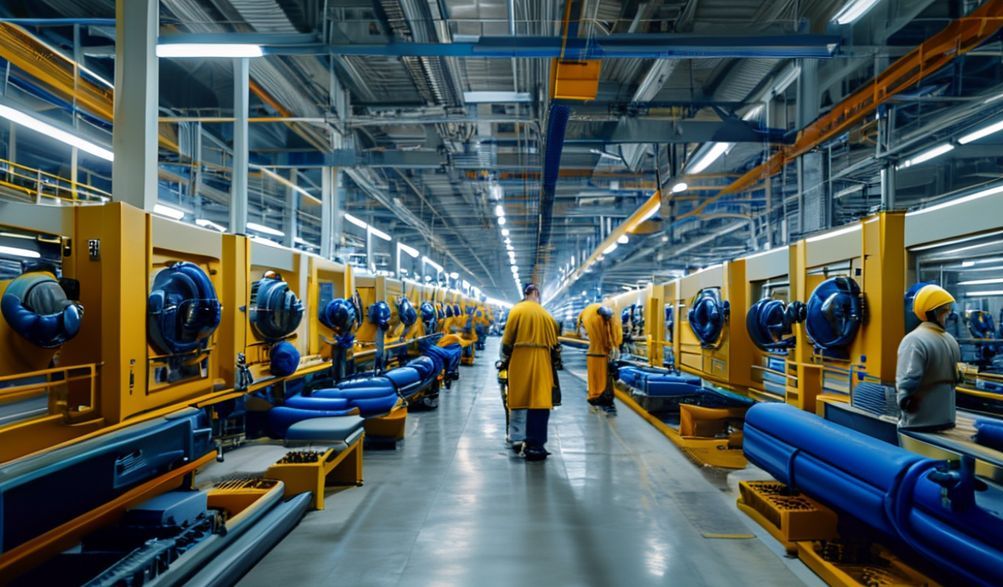
The Ultimate Guide to China’s Cement Block Making Machine Factories (2026 Buyer’s Guide)
مقدمة
The global construction industry runs on a foundation of efficiency and affordability. From ambitious infrastructure projects to essential housing developments, the demand for high-quality, cost-effective building materials is insatiable. At the heart of this supply chain for concrete products lies a critical piece of equipment: the cement block making machine. And when the world needs this machinery, it increasingly turns eastward. China has solidified its position not just as a manufacturer, but as the dominant global hub for block making machine factories.
This guide is crafted for you—the international buyer, project manager, or entrepreneur. You’re looking to make a significant capital investment, and navigating the vast landscape of China cement block making machine factories can be daunting. How do you separate market leaders from mediocre workshops? What hidden costs should you anticipate? Is the lower price point worth the potential risk?
Compiled from industry analysis, direct factory engagement, and evolving market trends, this 2026 guide serves as your comprehensive roadmap. Our goal is to arm you with the expertise needed to make an informed, confident decision. By the end, you will understand the key types of machines available, possess a clear framework for identifying and evaluating reputable suppliers, and be prepared to navigate the entire procurement process while skillfully avoiding common pitfalls. Let’s build that knowledge, from the ground up.
لماذا تُعد الصين المركز العالمي لآلات صناعة الطوب
China’s dominance in this sector isn’t accidental. It’s the result of decades of strategic industrial development, creating an ecosystem that is exceptionally difficult to match in terms of scale, efficiency, and innovation.
Scale and Manufacturing Expertise
Walk through industrial clusters in provinces like 山东、福建、广东, and you witness a cityscape dedicated to machinery. This concentration creates a powerful synergy:
* Specialized Supply Chains: Every component, from high-tensile steel plates and precision hydraulic cylinders to PLC controllers and vibrator motors, is available within a short radius.
* Deep Skill Pools: These regions have cultivated generations of welders, engineers, assemblers, and technicians whose specific expertise is in heavy machinery fabrication.
* Competitive Darwinism: The density of manufacturers fosters intense competition, driving factories to continuously improve processes, costs, and features to survive.
فعالية التكلفة ومزايا سلسلة التوريد
The integrated supply chain is the primary driver of China’s cost advantage. A factory doesn’t need to import costly steel or hydraulics; it sources them locally at scale. This allows China cement block making machine factories to offer compelling price-to-performance ratios. Importantly, “cost-effective” no longer automatically means “low-quality.” Many top-tier factories use internationally sourced components (e.g., German hydraulics, Japanese bearings) within their locally fabricated frames, offering a premium product at a mid-range price.
اعتماد التكنولوجيا والابتكار
The stereotype of Chinese manufacturing as purely imitative is outdated. Leading factories are at the forefront of technological integration:
* أنظمة التحكم المتقدمة Modern machines are governed by user-friendly PLC (Programmable Logic Controller) and HMI (Human-Machine Interface) panels, allowing for precise control over vibration time, pressure, and cycle counts.
* IoT and Remote Monitoring: Progressive suppliers now offer machines with IoT capabilities, enabling you to monitor production data, output, and even receive maintenance alerts from halfway across the world.
* تصميمات موفرة للطاقة: Innovations in hydraulic system design and the use of variable-speed drives are reducing electricity consumption—a major operational cost for block yards.
Types of Cement Block Making Machines Made in China
Understanding the categories of machinery is your first step in defining your investment. Chinese factories produce the full spectrum, from simple manual presses to fully integrated automated plants.
آلات صناعة البلوك الآلية بالكامل
These are the powerhouses for large-scale, commercial production lines.
* العملية: They integrate the block maker with automatic pallet feeders, concrete mixers, conveyors, and stackers. The entire process from raw material to cured block stack is automated.
* الإخراج: Capable of producing thousands of blocks (e.g., hollow blocks, solid blocks) per shift with minimal manual labor.
* الأفضل لـ: Large block yards supplying major construction projects, established concrete product manufacturers looking to scale, and government infrastructure initiatives.
آلات صناعة الطوب شبه الأوتوماتيكية
This category represents the most popular “sweet spot” for growing businesses and medium-scale operations.
* العملية: The machine itself (molding, vibration, compaction) is powered, but the movement of pallets and blocks often requires manual intervention or a simple transfer cart.
* Balance: Offers an excellent balance between productivity, initial investment cost, and operational flexibility. You can start production with a smaller crew and add automation later.
* الأفضل لـ: Entrepreneurs starting a block-making business, medium-sized construction companies supplying their own projects, and factories producing a variety of block types in smaller batches.
Mobile / Egg Laying Block Machines
Named for their ability to produce and deposit blocks directly onto the ground, these are the champions of simplicity and on-site production.
* مزايا: Highly affordable, low maintenance, and perfectly suited for remote locations or small-scale projects. They can be towed directly to a construction site.
* الإخراج: Lower output than stationary machines, but ideal for producing blocks exactly where they are needed, saving on transport costs.
* الأفضل لـ: Startups with limited capital, community-led building projects, and construction firms needing to produce blocks directly at a job site.
Specialized Machines for Paving Slabs, Interlock Blocks, etc.
Beyond standard blocks, Chinese factories showcase immense versatility with specialized equipment:
* Paving Slab Machines: For producing concrete pavers, kerbstones, and landscaping slabs, often with color-feeding systems.
* آلات تصنيع البلوك المتشابك: Designed to create the precise, puzzle-like shapes used in permeable paving and retaining walls without mortar.
* Curstone and Hollow Block Machines: For specialized construction needs. This variety means you can often find a factory that specializes in your exact niche product.
How to Identify and Evaluate Reputable Factories
With hundreds of suppliers claiming to be “leading manufacturers,” due diligence is non-negotiable. Here’s how to separate the authentic from the unreliable.
Key Indicators of a Trustworthy Factory
Look for these concrete signs of credibility:
* In-House R&D and Engineering Team: A factory with its own design team can provide technical support, develop custom solutions for your specific block design, and iterate on improvements. Ask for an organizational chart.
* Comprehensive Quality Certifications: While not an absolute guarantee, certifications are a strong trust signal. Prioritize factories with:
* آيزو 9001: Indicates a documented quality management system.
* علامة CE: Shows compliance with European health, safety, and environmental standards, often required for export.
* Other industry-specific certifications.
* Export History and Client Portfolio: Evidence of successful exports to regions like Africa, the Middle East, Southeast Asia, or South America is a powerful indicator of reliability. Ask for references or case studies.
The Critical Role of Factory Audits (Virtual & On-Site)
Never skip the audit. If an in-person visit isn’t feasible, insist on a detailed virtual tour via video call.
* Virtual/On-Site Audit Checklist:
* Production Floor: Is it organized, clean, and safe? Look at the welding quality on machines in production.
* محطات مراقبة الجودة Are there dedicated areas for testing hydraulic pressure, vibration frequency, and frame alignment?
* Material Warehouse: Ask to see the raw materials (steel plate, cylinders). Are they branded or from reputable sources?
* Testing Procedures: Request to see a machine under test run. Listen for unusual noises and observe the smoothness of operation.
Analyzing Factory Communications & Transparency
The communication style during the inquiry phase is a major red or green flag.
* Green Flags: Willingness to provide detailed technical drawings, clear answers to specific questions, patient negotiation, and proposed secure payment terms.
* Red Flags:
* Vague or evasive answers to technical questions.
* Inability or refusal to provide a virtual factory tour.
* Pressure to pay 100% upfront before production.
* Quotes that are suspiciously lower than all others by a large margin (classic “bait-and-switch” risk).
* The contact is purely a trading company that cannot show you their manufacturing facility.
The Procurement Process: From Inquiry to After-Sales
A structured approach turns a complex international transaction into a manageable series of steps.
Step 1: Defining Your Requirements (Output, Block Type, Automation)
Clarity here prevents costly mistakes. Document:
* Desired block types and dimensions.
* Required output per hour or 8-hour shift.
* Level of automation (manual, semi-auto, full-auto).
* Available factory space and power supply (voltage, phase).
* Local availability of raw materials (cement type, aggregate size).
Step 2: Requesting and Comparing Quotations (FOB, CIF, etc.)
Send your detailed specifications to a shortlist of 3-5 pre-vetted factories. A professional quote should include:
* Detailed machine specifications and model number.
* Clear Incoterms: Understand the difference.
* FOB (مجاناً على ظهر السفينة): You pay for the machine loaded on the ship; you handle shipping and insurance.
* CIF (Cost, Insurance, Freight): The supplier arranges and quotes for shipping to your nearest port.
* Itemized price list.
* Warranty terms and scope.
* Delivery timeline and packaging details.
* Terms of payment.
Step 3: Negotiation, Contract, and Payment Terms
- Contract: Ensure it includes all agreed specifications, warranty details, delivery date, and penalty clauses for delays. Use clear, simple English.
- Payment Terms: Secure methods are standard.
- 30% T/T deposit, 70% balance against copy of Bill of Lading.
- Letter of Credit (L/C): More secure but involves bank fees. Highly recommended for large orders.
- Avoid making 100% payment before production or shipment.
Step 4: Production, Inspection, and Shipping
- Pre-Shipment Inspection (PSI): This is critical. Hire a third-party inspection company or send your own agent to test the completed machine at the factory before it is packed. Verify it meets all specs and functions correctly.
- Shipping: Work with a freight forwarder you trust or use the factory’s recommended agent. Ensure all shipping documents (Packing List, Commercial Invoice, Bill of Lading, Certificate of Origin) are correct.
Step 5: Installation, Training, and After-Sales Support
The relationship doesn’t end at delivery. A factory’s commitment to after-sales is its ultimate test.
* Installation Guidance: Reputable suppliers provide detailed installation manuals, foundation drawings, and video guides.
* تدريب This can range from comprehensive video call sessions to the dispatch of an engineer to your site (usually at an additional cost, but worth considering for complex lines).
* Support: Reliable factories offer ongoing support via WhatsApp, email, or video call for troubleshooting. Confirm their policy on spare parts supply—how quickly can they ship wear-and-tear items?
Common Challenges and How to Mitigate Them
Forewarned is forearmed. Here are the typical hurdles and how to clear them.
Navigating Language and Cultural Barriers
- Solution: Use clear, simple English in all communications. Rely on technical drawings, diagrams, and videos to convey complex points. If possible, engage a bilingual project manager or use a translation service for critical contract discussions.
Ensuring Consistent Quality and Avoiding “Bait-and-Switch”
- Solution:الPre-Shipment Inspection (PSI) is your single most powerful tool. It physically prevents a supplier from shipping a sub-standard or different machine. Always source from verified factories, not fly-by-night trading companies that outsource production to unknown workshops.
Managing Logistics and Customs Clearance
- Solution: Partner with an experienced international freight forwarder. They will handle the complexities of ocean/air freight, customs documentation, duties, and final port clearance in your country. Don’t leave this to chance.
FAQ Section
Q1: What is the average price range for a cement block making machine from China?
A: Prices vary dramatically. A small mobile (egg laying) machine can start from \$5,000 – \$15,000. A robust semi-automatic machine may range from \$25,000 – \$70,000. A complete fully automatic production line can cost from \$100,000 to over \$500,000, depending on configuration and output. Remember, the cheapest quote often leads to the highest long-term cost in repairs and downtime.
Q2: Can Chinese factories customize machines for my specific block design?
A: Absolutely. Most reputable factories with strong R&D departments thrive on customization. To get an accurate quote, provide them with detailed drawings of your desired block, including all dimensions, wall thicknesses, and any special features.
Q3: How long is the typical warranty, and what does it cover?
A: A standard warranty from a good supplier is 12-18 months for core components like the hydraulic system, frame, and electrical controls, from the date of shipment. Wear items like molds, springs, and seals are typically excluded. Always get the exact warranty terms in writing within the contract.
Q4: What are the payment terms usually offered?
A: The most common and balanced terms are 30% deposit via T/T (bank transfer) to start production, with the 70% balance paid before shipment or against a copy of the shipping documents. Letters of Credit (L/C) are also widely accepted for larger orders. Be wary of suppliers demanding 100% upfront payment.
Q5: Do factories provide installation guidance and operational training?
A: Yes, reliable factories consider this essential. This usually includes detailed English manuals, video instructions, and real-time support via video call. For fully automatic lines, on-site engineer installation and training can be arranged for an additional fee, which is often a worthwhile investment.
خاتمة
Sourcing a cement block making machine from China is a significant venture that holds immense potential for boosting your productivity and profitability. Success, however, hinges on moving beyond price as the sole deciding factor. It requires a commitment to thorough research, meticulous evaluation, and clear communication.
As this guide has outlined, your goal is to partner with factories that demonstrably embody the principles of الخبرة (technical know-how and innovation), السلطة (proven track record and certifications), and الثقة (transparent processes and robust after-sales support). This E-E-A-T framework is your compass in a vast market.
Prioritize the total cost of ownership—which includes machine reliability, energy efficiency, and available support—over the allure of the lowest initial price. The right machine from the right factory isn’t just a purchase; it’s the foundation for a long-term partnership and the cornerstone of your business growth for years to come.
Your Next Steps: Begin by finalizing your project specifications. Prepare a list of detailed questions for potential suppliers. Start reaching out to factories that display the key indicators of reputation, and prioritize scheduling those virtual factory tours. Your journey to finding the ideal China cement block making machine factory starts now.
<