
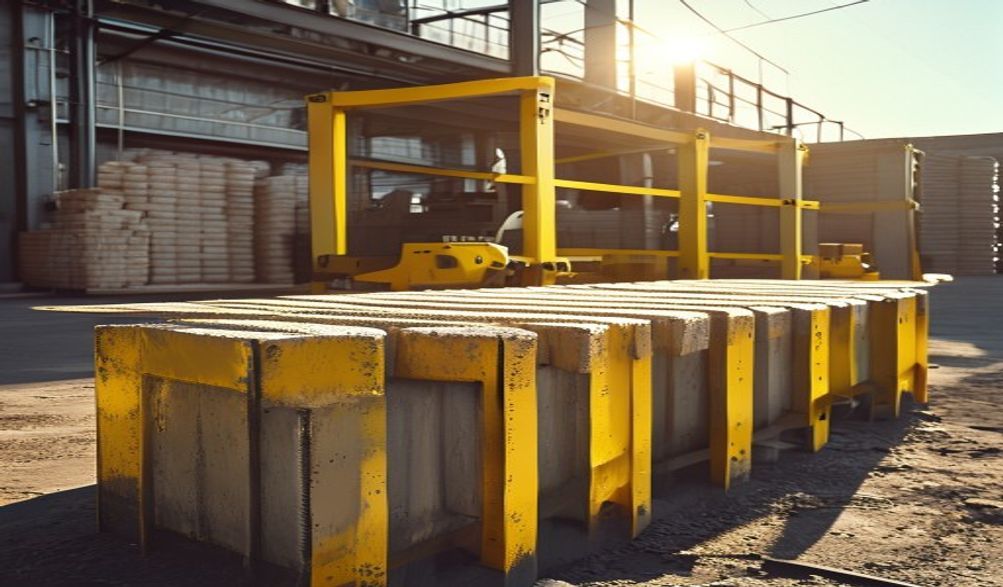
كيفية اختيار آلة تصنيع الطوب المناسبة للبيع: دليل المشتري
مقدمة
في عالم البناء، جودة الطوب والكتل هي أساس كل هيكل دائم. بالنسبة لرواد الأعمال والشركات، فإن الآلة التي تنتج هذه المواد البنائية ليست مجرد قطعة معدات، بل هي محرك الربحية والنمو. اختيار آلة تصنيع الطوب المناسبة هو قرار محوري قد يحدد نجاح مشروعك لسنوات قادمة.
بناءً على سنوات من مراقبة الصناعة وتحليل المواصفات الفنية، تم إعداد هذا الدليل لمساعدتك في التنقل في سوق معقد. من الأخطاء الشائعة والمكلفة اختيار آلة بناءً على السعر أو ميزة واحدة فقط، مما يؤدي إلى خسائر مالية خانقة، وإنتاج غير كافٍ، وجودة منتج دون المستوى. سيرشدك هذا الدليل الشامل للمشتري خلال كل عامل حاسم — بدءًا من تقييم احتياجات الإنتاج بصدق إلى فهم أنواع الآلات الأساسية وإجراء فحص صارم للموردين. هدفنا هو تزويدك بالمعرفة لاتخاذ استثمار واثق ومستنير. يُرجى ملاحظة أن هذه النصيحة محايدة وتركز فقط على نجاحك التشغيلي الطويل الأجل، وليس على الترويج لأي علامة تجارية أو مصنع معين.
فهم احتياجاتك وأهدافك الإنتاجية
قبل أن تطلع على كتيب آلة واحد، يجب أن تنظر إلى داخلك. أهدافك التشغيلية المحددة هي البوصلة الحقيقية الوحيدة لهذا الشراء. هذه الخطوة الأساسية، التي غالبًا ما يتم التسرع فيها، هي حيث يقضي أصحاب الأعمال ذوو الخبرة معظم وقتهم.
نطاق المشروع والإنتاج اليومي/السنوي
المخرجات المطلوبة هي المحرك الأساسي لحجم الآلة، والأتمتة، والتكلفة. قم بتصنيف مشروعك بواقعية:
- صغيرة النطاق:مثالي للاستخدام الشخصي، أو الشركات الصغيرة جدًا، أو المشاريع المحددة في الموقع. فكر في الآلات اليدوية أو شبه الأوتوماتيكية الصغيرة.
- متوسط النطاق:مناسبة لتزويد البنائين المحليين، مشاريع الإسكان، أو إنشاء مصنع طوب مخصص. الخطوط شبه الآلية والخطوط الأوتوماتيكية الكاملة الصغيرة شائعة هنا.
- الإنتاج الصناعي على نطاق واسع:لتزويد الأسواق الإقليمية، المقاولين الكبار، أو المشاريع الحكومية. يتطلب هذا المجال مصانع عالية الإنتاجية وآلية بالكامل تحتوي على أنظمة متكاملة للخلط والمعالجة.
كيفية حساب المخرجات المطلوبة الخاصة بك
1. تقدير الطلب (طوب/يوم) من عملائك أو السوق.
2. حدد ساعات العمل لكل وردية (مثال: 8 ساعات).
3. ضع في الاعتبار الكفاءة الواقعية (وقت التوقف لتغيير القوالب، الصيانة، فترات الراحة). قاعدة عامة جيدة هي إضافة نسبة احتياطية تتراوح بين 15-20% إلى هدفك.
٤. استخدم الصيغة:Required Machine Capacity (bricks/hour) = (Daily Demand / Working Hours) * 1.2
Types of Bricks or Blocks You Plan to Produce
The product dictates the mold and often the machine pressure type. Be specific:
* الأنواع الشائعة: Solid concrete blocks, hollow blocks (of various chamber configurations), interlocking paving blocks, fly ash bricks, clay bricks, and kerbstones.
* المواصفات الرئيسية: Finalize the exact dimensions (length, width, height), thickness of walls (for hollow blocks), and desired finished texture. This information is crucial for mold fabrication.
Raw Material Analysis
Your locally available and cost-effective raw materials will significantly influence your machine choice.
* Primary Materials: Is it cement, sand, and aggregate? Or are you focusing on fly ash, soil, or clay?
* Machine Impact: For example, dense concrete mixes often require high hydraulic pressure for solid compaction. Fly ash or soil-cement blocks might be efficiently produced with a well-calibrated vibratory press. Clay brick production typically involves entirely different extrusion or firing machinery.
Core Types of Bricks Making Machines
Understanding the broad categories of machines available is key to matching technology with your budget and output goals.
الآلات اليدوية أو التي تعمل باليد
- الوصف: These are lever-operated or simple mechanical presses where material filling, compaction, and block ejection are done by hand.
- مزايا: Very low initial investment, minimal to no power requirement, simple operation and maintenance.
- سلبيات: Very low output (e.g., 200-500 blocks/day), highly labor-intensive, product consistency depends heavily on operator skill.
- مثالي لـ: Startups with extremely tight budgets, remote locations with no electricity, or producing blocks for a single, personal construction project.
آلات شبه آلية
- الوصف: These machines strike a balance, automating the critical compaction process (often via a mechanical vibrator and hydraulic press) while requiring manual intervention for feeding raw material and removing finished pallets.
- السمات النموذجية: Automatic mixing system (sometimes), powered vibration and compression, manual pallet handling and curing.
- مثالي لـ: Small to medium-sized businesses. They offer a significant productivity boost over manual machines while keeping capital costs and operational complexity manageable.
آلات أوتوماتيكية بالكامل
- الوصف: The pinnacle of production efficiency. These computer-controlled systems automate the entire process: batching, mixing, molding, compaction, curing, and sometimes even stacking and packaging.
- مزايا: Very high, consistent output (thousands of blocks per shift), superior product uniformity, dramatically reduced labor costs.
- سلبيات: High initial capital investment, complex installation, requires skilled maintenance, and significant foundation/power infrastructure.
- مثالي لـ: Large-scale industrial production where output volume, consistency, and long-term labor savings justify the upfront cost.
آلات صناعة الطوب الثابتة مقابل المتنقلة
- الآلات الثابتة: These are fixed installations, typically heavier and more powerful, designed for high-volume production in a dedicated yard. They require a solid concrete foundation.
- الآلات المتنقلة: Mounted on a trailer, these can be towed directly to a construction site. They excel at producing blocks on-site for a specific project, eliminating transport costs for the finished product. Output is generally lower than comparable stationary models.
المواصفات الفنية الرئيسية للتقييم
Once you’ve narrowed the type, dive into the technical details. This is where expertise separates a good buy from a costly mistake.
Pressure System: Hydraulic vs. Vibratory
- الضغط الهيدروليكي: Uses a hydraulic cylinder to apply immense, steady pressure to the concrete mix. It produces extremely dense, strong blocks with a smooth finish. Excellent for high-strength products and a wider range of raw material densities.
- Vibratory Pressure: Uses high-frequency vibration to consolidate the concrete in the mold, often combined with some mechanical pressure. It’s effective and energy-efficient for standard mixes. The quality is very good but may not reach the extreme density of a high-tonnage hydraulic press for specialized applications.
Cycle Time and Production Capacity
- وقت الدورة: This is the total time a machine takes to produce one set of blocks (from mold filling to ejection). A shorter cycle time means higher output.
- Interpreting Claims: Be analytical. A claim of “2000 blocks per hour” might be for the smallest, fastest-producing block type under ideal lab conditions. Always ask for the cycle time for your specific block design and calculate output realistically for an 8-hour shift with downtime.
متطلبات الطاقة
- النماذج الكهربائية: Require a stable power connection. Check the voltage (e.g., 380V/415V 3-phase) and total power (kW) to ensure your site can support it. Operational cost is generally lower and cleaner.
- Diesel Engine Options: Provide independence from the electrical grid, crucial for remote sites or areas with unreliable power. Factor in higher fuel costs, noise, and maintenance.
Mold Customization and Changeover
- جودة القالب: This is the heart of your product. Insist on molds made from high-grade, hardened steel. Cheap, soft steel molds will wear quickly, leading to out-of-spec blocks and frequent, costly replacements.
- Changeover Process: How long does it take to switch molds to produce a different block type? Some systems allow for quick changes (30 mins), while others are more involved. If product flexibility is important, this is a critical feature.
Beyond the Machine: Supplier and Support Evaluation
The machine is only half the equation. The company behind it determines your long-term operational peace of mind.
Researching and Vetting Manufacturers
- Reputation & History: How long has the manufacturer been in business? A long track record often indicates stability and accumulated expertise.
- محفظة العميل: Ask for a list of clients, preferably in your region or a similar market. A reputable supplier will have this.
- التحقق: Don’t just rely on website testimonials. If possible, ask for contact details of 1-2 previous buyers and actually speak to them about their experience.
The Critical Role of After-Sales Service
This is arguably the most important trust factor.
* الدعم الفني Does the supplier offer installation supervision and comprehensive operator training? This is non-negotiable for semi- and fully-automatic machines.
* قطع الغيار: What is the availability and lead time for critical spare parts (hydraulic pumps, seals, control panels)? A local warehouse or fast shipping arrangement is a huge advantage. Ask for a spare parts price list upfront.
Warranty, Contracts, and Logistics
- الضمان: Understand exactly what is covered (parts, labor), for how long, and the process for making a claim. A 12-month warranty on core components is standard.
- Shipping Terms: Clarify responsibilities. Common terms are:
- FOB (مجاناً على ظهر السفينة): You own the goods and are responsible for costs/risk once they’re loaded on the ship/plane.
- CIF (Cost, Insurance, Freight): The supplier pays for shipping and insurance to your nearest port.
- Delivery & Installation: Who handles customs clearance, transport from the port to your site, and the physical installation? Get all this in writing.
Financial Considerations and ROI Analysis
View this purchase through the lens of Total Cost of Ownership (TCO) and potential return.
Understanding the Total Cost of Ownership
The machine’s price tag is just the beginning. Budget for:
* Machine purchase price.
* International shipping, insurance, and customs duties.
* Site preparation (foundation as per manufacturer drawings).
* Power connection or generator setup.
* Initial stock of essential spare parts and tools.
* Installation and training fees (if not included).
Budgeting and Financing Options
- Align with Reality: Be brutally honest about your budget. It’s better to buy a robust semi-automatic machine within your means than to overextend for a fully automatic one you can’t afford to install or maintain.
- Financing: Some manufacturers or local equipment dealers offer financing or leasing plans. Explore these options to ease the initial capital burden.
Calculating Potential Return on Investment (ROI)
Create a simple, conservative projection:
1. Estimated Daily Production Value: (Number of bricks/day) x (Selling price per brick).
2. Estimated Daily Operational Cost: (Raw materials + Labor + Power/Fuel + Maintenance reserve).
3. Daily Gross Profit: (1 – 2).
4. Simple Payback Period: (Total Initial Investment) / (Daily Gross Profit). This gives you the number of production days needed to recoup your investment.
FAQ Section
Q1: What is the average price range for a bricks making machine?
أ: The range is vast. A simple manual machine can start from a few thousand dollars. A quality semi-automatic machine may range from $15,000 to $50,000. Fully automatic production lines can start from $70,000 and go well into the hundreds of thousands. Output capacity and automation level are the primary price drivers. Always get detailed quotes based on your specific requirements.
Q2: Can one machine produce different types and sizes of bricks?
أ: Yes, absolutely. This is achieved by changing the mold set. The ease and speed of this changeover vary by machine design. Some allow for quick swaps, while others require more time and technical skill. Remember, each new block design requires its own custom-fabricated mold, which is an additional cost.
Q3: How much space and what kind of foundation is required?
أ: A small manual machine might only need a level concrete floor. A large stationary machine requires a significant, reinforced concrete foundation as specified in the manufacturer’s civil drawings. For space, you need room for the machine itself, raw material storage, a curing area, and finished product storage. A medium-sized operation often needs a minimum of 5,000-10,000 sq. ft.
ما هي أكثر مشاكل الصيانة شيوعًا؟
أ: Key wear parts include molds, hydraulic seals and hoses, vibrator motors, and conveyor belts (on automatic systems). The most common issues stem from neglect: failing to lubricate bearings, not cleaning excess concrete daily, and ignoring small hydraulic leaks. A simple, daily and weekly maintenance checklist is vital.
Q5: How do I choose between a local and an international supplier?
أ: Weigh the trade-offs. A local supplier offers easier communication, faster service calls, and readily available parts, but often at a higher machine cost. An international supplier (e.g., from China, India, Europe) may offer more competitive pricing and specialized technology, but you must carefully vet their after-sales support, parts logistics, and communication. The supplier’s support capability is ultimately more important than their physical distance.
خاتمة
Choosing the right bricks making machine is a strategic decision that hinges on a clear, honest definition of your needs, a solid understanding of the machine types and their technical nuances, and a thorough, diligent vetting of the supplier and their support ecosystem.
Our final piece of expert advice: if at all possible, visit a working machine—either at the manufacturer’s facility or, better yet, at a current user’s site. There is no substitute for seeing and hearing the machine operate and speaking directly to its operator. Never compromise on after-sales service and parts availability for a marginally lower purchase price; that “saving” can cost you your entire business during a breakdown.
By following this structured approach, you move from being a hopeful buyer to an informed investor. You are now equipped to transform this significant capital expenditure into the cornerstone of a profitable, efficient, and sustainable business venture for years to come.
Have a specific scenario or a technical detail you’d like to discuss? Please leave your questions in the comments below for further, personalized guidance.
<