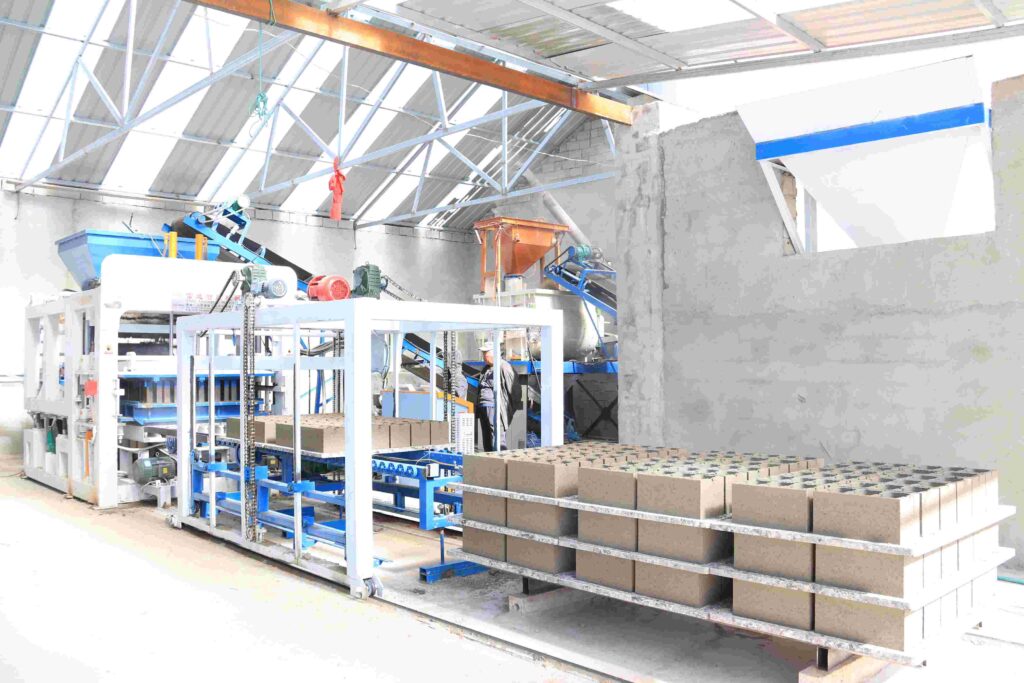
تفكيك مشهد النفقات الرأسمالية (CapEx)
سعر الشراء الأولي هو التكلفة الأكثر وضوحاً، لكنه مرتبط ارتباطاً جوهرياً بقدرات الآلة وفلسفة بنائها ومستوى الإنتاج المستهدف. إن فهم هذا التسلسل الهرمي ضروري لمطابقة العملاء مع الالتزامات المالية المناسبة.
1. أنظمة المبتدئين واليدوية: دخول السوق بتكلفة منخفضة
تركز هذه الآلات على تحمل التكلفة والوظائف الأساسية بدلاً من الأتمتة، مما يجعلها بمثابة بوابة للدخول في الإنتاج على نطاق صغير.
- نطاق التكلفة:عادةً من1,500 إلى 5,000 دولار.
- محركات التكلفة والتبرير:
- البساطة في المواد والبناءمصنوعة من صلب أخف سمكًا وبتوصيلات ميكانيكية أبسط (أنظمة رافعة/ضغط) بدلاً من الأنظمة الهيدروليكية المعقدة.
- أتمتة محدودةالعملية يدوية بالكامل أو شبه آلية (باستخدام محرك واحد للاهتزاز). يشكل العمالة التكلفة "التشغيلية" الأساسية.
- Low Output Capacity: Production speed is slow, often between 100-800 blocks per 8-hour shift, directly correlating to the lower price point.
- Minimal Ancillary Requirements: These machines often do not require sophisticated three-phase power or specialized foundations, keeping auxiliary costs low.
- Target Client Profile: Micro-entrepreneurs, community cooperatives, or on-site construction teams for very specific, limited-volume projects.
2. Mid-Range Fully Automatic Machines: The Core of Commercial Viability
This segment represents the most dynamic market, where the investment directly scales with output, automation, and reliability. Prices here reflect a transition from a “tool” to a “production system.”
- نطاق التكلفة: Broadly spans from $5,000 to $12,000+.
- Detailed Cost Breakdown and Value Proposition:
- Core Press System (40-50% of Cost): The heart of the machine—a robust, multi-directional vibro-compaction system with a high-tonnage hydraulic press. Cost escalates with press force (e.g., a 100-ton press is a significant step up from a 60-ton), determining ultimate block density and strength.
- Automation and Control Package (20-30% of Cost): This includes the PLC, touchscreen HMI, sensors, and software. A machine with recipe storage, fault diagnostics, and production data logging commands a premium over a basic relay-controlled unit.
- Material Handling Integration (15-25% of Cost): The inclusion of an automated feed system, mixer integration, and a pallet circulation/conveyor system adds substantial cost but drastically reduces labor and improves consistency.
- Structural Integrity and Durability (15% of Cost): Machines with heavier-duty frames, hardened steel mold liners, and industrial-grade hydraulic components cost more upfront but demonstrate far lower lifetime maintenance costs and downtime.
3. High-Capacity Turnkey Production Lines: Industrial-Scale Investment
For clients aiming to dominate regional supply or produce specialized high-value products, the investment shifts to a complete manufacturing plant.
- نطاق التكلفة: Investments begin around $12,000 to $7,0000+.
- Scope of Investment:
- Multiple Integrated Machines: The cost encompasses not just a block maker, but automated batching plants, robotic palletizers, stackers, and climate-controlled curing chambers.
- Specialized Technology: Lines designed for producing insulated (e.g., clinker blocks), color-layered, or pervious concrete blocks involve complex mold and material delivery systems.
- Infrastructure and Commissioning: This price tier includes significant costs for factory layout engineering, installation, and extensive commissioning and training services.
The Crucial Analysis of Total Cost of Ownership (TCO)
An astute buyer—and the advisor serving them—must look beyond the invoice. TCO analysis is the definitive tool for evaluating long-term value.
1. Direct Operational Expenditures (OpEx)
These are the ongoing, variable costs of running the machine.
- استهلاك الطاقة A major recurring cost. Fully automatic hydraulic machines are power-intensive. Calculating the cost per cycle based on local electricity or diesel rates is essential.
- العمل While automatic machines reduce manual labor, they require a more skilled (and often higher-paid) technician for oversight and maintenance versus numerous unskilled laborers for manual machines.
- Raw Material Inputs: Beyond cement and aggregates, this includes the cost of pallets (for stationary plants), curing agents, and mold release oils.
- Consumables and Wear Parts: Regular replacement of items like hydraulic filter elements, vibration motor bearings, and most critically, mold liners and wear plates. The quality and cost of these spare parts are a key differentiator among manufacturers.
2. Hidden and Indirect Costs
These often overlooked expenses can erode profitability.
- Shipping, Installation, and Foundation: Import duties, freight costs for a heavy machine, and the construction of a proper concrete foundation and shelter can add 10-20% to the landed cost.
- Training and Downtime: The cost of lost production during the learning curve and any unscheduled stoppages.
- Maintenance Regimen: Preventive maintenance (scheduled oil changes, part inspections) carries a cost but prevents far more expensive corrective maintenance.
- Financing Costs: Interest payments if the machine is purchased via a loan or lease agreement.
3. The ROI Equation: From Cost Center to Profit Center
The ultimate justification for the investment. ROI is calculated by weighing the total annual profit from block sales against the total annualized cost of the machine (CapEx amortization + OpEx).
- Key Profit Variables: Local market price per block, production capacity utilization (% of time the machine is running productively), and the gross margin per block (selling price minus raw material cost).
- Sample Scenario: A $50,000 machine producing 5,000 blocks/day at a $0.15 net profit/block, operating at 70% capacity, can generate annual profits of ~$190,000. Even with OpEx, this suggests a payback period of well under one year, making a compelling case. Distributors must be equipped to build these models for clients.
Strategic Recommendations for the Supply Chain
For distributors and dealers, success lies in becoming trusted financial and technical consultants.
- Conduct Client Needs Analysis: Move beyond “what’s your budget?” to “what is your target market volume, block type, and local labor cost?” This dictates the correct machine tier.
- Promote TCO, Not Just Price: Educate clients that a slightly higher upfront cost for a robust, energy-efficient machine with local service support yields a much lower TCO and higher lifetime profitability.
- Develop Financing Partnerships: Collaborate with financial institutions to offer lease-to-own or equipment financing options, lowering the barrier to entry for serious clients.
- Offer Comprehensive Packages: Bundle the machine with an initial set of spare parts, on-site training, and a preventive maintenance contract. This increases the deal value while ensuring client success and fostering long-term loyalty.
Conclusion: Investing in Value, Not Just Equipment
The discourse around cement block machine cost must evolve from a singular focus on purchase price to a holistic assessment of value generation. For the procurement agent or distributor, the most successful strategy is to guide clients toward an investment that aligns with their business ambition, market context, and operational capabilities. The machinery that offers the lowest per-unit production cost over its operational lifespan, while delivering consistent quality, represents the true value proposition. By mastering the intricacies of CapEx, OpEx, and ROI, and by communicating these principles effectively, you position yourself not as a vendor of machinery, but as an architect of your clients’ productive and profitable future in the construction ecosystem.
الأسئلة الشائعة (FAQ)
Q1: What is the single biggest financial mistake clients make when purchasing a block machine?
أ: The most common error is underestimating operational and hidden costs while overestimating production efficiency. Clients may buy a low-cost manual machine without factoring in high labor costs and slow output, or purchase a high-speed automatic machine but fail to budget for adequate raw material supply, skilled labor, or three-phase power installation, leading to underutilization and poor ROI.
Q2: How does machine automation truly affect the final cost per block?
أ: Automation significantly increases fixed costs (higher CapEx, depreciation, technical maintenance) but dramatically reduces variable costs (direct labor per block, waste from inconsistency). Therefore, the cost per block on an automatic machine drops steeply as production volume increases, making it vastly more economical at scale. A manual machine has a flatter, higher cost-per-block curve regardless of volume.
Q3: Are “cheaper” machines from certain geographic regions a false economy?
أ: Not always, but due diligence is critical. A lower price may reflect lighter construction, lower-quality components (e.g., standard vs. industrial-grade hydraulics), and minimal after-sales support. The risk of frequent breakdowns, costly imported spare parts, and production downtime can quickly erase any initial savings. It is crucial to evaluate the total cost of ownership and the supplier’s long-term support commitment.
Q4: What are the key maintenance costs we should advise clients to budget for?
أ: Clients should be guided to establish a maintenance budget for: Regular Consumables (hydraulic oil, filters); Wear Parts (mold liners, pressure shoes, vibrator mounts – typically needing replacement every 6-24 months depending on production); and Unexpected Repairs (a contingency fund for hydraulic cylinder or motor failures). A good practice is to allocate 5-10% of the machine’s annual revenue to maintenance.
Q5: How important is local technical support, and how does it impact cost calculations?
أ: It is paramount. The lack of local support can turn a minor, hours-long repair into a weeks-long stoppage waiting for a remote technician or imported part. This downtime cost often exceeds any premium paid for a locally supported brand. When comparing costs, factor in the value of guaranteed response time, local parts inventory, and technician availability.
Q6: Can a client start with a manual machine and upgrade later? Is this cost-effective?
أ: This is a common path, but its cost-effectiveness depends. A manual machine can validate the market and generate initial capital. However, it is often a sunk cost as its residual value is low, and the operational learnings do not fully transfer to an automated system. In some cases, financing a higher-tier machine from the start might lead to faster market capture and higher overall profits, despite the larger initial loan. A detailed 5-year business projection comparing both scenarios is highly recommended.