
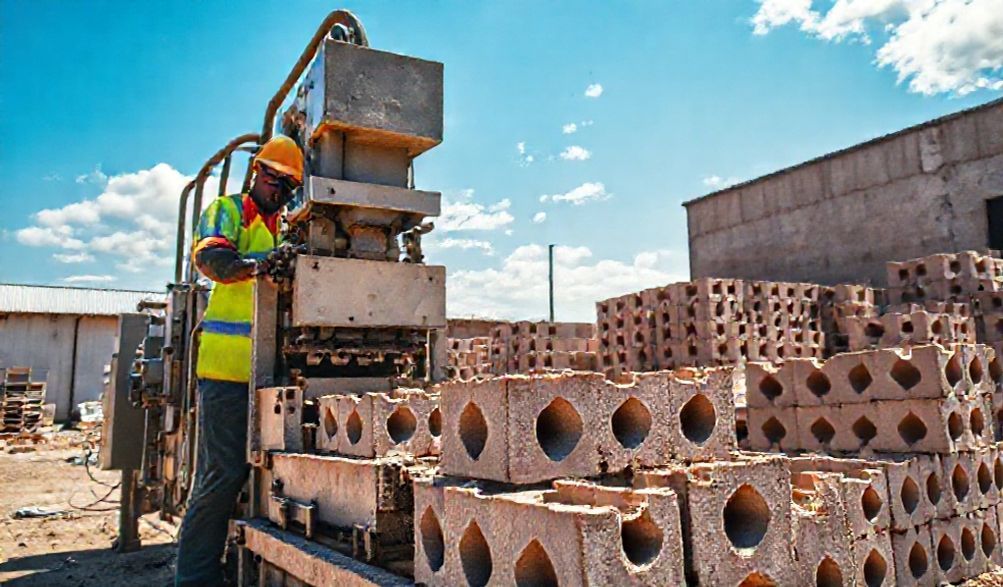
Your Complete Guide to Concrete Block Making Machines in Tanzania (2024)
مقدمة
Tanzania is building its future. From the rapid urban expansion of Dar es Salaam to the infrastructure projects connecting regions, the demand for durable, affordable building materials has never been higher. At the heart of this construction boom lies a critical component: the humble concrete block. For savvy entrepreneurs and forward-thinking construction firms, this demand presents a golden opportunity. Investing in a concrete block making machine in Tanzania is not just a purchase; it’s a stake in the nation’s growth and a pathway to a profitable, sustainable business.
This comprehensive guide is designed to be your definitive resource. We cut through the noise to provide expert, unbiased, and practical information tailored for the Tanzanian market. Whether you’re an individual entrepreneur, a growing construction company, or a local government body looking to stimulate local industry, this guide will walk you through every critical step—from understanding the market and machine types to calculating your investment and navigating operational challenges.
Insights compiled by industry experts with over 15 years of experience in construction equipment, manufacturing, and Tanzanian market dynamics.
By the end of this guide, you will learn:
* How to analyze the Tanzanian market for block production.
* The pros and cons of different types of block making machines.
العوامل الرئيسية التي يجب مراعاتها قبل اتخاذ قرارك الاستثماري.
* A transparent breakdown of costs, profitability, and ROI.
* Operational best practices and solutions for local challenges.
Let’s build a solid foundation for your success.
Understanding the Tanzanian Market for Block Production
To succeed, you must first understand the landscape. Tanzania’s construction sector is a primary driver of economic growth, fueled by powerful demographic and governmental forces.
The Construction Boom: Drivers and Opportunities
Several key factors are converging to create unprecedented demand for building materials:
* التحضر السريع: Tanzania’s urban population is growing fast, creating a continuous need for new housing, commercial spaces, and urban infrastructure.
* مبادرات الحكومة: Large-scale public projects under development plans are focusing on roads, railways, schools, and hospitals, all requiring massive quantities of building materials.
* Rising Housing Demand: A growing middle class and population growth are fueling a residential construction surge, particularly for affordable housing.
This isn’t just a spike in demand; it’s a sustained, long-term trend that makes local block production a strategically sound business.
Advantages of Local Block Production
Why start a block making business? The benefits extend beyond personal profit:
* توفير كبير في التكاليف Producing blocks on-site or locally eliminates long-distance transportation costs for builders, making your blocks competitively priced.
* مراقبة الجودة الفائقة You control the mix, the curing, and the final product, ensuring consistent, high-quality blocks that build trust with your customers.
* Job Creation & Skill Development: You create direct employment (machine operators, laborers, drivers) and contribute to developing a skilled local workforce.
* Supporting Local Industry: You keep capital within the community, reduce import dependence, and contribute directly to Tanzania’s industrial and infrastructural goals.
Common Block Types and Standards in Tanzania
Understanding what the market uses is crucial:
* الطوب المجوف: The most common for wall construction. They are lighter, provide good insulation, and use less raw material.
* كتل صلبة: Used for foundations, load-bearing walls, and paving. They are denser and offer high compressive strength.
* الكتل المتشابكة: Gaining popularity for their speed of construction and reduced need for mortar. Excellent for certain wall types and paving.
* Standards: Always aim to produce blocks that meet or exceed common construction specifications. While specific Tanzanian Bureau of Standards (TBS) for blocks may be under development, adhering to widely accepted strength and dimension guidelines (e.g., compressive strength classes) is essential for credibility and customer safety.
Types of Concrete Block Making Machines Available
The right machine depends entirely on your scale, budget, and goals. Here’s a breakdown of the primary types available in the market.
آلات صناعة الطوب اليدوية
- الوصف: Operated entirely by human labor. You manually fill the mold, compress the mix (often via a lever), and remove the finished block.
- الأفضل لـ: Micro-enterprises, community projects, or very small-scale startups testing the market. Ideal for producing a few hundred blocks per day.
- مزايا: Extremely low upfront cost, no power required, simple to understand.
- سلبيات: Very labor-intensive, low output, inconsistent block quality if not operated carefully.
آلات صناعة الطوب شبه الأوتوماتيكية
- الوصف: These machines mechanize the critical compaction process (using a vibration motor) and often include a hydraulic system for block ejection. Feeding and block removal may still be manual or partially mechanized.
- الأفضل لـ: Small to medium-sized enterprises (SMEs). They offer the perfect balance between affordability and efficiency for a serious business.
- مزايا: Good production capacity (1,000 – 3,000+ blocks per 8-hour shift), consistent quality, available in electric or diesel versions to suit local power conditions.
- سلبيات: Higher initial investment than manual machines, requires a stable power source or fuel.
آلات صناعة البلوك الآلية بالكامل
- الوصف: These are complete production lines. They automatically mix, feed, compact, eject, and sometimes even stack blocks via conveyor belts and robotic palletizers. They often feature PLC control systems.
- الأفضل لـ: Large-scale block yards, major construction companies supplying big projects, or investors targeting high-volume regional supply.
- مزايا: Very high output (5,000 – 20,000+ blocks per shift), minimal manual labor, exceptional consistency and quality.
- سلبيات: High capital investment, requires significant space, reliable three-phase power, and more technical skill to operate and maintain.
الآلات الكتلية المتنقلة مقابل الثابتة
- آلات تصنيع الكتل المتنقلة: Mounted on a trailer. Perfect for producing blocks directly on a construction site, eliminating transport costs for that project.
- Tanzania Consideration: Excellent for large, remote infrastructure projects.
- آلات تصنيع البلوك الثابتة: Set up in a fixed location (a block yard).
- Tanzania Consideration: The standard choice for supplying a local market. Allows for optimized workflow, curing areas, and storage.
العوامل الرئيسية التي يجب مراعاتها قبل الشراء
A thoughtful purchase decision is the bedrock of your business. Don’t just buy a machine; invest in a solution.
تقييم احتياجات الإنتاج والميزانية
اسأل نفسك هذه الأسئلة:
* الناتج اليومي/الأسبوعي How many blocks do I need to produce to meet my business goals?
* أنواع الكتل Will I focus on standard hollow blocks, or also produce solid, interlocking, or paving blocks?
* Available Capital: What is my total budget for the machine, installation, و initial working capital for raw materials?
* الفضاء Do I have adequate, secure land for production, curing, and storage?
الغوص العميق في مواصفات الآلة
Look beyond the price tag. Key specs include:
* وقت الدورة: How many seconds/minutes to produce one cycle of blocks?
* Output per Hour: The most important capacity metric. Be realistic about achievable output.
* متطلبات الطاقة Does it run on single-phase or three-phase electricity? Is a diesel engine option available or necessary for your location?
* المكونات الرئيسية: Invest in quality where it counts.
* القوالب: High-strength steel molds determine block shape and durability.
* نظام الاهتزاز: A powerful, well-balanced vibration motor is crucial for dense, strong blocks.
* النظام الهيدروليكي: Look for reliability and serviceability.
Source Material Availability in Tanzania
Your machine is only as good as the raw materials you feed it.
* أسمنت: Widely available from multiple local manufacturers. Establish a reliable supply chain.
* الركام: Sand and gravel (or crushed stone) are locally sourced. Quality is vital—ensure your aggregates are clean, well-graded, and free of organic material.
* ماء: A consistent, clean water supply is non-negotiable for the mix and curing.
Supplier Evaluation: Local Dealers vs. Direct Import
This is a critical trust decision.
* Local Authorized Dealers:
* مزايا: Local support, easier communication, readily available spare parts, on-the-ground after-sales service and training. They handle customs and logistics.
* سلبيات: Potentially higher machine cost due to their markup.
* Direct Import from Overseas Manufacturer:
* مزايا: Possibly lower initial machine cost.
* سلبيات: Complex logistics, import duties, no local support. Critical delays if a spare part is needed or a technician is required. High risk for first-time buyers.
* Vetting Process: Always ask for local customer references, visit their workshop, check the physical availability of common spare parts, and get detailed, written warranty and service agreements.
The Investment Breakdown: Costs and Profitability
Let’s translate this into numbers. (Note: All figures are indicative ranges in USD for 2024 and can fluctuate).
Upfront Investment Costs
- Machine Price:
- Manual: $1,000 – $3,000
- Semi-Automatic: $7,000 – $25,000
- Fully Automatic: $40,000 – $150,000+
- الشحن والتركيب: $500 – $5,000+ (depending on origin and machine size).
- Foundation & Yard Setup: $1,000 – $10,000 (for a basic, functional yard with shelter, mixing area, and curing space).
Operational Costs and Raw Material Budgeting
Understanding your cost per block is key.
* Raw Materials (Per Block Estimate): This is your largest ongoing cost. A typical 6-inch hollow block might cost ~ TZS 500 – 800 in raw materials (cement, aggregate, water), depending on local prices and mix design.
* العمل 2-4 workers for a semi-automatic operation.
* Power/Fuel: Budget for electricity consumption or diesel costs for generators/engines.
* Maintenance Fund: Set aside 3-5% of the machine’s cost annually for routine maintenance and spare parts.
Calculating Your ROI and Potential Earnings
Simplified Model for a Semi-Automatic Plant:
* Machine Output: ~2,000 blocks per day.
* Selling Price (Market Dependent): TZS 1,200 – 1,800 per block.
* Cost Price (Materials + Labor + Overhead): ~ TZS 900 per block.
* Gross Profit per Block: ~ TZS 300 – 900.
* Daily Gross Profit (at 2,000 blocks): TZS 600,000 – 1,800,000.
* ROI: A well-run operation can often recoup the initial investment in a semi-automatic machine within 12-24 months, depending on sales volume and efficiency.
Operational Guide and Best Practices
Success lies in daily execution. Here’s how to run your plant effectively.
Site Setup and Foundation Requirements
- Choose a level, well-drained site with good access for trucks.
- Pour a strong, level concrete foundation for the machine as per the supplier’s specifications.
- Plan your yard layout logically: raw material storage -> mixing area -> machine -> curing area -> finished block storage.
The Block Production Process: Step-by-Step
- خلط: Use a pan or drum mixer to achieve a uniform, semi-dry concrete mix. Consistency is key.
- التغذية: Transfer the mix to the machine’s hopper.
- التشكيل والضغط: The mix is fed into the mold and compacted under vibration and pressure.
- الطرد والتكديس على البليت The fresh block is ejected onto a wooden or steel pallet.
- التداوي This is critical! Keep blocks under damp covers or in a curing chamber for at least 7 days to gain strength. Never let them dry out too quickly.
- Storage: Stack cured blocks properly to prevent damage before sale.
Essential Maintenance for Longevity
- Daily: Clean the machine thoroughly, check for loose bolts, lubricate moving parts as per manual.
- Weekly: Inspect molds for wear, check hydraulic oil levels and hose condition.
- Monthly: Perform a more thorough inspection of the vibration motors, electrical connections, and frame integrity.
Ensuring Consistent Block Quality
- Mix Ratio: Stick to a proven recipe (e.g., 1 part cement : 6 parts aggregate is a common starting point for hollow blocks).
- التداوي Proper curing can double the block’s strength. Use water sprinkling or plastic sheeting.
- Simple Quality Test: A well-made block should have a sharp edge, a consistent color, and produce a clear “ring” when struck with another block. It should not crumble easily.
Navigating Challenges and Finding Success in Tanzania
Foresight turns challenges into manageable routines.
Common Challenges for New Operators
- Power Reliability: Interruptions are common in some areas.
- Spare Parts Delays: Waiting weeks for a critical part from abroad can halt production.
- Finding Skilled Labor: Operators who understand the machine and the importance of mix ratios.
- المنافسة في السوق Establishing your brand against existing producers.
Solutions and Local Adaptations
- قوة Invest in a quality generator as a backup. For semi-automatic machines, the diesel engine option is a wise choice in areas with unstable grids.
- قطع الغيار: Work with a supplier who stocks common parts locally. Build a small, critical spare parts inventory from day one (e.g., vibration motors, hydraulic hoses, common seals).
- العمالة الماهرة: Partner with your supplier for thorough operator training. Consider simple, hands-on training programs for your staff.
- Competition: Differentiate on جودةوreliability. Deliver consistent, strong blocks on time. Your reputation will be your best marketing.
Marketing Your Blocks Locally
- شبكة Build relationships with local builders, contractors, and hardware shops.
- Samples: Provide free samples to potential clients to demonstrate your block’s quality.
- Community Presence: Let your community see your operation. A well-run block yard is a powerful advertisement.
- Simple Branding: Stamp your blocks with your company name or logo.
الأسئلة الشائعة (FAQ)
What is the price range for a concrete block making machine in Tanzania?
Prices vary dramatically based on type and automation. You can find basic manual machines from around TZS 2.5 million, semi-automatic machines between TZS 16 million and TZS 60 million, and large fully automatic plants from TZS 100 million upwards. Always factor in shipping, installation, and setup costs.
Can I get training on how to operate the machine?
Yes, this is non-negotiable. A reputable supplier must provide comprehensive machine operation and basic maintenance training, usually at your site after installation. For deeper technical skills, consider short courses at vocational training centers (VETA) that offer masonry or mechanical courses.
Where can I buy a reliable block making machine in Tanzania?
Research established construction and industrial equipment dealers, particularly in major commercial hubs like Dar es Salaam, Arusha, and Mwanza. Look for companies with a physical workshop, a showroom, and a list of local client references. Visiting an existing client’s operational plant is the best due diligence you can do.
What is the typical warranty for these machines?
Standard warranties often cover key components like the frame, vibration motors, and hydraulic systems for 12 months against manufacturing defects. However, terms vary. Crucially, get the warranty scope, duration, and response time commitments in writing before purchase.
How much profit can I make from a block making business?
Profitability is highly dependent on your scale, operational efficiency, local material costs, and your selling price. As illustrated in the ROI section, a well-managed semi-automatic plant can be very profitable. Focus on controlling your production costs and building a steady customer base to ensure healthy margins.
خاتمة
الاستثمار فيconcrete block making machine in Tanzania is a significant decision that carries the potential for substantial reward. The journey begins with a clear understanding of your own goals and the local market dynamics. From there, carefully selecting the right type of machine—whether manual, semi-automatic, or fully automatic—based on a realistic assessment of your needs and budget is paramount. Partnering with a reliable, service-oriented supplier cannot be overstated; they are your long-term ally in this venture.
Remember, your success will hinge not just on the machine, but on your commitment to quality raw materials, proper curing, diligent maintenance, and smart local marketing. This guide, rooted in expert knowledge and practical experience tailored for Tanzania, provides the blueprint.
You are not just buying a machine; you are laying the foundation for a business that builds homes, schools, and the very infrastructure of the nation. Take the next step with confidence: conduct thorough research, visit existing block yards if possible, and ask your potential supplier detailed questions. Your contribution to Tanzania’s growth starts with a single block.
<