
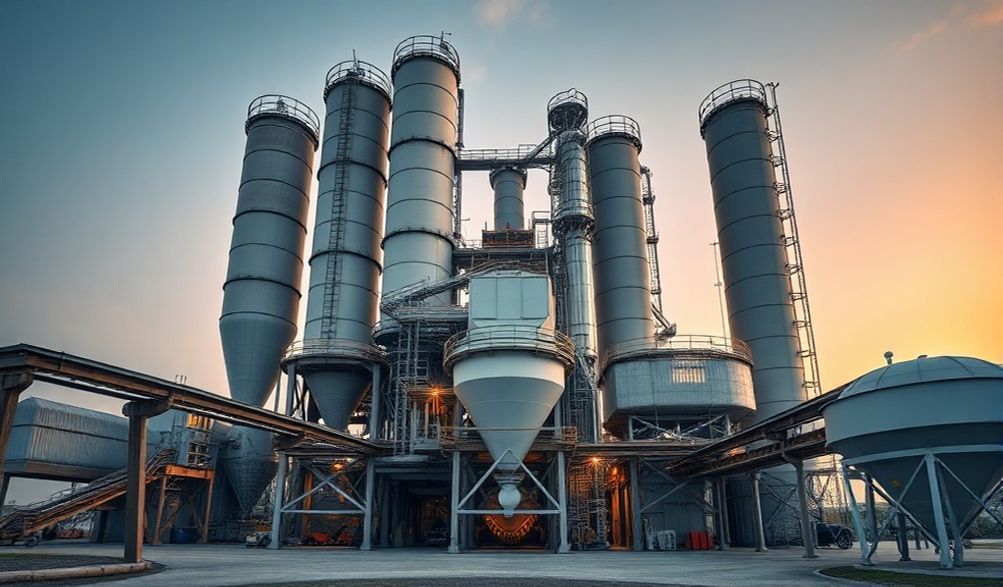
الدليل الشامل لمعدات خط إنتاج الخرسانة: الأنواع، الاختيار، والتحسين
مقدمة
الخرسانة هي العمود الفقري الحرفي والمجازي للبناء الحديث. من ناطحات السحاب الشاهقة إلى البنى التحتية الحيوية، فإن جودة واتساق وفعالية التكلفة لكل مشروع تتحدد بشكل أساسي قبل بدء الصب بوقت طويل - عند خط الإنتاج.
للمدراء المشاريع، وأصحاب المصانع، وأخصائيي المشتريات، فإن اختيار وتجهيز خط إنتاج الخرسانة وتحديثه يعد قراراً معقداً ومحفوفاً بالمخاطر. فهو استثمار رأسمالي كبير، حيث يمكن أن تؤدي الأخطاء إلى مشاكل جودة مزمنة، وتوقف مكلف عن العمل، وتآكل الربحية.
صُمم هذا الدليل لاختراق ذلك التعقيد. مستندين إلى عقود من الخبرة الصناعية الجماعية، نتجاوز كشوف المواصفات الأساسية لنقدم منظوراً شاملاً وخبيراً. سنستكشف كيفية بناء نظام إنتاج موثوق وفعال ومربح—نظام يضمن اتساقاً لا يتزعزع، ويعظم عائد استثمارك، ويتكيف مع المتطلبات المتطورة للبناء الحديث.
فهم هذه المعدات لا يتعلق فقط بالآلات؛ بل يتعلق بهندسة الأساس المتين الذي يُبنى عليه نجاح عملك.
المكونات الأساسية لخط إنتاج الخرسانة الحديث
خط إنتاج الخرسانة هو سيمفونية من الأنظمة المتكاملة. يجب أن يؤدي كل مكون دوره بدقة وبانسجام مع الآخرين لتحقيق المنتج النهائي. دعونا نفكك الأجزاء الأساسية.
1. أنظمة التعامل مع المواد المجمعة وتخزينها
هنا تبدأ العملية. الدقة والموثوقية هنا تمهد المسار لكل ما يلي.
- أنظمة الدُفعات:هذا هو جوهر التناسب. هناك نوعان أساسيان:
- التجميع التراكمي:يتم وزن الركامات واحدة تلو الأخرى في نفس القادوس. إنها طريقة أبعد وأكثر فعالية من حيث التكلفة ولكنها أقل دقة قليلاً.
- التحزيم المنفصل:كل نوع من الركام له قادوس وزن مخصص. يتم وزنها في وقت واحد ثم تفريغها معًا. تقدم هذه الطريقة سرعة ودقة فائقتين، وهو أمر بالغ الأهمية للإنتاج عالي الحجم أو الدقيق.
- حلول التخزينالتخزين الفعال يمنع الاختناقات.
- الصوامع والقواديس:مصممة بناءً على الاستهلاك الإجمالي وتكرار التوصيل. التصميم السليم يمنع الانعزال وتكوين الجسور للمواد.
- الناقلاتشرايين النبات.أحزمة النقلمعالجة كميات كبيرة عبر مسافات أطول.برغي الناقلونممتازة للنقل المتحكم به والمغلق.مصاعد الدلاءتستخدم للرفع العمودي.
- المغذيات وقواديس الوزنتضمن هذه التدفق المنتظم والمضبوط للمواد إلى نظام الوزن. تُستخدم المغذيات الاهتزازية بشكل شائع للتحكم الدقيق، بينما تتعامل المغذيات الحزامية مع كميات أكبر.
2. Cement & Supplementary Material Handling
Handling powders like cement, fly ash, and slag requires specialized, airtight equipment to prevent waste, ensure accuracy, and maintain environmental and worker safety.
- Cement Silos: More than just storage tanks. Key features include:
- Aeration Systems: Pads at the bottom fluidize the powder for easy, consistent discharge.
- Dust Collectors: Essential for environmental compliance and preventing product loss.
- Level Indicators: Provide critical inventory data to prevent run-out.
- Material Transfer: Pneumatic conveyors use air pressure to transport powder over long distances and to elevated silos. برغي الناقلون are a reliable mechanical solution for shorter, controlled transfers.
- SCM Handling: Fly ash and ground granulated blast-furnace slag (GGBS) often require dedicated systems similar to cement, but their differing flow characteristics may necessitate specific aerator designs or conveyors.
3. Water & Admixture Dispensing Units
Precision here is non-negotiable. Minute variations in water content can drastically alter concrete strength and workability.
- Precision Water Metering: Modern plants use highly accurate flow meters or load cells on water tanks. The best systems automatically compensate for the moisture content in aggregates, a critical factor for consistent water-cement ratio.
- Admixture Tanks & Dosing Pumps: Liquid admixtures (plasticizers, accelerators, retarders) are stored in corrosion-resistant tanks. Metering pumps, often peristaltic or diaphragm types, inject precise amounts—sometimes as small as milliliters per batch—into the mixing cycle. Powdered admixtures may require their own mini-batching system.
4. The Heart of the Line: Mixers
The mixer is where raw materials are transformed into homogeneous concrete. The choice of mixer is the most critical equipment decision you’ll make.
- خلاطات الصواني A stationary pan with rotating stars or paddles. They offer intense, forced mixing action.
- مزايا: Excellent for stiff mixes, fiber-reinforced concrete, and precast applications where homogeneity is paramount.
- سلبيات: Generally higher maintenance on wearing parts and can have a longer discharge time.
- Twin-Shaft Mixers: Two intermeshing, counter-rotating shafts create a high-shear, turbulent mixing action.
- مزايا: Extremely fast and efficient mixing, excellent for high-performance and standard mixes. Fast discharge. Industry standard for high-volume ready-mix and precast.
- سلبيات: Higher initial investment and power requirement.
- Tilting Drum Mixers: The familiar drum that rotates and tilts to discharge. Common in smaller batch plants, mobile mixers, and volumetric trucks.
- مزايا: Simpler, more economical, gentler mixing action.
- سلبيات: Less efficient mixing, longer cycle times, less suitable for stiff or specialized mixes.
- المواصفات الرئيسية: Always evaluate batch capacity (often in m³), mixing time (seconds), motor power (kW), and the durability and accessibility of wear liners and blades.
5. Control Systems: The “Brain” of the Operation
This is the intelligence hub that orchestrates the entire line. The leap from manual levers to automated control is the leap from a workshop to a modern factory.
- التطور: Systems have progressed from basic manual controls to relay logic, and now to sophisticated متحكم منطقي قابل للبرمجة (PLC) systems with graphical touchscreen interfaces.
- Benefits of Automation:
- Recipe Management: Store hundreds of mix designs for one-touch batching.
- Repeatability & Accuracy: Eliminates human error in weighing and timing.
- Data Logging: Every batch is recorded—materials used, time, date. This is invaluable for quality control, traceability, and billing.
- Error Reduction: Prevents out-of-sequence loading and provides alarms for malfunctions.
- Software Integration: Top-tier systems can integrate with fleet management software (dispatching trucks) and business ERP systems, creating a seamless flow from order to invoice.
How to Select the Right Equipment for Your Project Needs
Choosing equipment isn’t about buying the biggest or most advanced; it’s about finding the perfect fit for your specific operational goals.
تقييم متطلبات الإنتاج
ابدأ بطرح الأسئلة الأساسية:
- What is your required peak output? Calculate in cubic meters per hour (m³/hr). Don’t just consider average demand; plan for peak project requirements.
- What types of projects will you supply? Ready-Mix Concrete (RMC) for construction sites requires high-volume, consistent output. Precast production demands extreme precision and may use stiffer mixes. Paving projects might need mobile or continuous mix plants.
- How complex are your mixes? Will you produce standard C25/30 or specialized self-consolidating concrete (SCC), fiber-reinforced, or high-strength mixes?
- What are your space and layout constraints? A compact, vertical “tower” plant suits limited spaces, while a horizontal layout is easier to maintain and expand. For remote or temporary sites, a mobile or modular batching plant is the only viable choice.
Matching Mixer Type to Concrete Specification
Your mixer choice is dictated by your product.
- High-Strength/Performance Concrete: Requires a high-shear, intensive mixing action to fully coat particles and activate binders. A twin-shaft mixer is typically the best choice.
- Standard Ready-Mix & Volumetric Production: Both twin-shaft and large tilting drum mixers are common. The decision hinges on desired cycle time, maintenance philosophy, and mix versatility.
- Special Mixes: Fiber-reinforced concrete needs a mixer that can distribute fibers evenly without balling (pan or twin-shaft). SCC requires a mixer that can handle high-paste volumes without segregation.
Evaluating Automation Levels & ROI
Automation is an investment, not just a cost. Conduct a clear cost-benefit analysis.
- Cost Factors: Upfront price of the PLC system, sensors, and software. Cost of installation and commissioning.
- Benefit Factors:
- تقليل هدر المواد: 1-3% savings on cement and admixtures through precise batching is common and pays back quickly.
- تكاليف العمالة المنخفضة One operator can run the entire plant.
- Eliminated Quality Variability: Reduces costly rejects, repairs, and reputation damage.
- Data & Traceability: Provides defensible quality records.
- قابلية التوسع Choose a control system that can grow with you—adding more aggregate bins, admixture lines, or integrating with new software should be possible.
Best Practices for Operation & Maintenance
The finest equipment will fail without disciplined operation and care. Proactive maintenance is the cheapest component of your production cost.
Daily, Weekly, and Monthly Maintenance Checklists
- Daily: Visually inspect mixer liners and blades. Check for leaks at water and admixture pumps. Ensure all dust collectors are functioning. Listen for unusual noises from conveyors.
- Weekly: Clean out aggregate and cement spillage. Check conveyor belt alignment and tension. Inspect air compressor filters and lubrication levels.
- Monthly: Perform a full calibration check on all weigh scales and water meters. Tighten all structural bolts. Inspect electrical connections for wear. Lubricate all moving parts as per the manufacturer’s manual.
Critical Wear Parts: Plan for the scheduled replacement of mixer blades/liners, conveyor belt scrapers and idlers, pump seals and diaphragmsوaerator pads in cement silos.
Optimizing Mixing Cycles for Efficiency & Quality
Mixing time is not “set and forget.”
- Optimal Time: It varies by mixer type and mix design. A standard mix in a twin-shaft mixer might be ready in 30-45 seconds, while a stiff fiber-reinforced mix in a pan mixer could take 2-3 minutes. Under-mixing causes inhomogeneity; over-mixing wastes energy and can start the hydration process.
- Load Sequence: A best-practice sequence minimizes “balling” of cement and ensures homogeneity. A common sequence is: 1) 15-20% of mixing water, 2) coarse aggregate (scrubs the drum), 3) sand and cement, 4) remaining water and admixtures.
Ensuring Safety and Compliance
Safety is paramount in an industrial environment.
- Lockout-Tagout (LOTO): Strict, enforced procedures must be in place before any maintenance personnel enters a mixer, conveyor, or silo. This isolates energy sources and prevents accidental startup.
- Dust Control: Properly maintained baghouse dust collectors are essential for meeting environmental regulations (like EPA or local standards) and protecting worker health.
- Operator Training: Certified, well-trained operators are your first line of defense for safety, quality, and efficiency. Training should cover equipment operation, basic troubleshooting, and emergency procedures.
Future Trends in Concrete Production Technology
Staying ahead means understanding where the industry is headed. The future is digital, sustainable, and agile.
Integration of IoT & Industry 4.0
The connected plant is becoming a reality.
- Predictive Maintenance: Vibration sensors on mixer bearings, thermal sensors on motors, and pressure sensors in hydraulic systems can predict failures before they happen, scheduling maintenance during planned downtime.
- Real-Time Monitoring & Diagnostics: Plant managers can monitor production rates, energy consumption, and equipment health from a dashboard on their phone. Suppliers can perform remote diagnostics to troubleshoot issues faster.
Advancements for Sustainable Production
The drive for green construction is reshaping equipment design.
- Recycled Aggregate Processing: Equipment is being developed to efficiently wash, sort, and proportion high volumes of recycled concrete aggregate (RCA) within the batching system.
- Low-Carbon Binder Systems: Plants will need enhanced systems to handle novel binders like calcined clays or carbon-cured cements, which may have different storage and flow characteristics.
- كفاءة الطاقة: Variable frequency drives (VFDs) on mixer motors and conveyors reduce energy consumption. Heat recovery systems are being explored to capture waste energy.
Modular and Mobile Plant Innovations
Flexibility is key for modern project logistics.
- Rapid-Deployment Plants: Pre-assembled, skid-mounted modules that can be shipped and operational on a new site in days, not months, ideal for large infrastructure projects.
- Containerized Solutions: Entire batching and control systems housed in shipping containers for extreme mobility and plug-and-play setup in remote locations.
الأسئلة الشائعة (FAQ)
Q1: What is the typical lifespan of a concrete batching plant’s core equipment?
أ: With a rigorous preventive maintenance program, the structural frame and main mixer drum/pan can last 15-25 years or more. High-wear components like mixer liners, blades, conveyor belts, and pump seals are consumables and may need replacement every 6-24 months, depending on production volume. The lifespan is directly proportional to the care it receives.
Q2: What’s more important: mixer capacity or mixing cycle time?
أ: Neither in isolation. You must consider hourly output, which is a function of both: Batch Size x Batches per Hour. A strategic selection balances these. For example, a 3m³ mixer with a 2-minute cycle (30 batches/hr) has a 90 m³/hr output. A 2m³ mixer with a 1.5-minute cycle (40 batches/hr) outputs 80 m³/hr. The required mixing time for your specific mix designs will dictate the minimum cycle time.
Q3: Can I retrofit older equipment with modern automated controls?
أ: Absolutely. Retrofitting is a highly cost-effective strategy. Modern PLCs, new high-accuracy load cells, and digital sensors can be installed on older plants. This upgrade dramatically improves batching accuracy, provides recipe storage and data logging, and reduces reliance on skilled manual operators. A professional audit is recommended to ensure mechanical compatibility.
Q4: How do I calculate the ROI on a new concrete production line?
أ: Build a detailed financial model comparing your current costs to projected new costs. Key factors include:
* زيادة الإيرادات: From higher production capacity.
* توفير التكاليف: Reduced material waste (cement, admixtures), lower labor costs, decreased energy/water use, fewer quality failure costs.
* Costs: Total capital expenditure, financing costs, increased maintenance (if any), and training.
ROI is typically calculated as (Net Annual Savings / Total Investment) x 100. A reputable supplier should help you build this model.
Q5: What are the most common causes of concrete quality inconsistency in a production line?
أ: The primary culprits, in order, are often:
1. Uncompensated Aggregate Moisture: The single biggest variable. Modern controls with moisture probes are essential.
2. Inaccurate Weighing/Metering: Worn load cells, uncalibrated water meters, or failing admixture pumps.
3. Worn Mixer Components: Blades or liners that no longer provide the designed mixing action.
4. Inconsistent Mixing Time: Operators shortening cycles to increase output.
5. Improper Load Sequence: Leading to balling of cement or poor admixture dispersion.
خاتمة
Investing in a concrete production line is a defining strategic decision for any construction business. As we’ve explored, it requires a systems-thinking approach—selecting not just individual machines, but compatible components that form a cohesive, reliable whole. From the robust handling of raw materials to the intelligent control system that orchestrates them, every element must align.
Remember, the initial purchase is just the beginning. Your long-term profitability, reputation, and competitive edge will be secured by a steadfast commitment to skilled operation, disciplined preventive maintenance, and a culture of safety and quality. By carefully aligning your equipment with your specific production goals and keeping an eye on the future of automation and sustainability, you do more than produce concrete. You build a resilient, efficient, and forward-looking enterprise. For any major investment, always engage with experienced engineering consultants and reputable equipment suppliers to tailor the optimal solution for your unique challenges and ambitions.
<