
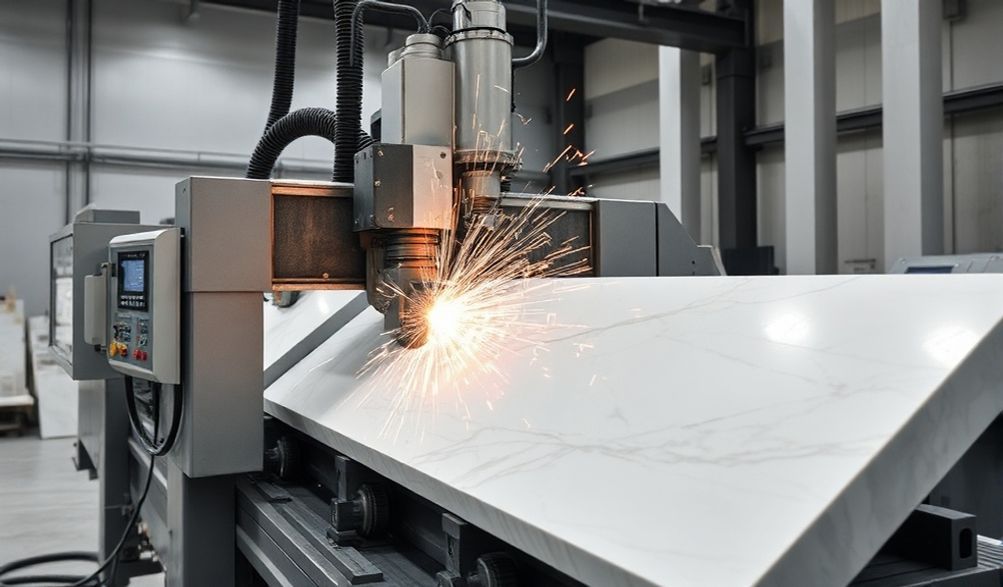
Your Ultimate Guide to Block Cutting Machine Manufacturers in 2024
مقدمة
In the high-stakes world of construction and material processing, inefficiency is a silent profit killer. Are you grappling with inconsistent block dimensions, excessive material waste from imprecise cuts, or production bottlenecks that delay project timelines? You’re not alone. For businesses in stone, concrete, and manufacturing, these pain points directly impact the bottom line and competitive edge.
The bridge between these challenges and a solution of precision, productivity, and profit is often a single, pivotal investment: a modern block cutting machine. However, the critical decision isn’t merely about purchasing a piece of equipment; it’s about partnering with the right block cutting machine manufacturer. The wrong choice can lead to costly downtime, unreliable performance, and inadequate support.
This comprehensive guide leverages deep industry expertise to help you navigate the complex global landscape of manufacturers. We’ll move beyond glossy brochures to the core factors that separate market leaders from the rest, ensuring you make an informed, trustworthy investment that powers your business for years to come. Built on technical knowledge, authoritative market analysis, and a commitment to practical advice, this guide is your roadmap to a successful purchase.
Understanding Block Cutting Machines: Types and Core Applications
Before evaluating who builds the best machines, it’s essential to understand what these machines do and which type aligns with your specific needs. This foundational knowledge is key to communicating effectively with manufacturers and assessing their expertise.
What is a Block Cutting Machine?
At its core, a block cutting machine is a powerful industrial tool designed to cut hard, bulky materials into precise shapes, blocks, or slabs. Using various cutting technologies—typically diamond-impregnated blades or wires—these machines transform raw stone, concrete, or brick with accuracy and speed that manual methods cannot match. Their primary function is to maximize yield from expensive raw material while delivering consistent, dimensionally accurate products.
Primary Types of Block Cutting Machines
Not all block cutters are created equal. The technology varies significantly based on application.
-
Bridge Saw Machines:
- Operation & Use: Featuring a sturdy, bridge-like structure that moves a cutting head across a stationary bed or table. They are the workhorses of most stone shops.
- مثالي لـ: Cutting large slabs of granite, marble, quartz, and other natural stone into countertops, tiles, and architectural elements. They excel at straight cuts and can be equipped for basic shaping.
-
Wire Saw Machines:
- Operation & Use: Utilize a continuous loop of diamond-impregnated wire, driven by a pulley system, to cut through massive volumes of material. The wire can be threaded through drill holes for completely customizable cuts.
- مثالي لـ: Primary quarrying (extracting blocks from the earth), cutting extremely large granite or marble blocks, and performing complex cuts in demolition or heavy industry. They offer unparalleled flexibility for size and shape.
-
Block Cutters / Splitters:
- Operation & Use: Often rely on hydraulic force to split or cut materials along a predetermined line. They may use a blade or a simple wedge-and-feather principle.
- مثالي لـ: Mass production of concrete blocks, bricks, pavers, and certain types of natural stone blocks. They prioritize high-volume output and consistent sizing over intricate cutting.
-
CNC Block Cutting Machines:
- Operation & Use: The pinnacle of automation. Computer Numerical Control (CNC) allows for programming complex cutting paths, drill holes, and contours with minimal operator intervention.
- مثالي لـ: High-precision fabrication of stone components, intricate monuments, bespoke architectural features, and any operation where repeatability and complex geometry are required. They minimize waste and maximize design potential.
Key Industries Served
The demand for precision cutting spans several major industries:
* Natural Stone Processing: This is the primary domain, encompassing the transformation of raw granite, marble, limestone, onyx, and quartzite blocks into slabs, tiles, and finished goods.
* Concrete Product Manufacturing: For producing precise concrete blocks, masonry units, landscaping stones, and precast elements.
* Brick and Paver Production: Ensuring clean, uniform cuts for clay and concrete bricks, interlocking pavers, and kerbstones.
* Construction and Monumentation: For cutting stone for building cladding, flooring, and creating memorials or artistic stonework.
Critical Factors When Evaluating Block Cutting Machine Manufacturers
Choosing a manufacturer is a long-term business decision. The machine’s sticker price is just the beginning. Here are the expert-backed criteria you must scrutinize.
Engineering Expertise and Manufacturing Quality
The machine’s soul is in its build. Look for manufacturers with proven engineering prowess.
* البحث والتطوير الداخلي: Companies that invest in research and development are continually improving reliability, efficiency, and safety. It’s a sign of market leadership.
* بناء قوي: The frame is the foundation. It must be made of high-quality, stress-relieved steel to resist vibration and maintain alignment under heavy loads. Look for reinforced guide rails and precision-ground surfaces.
* جودة المكونات The quality of bearings, spindles, hydraulic cylinders, and linear guides is non-negotiable. Top manufacturers use branded, industrial-grade components from reputable suppliers (e.g., SKF, Bosch Rexroth, Siemens).
Machine Specifications and Performance
Move beyond marketing fluff to hard data. Compare these key metrics across shortlisted manufacturers:
* Cutting Capacity: Maximum block dimensions (length, width, height) and cutting depth.
* قوة المحرك: Spindle motor horsepower (HP or kW) indicates cutting strength and ability to handle hard materials.
* Cutting Speed & Feed Rate: Impacts overall productivity and finish quality.
* Accuracy Tolerances: Look for specifications on repeatability and positioning accuracy (often in millimeters or fractions of an inch).
* Blade/Wire Specifications: Compatibility with industry-standard tooling sizes and types.
Technology and Innovation
Modern machines are smarter and safer. Prioritize manufacturers integrating these features:
* الأتمتة CNC controls with user-friendly software, automatic tool changers, and programmable cutting sequences.
* Guidance Systems: Laser projection or digital readouts that show the exact cut line, drastically reducing setup time and errors.
* Safety Systems: Comprehensive guarding, emergency stop circuits, pressure-sensitive mats, and electrical safety certifications (CE, UL).
* كفاءة الطاقة: Variable frequency drives (VFDs) on motors and efficient hydraulic systems that reduce power consumption.
Material Compatibility and Versatility
Be explicit about your primary materials. A machine optimized for soft sandstone may struggle with Brazilian granite. The best manufacturers will ask detailed questions about your material hardness (Mohs scale), abrasiveness, and typical block sizes to recommend the correct configuration of power, speed, and tooling.
After-Sales Support: The Deal-Breaker
This is where great manufacturers are separated from the rest. A machine will eventually need service.
* الضمان: Scope is critical. Does it cover parts and labor? For how long? What is excluded?
* توفر قطع الغيار Is there a well-stocked, local parts depot? What is the average lead time for critical components?
* Technical Training: Do they provide comprehensive on-site training for your operators and maintenance staff?
* شبكة الخدمة Do they have qualified technicians in your region, or will you rely on remote support and fly-in service (which is slower and more expensive)?
A Deep Dive into the Global Manufacturing Landscape
Understanding where and how machines are built provides crucial context for your evaluation.
Established Manufacturers vs. Emerging Players
- Established Brands (Often European/N. American):
- مزايا: Proven track record, strong R&D, extensive global service networks, high resale value, premium build quality.
- سلبيات: Higher initial purchase price, sometimes slower to adopt the very latest cost-effective technologies.
- Emerging Players (Often Asian):
- مزايا: Highly competitive pricing, rapid adoption of new features, increasingly improving quality.
- سلبيات: Variable quality control between factories, potentially less robust support networks, brand reputation still being built. Vetting is paramount.
Regional Manufacturing Hubs: What to Know
- Europe (Italy, Germany, Spain): The historical epicenter of stone machinery innovation. Synonymous with high-precision engineering, elegant design, and automation leadership. Brands from these regions command a premium but are often considered the industry benchmark for performance and durability.
- Asia (China, India, Turkey): The world’s largest manufacturing hub. Offers a vast spectrum, from simple, low-cost machines to sophisticated CNC systems that rival European counterparts. The key is identifying manufacturers who have moved beyond copying to implementing genuine quality control and engineering. Factory audits are highly recommended.
- North America: Hosts several specialized manufacturers focusing on robust, high-production machinery for the concrete and brick industries, as well as distributors and integrators for global brands, offering strong local application support.
The Importance of Direct Factory vs. Distributor Relationships
- Buying Direct from the Factory:
- فوائد: Potentially lower cost, direct communication with engineers, ability to customize.
- التحديات: Language barriers, complex logistics and customs, managing service directly from overseas.
- Buying Through an Authorized Distributor:
- فوائد: Local sales and technical support, faster parts supply, help with installation and training, single point of contact.
- التحديات: Higher price (includes distributor margin), you are one step removed from the manufacturer.
How to Vet and Select a Trustworthy Manufacturer: A Step-by-Step Guide
Follow this experience-based roadmap to navigate the selection process with confidence.
Step 1: Comprehensive Online Research & Shortlisting
Start by creating a long list. Analyze manufacturer websites for technical depth, transparency, and professionalism. Download technical brochures and data sheets. Look for valid industry certifications like آيزو 9001(إدارة الجودة) وCE marking (safety compliance for the European market, a good baseline indicator).
Step 2: Due Diligence: Beyond the Brochure
- تاريخ الشركة: How long have they been in business? What is their core expertise?
- مراجع العملاء: Always request references from companies in a similar industry and region. Contact them and ask about machine uptime, support quality, and overall satisfaction.
- Unbiased Reviews: Search industry-specific forums, B2B platforms, and social media groups for unfiltered user experiences. Look for patterns in feedback.
Step 3: The Inquiry Process: Asking the Right Questions
Prepare a detailed questionnaire for sales engineers:
* Technical: “What is the recommended maintenance schedule for the main spindle bearings?” “Can you provide a noise level (dB) report?”
* Commercial: “What is included in the FOB price? What are typical shipping and installation costs?” “What is the payment schedule?”
* Support: “What is your guaranteed response time for a technical support call?” “Can I see a list of your spare parts inventory in my continent?”
Step 4: Evaluating Proposals and Total Cost of Ownership (TCO)
Look beyond the machine price. Calculate the TCO over 5-10 years:
* Initial Price + Shipping & Insurance + Installation & Commissioning + Training + Estimated Annual Maintenance & Power Consumption + Cost of Critical Spare Parts.
Step 5: The Site Visit (Physical or Virtual)
If possible, visit the manufacturer’s facility. A well-organized factory is a strong positive indicator. Ask for a live cutting demonstration with a material similar to yours. If a physical visit isn’t feasible, insist on a detailed virtual tour and live video demonstration.
Future Trends in Block Cutting Technology
Investing in a machine with an eye on the future protects your investment. Here’s where the industry is headed.
Increased Automation and IoT Integration
The future is connected. Machines will increasingly feature sensors that monitor vibration, temperature, and wear. This data, accessible via IoT (Internet of Things) platforms, enables:
* Remote Monitoring: Diagnose issues from anywhere in the world.
* Predictive Maintenance: Receive alerts before a component fails, preventing unplanned downtime.
* Production Analytics: Optimize cutting cycles, track material yield, and analyze overall equipment effectiveness (OEE).
Advancements in Cutting Tools and Sustainability
- Cutting Tools: Diamond wire and blade technology continues to evolve, offering longer life, faster cutting speeds, and the ability to handle new, harder composite materials.
- الاستدامة: Manufacturers are focusing on closed-loop water recycling systems to minimize waste, advanced dust collection and suppression technologies, and energy-recovery systems to reduce the environmental footprint of cutting operations.
The Rise of Adaptive and Smarter CNC Systems
Artificial Intelligence (AI) and advanced software will move CNC systems from simply following instructions to making optimizations. Future systems may automatically scan a raw block for fissures, calculate the most yield-efficient cutting pattern to minimize waste, and adjust cutting parameters in real-time based on material density variations.
الأسئلة الشائعة (FAQ)
Q1: What is the average price range for an industrial block cutting machine?
أ: Prices vary dramatically based on type, size, and automation. A basic block cutter may start around $20,000, a standard bridge saw between $50,000-$120,000, and a fully-equipped, large-format CNC machine can easily exceed $200,000. Always request a detailed, itemized quote based on your specifications.
Q2: How important is after-sales service, and what should it include?
أ: It is arguably the most critical factor. Comprehensive service should include on-site installation supervision, thorough operator and maintenance training, a clear and fair warranty (typically 12-24 months on key components), and a reliable supply chain for spare parts with reasonable lead times.
Q3: Can one machine cut different materials like granite and concrete?
أ: Some versatile machines can handle multiple materials with adjustments to cutting speed, feed rate, and tooling (blade type). However, for optimal performance, longevity, and efficiency, it’s generally better to choose a machine whose power, structure, and features are tailored to your primary material’s hardness and abrasiveness.
Q4: What are the key safety features to look for?
أ: Prioritize machines with emergency stop buttons at multiple points, fully enclosed cutting areas with interlocked doors, blade guards, pressure-sensitive emergency mats, proper machine grounding, and compliance with international safety standards (like CE).
Q5: How long does it typically take from order to installation?
أ: Lead times can range from 8 weeks for a standard model from stock to 6 months or more for a highly customized machine or during periods of high global demand. Factors include customization level, shipping method (sea freight vs. air), and the manufacturer’s production backlog. Always confirm this timeline in your purchase agreement.
خاتمة
Selecting the right block cutting machine is a multifaceted decision that hinges on a deep understanding of your own needs and a rigorous evaluation of potential manufacturing partners. We’ve navigated from the core types of machines and their applications to the essential criteria for judging manufacturer quality—engineering, support, and innovation. The structured, step-by-step vetting guide provides a practical framework to move from research to a confident purchase.
Remember, you’re not just buying a machine; you’re entering a long-term partnership. The manufacturer’s reputation for deep الخبرة, their موثوق standing in the industry, and their proven الثقة in after-sales support are investments as crucial as the steel and software of the machine itself.
Call to Action: Use this guide as your definitive checklist during your next round of RFPs or manufacturer discussions. Before you sign any contract, ensure you have satisfactory answers to every critical factor outlined here. For a personalized shortlist of manufacturers that match your specific material, output, and budget requirements, consider consulting with an independent industry expert.
<