
Analytical Framework for Machinery Cost Structures
The pricing of concrete block moulding machines is stratified according to their operational methodology, degree of automation, and production capacity. Each tier serves a distinct business model with unique financial implications.
1. Manual and Lever-Actuated Moulding Presses
These systems embody mechanical simplicity, relying on human power for the core compaction process.
- نطاق التكلفة: Typically between $800 and $5,000.
- Financial and Operational Analysis:
- فلسفة التصميم: Costs are driven by material (basic structural steel), a simple mold box, and a lever or mechanical press mechanism. Vibration, if present, is often provided by a separate, inexpensive table vibrator.
- Production Economics: The primary cost driver for the end-user is operational labor. Output is intrinsically limited by human endurance, typically ranging from 100 to 600 blocks per day. The cost-per-block is highly variable and sensitive to local wage rates.
- Ancillary Investment: Requires minimal site preparation—a level floor suffices. Power requirements are negligible or non-existent. The business risk is low, but the scalability and profit ceiling are equally constrained.
- Strategic Market Position: Suitable for ultra-small-scale entrepreneurship, community self-help projects, or highly specialized, low-volume production of custom architectural units.
2. Semi-Automatic and Fully Automatic Static Press Machines
This category represents the industrial standard, where capital investment is exchanged for systematic productivity and quality control.
- نطاق التكلفة: Spans from approximately $5,000 to over $50,000.
- Component-Level Cost Breakdown:
- The Core Moulding Press (40-50%): The cost center here is the vibro-compaction system. Investment scales with press tonnage (e.g., 60-ton vs. 150-ton), which determines ultimate block density, and the sophistication of vibration (e.g., directional, variable frequency). A machine capable of producing high-strength, load-bearing blocks or intricate paving stones requires a more robust and expensive press assembly.
- Automation and Control Nucleus (20-30%): This encompasses the programmable logic controller (PLC), human-machine interface (HMI), sensor arrays, and software. A system with automated cycle control, fault diagnostics, and production data logging justifies a higher price than a basic relay-and-button setup. Connectivity for remote monitoring is an emerging cost/value factor.
- Integrated Material Handling (15-25%): The inclusion of an automated feed hopper, weigh-batcher, and a pallet circulation system (conveyor, stacker) significantly increases the price but transforms the machine from a stand-alone unit into a continuous production station, drastically reducing labor dependency.
- Durability and Precision Engineering (10-15%): Investment in hardened steel mold components, precision-machined guide columns, and industrial-grade hydraulic valves and pumps reduces long-term wear and maintenance costs, contributing to a higher initial price but a lower total cost of ownership.
3. Mobile Moulding Systems and Integrated Production Lines
These represent the extremes of flexibility and scale, respectively, with cost structures aligned to their unique value propositions.
- Mobile “Egg-Layer” Type Machines: Priced between $2,000 and $20,000, their cost is defined by mobility (trailer mounting, diesel engines) and the mechanism for depositing blocks directly on a curing slab, eliminating the need for pallets and complex transfer systems.
- خطوط الإنتاج الجاهزة الشاملة Investment begins around $30,000 and escalates into the millions. This cost envelops the entire value chain: automated raw material batching plants, multiple moulding machines synchronized with robotic handling, climate-controlled curing tunnels, and packaging systems. It is a capital project for market dominance.
Total Cost of Ownership: The Definitive Financial Metric
For the sophisticated buyer, the purchase price is merely the entry fee. The true financial commitment is revealed through a Total Cost of Ownership (TCO) analysis.
1. Direct and Recurring Operational Expenditures
- Energy Intensity: The hydraulic systems and vibratory motors of automatic presses are significant power consumers. Calculating energy cost per 1,000 blocks is a critical operational metric.
- Labor Reconfiguration: Automatic machines shift cost from numerous low-skill laborers to fewer, higher-skilled machine operators and maintenance technicians. This affects both payroll structure and training budgets.
- Consumables Portfolio: Beyond concrete mix, this includes pallet costs (for stationary machines), mold release agents, and the ongoing consumption of wear parts: hydraulic oil, filter elements, and most critically, the mold liners and wear plates themselves. The lifespan of these parts is a direct function of machine quality and material abrasiveness.
2. Lifecycle and Contingency Costs
- Depreciation and Financing: The method of capital recovery (straight-line depreciation, loan interest) directly impacts the annual cost burden.
- Preventive Maintenance Regime: Scheduled servicing—overtime often underestimated—includes lubrication, alignment checks, and component inspection. A formalized PM program carries a known cost that prevents catastrophic, high-cost failures.
- Downtime Valuation: The single largest hidden cost. Machine reliability and the availability of technical support and spare parts are not line items in a quote but are paramount to profitability. A machine with a 5% higher upfront cost but 30% higher uptime is invariably the superior investment.
3. The Profitability Equation: From Cost to Return
The ultimate justification is the machine’s ability to generate margin.
- Key Variables: The analysis must model: Achievable Selling Price (influenced by block quality and consistency), Raw Material Cost Volatility, Production Utilization Rate (the percentage of available time the machine is producing saleable blocks), and Market Demand.
- Scenario Modeling: A distributor should be able to demonstrate that a $70,000 machine producing 4,000 high-quality blocks per day at a 22% margin creates a fundamentally different business—with faster market penetration and brand reputation—than a $20,000 machine producing 1,500 blocks per day at a 15% margin with higher labor intensity.
Strategic Imperatives for the Distribution Channel
The role of the distributor evolves from order-taker to financial and operational consultant.
- Conduct Capability-Based Needs Assessment: Align the machine’s specifications not just with a budget, but with the client’s target product specifications, available utilities, and workforce skill base.
- Articulate the TCO Narrative: Use comparative financial models to show how a higher-quality machine with comprehensive local support delivers a lower cost-per-block over a 5-year period.
- Structure Value-Added Packages: Offer bundled solutions that include machine installation, operator certification training, a starter kit of critical spare parts, and a scheduled maintenance plan. This ensures client success and creates recurring revenue streams.
- Facilitate Financial Engineering: Partner with equipment financing firms to offer structured loans or leasing options, making strategic investments accessible and managing client cash flow.
Conclusion: The Calculus of Strategic Investment
The cost of a concrete block moulding machine is not an expense; it is the capitalization of a production capability. For the astute dealer or procurement agent, the focus must be on facilitating an investment decision that is financially literate and strategically sound. This means guiding clients to understand that the least expensive machine in terms of purchase price often carries the highest long-term operational cost and the greatest risk of business failure. Conversely, an investment in robust engineering, intelligent automation, and dependable support infrastructure lays the foundation for scalable profitability and market resilience. By mastering and communicating this comprehensive cost calculus, you become an indispensable partner in building not just structures, but sustainable and prosperous manufacturing enterprises.
الأسئلة الشائعة (FAQ)
Q1: Why is there such a vast price difference between machines that seem to produce the same size block?
أ: The difference lies in performance, durability, and output capability. A lower-cost machine may produce a block of the same dimensions, but likely at a slower rate, with higher variance in density and dimensional tolerance, and using components prone to faster wear. The higher-priced machine invests in precision engineering, superior hydraulics, and control systems that ensure consistent high quality, faster cycling, and longer operational life, yielding a lower cost per block over time.
Q2: How should a client budget for mold costs, and how long do molds typically last?
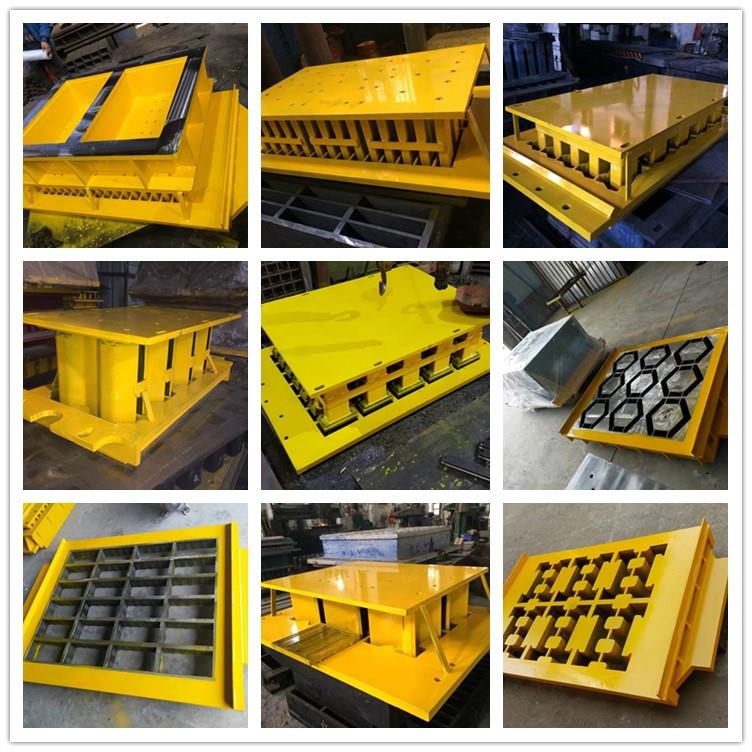
أ: Molds are a significant recurring capital item. Clients should budget 10-20% of the initial machine cost for an inventory of standard mold sets. Lifespan varies dramatically: a basic mold on a low-pressure machine producing abrasive concrete might last for 50,000 cycles, while a hardened steel mold on a high-pressure machine can exceed 500,000 cycles. The quality of the mold is as important as the quality of the machine itself.
Q3: What are the “soft costs” often missed in initial budgeting?
أ: Commonly overlooked costs include: Site Preparation (heavy foundation, electrical substation), Installation and Commissioning (often quoted separately), Regulatory Compliance (environmental, safety, business licensing), Initial Raw Material Inventory (stockpiling of aggregates, cement), and Working Capital to cover operations until payment is received from customers.
Q4: Is it more cost-effective to buy a high-production machine from the start or to upgrade later?
أ: This is a critical strategic decision. While starting small reduces initial risk, upgrading often involves significant sunk costs and operational disruption. The resale value of entry-level equipment is low. If market analysis confirms strong demand, financing a higher-capacity machine from the outset can lead to faster market capture, stronger margins, and avoided transition costs, often proving more cost-effective in a 3-5 year horizon.
Q5: How does the choice of machine affect the quality and marketability of the final blocks?
أ: Profoundly. Machines with higher compaction pressure and controlled vibration produce blocks with higher compressive strength, better surface finish, and tighter dimensional tolerances. These blocks command premium prices, are preferred by professional builders, and can be used in structural applications. A cheaper machine may produce blocks suitable only for non-load-bearing partitions or garden walls, limiting market reach and price point.
Q6: What specific financial metrics should we encourage clients to monitor after purchase?
أ: Advise clients to track: Cost Per Block (total operating cost / saleable blocks produced), Machine Utilization Rate, Reject Rate, Mean Time Between Failures (MTBF), and Overall Equipment Effectiveness (OEE). Monitoring these metrics turns the machine from a black-box cost center into a managed profit-generating asset and provides early warning for operational issues.

