
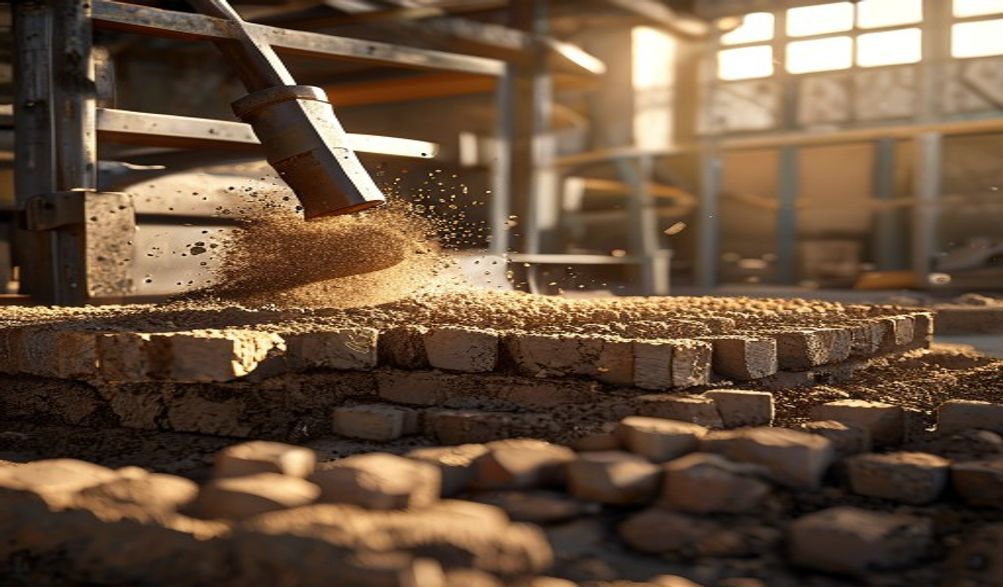
كيفية اختيار آلة صنع الطوب الترابي الهيدروليكية: دليل المشتري النهائي
مقدمة
صناعة البناء العالمية تقف عند مفترق طرق. مع ارتفاع تكاليف المواد والحاجة المُلحة لممارسات مستدامة، يبحث البناؤون ورواد الأعمال عن حلول أكثر ذكاءً ومرونة. وهنا تظهر الطوب المضغوط من التربة (CEBs): مواد بناء ذات جذور قديمة وإمكانات حديثة. وفي قلب هذا الإحياء تقع آلة صنع الطوب بالتربة الهيدروليكية—أداة قوية تحول التربة المحلية إلى طوب قوي وموحد وصديق للبيئة.
ولكن التنقل في سوق هذه المعدات قد يشبه عبور حقل ألغام تقني. مع اختلاف المواصفات، والادعاءات الجريئة، والاستثمار الكبير على المحك، كيف تضمن اختيار الشريك المناسب لمشروعك؟ هذا الدليل صُمم ليكون خريطة طريقك النهائية.
بالاعتماد على عقود من الخبرة الصناعية المتراكمة، والمبادئ الهندسية، والرؤى المستمدة من المشاريع الواقعية، قمنا بإعداد هذا الدليل لتقديم نصائح موثوقة وقابلة للتطبيق. هدفنا هو مساعدتك في تجنب الأخطاء المكلفة واتخاذ قرار قائم على الوضوح، وليس الارتباك. سنرشدك خلال إطار عمل تدريجي، بدءًا من فهم أنواع الآلات الأساسية وتحليل تربتك، وصولاً إلى مقارنة المواصفات التقنية وتقييم الموردين. لنبدأ الرحلة نحو العثور على الآلة المثلى لتحقيق طموحاتك في البناء المستدام.
فهم آلات الطوب الهيدروليكية الترابية ومزاياها
قبل مقارنة النماذج، من الضروري فهم ما يميز الآلة الهيدروليكية ولماذا قد تكون الخيار الأمثل لإنتاج البلوك الأرضي المضغوط.
ما هي آلة صنع الطوب الهيدروليكية من التربة؟
At its core, a hydraulic soil brick making machine is a press. It uses a sophisticated hydraulic system—comprising a pump, valves, cylinders, and fluid—to generate immense, controlled pressure. This pressure is applied to a prepared soil mixture (often stabilized with a small percentage of cement or lime) contained within a steel mold. The result is a densely compacted, consistently shaped brick or interlocking block, known as a compressed earth block (CEB).
- المُعَيِّن الرئيسي: This method stands in stark contrast to manual presses or mechanical lever systems. While those rely on human force or simpler mechanics, the hydraulic system delivers superior, repeatable pressure measured in tons. This ensures every brick meets the same high standard of density and strength, which is difficult to achieve with non-hydraulic methods.
Key Benefits of Choosing a Hydraulic Machine
Investing in a hydraulic press unlocks several compelling advantages that justify its position as the professional’s choice for CEB production:
- Unmatched Quality & Strength: The high, consistent pressure compacts soil particles more intimately, drastically reducing voids. This leads to bricks with significantly higher compressive strength, improved water resistance, and greater overall durability compared to those from manual presses.
- Superior Efficiency & Output: Hydraulic machines have faster, automated cycle times. Once initiated, the press, ejection, and reset processes are swift and consistent. This allows for a much higher daily production rate. Furthermore, this automation potential seamlessly integrates with feed systems and pallet dispensers, creating a semi-automatic production line.
- مرونة استثنائية: With a simple mold change, many hydraulic machines can produce different block sizes, shapes (standard rectangles, interlocking), and even specialty designs. They can also be calibrated to handle a wider range of soil types—from sandy to clay-rich—provided the mix is properly analyzed and stabilized.
- Optimized Labor & Safety: The machine does the heavy work of compression. This dramatically reduces the physical strain on operators, minimizes the risk of injury, and allows labor to be focused on material preparation, quality control, and handling. It also removes the variability introduced by human fatigue, ensuring brick consistency from the first to the last of the day.
Pre-Purchase Checklist: Defining Your Project Needs
A successful purchase starts not with a product catalog, but with a clear understanding of your own requirements. Answering these questions will create a filter through which to evaluate every machine you see.
تقييم متطلبات الإنتاج
Be specific and realistic about what you need to achieve.
- الناتج اليومي/الأسبوعي Calculate the number of bricks needed per day to meet your project deadlines. This is your most critical number.
- Small-scale/Project-specific: 500 – 2,000 bricks per day.
- Medium-scale/Entrepreneurial: 2,000 – 5,000 bricks per day.
- Large-scale/Commercial: 5,000+ bricks per day.
- نوع الكتلة والحجم: Determine the exact brick dimensions you require. Are you making standard building blocks, interlocking blocks for mortar-less construction, or specialty shapes? Will you need multiple molds? This directly impacts machine selection and cost.
- مقياس المشروع ومدة التنفيذ: Is this machine for a single housing project, or is it the foundation of a new business? A one-off project might prioritize a lower-cost, simpler machine, while an ongoing enterprise demands maximum durability, reliability, and after-sales support.
Analyzing Your Local Soil Composition
The machine is only as good as the material you feed it. Not all soil is immediately suitable.
- The Suitability Test: Before buying anything, conduct a simple sedimentation jar test. Mix soil and water in a clear jar, shake it, and let it settle. The layers of sand, silt, and clay that form will give you a basic idea of your soil’s composition. A good CEB soil often has a balanced mix of these components.
- The Role of Stabilizers: Most soils require a stabilizer—typically 5-10% cement or lime—to achieve optimal strength and weather resistance. Your local soil type will determine the best stabilizer and ratio, which in turn can affect the required compaction pressure.
Evaluating Your Available Resources
Consider the practical ecosystem your machine will live in.
- مصدر الطاقة This is a deal-breaker. Check your available power supply. Most industrial hydraulic machines require robust 3-phase electricity. If this isn’t available, you must look for a model with an integrated diesel engine option.
- Space & Layout: You need more than just a spot for the machine. Plan for:
- Machine operation floor space.
- Raw soil storage and screening/pre-mixing area.
- Space for curing the freshly pressed bricks (protected from sun and rain).
- Storage for finished, cured bricks.
- Operator Skill & Training: Hydraulic systems require basic technical understanding. Assess if you or your team will need training on operation, routine maintenance, and basic troubleshooting. A good supplier should provide this.
Critical Technical Specifications to Compare
With your needs defined, you can now dive into the technical details. Use this section as a comparison checklist when reviewing supplier quotations.
مواصفات الجهاز الأساسية
These are the non-negotiable performance indicators.
- سعة الضغط (الطاقة بالطن): This is the “engine size.” Measured in tons (e.g., 20T, 50T, 100T), it indicates the maximum force the machine can apply.
- لماذا يهم: Higher tonnage compacts soil more densely, producing stronger bricks. Clay-rich soils often require higher pressure than sandy soils to achieve the same density. Match the tonnage to your target brick strength (e.g., for load-bearing walls).
- Cycle Time & Production Rate: Cycle time is the time taken to produce one brick (fill, press, eject). Production rate is the number of bricks per hour.
- لماذا يهم: A machine with a 20-second cycle time can theoretically produce 180 bricks per hour. One with a 30-second cycle produces 120. This simple math directly impacts your project timeline and profitability.
- جودة النظام الهيدروليكي: The heart of the machine. Inquire about the brands of the hydraulic pump, valves, and cylinders.
- لماذا يهم: Reputable, industrial-grade components (from brands like Bosch Rexroth, Parker, or Eaton) are signs of a quality build. They offer greater reliability, efficiency, and longevity than generic, no-name parts.
- Machine Construction & Durability: Look for a robust frame made from solid steel plates or heavy-duty profiles, not light, welded tubing. Check for quality welding and corrosion-resistant paint or treatment.
- لماذا يهم: The machine must withstand constant, high-pressure vibration. A weak frame will flex, leading to misalignment, wear, and ultimately, failure.
Automation and Operational Features
These features enhance productivity and ease of use.
- نظام التغذية:
- Manual Feed: Operator shovels mix into the mold. Lower cost, higher labor.
- Semi-Automatic/Conveyor Feed: A conveyor or feed hopper delivers a measured amount of mix to the mold. Significantly increases output and reduces labor fatigue.
- نظام التحكم
- Manual Controls: Simple levers and buttons. Reliable but dependent on operator timing.
- وحدة التحكم المنطقية القابلة للبرمجة (PLC): An automated electronic brain. It ensures precise, repeatable control over pressure and cycle timing, improving consistency and allowing for easier integration with other automated systems.
- معالجة البليت Bricks are pressed onto wooden or steel pallets for curing.
- دليل: An operator places and removes each pallet.
- Integrated Dispenser/Stacker: Automatically feeds a new pallet and stacks the pressed brick, creating a continuous, efficient workflow.
Mold and Customization Options
The mold defines your final product.
- Mold Material: Insist on molds made from high-quality, hardened steel. Softer steel will wear down quickly, changing brick dimensions and causing soil to stick.
- Ease of Changeover: How difficult is it to swap molds? A system that allows for relatively quick changes increases your operational flexibility.
- قوالب مخصصة: If you need a unique block design, discuss the supplier’s ability to design and manufacture custom molds. Understand the lead time and cost involved.
Beyond the Machine: Total Cost of Ownership & Supplier Viability
The cheapest machine can become the most expensive investment. Look beyond the sticker price.
Understanding the Full Investment (Not Just Purchase Price)
Create a comprehensive budget that includes:
- التكاليف الأولية:
- Machine price (FOB or CIF).
- Shipping, freight, and insurance.
- Import duties and taxes (if applicable).
- Cost of initial spare parts kit (seals, filters).
- التكاليف التشغيلية:
- Power consumption (kWh) or diesel fuel costs.
- Cost of routine maintenance (hydraulic oil, filters).
- Labor costs for operation.
- Long-term mold wear and eventual replacement.
- Hidden & Contingency Costs:
- Site preparation (reinforced concrete foundation?).
- Cost of operator training if not included.
- Potential business loss from downtime due to machine failure or lack of spare parts.
Evaluating the Manufacturer/Supplier (A Key E-E-A-T Factor)
Your relationship with the supplier is as important as the machine itself. This is where الخبرة، والخبرة المتخصصة، والموثوقية، والجدارة بالثقة (E-E-A-T) become critical.
- Experience & Reputation: How long has the company been building these specific machines? Ask for a client list, photos/videos of past projects, and genuine testimonials. Search for their name online in industry forums.
- Expertise & Support: Do they provide detailed technical manuals, electrical and hydraulic diagrams? Will they offer installation guidance—remotely or via an engineer? Is comprehensive operator training part of the package?
- خدمة ما بعد البيع: This is paramount. What is the warranty period and what does it cover? How quickly can they ship spare parts? Do they have a responsive technical support team (phone, email, WhatsApp)? A machine without support is a ticking clock.
- Requesting References: Don’t hesitate to ask the supplier for contact information for 2-3 previous customers, preferably in a region with a similar climate and soil conditions. A confident, reputable supplier will provide these.
Safety, Operation, and Maintenance Essentials
Planning for safe and sustained operation is part of the purchase decision.
Foundational Safety Protocols
Never compromise on safety. Establish these rules from day one:
- Mandatory Personal Protective Equipment (PPE): Safety glasses, heavy-duty gloves, and steel-toe boots are minimum requirements.
- Critical Safety Rules:
- Always implement Lock-Out/Tag-Out (LOTO) procedures before performing any maintenance or clearing a jam.
- Keep hands, tools, and clothing clear of all moving parts, especially the pressing head and feed mechanisms.
- Ensure the machine is on a stable, level surface.
- Train all personnel on proper manual handling techniques for raw materials and heavy blocks.
Routine Maintenance for Longevity
A well-maintained machine lasts decades. Follow a schedule:
- Daily: Clean the machine of soil and debris. Check hydraulic fluid levels and look for leaks. Inspect hoses for wear.
- Weekly: Check and tighten all bolts, nuts, and fittings. Inspect electrical connections. Lubricate moving parts as per the manual.
- Periodic (Monthly/Annually): Change hydraulic fluid and filters as specified. Inspect and replace worn seals. Check mold for wear and dimensional accuracy.
- Golden Rule: The manufacturer’s operation and maintenance manual is your primary guide. Follow it meticulously.
الأسئلة الشائعة (FAQ)
Q1: What is the ideal soil mix for a hydraulic brick machine?
أ: There’s no single “ideal” mix, as it depends on local geology. A good starting point is a well-graded mixture of approximately 70% sand and gravel, 15-30% silt, and 10-20% clay. A professional soil lab test is highly recommended to determine the exact composition and optimal stabilizer (cement or lime) percentage.
Q2: Can I use the machine for cement-based blocks as well?
أ: This varies by machine design. Some hydraulic presses are engineered specifically for soil and may not handle the abrasive nature of concrete well. Others are built as multi-purpose machines capable of producing both CEBs and concrete blocks. Always confirm this capability with the manufacturer, as pressure settings and mold designs may differ.
Q3: What is the typical lead time and installation process?
أ: Lead times can range from 4 to 12 weeks depending on the manufacturer’s backlog and customization. Installation typically involves unloading and placing the machine on a prepared, level foundation, connecting it to the power source (or preparing the diesel engine), filling the hydraulic system with fluid, and commissioning it—often under the remote or on-site guidance of the supplier’s technician.
Q4: How do I calculate the return on investment (ROI) for this machine?
أ: Use a simplified formula: (Value of Bricks Produced - Total Operational Costs) / Total Machine Investment. Calculate the value of bricks needed for your project(s) or annual sales. Subtract all costs (power, labor, maintenance, stabilizer). Divide this profit by the total cost of the machine, shipping, and setup. A good ROI for equipment is often targeted within 1-3 years.
Q5: What are the most common operational problems and their solutions?
أ:
* Bricks Cracking: Usually caused by incorrect moisture content (too wet/dry) or insufficient stabilization. Adjust your soil mix and compaction pressure.
* Low Pressing Pressure/Weak Bricks: Check hydraulic fluid level and quality. Inspect the pump and pressure relief valve. The soil may be too dry or have incorrect grading.
* Bricks Sticking in Mold: Likely due to a worn mold (loss of taper), insufficient mold release agent (often just water mist), or overly wet/sticky soil mix.
خاتمة
Choosing the right hydraulic soil brick making machine is a deliberate, systematic journey—not an impulse buy. It begins with a deep understanding of your own project’s scale, soil, and resources. It proceeds through a meticulous comparison of technical specifications, not as isolated numbers, but as they relate to your defined needs. It culminates in the critical evaluation of the supplier’s expertise and commitment to your long-term success.
Remember, you are not just purchasing a piece of machinery; you are investing in a production partner for your sustainable construction venture. Prioritizing proven quality, robust support, and total cost of ownership over the lowest initial price is a strategy that pays dividends in reliability, safety, and productivity for years to come.
Your Final Call to Action: Use this guide as your definitive checklist. When you speak with suppliers, ask the questions outlined here. Request detailed quotations that specify every component. Ask for video demonstrations of the exact model you’re considering. And most importantly, talk to their previous customers. Armed with this knowledge, you are ready to make a confident, informed investment that will build your future, one solid block at a time.
<