
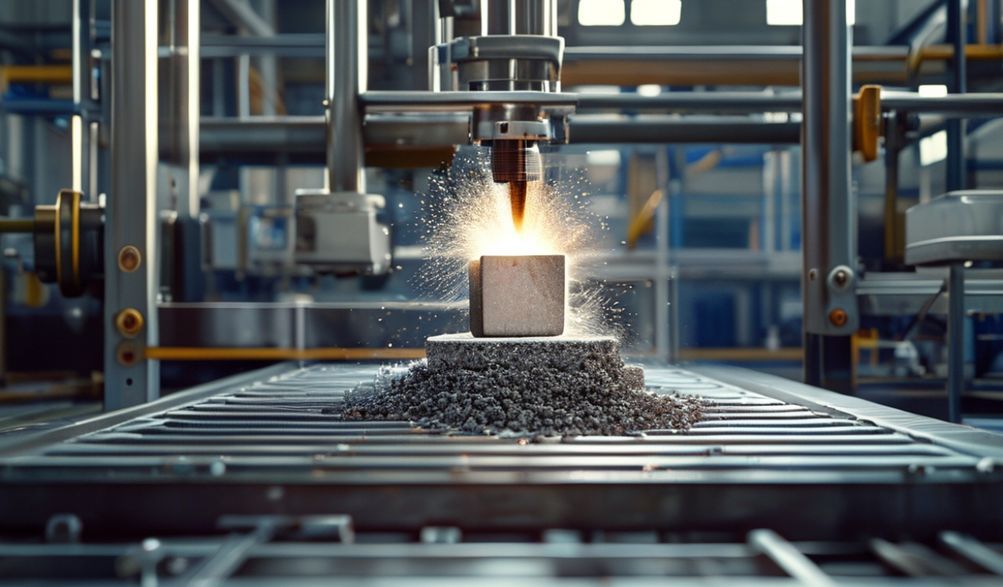
الدليل الشامل لآلات تصنيع الطوب: الأنواع، التكاليف، وكيفية الاختيار
مقدمة
From the ancient walls of Jericho to the modern skylines of our cities, bricks have been the fundamental building block of civilization. Their enduring popularity stems from strength, durability, and versatility. However, the method of producing them has undergone a revolution. The shift from back-breaking manual labor to sophisticated mechanized production is what makes modern construction scalable, efficient, and profitable. At the heart of this revolution lies the brick manufacturing machine.
This comprehensive guide is designed to be your definitive resource. Whether you are an entrepreneur exploring a new business venture, a construction company looking to bring production in-house, or an industry professional seeking to upgrade, making an informed decision is critical. We synthesize deep technical knowledge, operational experience, and current market analysis to cut through the noise. We’ll address the core questions you have: What types of machines exist? What is the true cost? And most importantly, how do you select the perfect machine for your specific project and business goals?
فهم آلات تصنيع الطوب: المفاهيم الأساسية
Before diving into types and costs, it’s essential to grasp what these machines do and why they are a transformative investment.
ما هي آلة تصنيع الطوب؟
A brick manufacturing machine is a piece of industrial equipment designed to automate and mechanize the process of forming standardized bricks or blocks from raw materials. These materials typically include clay, concrete (cement, sand, aggregate), or industrial by-products like fly ash. The core function is to replace the variable, labor-intensive processes of manual molding and curing with a consistent, high-speed system that outputs bricks of uniform size, shape, and density.
المكونات الرئيسية وكيفية عملها
While designs vary, most machines share common subsystems that form a cohesive production line:
- الخلاط: Where raw materials are blended with water to achieve a homogeneous, workable consistency.
- نظام الناقلينقل الخليط الخام إلى غرفة التشكيل.
- Mold/Compaction Unit: The heart of the machine. Here, the mix is shaped under pressure (hydraulic or vibrational) into the desired brick form.
- نظام العلاج Some automated lines include integrated curing chambers (steam or humidity-controlled) to accelerate the brick’s strength gain. For many operations, curing is a separate, staged process.
- لوحة التحكم: The operator’s interface, ranging from simple levers on manual machines to programmable logic controllers (PLCs) on fully automatic lines.
The Basic Workflow: Raw Material → Mixing → Molding/Compaction → Ejection → Curing → Finished Brick.
Benefits of Using a Dedicated Machine
Investing in dedicated machinery isn’t just about speed; it’s about building a superior, more competitive business.
زيادة كبيرة في الإنتاجية والاستقرار
A single semi-automatic machine can produce thousands of bricks per day, a volume impossible with manual labor. This consistency ensures every brick meets specification, project after project.
Significant Reduction in Labor Costs and Physical Strain
Machines automate the most strenuous tasks. One or two operators can manage output that would require dozens of manual laborers, drastically reducing long-term wage costs and improving worker safety.
Superior Brick Quality, Strength, and Uniformity
Precise control over compression force, vibration frequency, and mix ratios results in bricks with higher compressive strength, uniform dimensions, and better aesthetic finish. This quality builds your reputation.
Material Efficiency and Waste Reduction
Automated systems precisely measure and use raw materials, minimizing spillage and rejected bricks common in manual processes. This efficiency directly boosts your profit margins.
Types of Brick Manufacturing Machines Explained
The market offers a variety of machines, each suited to different materials, products, and scales of operation. Understanding these categories is the first step in narrowing your choice.
By Production Process
The core technology used to form the brick defines its capabilities.
مكابس هيدروليكية
These machines use immense hydraulic pressure to compress material into a dense, solid block. They are the go-to choice for producing high-strength bricks from fly ash, concrete, or soil-cement mixes. The slow, high-pressure cycle creates bricks with excellent load-bearing properties, making them ideal for structural applications.
آلات البثق
Primarily used for clay brick production, these machines force a continuous column of plastic clay through a shaped die. The extruded column is then wire-cut into individual bricks. This process is excellent for high-volume production of traditional clay bricks and allows for intricate perforations to create lighter, thermally efficient blocks.
Vibration Compaction Machines
Here, a mold filled with a relatively dry concrete mix is subjected to high-frequency vibration while being simultaneously compacted. This method is perfect for producing hollow blocks, paving slabs, and curbstones. The vibration removes air pockets, resulting in a well-compacted, strong block with a smooth surface finish.
By Level of Automation
Your budget and labor strategy will guide this choice.
الآلات اليدوية/شبه الآلية
These require operator involvement for feeding material, activating the press cycle, and removing finished bricks. They have a lower initial costولكنhigher labor requirement. They are an excellent, low-risk entry point for startups, small builders, or markets with low labor costs.
آلات أوتوماتيكية بالكامل
These are complete production lines with automated material feeding, molding, stacking, and sometimes even palletizing and curing. Controlled by a central computer, they offer very high output with minimal manual intervention. The investment is significant, but the ROI can be rapid for large-scale, continuous production.
آلات صنع الطوب المتنقلة
Mounted on a trailer or truck bed, these units are designed for on-site production at large construction projects. They eliminate transport costs for finished bricks and allow for production using locally sourced materials, offering tremendous logistical and cost advantages for mega-projects.
By Brick Type Produced
Most machines are versatile, but some are specialized. Key outputs include:
* كتل خرسانية صلبة
* الطوب المجوف (for insulation and reduced weight)
* Paver Blocks & Interlocking Pavers(للتنسيق الخارجي والممرات)
* Interlocking Bricks (for dry-stack construction)
* Specialty Shapes (curbstones, grass pavers, etc.)
العوامل الحاسمة لاختيار الآلة المناسبة
Selecting a machine is a strategic decision. Use this framework to evaluate your needs against what the market offers.
تقييم احتياجاتك الإنتاجية
Required Daily/Annual Output (Bricks Per Hour/Day)
Be realistic. Calculate your current demand and projected growth. A machine operating at 50% capacity is inefficient, while one at 110% capacity will wear out prematurely. In operational practice, it’s wiser to choose a machine that can grow with you, perhaps by adding a second shift, rather than maxing out a smaller unit immediately.
Types of Bricks to be Produced
Define your product line. Will you focus on standard construction blocks, or is there higher demand (and margin) for pavers or interlocking bricks in your region? Ensure the machine you choose can accommodate the necessary mold types and compression methods.
المواد الخام المتاحة
This is a decisive factor. Common feedback from operators highlights that machine performance is directly tied to material quality. Analyze your local access to:
* طين (for extrusion).
* Cement, Sand, and Aggregate (for concrete/vibration machines).
* رماد متطاير (for eco-friendly, high-strength hydraulic press bricks).
Your most affordable, consistent material source should guide your machine technology choice.
Financial Considerations & Budgeting
Machine Cost Spectrum
Prices can range from a few thousand dollars for a basic manual press to several hundred thousand for a fully automated turnkey plant. Semi-automatic machines offering a good balance of output and affordability typically sit in the $15,000 – $50,000 range, depending on capacity and features.
Operating Costs: Power, Labor, Maintenance
Look beyond the sticker price. A fully automatic machine may have a high upfront cost but lower labor costs. A hydraulic press may consume more power than a vibration machine. Always factor in the ongoing cost of electricity, skilled operators, and routine maintenance parts.
Understanding Return on Investment (ROI) Timeline
Create a simple projection: (Total Machine Cost + Setup) / (Projected Monthly Profit from Brick Sales). A faster ROI (e.g., 12-24 months) is generally desirable. High-volume operations with a ready market can justify a longer ROI for a more capable machine.
Technical and Operational Specifications
Machine Power and Energy Requirements
Ensure your facility has the necessary electrical hookups (e.g., 3-phase power) or can support a diesel-powered unit. An underpowered site will lead to constant tripping and production halts.
Space and Foundation Needs
To ensure smooth running, the machine requires a level, reinforced concrete foundation to handle its dynamic loads. Account for space for raw material storage, the production line, a curing area, and finished product storage.
After-Sales Support, Warranty, and Parts Availability
This is arguably the most critical factor for long-term success. A cheap machine with no local technical support or available spare parts can become a very expensive paperweight. Prioritize suppliers who offer comprehensive training, a clear warranty, and a proven supply chain for wear parts like molds, hydraulic seals, and vibrator motors.
Navigating Costs and Suppliers
The global market is vast, with suppliers ranging from highly reputable to less scrupulous. Navigate it with a discerning eye.
Price Range Breakdown by Machine Type
- Small Manual Machines: Typically range from $3,000 to $10,000.
- الآلات شبه الآلية: Typically range from $15,000 to $50,000, with size and output being the main variables.
- خطوط الإنتاج الآلية بالكامل: Typically start from $80,000 and can exceed $300,000 for large, integrated plants.
Factors causing variation: Brand reputation, level of automation, production capacity (bricks per hour), country of manufacture, and quality of components (e.g., German vs. local hydraulics).
How to Vet Manufacturers and Suppliers
The Importance of Live Demos or Customer Videos
Never buy based on a brochure alone. Insist on seeing the machine run, preferably with materials similar to yours. If a factory visit isn’t possible, request detailed videos of the machine in operation at a client’s site.
Checking Certifications, Company History, and Client Portfolio
Look for manufacturers with ISO certifications. Research how long they have been in business. A reputable company will gladly provide references or case studies from past clients in your region.
Reading Between the Lines of Customer Reviews
Scour independent business forums and B2B platforms. Look for patterns in feedback. Are complaints about poor after-sales service common? Is praise consistently about machine durability? This is invaluable market intelligence.
Hidden Costs to Watch Out For
To build a truly accurate budget, account for:
* Shipping and Logistics: International freight and local transport can be substantial.
* الرسوم والضرائب الجمركية: Vary significantly by country.
* التثبيت والتشكيل: Professional setup is often an extra charge.
* Operator Training: Essential for efficiency and safety.
* Initial Spare Parts Kit: Having critical spares on hand prevents lengthy downtime.
Maximizing Success: Installation, Operation, and Maintenance
Your machine’s performance and lifespan depend heavily on how it is treated from day one.
Best Practices for Installation and Setup
Follow the manufacturer’s site preparation guide meticulously. This always includes pouring a perfectly level, heavy-duty concrete foundation that can absorb vibration. Ensure all electrical and water connections are completed by qualified personnel before commissioning.
Efficient and Safe Operation
- تدريب Never let an untrained operator use the machine.
- Material Prep: Ensure your raw mix is consistent. The moisture content and gradation of sand/aggregate are crucial for proper compaction and brick release from the mold.
- Safety First: Enforce the use of safety glasses, gloves, and hearing protection. Establish clear lock-out/tag-out procedures for maintenance.
Essential Maintenance Schedule
Preventive maintenance is far cheaper than major repairs.
- Daily: Clean the machine thoroughly, especially molds and hoppers. Check hydraulic oil levels and for any leaks. Lubricate all moving points as per the manual.
- Weekly: Inspect molds for wear or damage. Tighten any loose bolts and nuts. Check the tension on conveyor belts.
- Monthly: Perform a more thorough inspection of hydraulic hoses, electrical connections, and the vibration unit. Replace filters.
Common Troubleshooting Tip: If bricks are cracking or lack strength, the first culprits to check are incorrect water content in the mix or insufficient compaction pressure/vibration time.
الأسئلة الشائعة (FAQ)
Q1: What is the average cost of a brick manufacturing machine?
أ: There is no single “average” cost, as it depends entirely on type and automation. Small manual machines start around $3,000, robust semi-automatic units are often in the $20,000-$40,000 range, and fully automatic lines begin at $80,000+. A specific quote requires defining your output needs and brick type.
Q2: Can one machine produce different types of bricks?
أ: Yes, many machines are designed for versatility. The key is قوالب قابلة للتبديل. By swapping the mold box, a single machine can often produce solid blocks, hollow blocks, and pavers. However, always confirm this capability and the cost/availability of additional molds with the supplier.
Q3: What is the most profitable type of brick to manufacture?
أ: Profitability is hyper-local. While fly ash bricks have high demand in eco-conscious markets and pavers command a premium in landscaping, the “most profitable” brick is the one with the strongest, most consistent demand in your specific area. Conduct local market research before deciding.
Q4: How much space and manpower is required to operate a brick machine?
أ: A semi-automatic machine might need a 2,000-5,000 sq. ft. area (including curing) and 3-5 workers per shift. A fully automatic line requires a larger covered facility (10,000+ sq. ft.) but may only need 2-3 skilled operators per shift to monitor the automated process.
Q5: What are the most common problems with brick machines and how are they fixed?
أ: Two frequent issues are:
1. Bricks sticking in the mold: Usually caused by an under-oiled or worn mold, or incorrect mix moisture. Remedy: Apply recommended mold oil and adjust water content.
2. Poor brick strength/chipping edges: Often due to insufficient compaction pressure or an incorrect raw material mix ratio. Remedy: Calibrate pressure settings and re-formulate your mix.
Always consult your machine manual and supplier for major mechanical or hydraulic issues.
خاتمة
Choosing a brick manufacturing machine is a significant investment that hinges on a clear understanding of your production needs, the available machine types, a realistic budget, and, crucially, the reliability of your supplier. It’s a decision that should be grounded in careful research and technical understanding, not just the allure of the lowest price.
Use this guide as your structured framework for evaluation. Consult with multiple experts, request detailed proposals, and always prioritize long-term machinery quality and supplier support over short-term savings. By doing so, you’re not just purchasing a machine; you’re investing in the foundation of a productive, profitable, and sustainable business. As the industry evolves with trends like AI-driven quality control and a greater focus on recycled materials, a well-chosen machine will be your platform for future growth and innovation.
<