
The Ultimate Guide to Earth Brick Machines: Building a Sustainable Future
The construction industry stands at a crossroads. Responsible for nearly 40% of global carbon dioxide emissions and consuming vast quantities of raw materials, the way we build our world is under intense scrutiny. At the heart of this challenge lies a humble yet ubiquitous component: the brick. Traditional fired clay brick manufacturing is an energy-intensive process, often reliant on fossil fuels and contributing significantly to deforestation and pollution.
But what if there was a way to create strong, durable building blocks using the earth beneath our feet, with minimal environmental disruption? Enter the earth brick machine—a transformative piece of technology turning ancient building wisdom into a modern, scalable solution. These machines produce Compressed Earth Blocks (CEBs), a cornerstone of sustainable architecture.
This comprehensive guide delves into the world of earth brick machines. Compiled from industry standards, engineering principles, and real-world applications in green building, we will explore how they work, their profound benefits, the different types available, and the critical factors for success. Whether you’re a self-builder, a professional architect, or simply an advocate for sustainable living, this guide will equip you with the knowledge to understand how this technology is paving the way for a greener future.
What is an Earth Brick Machine and How Does It Work?
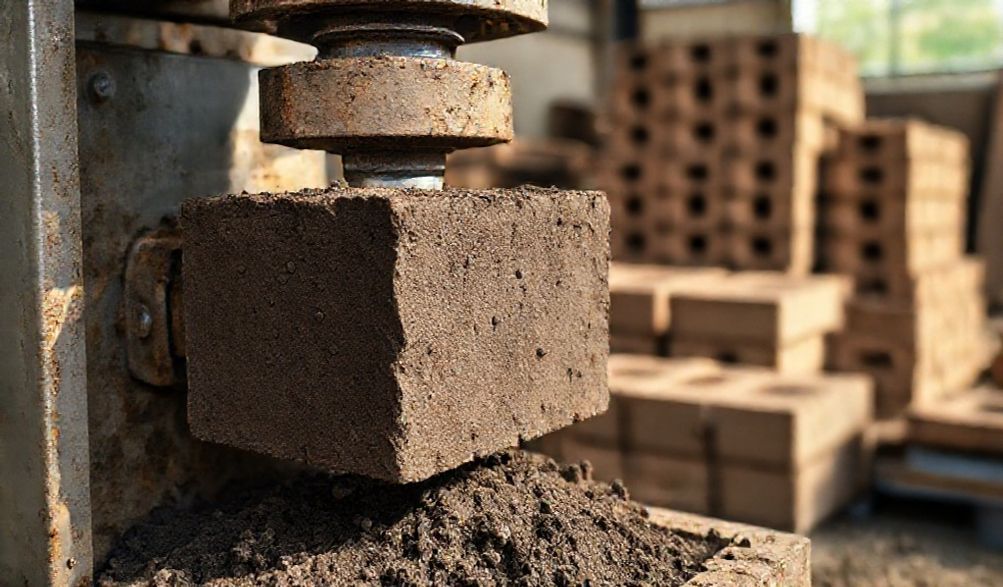
An earth brick machine is a device designed to compress a mixture of damp earth—often with a small percentage of stabilizer—into a dense, solid building block. Unlike traditional brickmaking, it eliminates the need for high-temperature kiln firing, leveraging mechanical force to create structural integrity.
Core Principle: Mechanical Compression
The fundamental science is straightforward yet powerful: mechanical compression. By applying immense pressure to a prepared soil mix within a mold, the particles are forced together, creating strong bonds through compaction and particle interlock. This process yields a brick with high compressive strength, suitable for load-bearing walls in many applications.
From Soil to Building Block: A Step-by-Step Process
Creating high-quality CEBs is a systematic process where each stage is crucial.
- Soil Selection and Testing: Not all dirt is created equal. The ideal soil is a blend of clay (acts as a binder), silt, and sand (provides structure and reduces shrinkage). Simple field tests, like the ribbon or jar test, help determine composition.
- Preparation and Mixing: The soil is sieved to remove large debris. A precise amount of water is added to achieve optimal moisture content—typically around 10-15%. At this stage, a stabilizer like cement (5-10%) or lime may be added for increased strength and weather resistance, especially in humid climates.
- ضغط: The moist mix is fed into the machine’s hopper and directed into a mold or die. A hydraulic ram or mechanical lever then applies pressure, ranging from a few tons for manual presses to over 20 tons for industrial models. This pressure is the key to the block’s durability.
- التداوي The freshly extruded block is carefully removed and set aside to dry. Unlike fired bricks, curing is a chemical and physical process of drying and hardening. Blocks are typically kept under plastic sheeting for several days to ensure slow, even drying, which prevents cracking and allows stabilizers (if used) to hydrate fully.
المكونات الرئيسية لآلة نموذجية
While designs vary, most machines share common components:
* هوبر: The chamber where the raw soil mix is loaded.
* قالب/قالب الصب: The cavity that defines the block’s shape and size (standard, interlocking, etc.).
* آلية الضغط The core of the machine, either a manual lever, a hydraulic cylinder, or an electrically driven press.
* نظام القذف A mechanism to release the compacted block from the mold without damaging it.
Why Choose an Earth Brick Machine? Key Benefits and Applications
The advantages of adopting earth brick technology extend far beyond simple cost savings, touching on environmental, economic, and performance aspects.
Environmental and Sustainability Advantages
- انخفاض كبير في البصمة الكربونية Eliminating the firing process removes a massive source of CO2 emissions. The embodied energy (total energy required for production) of a CEB is a fraction of that of a fired brick or concrete block.
- Local and Abundant Materials: It promotes the use of on-site or locally sourced soil, slashing transportation emissions and supporting circular economies. It literally turns a site’s excavation material into its primary building product.
- Minimal Waste and Biodegradability: Production creates near-zero waste, and unstabilized blocks can eventually return to the earth. Even stabilized blocks have a lower environmental impact than conventional materials.
Economic and Practical Benefits
- فعالية التكلفة: Significant savings come from minimal material costs (soil is often free) and low energy input. For community-led or self-build projects, this can make construction financially viable.
- الإنتاج في الموقع Manufacturing blocks directly where they will be used eliminates middlemen, reduces logistics, and gives builders complete control over the supply chain.
- Superior Thermal Performance: CEBs have excellent thermal mass. They absorb heat during the day and release it slowly at night, naturally regulating indoor temperatures and reducing reliance on heating and cooling systems.
Versatile Applications in Modern Construction
This is not a niche technology. It’s being used in diverse and impressive ways:
* البناء السكني From elegant, modern villas to affordable eco-homes and remote lodges.
* المشاريع التجارية والمؤسسية: Schools, community centers, and offices seeking certifications like LEED or Living Building Challenge.
* Humanitarian and Development Work: Ideal for rapid, low-cost, and culturally appropriate construction in disaster relief or developing regions.
* Landscape Architecture: Creating beautiful and durable retaining walls, garden beds, and perimeter fencing.
Types of Earth Brick Machines: Choosing the Right One
Selecting the right machine depends on your project scale, budget, and labor availability. The market offers a spectrum from simple manual tools to fully automated systems.
Manual vs. Hydraulic vs. Electric Machines
-
Manual Presses (e.g., Cinva Ram style):
- مزايا: Very low initial cost, completely portable, requires no electricity, simple to maintain. Perfect for small-scale, DIY, or community projects in off-grid locations.
- سلبيات: Labor-intensive, lower production output (50-100 blocks per day), and the achievable compression pressure is limited by human force, which can affect ultimate brick strength.
-
Hydraulic Machines:
- مزايا: Higher and more consistent pressure leads to stronger, more uniform bricks. Higher production capacity (300-1000+ blocks per day). Can be powered by electric motors, diesel engines, or tractor PTOs, offering flexibility.
- سلبيات: Higher upfront cost, requires a power source, and is less portable than manual presses. Represents the best balance of quality and output for most professional small to medium-sized projects.
-
Fully Electric/Automated Machines:
- مزايا: Highest production output (thousands of blocks per day), exceptional precision and consistency, minimal manual labor required. Essential for large-scale commercial production.
- سلبيات: Requires a significant capital investment and a reliable, high-capacity electrical supply. Less relevant for typical self-builders or small teams.
Key Selection Criteria: Output, Pressure, and Mobility
When evaluating machines, consider these critical specs:
* القدرة الإنتاجية: Match the machine’s bricks-per-hour rating to your project timeline and crew size.
* Compression Force: Measured in tons or Megapascals (MPa). Higher pressure generally yields stronger blocks (common range is 10-20 MPa for stabilized CEBs). Ensure it meets local building code requirements for compressive strength.
* قابلية النقل: Will you move the machine around a site or between projects? Wheel-mounted hydraulic units offer a good compromise.
* Soil Compatibility & Mold Versatility: Some machines handle a wider range of soil moisture and composition. Check if the supplier offers different mold shapes (standard rectangular, interlocking) for design flexibility.
Critical Factors for Success with Earth Brick Machines
Owning a machine is just the beginning. Success hinges on understanding and mastering the material science and best practices behind it.
The Most Important Ingredient: Soil Analysis
The machine is a tool; the soil is the material. Skipping proper analysis is the most common cause of failure.
* Conduct simple tests: The “jar test” (settling test) reveals your soil’s sand/silt/clay ratio. The “ribbon test” gives a feel for its plasticity.
* Ideal Blend: A well-graded mix of approximately 70% sand and gravel, 30% silt and clay is often a target. Pure clay will shrink and crack; pure sand won’t bind.
* Role of Stabilizers: For permanent, weather-resistant structures, a stabilizer like Portland cement (5-10%) or hydrated lime is almost always recommended. It chemically binds the soil particles, dramatically increasing strength, durability, and resistance to water erosion.
Best Practices for Production and Curing
- محتوى الرطوبة: This is critical. The mix must be damp enough to bind but not so wet that it sticks in the machine or deforms upon ejection. The “hand-squeeze test” (forming a ball that holds its shape with slight cracking) is a reliable field method.
- Curing Protocol: Treat fresh blocks with care. Stack them in a shaded, covered area (under plastic sheeting or in a shed) for a minimum of 7-14 days. This slow drying is essential for strength development, especially for cement-stabilized blocks.
Understanding Building Codes and Standards
While earth construction is ancient, modern building codes are catching up.
* Consult Local Authorities: Before starting any structural project, engage with your local building department. Acceptance of CEBs varies by region.
* Reference Established Standards: Point to authoritative documents to build your case. Relevant standards include:
* ASTM D1632 / D1633: Standard practices for making and curing soil-cement compression test specimens.
* New Zealand Standard NZS 4297-4299: A comprehensive set of engineering design, materials, and construction standards for earth buildings.
* References from organizations like The Earth Building Association (UK)أوRammed Earth Works (US) add significant credibility.
Frequently Asked Questions (FAQ) About Earth Brick Machines
Q1: How strong are earth bricks compared to traditional fired bricks or concrete blocks?
A: Properly made and stabilized CEBs typically achieve a compressive strength between 5 and 20 MPa. This meets or exceeds the strength requirements for single and two-story load-bearing residential construction in many codes (which often stipulate a minimum of 3-5 MPa). While high-strength concrete blocks can be stronger, CEB strength is more than sufficient for most housing needs.
Q2: Are earth bricks waterproof and durable in all climates?
A: Unstabilized earth bricks require protection from direct, prolonged rainfall. This is achieved through good design: generous roof overhangs, raised foundations, and breathable plaster coatings (like lime plaster). Stabilized bricks (with cement or lime) have greatly enhanced weather resistance. They are exceptionally durable in dry climates and, with proper detailing, perform well in temperate and tropical regions.
Q3: What is the typical cost of an earth brick machine and what is the ROI?
A: Prices vary widely. A simple manual press can cost $500 – $2,000. A quality hydraulic machine for small business or serious self-build projects ranges from 5,000 دولار – 25,000 دولار. Fully automated production lines start at $50,000+. Return on Investment (ROI) is project-dependent. It’s calculated through savings on purchased bricks, reduced transportation, lower energy bills from thermal mass, and the value of achieving sustainability goals. For a building project using on-site soil, the material cost savings alone can be 50-80% compared to conventional masonry.
Q4: Can I use the soil from my own property to make bricks?
A: In many cases, yes—and this is a major advantage. However, you must test it first. It’s rare for native soil to be perfect. You may need to “amend” it by adding sand (if too clayey) or clay (if too sandy) to achieve the ideal ratio. A small investment in soil testing saves significant time and material waste later.
Q5: Do I need special skills to operate an earth brick machine?
A: Manual machines are mechanically simple and can be learned quickly. Operating hydraulic or electric machines safely and efficiently requires basic mechanical aptitude, understanding of the soil mix, and careful attention to the manufacturer’s instructions. Reputable suppliers provide operational training. For actual construction, consulting or hiring a professional experienced in earth building is highly recommended for structural projects.
خاتمة
The earth brick machine represents more than just a piece of equipment; it symbolizes a shift towards a more conscious, resilient, and sustainable model of construction. By transforming ubiquitous soil into high-performance building blocks, it offers a tangible solution to some of the industry’s most pressing environmental and economic challenges.
As interest in natural building and carbon-neutral design continues to grow globally, technologies like this will move from the fringe to the forefront. The future of building may well be rooted in the very ground we stand on.
Your Next Step:
* For the Curious & DIY Enthusiast: Start by getting your hands dirty. Perform a simple jar test on your site’s soil to understand its composition.
* For Builders, Architects & Developers: Deepen your research. Connect with reputable machine manufacturers, review case studies, and consult with a structural engineer who has expertise in earth-based construction.
* For Everyone: Look around. Explore the stunning architecture already being created with compressed earth blocks—from humble homes to award-winning public buildings. See the potential, feel the texture, and imagine the possibilities.
Adopting this technology requires careful planning, a commitment to learning, and often professional guidance for structural integrity. This guide serves as a trustworthy foundation for your journey. By prioritizing knowledge and best practices, you can leverage the power of the earth brick machine to build not just structures, but a more sustainable future.
<