
الدليل الشامل لآلات صنع الطوب المتشابك من الصين (دليل المشتري لعام 2026)
مقدمة
تقف صناعة البناء العالمية عند مفترق طرق. فمن جهة، هناك طلب متزايد باستمرار على السكن بأسعار معقولة والبنية التحتية. ومن جهة أخرى، تخلق تكاليف المواد المرتفعة، ونقص العمالة الماهرة، والحاجة الملحة لممارسات مستدامة ضغوطاً هائلة. وقد قاد البحث عن حل بناء يملأ هذه الفجوة المبتكرين إلى العودة إلى المادة الأساسية الأكثر قدماً—التراب—وإلى الأمام بهندسة بارعة. هنا يأتي دور الطوب المتشابك: مكون بناء يُرص دون ملاط، ويحدث ثورة في البناء من المساكن الريفية إلى التطويرات الحضرية.
لكن المحفز الحقيقي لهذه الثورة هو الآلة التي تنتجها. يركز هذا الدليل على المركز العالمي لهذه التكنولوجيا: الصين. توريد آلةآلة صنع الطوب المتشابك من الصينيمكن أن يكون قرارًا تحويليًا لمشروعك أو عملك، حيث يقدم قيمة وقدرات لا مثيل لهما. ومع ذلك، فإن التنقل في هذا السوق الواسع يتطلب بصيرة واجتهادًا وخارطة طريق واضحة.
يقدم هذا المقال دليلكم الشامل والحيادي لشراء عام ٢٠٢٦. يستند إلى تحليل اتجاهات الصناعة ومواصفات الشركات المصنعة وتجارب المشترين الواقعية، وهو مصمم لرواد الأعمال والمقاولين والمنظمات غير الحكومية والمطورين حول العالم. ستكتسبون فهماً واضحاً للتكنولوجيا، وتتعلمون كيفية الإبحار بخبرة في مشهد التصنيع الصيني، وتكتشفون قائمة المراجعة الحاسمة لاختيار الآلة المناسبة، وتتقدمون خطوة بخطوة في عملية التوريد لضمان استثمار ناجح ومربح.
ما هي آلات صنع الكتل المتشابكة ولماذا تعتبر ثورية؟
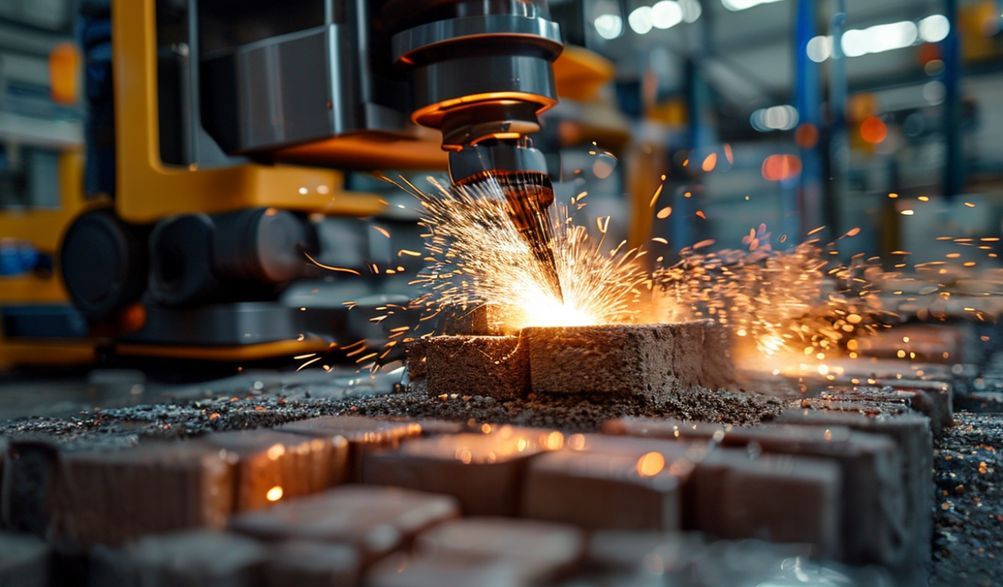
آلات تصنيع الطوب المتشابك هي مكابس متخصصة تنتج كتل بناء مزودة بحواف وأخاديد مصممة. تسمح هذه الميزات للكتل بالانزلاق معًا مثل قطع اللغز، مما يشكل جدرانًا ثابتة دون الحاجة إلى الملاط التقليدي للربط.
تعريف التكنولوجيا: كيف تعمل آلات البلوك المتشابك
في جوهرها، هذه الآلات هي مكابس هيدروليكية أو ميكانيكية دقيقة. العملية أنيقة في بساطتها ولكنها تعتمد على هندسة متينة.
- إعداد المواد:المواد الخام - التي يمكن أن تكون تربة (لاتريت)، أسمنت، رمل، رماد متطاير، أو خليط - يتم تحضيرها بنسبة رطوبة منخفضة (عادة 5-10%).
- التغذية:يتم تغذية الخليط في قادوس التغذية الموجود على الماكينة.
- الضغط:صندوق قالب يحتوي على الشكل السلبي الدقيق للكتلة المرغوبة (بما في ذلك التصميم المتشابك) يتم ملؤه. مكبس هيدروليكي أو رافعة ميكانيكية تطبق ضغطًا هائلًا، يتراوح غالبًا من 20 إلى 200 طن.
- طرد:يتم إخراج الكتلة الجديدة عالية الكثافة من القالب على منصة نقالة أو حزام ناقل.
- التداويعلى عكس الكتل الخرسانية التقليدية، غالبًا ما تكون هذه الكتل "خضراء" أو معالجة في درجة حرارة الغرفة، وتكتسب قوتها من خلال الترطيب والضغط بدلاً من الحرق بدرجة حرارة عالية.
The magic lies in the mold design. The interlocking mechanism—usually a vertical tongue-and-groove and sometimes a horizontal shear key—provides alignment, shear resistance, and incredible structural integrity once stacked.
المزايا الرئيسية للبناء الحديث
- Unmatched Speed & Labor Savings: Construction time can be reduced by over 50%. Without mixing or applying mortar, walls rise faster with semi-skilled labor. This drastically cuts project timelines and costs.
- Superior Material Efficiency & Waste Reduction: The process uses locally available materials (like on-site soil) and produces near-zero waste. Blocks are made on-demand, minimizing storage and spoilage.
- Exceptional Durability & Seismic Performance: The high compression force creates blocks with immense compressive strength. When stacked, the interlocking system creates a monolithic wall structure that performs exceptionally well under seismic loads, flexing as a unit rather than crumbling.
- Inherent Sustainability: This is a cornerstone benefit. The technology enables the use of stabilized earth, a low-carbon material. It reduces the need for cement (a major CO2 emitter) and can incorporate industrial by-products like fly ash. Buildings offer excellent thermal mass, regulating indoor temperatures naturally.
Navigating the Chinese Market for Block Making Machines
China’s dominance in machinery manufacturing isn’t accidental. For a buyer, understanding this ecosystem is the first step to a successful purchase.
Why China is a Global Hub for Machinery Manufacturing
China offers a complete spectrum of options, driven by three key factors:
* حجم غير مسبوق وسلسلة توريد Concentrated industrial clusters mean every component—from hydraulic cylinders and PLCs to hardened steel for molds—is readily available, reducing costs and lead times.
* الطيف التكنولوجي: You can find everything from simple, robust manual machines perfect for small-scale, off-grid projects to fully automated production lines with robotic palletizers, serving large commercial block yards.
* Rapid Innovation & Adaptation: Chinese manufacturers are quick to iterate on designs, incorporating user feedback and new technological features to meet diverse global market demands.
Key Manufacturing Regions and Industrial Clusters
Knowing where to look adds a layer of trust and efficiency to your search.
* مقاطعة شاندونغ: Often considered the heart of construction machinery manufacturing, known for heavy-duty, industrial-grade equipment.
* Fujian & Guangdong Provinces: These coastal regions have a high concentration of manufacturers, often with strong export departments and experience in international shipping.
* Henan Province: A major hub for brick and block making machinery, offering competitive options.
These regions host major industrial fairs like the Canton Fair, where you can meet suppliers in person or explore their latest models virtually.
Types of Suppliers: Manufacturers vs. Trading Companies
Industry practice shows that identifying your supplier’s true nature is critical.
-
Direct Manufacturers:
- مزايا: Better pricing control, direct access to engineers, clearer customization, and typically stronger after-sales support.
- سلبيات: May have less polished English communication; minimum order quantities (MOQs) can apply.
- How to Identify: Request detailed factory tour videos (not just stock footage), ask for photos of their CNC or mold-making workshops, and inquire about their R&D team. Their technical specifications will be highly detailed.
-
شركات التداول:
- مزايا: Easier communication, often lower MOQs, can source a range of complementary equipment.
- سلبيات: Higher final price, potential for communication delays with the actual factory, less direct technical expertise.
- How to Identify: They often list a vast array of unrelated machinery. Ask them directly for the name and address of the factory they partner with for this specific machine.
How to Choose the Right Interlocking Block Machine: A Detailed Checklist
اختيار الآلة ليس عن العثور على "الأفضل"، بل عنright one for your specific context.
Assessing Your Production Needs: Output, Block Type, and Automation
Start by defining your project scope clearly.
* سعة الإخراج Calculate your required blocks per 8-hour shift. Machines are rated (e.g., 800-1200 blocks/hour). Always factor in downtime for maintenance and mold changes.
* مستوى الأتمتة:
* دليل: Operator-dependent for feeding and block removal. Lowest cost, suitable for very small projects.
* شبه آلي Hydraulic operation with manual feeding or block removal. The best balance of productivity and affordability for most small-to-medium businesses.
* أوتوماتيكي بالكامل: PLC-controlled with automatic feeders, conveyors, and stackers. For high-volume, commercial production.
* Block Type: Ensure the supplier offers molds for the blocks you need: standard interlocking, corner blocks, half-blocks, and potentially custom designs for architectural features.
Critical Machine Specifications to Scrutinize
These technical details are where quality and performance are decided.
* سعة الضغط (الطاقة بالطن): This directly correlates to final block strength. For stabilized earth blocks, 40-60 tons is common. For concrete interlocking blocks, 100+ tons may be required. Don’t compromise here.
* جودة القالب والمواد: The mold is the heart of the machine. Insist on molds made from high-chromium, hardened alloy steel for longevity. A quality mold should produce 100,000+ blocks before significant wear. Discuss customization options and lead time for new mold designs.
* متطلبات الطاقة: Choose based on your site conditions:
* كهربائي Clean, efficient, but requires a stable grid.
* ديزل Fully mobile and ideal for remote sites.
* هجين (كهربائي/ديزل): Offers operational flexibility.
* دعم ما بعد البيع This is non-negotiable. Before buying, confirm:
* Availability of English operation and parts manuals.
* A readily available spare parts list and pricing.
* Access to technical support (via WhatsApp, email, video call).
* Warranty period and terms.
Raw Material Compatibility Analysis
A machine is only as good as the material it processes. Demonstrating expertise here is key.
* Soil-Cement Mixes: The most common application. The machine must provide sufficient pressure to activate the cementitious bonding. A soil test is essential to determine cement percentage (typically 5-10%).
* Clay-Based Mixes: May require slightly higher moisture content and specific compaction profiles.
* Fly Ash/Cement Mixes: Excellent for a lightweight, strong block. Flow characteristics differ, so discuss with the manufacturer.
* Concrete Mixes: Require high-tonnage machines and specific vibration systems sometimes integrated with compression.
Practical Tip: Always request to conduct a material test with your local soil sample. Reputable manufacturers often offer this service, sending you sample blocks pressed from your shipped material.
The Smart Buyer’s Guide: Sourcing and Due Diligence
Step-by-Step Sourcing Process
- Initial Research & Shortlisting: Use B2B platforms (Alibaba, Made-in-China) and Google searches with your key specs. Filter for “Verified Suppliers” or “Gold Members,” but dig deeper.
- Effective Supplier Communication & RFQ: Send a detailed Request for Quotation (RFQ). Include: required block type/dimensions, target output, raw material description, power source preference, and your port of destination. Clear communication filters unserious suppliers.
- Technical & Commercial Negotiation: Negotiate on FOB (التسليم على ظهر السفينة) price. This gives you control over shipping logistics. Discuss payment terms (e.g., 30% deposit, 70% before shipment). Never use insecure payment methods.
- Factory Audit & Quality Inspection: This is your most critical due diligence. If you cannot visit, hire a third-party inspection company (like SGS, Bureau Veritas) for a pre-shipment inspection. At minimum, insist on a live video tour of the factory floor and a video test of the actual machine under load.
- Logistics, Shipping, and Customs: The supplier will prepare export documents. You or your freight forwarder will handle sea/air freight and customs clearance in your country. Factor in these costs (shipping, insurance, import duties) to your total investment.
Red Flags and How to Avoid Common Pitfalls
Based on buyer feedback, be wary of suppliers who:
* Provide vague or inconsistent technical specifications.
* Refuse or repeatedly delay a live video call or factory tour.
* Quote a price dramatically lower than the market average—this almost always indicates inferior materials or hidden costs.
* Have poor, template-based English communication.
* Cannot provide verifiable evidence of certifications or past export history.
Essential Certifications and Compliance
Certifications are a baseline indicator of quality systems.
* علامة CE: For the European market, this indicates the machine meets EU safety, health, and environmental protection requirements. It’s a strong positive signal.
* آيزو 9001: Certifies the manufacturer has a quality management system in place. While not a guarantee of product quality, it shows procedural discipline.
* Other Standards: Depending on your country, you may need standards like SON (Nigeria), SASO (Saudi Arabia), etc. Discuss this early with the supplier.
Maximizing Your Investment: Installation, Operation, and ROI
Planning for Installation and Operator Training
The work begins when the machine arrives.
* Foundation: Prepare a level, reinforced concrete foundation as per the machine manual. This is crucial for stability and performance.
* تدريب Prioritize suppliers who offer comprehensive training—either through detailed video manuals, live online sessions, or (ideally) an on-site engineer for initial setup. Proper training prevents operational errors and early breakdowns.
Routine Maintenance for Longevity
A simple, consistent maintenance routine is the cheapest insurance.
* Daily: Clean the machine thoroughly, check hydraulic oil levels, and inspect for loose bolts.
* Weekly: Grease all moving parts (pivots, bearings), check hydraulic hoses for wear.
* Monthly: Inspect the mold for wear or damage, change hydraulic oil filters as recommended, and tighten all major structural bolts.
Calculating Your Return on Investment (ROI)
A simplified, authoritative framework to project your earnings:
ROI Time = (Total Machine Investment + Shipping & Import Costs) / (Monthly Gross Profit)
Where:
* Total Machine Investment: Final landed cost of the machine.
* Monthly Gross Profit: (Number of Blocks Produced per Month x Your Local Selling Price per Block) minus (Cost of Raw Materials + Labor + Utilities).
مثال: If your total investment is $15,000 and you produce 20,000 blocks/month selling at $0.50 each, with material/labor costs of $0.20 per block, your monthly gross profit is 20,000 x ($0.50 – $0.20) = $6,000. Your simple payback period would be approximately 2.5 months. This demonstrates the powerful economics behind this technology.
الأسئلة الشائعة (FAQ)
Q1: What is the average price range for an interlocking block machine from China?
أ: Prices vary widely based on capability. A small manual machine can start around $3,000 – $7,000. A robust semi-automatic model typically ranges from $10,000 – $25,000. Large, fully automatic production lines can cost $50,000 to $150,000+. The key is to specify your required output and automation level for an accurate quote.
Q2: Can these machines use 100% local soil?
أ: Rarely. Most soils require a stabilizer to achieve water resistance and durable strength. Typically, 5-10% cement is used for soil stabilization. Some clay-rich soils may perform with lime or other stabilizers. A soil test is mandatory to determine the optimal, cost-effective mix design.
Q3: How do I handle machine breakdowns and spare parts from overseas?
أ: This is a valid concern. Mitigate it by choosing a supplier with a proven spare parts supply chain. Before purchase, request a list of commonly worn parts (seals, hydraulic hoses, mold liners) and consider purchasing a starter kit. Ensure they offer reliable shipping for spare parts (often via air freight for urgent needs).
Q4: Are Chinese interlocking block machines reliable and durable?
أ: The market contains both high-quality and low-quality options. Reliability is a direct result of your supplier selection process. Machines from reputable manufacturers who use standard-brand hydraulic components and hardened steel molds are extremely durable and reliable. The due diligence steps outlined in this guide are designed to help you find those manufacturers.
Q5: What is the typical lead time and shipping process?
أ: Standard production time is 30-45 days after order confirmation. Shipping via sea freight to most international ports takes an additional 30-45 days. The supplier handles export from a Chinese port (FOB terms). You or your appointed freight forwarder will manage the sea freight, insurance, and customs clearance in your country.
خاتمة
Sourcing an آلة صنع الطوب المتشابك من الصين presents a significant opportunity to leverage advanced, cost-effective technology for construction. The market’s vast selection means there is a perfect machine for every project scale, from community-led housing to large-scale commercial development. As this guide has detailed, your success hinges not on finding the cheapest option, but on executing an informed, diligent selection and vetting process.
Remember to prioritize total value—encompassing machine quality, material compatibility, supplier transparency, and after-sales support—over the lowest initial price tag. Use the checklists and steps provided here as your foundational toolkit. Start by crystallizing your project requirements, then approach the market with confidence, asking the right questions and demanding verifiable proof of quality. With careful planning, your investment will not only pay for itself but will become a cornerstone for sustainable, profitable growth for years to come.
<