
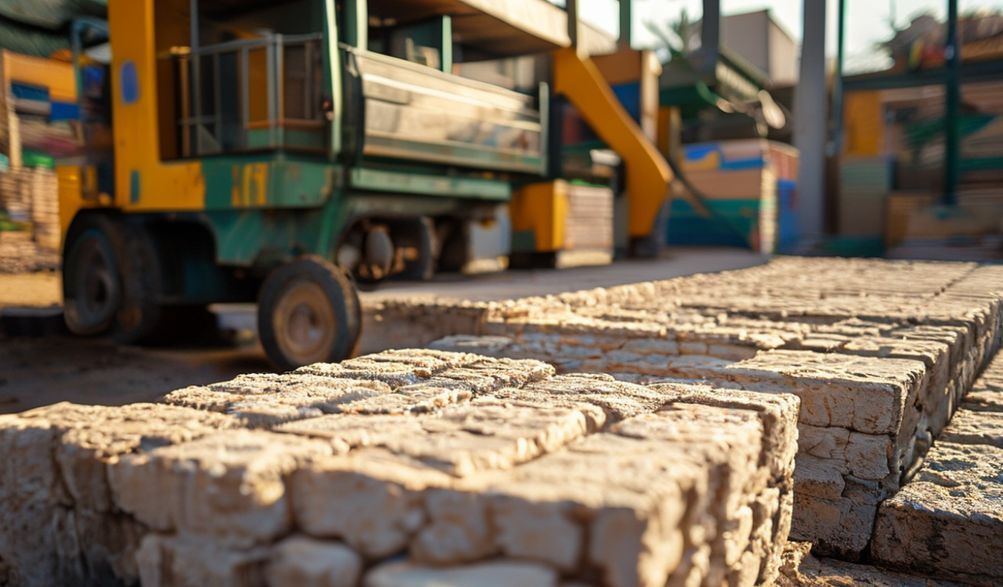
العثور على آلة موثوقة ورخيصة لصنع الطوب في غانا: دليل الشراء المباشر من المصنع
للبنائين والمقاولين ورجال الأعمال في جميع أنحاء غانا، يلوح تحدٍ دائم: كيفية الحصول على الطوب الخرساني المتين والعالية الجودة الضرورية للبناء دون أن تثقل كاهلكم الميزانية. إن جاذبية آلة صنع الطوب منخفضة السعر قوية، لكن الخوف من خطأ مكلف بنفس القوة — آلة تتعطل في غضون أسابيع، دون توفر قطع غيار أو دعم. هذه المعضلة تعيق المشاريع وتخنق الإمكانات التجارية.
يستند هذا الدليل إلى تحليل سوقي شامل، ومشاركة مباشرة مع المصنعين المحليين في تيما وكوماسي، وتقييمات تقنية للآلات العاملة في الظروف الغانية. إنه يمثل مصدرك النهائي الموثوق، حيث يجمع بين المواصفات التقنية، وبيانات الأسعار الواقعية، ونصائح شراء عملية مصممة خصيصًا لسوقنا.
سنقدم لك المساعدة للتنقل باحترافية في البحث عن آلة صنع الطوب بأسعار معقولة في غانا. ستتعرف على الأنواع الرئيسية للآلات، والميزات التي تحدد القيمة الحقيقية، وكيفية تحديد المصانع المحلية ذات السمعة الطيبة، والأسئلة الحاسمة التي يجب طرحها. هدفنا هو تمكينك من إجراء عملية شراء مستنيرة تدعم النمو التجاري المستدام، مما يضمن لك الحصول على قيمة حقيقية مقابل كل سيذي تنفقه.
فهم آلات صناعة الطوب: الأنواع وكيفية عملها
لإجراء شراء ذكي، يجب أولاً فهم التقنيات الأساسية المتاحة. الاختيار الصحيح يوازن بين ميزانيتك، الناتج المطلوب، والسياق التشغيلي.
آلات صناعة الطوب اليدوية
- الوصف:هذه هي أبسط الآلات وأكثرها تكلفةً معقولة، تعمل بالكامل بواسطة العمالة البشرية. يُستخدم ذراع رافع لضغط خليط الخرسانة داخل القالب، غالباً مع الحد الأدنى من الاهتزاز أو بدونه.
- مثالي لـ:الأفراد أو الشركات الناشئة ذات رأس المال المحدود للغاية، أو المشاريع الشخصية الصغيرة جداً، أو العمليات في المناطق الريفية التي تعاني من عدم توفر كهرباء موثوقة أو انعدامها تماماً.
- الإخراج والقيود Production is slow and physically demanding, typically yielding 200-500 blocks per day with a full crew. Block strength and consistency are highly dependent on the operator’s skill and effort, making it difficult to achieve uniform, high-density blocks for commercial purposes.
آلات صناعة الطوب شبه الأوتوماتيكية
- الوصف: This category represents the optimal “sweet spot” for most small-to-medium-scale block factories in Ghana. They combine manual feeding of raw material with a mechanized system for compaction.
- الميزات الرئيسية: An electric motor powers a vibration system (eccentric weights) that densely compacts the concrete in the mold. Many models are mobile (“egg-laying” types), allowing blocks to be made directly on the curing floor.
- Balance: These machines offer a significant boost in output and block quality over manual versions without the massive capital outlay of a full automatic system. They balance cost, efficiency, and labor requirements perfectly for growing businesses.
آلات صناعة البلوك الآلية بالكامل
- الوصف: These are high-output, integrated production lines. They feature automated systems for feeding raw materials, mixing, pressing, curing, and even stacking finished blocks.
- مثالي لـ: Large-scale commercial block factories supplying major construction projects or distributors. They require a substantial initial investment and consistent, high-volume demand to be profitable.
- The Cost Perspective: While rarely classified as “cheap” upfront, their extremely high efficiency (thousands of blocks per day) and low labor cost per block can offer the lowest total cost of ownership in the long run for the right operation.
Key Factors Defining “Cheap” & “Value” in Ghana’s Market
In Ghana’s machinery market, the cheapest option is often the most expensive mistake. True value is measured over the machine’s entire lifespan.
Upfront Cost vs. Total Cost of Ownership
A machine with a shockingly low price tag may hide severe costs:
* الأعطال المتكررة: Poor-quality components fail quickly under the stress of constant vibration.
* Part Scarcity: If spare parts aren’t available locally, weeks of downtime await while shipping from abroad.
* عدم كفاءة الطاقة A poorly made motor may draw more power, increasing your operational costs daily.
* The Better Metric: Always think in terms of cost-per-block. A slightly more expensive, robust machine that runs for years with minimal downtime will produce cheaper blocks than a “bargain” machine that is constantly being repaired.
Critical Machine Components to Inspect
Never buy a machine without evaluating these parts:
نظام الاهتزاز
This is the heart of your machine. It determines the block’s density and final strength. Look for a system with a durable, brand-name vibration motor (e.g., Italian or German brands are well-regarded) or a robust eccentric shaft assembly. Ask about the vibration frequency and amplitude.
Mold Quality & Material
The mold defines the block’s shape and finish.
* Avoid: Mild steel molds. They will wear out rapidly, leading to poorly shaped blocks and frequent replacement costs.
* Prioritize: Molds made from hardened, high-chrome steel. They resist abrasion from sand and cement, ensuring a smooth block finish and a lifespan of hundreds of thousands of cycles.
Frame and Structure
The frame must withstand relentless vibration without cracking or warping. Inspect the welding quality—it should be clean, even, and robust. A flimsy frame will lead to misalignment and catastrophic failure.
متطلبات الطاقة
Ensure the machine’s motor is compatible with Ghana’s common industrial voltages: 220V single-phase (for smaller machines) or 380V three-phase (for larger semi-automatic and automatic models). An incompatible machine is useless.
The Importance of Local Availability of Spare Parts
This cannot be overstated. Your machine will need maintenance.
* Common Wear Parts: Molds (even hardened ones wear), springs, bolts/nuts, vibration motors, electrical switches, and mixer paddles.
* Strategic Sourcing: Prioritize suppliers or factories in Accra, Tema, or Kumasi that stock these parts or can source them within 48 hours. Ask specifically: “Where do I buy a replacement vibration motor, and how quickly can I get it?” A supplier’s answer reveals their commitment to after-sales support.
How to Source Directly from a Factory in Ghana
Buying direct from a reputable local assembler or authorized factory dealer is the best way to secure value and support.
Major Industrial Hubs for Machinery in Ghana
Focus your search on these established clusters:
* Tema Industrial Area: The epicenter of heavy machinery and manufacturing, hosting numerous reputable equipment fabricators and dealers.
* Kumasi (Suame Magazine): A vast, legendary hub for artisanal engineering and machinery. Excellent for finding skilled technicians and competitive prices on semi-automatic machines.
* Accra: Industrial zones like North KaneshieوIndustrial Area host several equipment suppliers and showrooms.
Identifying a Reputable Factory or Supplier
Signs of a Trustworthy Dealer
- A physical workshop or showroom where you can see machines.
- Willingness to provide a live demonstration.
- A list of past clients (Ghanaian businesses) you can contact for references.
- Clear, written warranty terms covering specific components and durations.
- Technical staff who can explain machine operation and maintenance.
Red Flags to Avoid
- Sellers operating only from a truck or a temporary stall (“fly-by-night”).
- Prices drastically (20%+) below the prevailing market rate.
- Vague promises about after-sales service with no written commitment.
- Inability to answer basic technical questions about motor power, mold steel, or vibration mechanism.
The Factory Visit Checklist
When you visit, go prepared:
1. Request a Live Demo: Insist they run the machine using typical Ghanaian materials—local sand and cement. Observe block formation, ease of operation, and the finished block’s quality.
2. Inspect Build Quality: Look closely at welds, paint quality (a good coat prevents rust in our climate), and the general sturdiness.
3. Discuss After-Sales Support: Get clear answers on:
* Installation: Will they help set it up?
* تدريب Will they train your operators?
* الضمان: e.g., “12 months on the main frame and mold, 6 months on the motor and vibrator.” Get this in writing.
Affordable Models & Estimated Price Ranges in Ghana (2026)
تنبيه: Prices are estimates in Ghana Cedis (GHS) and fluctuate based on specifications, supplier, and forex rates. Always get current quotes.
Manual Machine Price Range: GHS 3,000 – GHS 8,000
- الناتج النموذجي: 200 – 500 blocks per day with a dedicated operator.
- ما تحصل عليه: A basic, hand-operated press. Focus on build quality of the lever and mold even at this level.
Semi-Automatic Machine Price Range: GHS 10,000 – GHS 40,000+
- This is the most competitive and popular range. Common models include single-vibrator stationary machines and mobile “egg-laying” types.
- الإخراج: Can range from 1,000 to over 3,000 blocks per 8-hour shift, depending on model and crew.
What to Expect in Each Price Bracket
- GHS 10,000 – GHS 18,000: Basic stationary semi-automatic machines, often with a single vibration motor, suitable for a small startup.
- GHS 18,000 – GHS 28,000: More robust mobile (“egg-laying”) machines, better vibration systems, and higher-quality molds. This is the core range for a serious small business.
- GHS 28,000 – GHS 40,000+: Higher-output stationary machines, possibly with multiple vibration motors, more automation (like automatic feeding), and superior component brands.
Maximizing Your Investment: Tips for Operation & Maintenance
Your machine’s performance depends as much on how you use it as on its build quality.
Proper Mix Design for Ghanaian Materials
A perfect machine with a poor mix makes weak blocks.
* A Standard Ratio: A good starting point is 1 part cement : 6 parts aggregate (a mix of clean, sharp sand and small gravel). The sand must be clean and well-graded.
* Water Content: The mix should be just moist enough to hold its shape when squeezed—not soggy. Excess water drastically reduces final block strength.
Routine Maintenance Schedule
- Daily: Thoroughly clean all concrete residue from the mold, hopper, and pallets. Lubricate all moving parts as per the manual.
- Weekly/Monthly: Check and tighten all bolts and nuts (vibration loosens them). Inspect electrical connections for wear. Check the vibration motor mounts.
Basic Troubleshooting for Common Issues
- Blocks Breaking Easily: Usually caused by a weak concrete mix (too much sand, not enough cement, or excess water) or insufficient vibration time/strength.
- Poor Surface Finish: Often a sign of a worn-out mold or a mix that is too dry.
- Inconsistent Density: Can be caused by uneven feeding of the raw mix into the mold or an inconsistent vibration system.
FAQ Section
Q1: What is the absolute cheapest block making machine I can buy in Ghana?
A: Basic manual presses can be found for as low as GHS 3,000. However, be prepared for significant physical labor and lower, less consistent output. It’s a tool for very specific, limited-use cases.
Q2: Can I get a quality semi-automatic machine under GHS 20,000?
A: Yes, it is possible. In this range, look for a basic but well-built stationary model from a known local fabricator in Suame Magazine or Tema. Prioritize a solid frame, a good vibration motor, and the supplier’s reputation over extra features.
Q3: Are Chinese block making machines sold in Ghana reliable?
A: The market is mixed. Many reliable machines are manufactured in China, but quality control varies. The critical factor is the local Ghanaian supplier. A reputable agent provides quality control, technical support, warranty honor, and spare parts. The country of origin matters less than the local service backing the machine.
Q4: What is the typical warranty for a block machine in Ghana?
A: A standard warranty from a reputable dealer might be 12 months on the frame and mold, and 6 months on the motor and vibration system. Always ensure these terms are explicitly stated in your sales contract or receipt.
Q5: How do I calculate the potential profit from my block making machine?
A: Use this simplified formula:
(Selling Price per Block - Cost of Materials per Block) x Daily Output = Gross Daily Profit.
Remember to then subtract overheads like labor, power, transport, and machine depreciation. A semi-automatic machine producing 2,000 blocks daily can be a highly profitable venture with good management and market demand.
خاتمة
Finding a truly valuable “cheap” block making machine in Ghana is about strategic investment, not just finding the lowest price. It means prioritizing robust construction, accessible local service, and proper operation over a tempting sticker price. The right machine becomes a foundation for growth, enabling you to supply quality materials for homes, schools, and businesses, contributing directly to Ghana’s development.
Use this guide as your framework. Visit the factories in Tema and Kumasi with confidence, checklist in hand. Ask the detailed questions, demand demonstrations, and verify warranties. The time you invest in research now is the first and most crucial step toward building a profitable and sustainable block production business. Your future in construction starts with a solid foundation—choose the machine that will help you build it.
<