
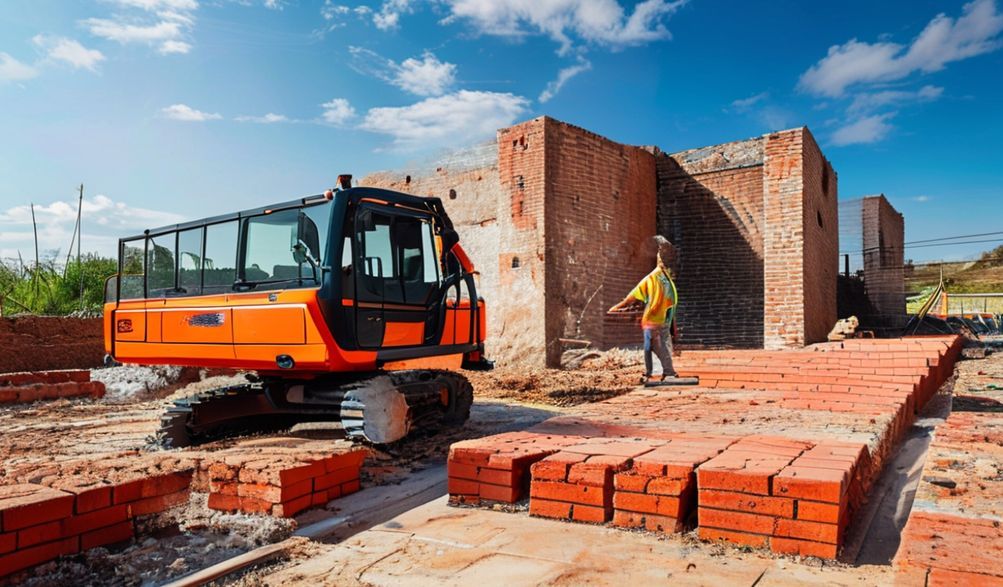
উগান্ডায় ইট বসানোর মেশিনের চূড়ান্ত নির্দেশিকা: খরচ, সরবরাহকারী ও সুবিধাসমূহ (২০২৬)
ভূমিকা
আপনি কি একজন উগান্ডান ঠিকাদার যিনি আপনার প্রকল্পের সময়সীমা প্রসারিত হতে দেখছেন, আর শ্রম খরচ বাড়ছে? অথবা আপনি কি একজন ডেভেলপার যিনি কাম্পালায় আপনার নতুন অ্যাপার্টমেন্ট কমপ্লেক্সে হাতে তৈরি ইটের কাজের অসামঞ্জস্যতায় হতাশ? আপনি একা নন। উগান্ডা জুড়ে নির্মাণের এই জোয়ার—সমৃদ্ধ রাজধানী থেকে নতুন পৌর উন্নয়ন পর্যন্ত—প্রথাগত পদ্ধতিগুলোকে তাদের সীমায় পৌঁছে দিচ্ছে।
বাসস্থান, বাণিজ্যিক স্থান এবং অবকাঠামোর চাহিদা ব্যাপক হারে বৃদ্ধি পাচ্ছে। তবুও, এই প্রবৃদ্ধির মুখোমুখি হচ্ছে দক্ষ শ্রমিকের অভাব, মজুরি বিল বৃদ্ধি এবং দ্রুত গুণগত মান নিশ্চিত করার নিরবচ্ছিন্ন চাপের মতো স্থায়ী চ্যালেঞ্জগুলো। এই উচ্চ ঝুঁকিপূর্ণ পরিবেশে, শুধুমাত্র হাতে ইট বসানোর উপর নির্ভরতা অব্যাহত রাখা কেবল ধীরগতিই নয়; এটি আপনার লাভজনকতা এবং সুনীতির জন্য একটি কৌশলগত ঝুঁকি।
এই নির্দেশিকা পরিবর্তনকারী একটি উপাদানের সাথে পরিচয় করিয়ে দিচ্ছে: ইট বসানোর যন্ত্র। একসময় ভবিষ্যতের প্রযুক্তি হিসেবে বিবেচিত, এই প্রযুক্তি এখন একটি ব্যবহারিক, শক্তিশালী সমাধান যা বিশ্বব্যাপী কাজের স্থানগুলিকে রূপান্তরিত করছে। উগান্ডার ব্যবসায়ীদের জন্য যারা প্রস্তুত, এটি দক্ষতা, নির্ভুলতা এবং দীর্ঘমেয়াদী খরচ নিয়ন্ত্রণের ক্ষেত্রে একটি উল্লম্ফন উপস্থাপন করে।
আমাদের লক্ষ্য হল আপনার নির্ভরযোগ্য ও চূড়ান্ত তথ্যসূত্র হওয়া। এই নির্দেশিকা তৈরি করা হয়েছে শিল্পগত গবেষণা, উগান্ডার সরঞ্জাম বাজারের প্রত্যক্ষ অন্তর্দৃষ্টি এবং গ্রহণযোগ্যতার প্রকৃত অর্থ কী তার স্পষ্ট বিশ্লেষণের ভিত্তিতে। আমরা প্রচারণার আবরণ সরিয়ে আপনার প্রয়োজনীয় তথ্য উপস্থাপন করব।
এই চূড়ান্ত নির্দেশিকায় উগান্ডায় পাওয়া যায় এমন ইট বসানোর যন্ত্রের প্রকারভেদ অনুসন্ধান করা হবে, খরচ বনাম সুবিধা বিশ্লেষণ করা হবে, বিশ্বস্ত সরবরাহকারীদের চিহ্নিত করা হবে এবং সফলভাবে গ্রহণের জন্য মূল বিবেচনাগুলো প্রদান করা হবে।
ইট বসানোর মেশিন বোঝা: প্রকারভেদ এবং কীভাবে কাজ করে
What is a Brick Laying Machine?
At its core, a brick laying machine is a piece of automated or semi-automated equipment designed to place bricks and apply mortar with remarkable precision and speed. Think of it as a force multiplier. Where a team of masons places bricks one by one, a machine automates the most repetitive and physically demanding parts of the process: picking, buttering with mortar, and placing each brick in perfect alignment.
The core value proposition is simple: transform bricklaying from a manual craft into a streamlined, controlled production line. This doesn’t eliminate the need for skilled oversight but dramatically enhances what a single team can achieve.
Main Types of Machines Available
Not all machines are created equal. Your choice will depend heavily on your project scale, budget, and operational goals.
-
Semi-Automatic Brick Layers: The gateway to automation for small and medium-sized contractors.
- তারা কীভাবে কাজ করে: An operator (often a trained mason) feeds bricks and mortar into the machine. The machine then takes over, applying mortar and placing the brick with consistent pressure and alignment. The operator guides the machine along the wall.
- সেরা জন্য: Housing projects, perimeter walls, schools, and medium-scale commercial buildings.
- Key advantage: Significantly more affordable than full robots, easier to operate and maintain, and perfect for contractors looking to boost output without a massive capital outlay.
-
Fully Automatic Brick Laying Robots: The pinnacle of efficiency for large-scale developers.
- তারা কীভাবে কাজ করে: These are programmable, track-mounted systems. Once set up and fed with a continuous supply of bricks and mortar, they can operate with minimal human intervention, laying bricks with laser-guided precision along a pre-defined path.
- সেরা জন্য: Large housing estates, industrial warehouses, high-rise buildings, and government infrastructure projects.
- Key advantage: Maximum output (thousands of bricks per day), unparalleled consistency, and the greatest reduction in direct labor requirements. The investment is higher, but so is the potential return on vast projects.
-
Mobile Block Making Machines (Contextual Note): It’s crucial to differentiate between machines that lay bricks and those that manufacture them. In Uganda, “block making machines” are a common and vital piece of equipment for producing concrete bricks/blocks on-site. While this guide focuses on laying machines, a complete on-site production line might involve both: a block maker to produce the bricks and a brick layer to place them. When speaking with suppliers, clarify which technology you are seeking.
Core Technology and Operation
The magic happens through a coordinated mechanical process. While models vary, the general operation follows these steps:
- মর্টার প্রয়োগ: A pump and nozzle system deposits a precise, consistent bed of mortar onto the course.
- Brick Picking: A robotic arm or gripping mechanism picks up a single brick from a fed stack.
- Buttering (Optional): Some machines apply mortar to the head of the brick (buttering) for stronger vertical bonds.
- Placing & Alignment: The arm places the brick onto the mortar bed. A combination of sensors, guides, or vibration ensures it is perfectly aligned and leveled with the previous brick.
- সংকোচন: A mechanism applies uniform pressure to seat the brick firmly, squeezing out excess mortar for a clean finish.
Imagine a highly precise, tireless assembly line worker dedicated solely to placing bricks perfectly, every single time. This is the fundamental action of the machine.
The Concrete Benefits: Why Consider a Machine in Uganda?
Investing in a brick laying machine is a strategic business decision. Here’s how it translates into tangible advantages on Ugandan construction sites.
Drastic Increase in Construction Speed
Time is money, and delays are costly. Manual bricklaying is inherently slow.
* A skilled mason team might lay 800-1,200 bricks in a full day, depending on complexity.
* A semi-automatic machine can consistently lay 1,500 to 3,000 bricks per day with a small crew.
* A fully automatic robot can exceed 4,000-6,000 bricks per day.
This 2x to 5x increase in speed means faster project completion. You can meet tighter deadlines, reduce site overhead costs, and move on to the next project sooner, accelerating your business’s overall revenue cycle.
Unmatched Consistency and Structural Quality
Human fatigue leads to variation. A machine does not get tired.
* Perfect Mortar Beds: Every brick gets an even, consistent layer of mortar, eliminating weak spots.
* Exact Alignment: Walls are perfectly straight and plumb, reducing the need for corrective work.
* Uniform Pressure: Each brick is seated with the same force, creating a stronger, more homogeneous wall structure.
ফলাফল?Structurally superior buildings with less material waste from errors, and work that consistently meets or exceeds Ugandan building standards. This enhances your reputation for quality.
উল্লেখযোগ্য দীর্ঘমেয়াদী খরচ হ্রাস
Look beyond the initial purchase price to the cost-per-brick over the machine’s lifespan.
* Labor Cost Savings: This is the most significant factor. While you still need operators, one machine can replace the output of several masons. As skilled labor wages continue to rise in Uganda, this saving becomes more pronounced each year.
* উপাদান দক্ষতা: Precise mortar application reduces waste by 10-20% compared to manual methods.
* Reduced Rework: The consistency of machine-laid walls drastically cuts costs associated with fixing errors or poorly laid sections.
For high-volume projects, the machine can pay for itself within a few projects through these accumulated savings.
Addressing Skilled Labor Shortages
Finding and retaining enough skilled masons is a nationwide challenge. A brick laying machine acts as a বল গুণক.
* It allows your existing, most skilled masons to be upskilled as machine operators and supervisors, overseeing more work.
* It reduces your project’s dependency on a large, hard-to-find manual workforce.
* It makes your business more resilient to labor market fluctuations.
Market Analysis: Cost of Brick Laying Machines in Uganda
Understanding the investment is crucial. Prices are influenced by automation, origin, and support.
Price Range Overview (2026 Estimates)
গুরুত্বপূর্ণ দাবিত্যাগ: The figures below are market estimates for 2026. Actual prices vary significantly based on supplier, exact specifications, currency exchange rates, and import duties. Always request a formal, detailed quotation from your shortlisted suppliers.
| Machine Type | Estimated Price Range (UGX) | Primary Use Case |
| :— | :— | :— |
| সেমি-অটোমেটিক | 45,000,000 – 120,000,000 | Small to medium projects, contractors scaling up |
| সম্পূর্ণ স্বয়ংক্রিয় | 150,000,000 – 400,000,000+ | Large-scale developments, industrial projects |
Key Factors Influencing the Price
- স্বয়ংক্রিয়তার স্তর: Semi-automatic is the entry point; full robotic automation commands a premium.
- উৎপাদন ক্ষমতা: Machines rated for higher bricks-per-hour output cost more.
- Brand & Country of Origin: Machines from Europe are typically at the premium end, while robust and popular options from India and China offer competitive pricing and are common in the Ugandan market.
- After-Sales Package: A machine sold with comprehensive training, a multi-year warranty, and a promise of local technical support is more valuable than a bare-bones import.
Total Cost of Ownership (TCO) Beyond Purchase
The sticker price is just the beginning. A prudent buyer budgets for:
* Importation Costs: Shipping, insurance, clearing agent fees, and Uganda’s import duties (which can be substantial for heavy machinery). A reputable local supplier will often have this cost built into their delivered price.
* ইনস্টলেশন ও কমিশনিং: Getting the machine set up and calibrated on your first site.
* অপারেটর প্রশিক্ষণ: Essential for productivity and safety.
* রক্ষণাবেক্ষণ ও যন্ত্রাংশ: Regular servicing and the cost/availability of wear-and-tear parts like nozzles, grippers, and hydraulic seals.
Finding a Reliable Supplier in Uganda: A Buyer’s Checklist
Your choice of supplier is as critical as your choice of machine. In Uganda, support is everything.
Local Distributors vs. Direct Import
- Direct Import (from Alibaba, etc.): May seem cheaper initially.
- অসুবিধাগুলো No local support, you handle all import logistics and taxes, warranty claims are a nightmare, no training, no guaranteed spare parts. High risk.
- Authorized Local Distributor: Has a physical presence in Uganda (likely in Kampala or Entebbe).
- সুবিধা: Provides installation, training, and after-sales service. Warranty claims are handled locally. Stocks or can source critical spare parts. Understands the Ugandan market and site conditions. High E-E-A-T (Experience, Expertise, Authoritativeness, Trustworthiness).
For 99% of Ugandan buyers, a reputable local supplier is the only recommended path.
Verifying Supplier Credentials & Expertise
Do not skip this due diligence. Your checklist:
* ✅ Physical Office/Warehouse: Visit them. Do they have a showroom or workshop?
* ✅ Demonstrable Experience: How long have they been supplying construction equipment? Ask for a portfolio.
* ✅ ক্লায়েন্ট রেফারেন্স: Insist on talking to past Ugandan clients who bought similar machines. Visit a site if possible.
* ✅ Authorization: Are they an authorized dealer for the brands they sell? Ask for certificates.
* ❌ Red Flags: Suppliers with only a PO Box, mobile number, or who cannot provide verifiable local references.
Essential Questions to Ask Before Buying
- “What is the exact warranty period and what does it cover (parts, labor, on-site service)?”
- “Do you provide comprehensive on-site operator and mechanic training? Is it included?”
- “Which spare parts are most prone to wear? Do you stock them in Kampala, and what is the lead time?”
- “Can we arrange a live demonstration of this model, either at your facility or a client’s site?”
- “What is the estimated delivery timeline, and does your price include all customs clearance and delivery to my site?”
Critical Considerations Before You Invest
Project Suitability and Scale
A brick layer isn’t for a single-family home. Perform a simple feasibility check:
* Ask: “What is my total brick volume over the next 2-3 years?”
* Threshold: If you are not consistently engaged in projects requiring millions of bricks (e.g., housing estates, large commercial complexes, serial construction), the investment may be hard to justify. For smaller contractors, consider collaborative ownership or rental models if they emerge in the market.
Site Requirements and Preparation
The machine needs a suitable environment:
* ক্ষমতা: Most machines require a reliable 3-phase power supply. A industrial generator may be necessary.
* মহাকাশ You need clear, level space for the machine to operate and for storing large, accessible stacks of bricks and mortar.
* Logistics: Plan for efficient material delivery to the machine’s feeding point to avoid bottlenecks.
Operator Training and Skill Shift
Your masons become machine technicians. This is a cultural and operational shift.
* Plan for the training period where output may be lower.
* Frame this as a career advancement for your best workers—they are learning to control advanced technology.
* Clear communication with your workforce is essential to manage this transition smoothly.
Maintenance and Spare Parts Ecosystem
This cannot be overstated. A broken machine without support is a pile of expensive scrap metal.
* Your supplier অবশ্যই have the capacity to service what they sell.
* Establish a preventive maintenance schedule from day one.
* Based on your supplier’s advice, keep a small inventory of the most critical, fast-wearing spare parts on hand to minimize downtime.
সচরাচর জিজ্ঞাসিত প্রশ্নাবলী (এফএকিউ)
Q1: What is the actual output of a semi-automatic brick layer per day in Ugandan conditions?
এ Under realistic Ugandan site conditions—factoring in material handling, operator breaks, and initial learning—a well-operated semi-automatic machine can reliably lay between 1,200 and 2,500 bricks in an 8-hour day. This is highly dependent on site organization and operator skill.
Q2: Can these machines lay different types of bricks (e.g., clay, cement-sand)?
এ Most machines are adaptable, but you must confirm with your supplier. They can typically handle standard cement-sand blocks and fired clay bricks of common dimensions (e.g., 6-inch). If you use a specialized brick size or type, provide a sample to the supplier for testing during the demonstration.
Q3: How do I handle repairs if the machine breaks down?
এ This is the most critical question. The answer lies in your pre-purchase decision. Choose a supplier with in-country technicians. Before buying, get a clear service-level agreement: response time, availability of loaner machines, and spare parts logistics. This is the primary reason we advocate for reputable local suppliers over direct imports.
Q4: Is financing available for such equipment in Uganda?
এ Yes, some established equipment distributors have partnerships with local banks or microfinance institutions to offer asset financing or hire-purchase agreements. This makes the investment more accessible. Inquire directly with suppliers about their available financing options.
Q5: What is the typical payback period for this investment?
এ It is highly project-specific. For a contractor using a semi-automatic machine on a large, ongoing housing project, the payback period could be 12 to 24 months, calculated through labor and material savings. For a fully automatic robot on a massive development, it may be longer but justified by the sheer scale. Create a simple financial model based on your current labor costs and projected machine output.
উপসংহার
The Ugandan construction industry is at an inflection point. Embracing technology like brick laying machines is no longer a luxury for a few; it’s a strategic imperative for businesses aiming to lead in efficiency, quality, and scalability. The benefits—blistering speed, impeccable consistency, and compelling long-term economics—are clear and substantial.
However, success hinges on more than just purchasing a machine. It requires careful planning, an honest assessment of your project pipeline, and, above all, partnering with a reputable, experienced supplier who offers unwavering local support. This relationship is your single greatest guarantee of a successful investment.
Use this guide as your framework. Define your needs, scrutinize your suppliers, and ask the hard questions. Your logical next step is to contact two or three shortlisted suppliers, request detailed quotations with full TCO breakdowns, and insist on a live demonstration.
Are you considering automating your bricklaying? Share your thoughts or questions below. For further, curated resources on construction technology in East Africa, feel free to reach out.
<