
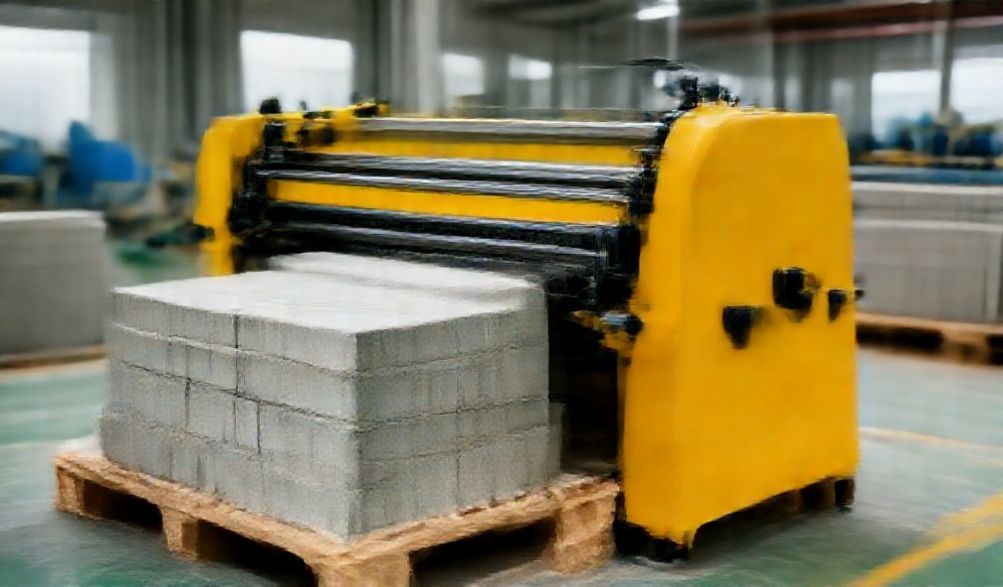
Your Ultimate Guide to China’s Small Brick Making Machines: Spotlight on FUDA Factory
For over a decade, I’ve navigated the intricate world of construction machinery, helping entrepreneurs and businesses from Accra to Atlanta establish profitable brick and block manufacturing operations. The single most common question I encounter is: “How can I find a reliable, efficient, and cost-effective small brick making machine without getting lost in the vast sea of global suppliers?” If you’re asking this, you’re already on the right track. The answer often leads to China, the undisputed epicenter of brick machinery manufacturing. But within that landscape, discernment is everything. This guide will provide an in-depth look at small brick making machines from China, using the FUDA factory as a detailed case study. My goal is not to sell you a FUDA machine, but to arm you with the expert framework and critical checks needed to make an informed decision, whether you choose them or another reputable supplier.
Understanding Small Brick Making Machines
Before evaluating any factory, you must understand the product itself. A small brick making machine is a gateway to entrepreneurship and project independence, but its capabilities and limitations must align with your goals.
What is a Small Brick Making Machine?
At its core, a small brick making machine is a compact, often mobile or semi-automatic system designed for small to medium-scale production. It’s the workhorse for operations where a massive, fully automated plant is overkill and cost-prohibitive.
- মূল বৈশিষ্ট্য: These machines prioritize accessibility. They have a lower output (typically 1000 to 5000 bricks per 8-hour shift), a smaller physical footprint for easier siting, simpler operation often requiring a small crew, and a significantly lower initial investment compared to industrial plants. Think of them as the precision tools of brick manufacturing, ideal for targeted production.
Common Types & Technologies
Not all small machines are created equal. The technology dictates output, labor needs, and final product quality.
-
স্বয়ংক্রিয়তার স্তর অনুযায়ী:
- ম্যানুয়াল: Operated entirely by hand lever; lowest cost, highest labor intensity, suitable for very low-volume or community projects.
- সেমি-অটোমেটিক: The sweet spot for most small businesses. They use electric or diesel power for vibration and compression, but brick ejection and pallet cycling may be manual. They offer an excellent balance of productivity and price.
- সম্পূর্ণ স্বয়ংক্রিয়: Equipped with a PLC controller, automatic feeder, and stacker. They require minimal manual intervention, offering the highest output in the “small” category but at a higher price point.
-
By Design:
- স্ট্যাটিক ব্লক মেশিন: Fixed in place, requiring bricks to be moved away after production. They are generally more robust and allow for higher pressure.
- মোবাইল "ডিম পাড়ার" মেশিন: These produce bricks directly on the ground, moving forward after each cycle like a chicken laying eggs. They eliminate the need for pallets and are fantastic for rapid, on-site production of solid blocks.
-
Core Technology: Regardless of type, most machines rely on vibration and compression. A motor creates high-frequency vibration to compact the raw concrete mix, while a hydraulic or mechanical system applies intense pressure to form a dense, strong brick.
Ideal Applications and Users
Who benefits most from these machines? The range is surprisingly broad.
- Small Construction Firms & Start-up Entrepreneurs: Producing bricks for your own projects or selling locally to create a new revenue stream.
- সম্প্রদায় ও উন্নয়ন প্রকল্প: Building schools, clinics, or housing in remote areas where transporting bricks is costly.
- Agricultural & Homesteading: Creating blocks for barns, storage sheds, boundary walls, and landscaping features like pavers and retaining wall blocks.
- Specialty Product Makers: Focusing on interlocking bricks for erosion control, permeable pavers, or customized architectural blocks.
Why Source from China? An Industry Overview
China’s dominance in brick machinery isn’t an accident. It’s the result of decades of industrial evolution, creating a ecosystem that presents unique advantages—and challenges—for the global buyer.
The Chinese Manufacturing Landscape for Brick Machinery
The sector is concentrated in industrial hubs like Linyi (Shandong)এবংQuanzhou (Fujian), where entire supply chains—from steel fabrication and hydraulic systems to vibration motor production—exist in close proximity. This clustering drives efficiency and innovation. The industry has matured from its early days of competing solely on price to now competing on value, reliability, and technological adaptation.
Key Benefits for International Buyers
- অনন্য খরচ-কার্যকারিতা: Economies of scale and integrated supply chains keep production costs lower, translating to competitive FOB prices.
- Extensive Variety & Customization: You can find a machine for nearly any application. Need a machine that runs on a tractor’s PTO? Or one customized for a specific soil-cement mix? Chinese factories are typically more flexible than Western counterparts in offering modifications.
- Improving Standards: Leading factories now actively pursue ISO and CE certifications, invest in better welding and painting processes, and use internationally recognized components to meet global market demands.
Potential Challenges and How to Mitigate Them
The scale that creates advantage also breeds complexity.
- Quality Variance: The gap between a top-tier factory and a low-end workshop is vast. A machine that looks identical in a photo can have critically different components.
- Communication Hurdles: Language barriers and time zone differences can lead to costly misunderstandings in specifications and service.
- Due Diligence is Non-Negotiable: You cannot buy on price and photos alone. The following sections will provide your verification toolkit.
Deep Dive: Evaluating the FUDA Brick Making Factory
Let’s apply a practical evaluation framework to a specific example: the FUDA Brick Making Factory. This is not an endorsement, but a demonstration of how to scrutinize any supplier.
Who is FUDA? Company Profile and History
Based on available public information, FUDA presents itself as a manufacturer located in China’s machinery hubs. They typically specialize in the popular কিউটি সিরিজ of block machines (like the QT4-15, QT6-15) and concrete brick making equipment. Their stated focus is often on providing robust, user-friendly machines for the small to medium-scale market, particularly targeting export to developing regions. The first step in your research is to verify this: ask for their exact business license, founding date, and physical address.
Analyzing FUDA’s Machine Portfolio
A professional supplier will have a clear, technical catalog. For a model like a semi-automatic QT4-15, scrutinize:
- আউটপুট: Is it “per hour” or “per day”? A reputable spec sheet will state a realistic output (e.g., 4,320 solid blocks/8 hours under ideal conditions).
- শক্তি প্রয়োজনীয়তা: Is it 3-phase or can it run on a generator? What’s the total motor power (kW)?
- ইটের প্রকারভেদ: What mold sizes are included? Can it produce hollow blocks, solid blocks, and pavers by changing molds?
- USPs They May Highlight: Look for claims like “high-pressure hydraulic system,” “frequency conversion vibration” for energy savings, or “reinforced steel frame.” Your job is to ask for proof or deeper explanation.
Assessing FUDA’s Credibility and Trust Signals
This is the most critical part of your evaluation. Do not skip these steps.
- সনদপত্র: Ask, “Can you send me a copy of your CE/ISO certification?” Anyone can claim it; legitimate factories can provide the document.
- Export Experience: Request a list of countries they’ve shipped to recently. Better yet, ask for contact information for 2-3 past international clients (with their permission). A reference call is invaluable.
- Factory Evidence: A website gallery is not enough. Request a live video tour via WhatsApp or Zoom. Ask to see the assembly floor, welding stations, painting booths, and quality control checks. This separates real factories from trading companies.
- Customer Reviews: Search beyond their website. Look for videos on YouTube from users, or discussions on industry forums like Brick Making Machine Forums. Be wary of testimonials that seem generic.
- বিক্রয়োত্তর সেবা: Drill down on specifics. “What is included in the manual? Do you have video guides in English? What is the warranty period and what components are covered? How quickly can you ship spare parts like moulds or hydraulic seals?”
Critical Checklist Before Buying from Any Chinese Supplier
Consider this your mandatory pre-purchase protocol.
Pre-Purchase Verification Steps
- Get a Detailed Proforma Invoice (PI): This should list every item, part number, price, and the agreed Incoterm (e.g., FOB Shanghai).
- Talk to Engineers: Insist on a video call with a technical person, not just a sales agent. Discuss your raw materials (aggregate size, cement type) to ensure machine compatibility.
- Contact References: Actually call or email the provided past clients. Ask about machine performance, ease of assembly, and the supplier’s responsiveness to problems.
- Clarify Logistics: Understand who arranges shipping, handles customs, and pays for insurance based on your chosen Incoterm.
গুরুত্বপূর্ণ মেশিনের বিবরণ যাচাই করার জন্য
The devil is in the component details.
- হাইড্রোলিক সিস্টেম: Brand? (Domestic brands like HuaideবাLikai are common; international brands like Yuken are a premium sign).
- ভাইব্রেশন মোটর: Brand and power (e.g., 2.2kw x 2). This is the heart of the machine.
- PLC & Electrical Panel: For automatic models, is it a known brand like SiemensবাMitsubishi?
- নির্মাণ Ask for the thickness of the main frame steel (e.g., “Is the frame made from 12mm steel plate?”).
- মোল্ডের গুণমান: Are moulds made from high-chromium alloy steel for durability? Request close-up photos.
Navigating Payment and Contract Terms
- Payment: Start with a small deposit (20-30%), with the majority (70-80%) paid against a copy of the Bill of Lading. Letters of Credit (L/C) are secure but involve bank fees. Avoid 100% upfront payments.
- Contract: Have a formal, bilingual contract. It must include: detailed specifications, warranty terms, delivery timeline, payment schedule, and a clause for third-party pre-shipment inspection.
- Inspection: Hiring a company like SGS, BV, or Intertek to inspect the machine before it leaves the factory is a few hundred dollars well spent. They verify quality, assembly, and function.
Maximizing Your Investment: Operation and ROI
A successful purchase is just the beginning. Proper setup and operation determine your profitability.
Setting Up for Success: Installation and Training
- Site Preparation: Your supplier should provide foundation drawings. Ensure you have a level, reinforced concrete base, the correct 3-phase power supply, and a plan for raw material storage and mixing.
- প্রশিক্ষণ: Maximize any training offered—whether it’s an on-site engineer (you usually cover visa and local costs) or detailed remote sessions. Have your entire crew participate.
Calculating Potential Return on Investment (ROI)
Here’s a simplified framework for a small machine:
- Daily Output: e.g., 3,000 bricks.
- Selling Price: e.g., $0.10 per brick in your local market.
- Daily Revenue: 3,000 x $0.10 = $300.
- Daily Costs: Raw materials (cement, aggregate, sand) + labor + power + overhead. Estimate this per brick (e.g., $0.05).
- Daily Gross Profit: $300 – (3,000 x $0.05) = $300 – $150 = $150.
- আরওআই টাইমলাইন: If the machine costs $9,000, simple ROI = $9,000 / $150 = 60 production days.
This is a basic model; your actual costs and prices will vary.
Maintenance Tips for Long Machine Life
- দৈনিক Clean the machine thoroughly, check hydraulic oil levels and for leaks, tighten any loose bolts.
- সাপ্তাহিক Grease all bearings and pivot points, inspect moulds for wear.
- Monthly: Change hydraulic oil and filters as per manual, perform a full bolt check.
- স্পেয়ার পার্টস: From day one, establish a channel for ordering common wear parts: seal kits, vibration motor bearings, spring pads.
সচরাচর জিজ্ঞাসিত প্রশ্নাবলী (এফএকিউ)
Q1: What is the approximate price range for a small brick making machine from China like FUDA’s?
এ Prices vary dramatically. A basic manual machine can start around $3,000, semi-automatic models range from $7,000 to $15,000, and fully automatic small plants can be $20,000+. Always compare based on detailed specifications and component brands, not just the headline price.
Q2: Can FUDA customize a machine for my specific brick design or raw materials?
এ Most factories, including FUDA, will offer custom mold fabrication for your brick design (at an extra cost). Adjusting the machine for unique raw materials (like volcanic ash) is more complex and requires detailed discussion with their engineers during the quoting process.
Q3: How do I ensure the machine meets my country’s safety and quality standards?
এ You must be proactive. State your required standards explicitly in the contract. For electrical safety, you may need to specify wiring standards. The most reliable method is to contract a third-party inspection agency to conduct a pre-shipment inspection against your agreed checklist.
Q4: What is the typical lead time from order to delivery?
এ For a standard model, production takes 20-30 days. Sea freight shipping to major ports in Africa or Southeast Asia can add 25-40 days. Always get a written timeline in your contract, including the production completion date and estimated shipping schedule.
Q5: What kind of after-sales support can I realistically expect?
এ Expect digital support: PDF manuals, parts diagrams, and troubleshooting videos. Real-time support is typically via WhatsApp or WeChat. Clarify their working hours for response. For critical mechanical issues, they may send replacement parts, but you will likely be responsible for finding a local technician to fit them, guided remotely.
উপসংহার
Sourcing a small brick making machine from China, whether from the FUDA factory or another reputable manufacturer, represents a significant strategic opportunity to control costs, boost productivity, and build a sustainable business. The path to success, however, is paved with diligent research. This guide has provided you with the lens of an industry expert to evaluate suppliers, scrutinize machines, and navigate the transaction process. Remember, you are not just buying a piece of equipment; you are forming a partnership. Investing time in thorough due diligence—applying the checklist, verifying credentials, and clarifying every detail—is as crucial as the financial investment itself. By doing so, you transform a purchase into a foundation for long-term growth and profitability in the vital construction materials sector.
This guide is based on industry analysis, technical specifications, and international trade best practices. For complex import regulations or large-scale investments, consulting a local import/export agent or industry consultant is always recommended.
<