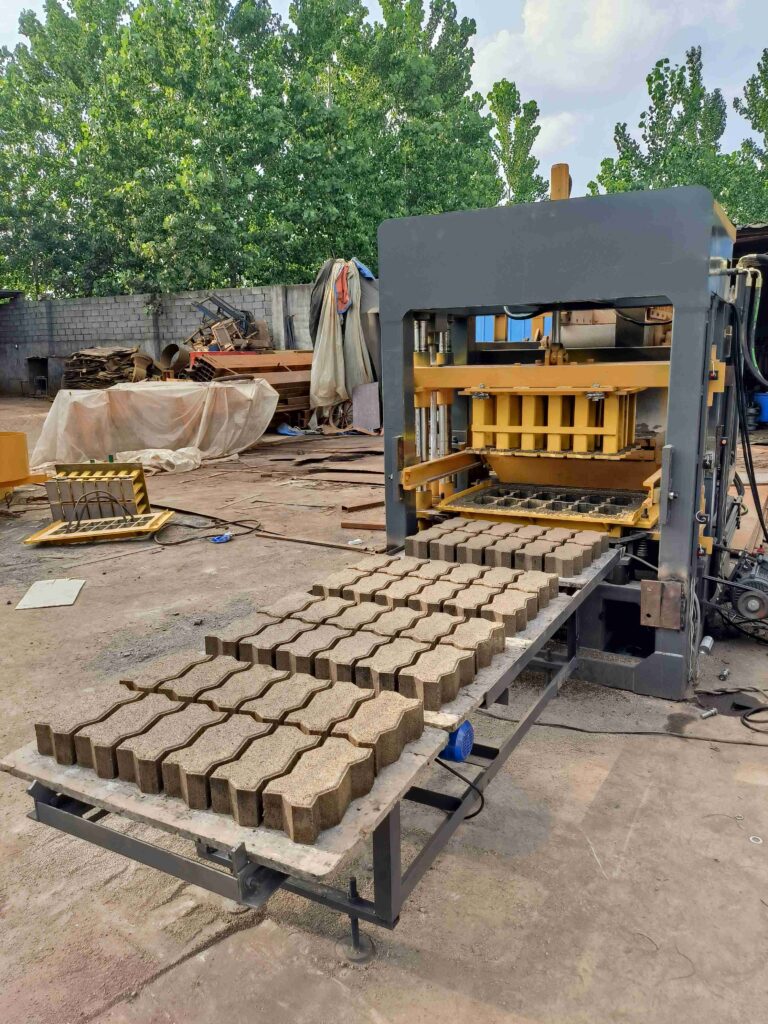
ইঞ্জিনিয়ারড পেভমেন্ট সলিউশনের সাহায্যে বাজার সম্প্রসারণ
পরিকাঠামো প্রয়োগের জন্য ইঞ্জিনিয়ারিং পেভিং ইউনিট
ভেহিকুলার ট্রাফিকের জন্য পেভিং ইউনিট উৎপাদনে মানক দেয়াল ইট উৎপাদন থেকে রূপান্তর একটি গুরুত্বপূর্ণ প্রযুক্তিগত এবং বাণিজ্যিক লাফ। এর জন্য দৃষ্টিভঙ্গিতে একটি মৌলিক পরিবর্তন প্রয়োজন: একটি বিল্ডিং এনভেলপ উপাদান থেকে একটিলোড-বিয়ারিং, পরিধান-প্রতিরোধী, এবং নিরাপত্তা-গুরুত্বপূর্ণ পৃষ্ঠ উপাদান.
১. পণ্যের সংজ্ঞা: "ইট" থেকে উচ্চক্ষমতাসম্পন্ন পেভার
It is crucial to adopt precise terminology. In road and highway contexts, the products are not traditional bricks but concrete or clay paving units. They are characterized by:
- Higher Dimensional Thickness: Typically 80mm (3.15 inches) or more for heavy traffic, compared to standard brick thickness of ~65mm.
- Superior Mechanical Properties: Extremely high compressive strength, tensile splitting strength, and resistance to abrasion.
- Specialized Geometries: Shapes designed for interlock (e.g., herringbone, stretcher bond) to distribute loads laterally and prevent movement under traffic forces.
- Controlled Surface Texture: Finishes that provide skid resistance in wet and dry conditions.
2. Critical Performance Specifications for Road and Highway Applications
The manufacturing process must be engineered to meet stringent international and national standards, such as ASTM C936 (Standard Specification for Solid Concrete Interlocking Paving Units) or EN 1338 (Concrete Paving Blocks). Key specifications include:
2.1. Compressive Strength
- Requirement: This is the paramount specification. For light residential roads, minimum strength may be 55 MPa (8,000 psi). For municipal streets, industrial yards, and highway applications (e.g., bus lanes, intersections, toll plazas), strengths often exceed 80 MPa (11,600 psi) or higher.
- Manufacturing Implication: Achieving this requires ultra-high-pressure compaction (often > 600 tons of force) in a hydraulic press, a very low water-cement ratio concrete mix with high-quality aggregates, and optimal curing. The machinery must be capable of sustained, precise high-pressure application.
2.2. Abrasion Resistance
- Requirement: Paving units must withstand the grinding action of tires, especially in braking and turning zones. Tests like the Böhme or Wide Wheel abrasion test measure surface wear.
- Manufacturing Implication: Abrasion resistance is directly tied to surface hardness and density. A high-strength mix, combined with a surface finish that exposes the hard aggregates (e.g., a lightly exposed aggregate texture), is essential. The mix must have a robust aggregate structure near the wearing surface.
2.3. Freeze-Thaw Durability
- Requirement: In cold climates, paving must survive hundreds of freeze-thaw cycles without significant scaling or loss of mass (as per ASTM C1645 or equivalent).
- Manufacturing Implication: This requires a very dense, low-porosity matrix to minimize water absorption. Air-entraining admixtures may be used in concrete mixes to create microscopic, disconnected air bubbles that provide pressure relief during freezing. Complete and controlled curing is non-negotiable.
2.4. Dimensional Tolerance and Interlock
- Requirement: Tolerances for thickness, length, and width are exceptionally tight (often ± 1-2mm). Consistency is critical for achieving a level surface and proper interlock, which is the system’s mechanism for load distribution.
- Manufacturing Implication: This demands precision-engineered, hardened steel molds, perfectly calibrated presses, and consistent raw material feed. Any variability in the machine’s operation will result in poor interlock and a failed installation.
3. Adaptations in Manufacturing Machinery and Process
Standard brick-making machines are typically not suitable. Production requires specialized heavy-duty paver press machines.
3.1. Machine Core Components
- High-Tonnage Hydraulic Press: The heart of the system. It must deliver consistent, multi-hundred-ton pressure to each mold cavity to achieve the required density.
- Precision Molds and Pallet System: Molds are fabricated from high-grade tool steel to withstand extreme pressure and resist wear. They are designed to form the specific interlocking shape. A robust pallet system conveys the molded pavers to the curing area.
- Automated Batching and Mixing Plant: A fully computerized batching system is required to produce the dry-mix concrete with exact proportions of cement, precisely graded aggregates, pigments, and admixtures. Mix consistency is paramount.
3.2. The Curing Regimen
- Paving units are not “dried” but scientifically cured. After pressing, pallets are moved to a controlled curing chamber where temperature and humidity are managed to optimize early strength gain. Steam curing or misting tunnels are common. This ensures the units achieve sufficient strength for depalletizing within 18-24 hours and continue to gain strength predictably.
4. Market Applications and Value Proposition
Understanding where and why these products are specified is key to market penetration.
4.1. Primary Application Segments
- Urban Infrastructure: Municipal streets, intersections, bus lanes, railway platform areas, port and airport aprons.
- Highway Applications: Toll plazas, rest areas, acceleration/deceleration lanes, traffic-calming areas, and bridge deck surfacing (as part of a composite system).
- Heavy Industrial: Loading docks, container yards, logistics centers, and factory floors subject to extreme point loads from racking and heavy machinery.
4.2. Compelling Advantages Over Monolithic Surfaces
- পারমিয়েবিলিটি: Permeable interlocking concrete pavement (PICP) systems, produced with specialized gap-graded mixes, manage stormwater runoff, reducing the burden on drains and supporting sustainable urban drainage (SUDS) goals.
- Durability and Low Life-Cycle Cost: A properly installed paver road can have a service life exceeding 30 years. Individual units can be replaced if damaged by utility cuts or extreme localized wear, a major advantage over asphalt or poured concrete.
- Aesthetic and Functional Design: The ability to incorporate color, pattern, and texture allows for community-friendly, context-sensitive infrastructure that also provides visual cues for drivers (e.g., colored bus lanes, crosswalks).
- Rapid Installation and Maintenance: Large areas can be laid quickly, and access to sub-base utilities is straightforward without destructive excavation.
Conclusion: A Strategic Niche for the Forward-Thinking Distributor
The question of whether brick machines can produce road products reveals a significant market dichotomy. Standard wall brick machinery cannot. However, specialized, high-tonnage paver press machines are engineered explicitly for this purpose and represent a distinct and advanced segment of the construction materials manufacturing industry.
For distributors and dealers, this niche offers a compelling opportunity to move into the high-value, specification-driven world of infrastructure. Success requires:
- Technical Partnership: Aligning with manufacturers whose entire process—from mix design to press technology to curing—is dedicated to and certified for producing heavy-duty paving units.
- Specification Literacy: Learning to navigate the relevant ASTM, EN, or local transportation authority specifications to speak the language of engineers and municipal procurement officers.
- System Selling: Understanding that the paving unit is part of a সিস্টেম that includes the correct sub-base, bedding sand, jointing sand, and installation expertise. Partnering with or developing certified installers is often crucial.
This is not a commoditized market. It is a performance-based one where quality, verifiable test data, and technical support win contracts. By positioning your business as a knowledgeable supplier of engineered pavement solutions, you gain access to large-scale, publicly and privately funded projects, building a reputation for handling the most demanding applications and driving sustainable growth.
FAQ
Q1: What is the fundamental difference between a machine for building bricks and one for road pavers?
A: The core difference is the forming pressure and mold precision. A standard brick machine (extruder or lower-pressure press) forms a product for vertical, mortared walls. A heavy-duty paver press is a high-tonnage hydraulic press designed to compress a dry concrete mix with immense force (500-1000+ tons) into a precision steel mold, creating an ultra-dense, interlocking unit meant to handle dynamic vehicular loads and direct weathering.
Q2: Are concrete and clay paving units interchangeable for roads?
A: Both are used, but concrete pavers dominate the heavy-duty infrastructure market due to their ability to consistently achieve the extremely high compressive strengths (>80 MPa) and abrasion resistance required. High-fired clay pavers are excellent for historic settings, plazas, and lighter traffic applications but are less common for major highways due to cost and standardized engineering specifications that favor concrete.
Q3: How does the cost of a paver road compare to asphalt or concrete pavement?
A: The initial installed cost of a paver surface is typically higher than asphalt and comparable to or slightly higher than poured concrete. The compelling economic argument is the life-cycle cost. Paver systems offer vastly superior durability in high-stress areas (like intersections), minimal maintenance, and zero cost for full-depth repair when utilities need access—you simply lift and relay the pavers. This can lead to significant savings over a 25-30 year period.
Q4: As a distributor, what certifications or test reports should I demand from a paver manufacturer for highway projects?
A: Insist on current, independent third-party test certificates for:
- Minimum Compressive Strength (ASTM C140/C936 or EN 1338).
- Abrasion Resistance (ASTM C944 or EN 1338 Annex D).
- Freeze-Thaw Resistance (ASTM C1645 or relevant local standard).
- Dimensional Tolerance certification.
For permeable pavers, also demand infiltration rateএবংvoid space testing data. Project engineers will require these for submission and approval.
Q5: Is there a market for these products in residential or light commercial settings?
A: Absolutely. The technology scales down. The same manufacturing principles produce pavers for driveways, walkways, patios, and parking lots. This allows a distributor to cover a full spectrum, from residential DIY and contractor segments to municipal and heavy industrial projects, using a product family with the same core quality DNA but differing performance grades. Starting in the residential/commercial market can be an excellent way to build expertise before targeting large infrastructure tenders.