
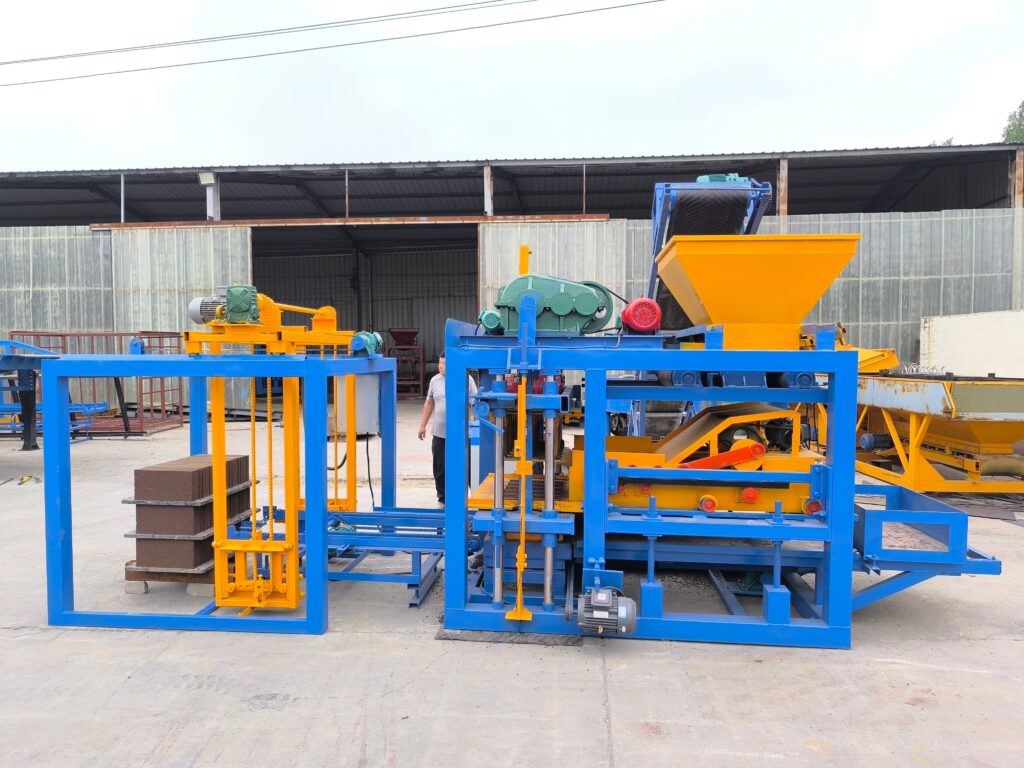
Issues Manifesting in Block Quality and Appearance
Often the first indicators of a problem are visible in the blocks themselves. These defects typically point to specific mechanical or process-related failures.
A. Dimensional Inconsistency and Surface Defects
- Variation in Block Height: Inconsistent block height from one pallet to the next is a frequent complaint. The primary causes are:
- Worn or Warped Pallets: This is the most common culprit. An uneven pallet surface directly translates to an uneven block bottom and variable height.
- Insufficient or Uneven Compaction: This can stem from incorrect feed volume, worn mold liners, or failing vibrators.
- Hydraulic Pressure Fluctuation: A malfunctioning hydraulic valve, pump issue, or low oil level can prevent the press head from applying consistent, full pressure each cycle.
- Poor Surface Finish and Sticking: Blocks that are difficult to eject or have a rough, torn surface often indicate:
- Inadequate or Incorrect Mold Release: Failure to apply release agent, using a substandard product, or applying it unevenly.
- Worn Mold Liners: Over time, liner surfaces degrade, increasing friction and adhesion.
- Excessively Wet Mix: A high water-cement ratio creates a sticky paste that bonds aggressively to the mold surfaces.
B. Structural Weakness and Integrity Failures
- Low Compressive Strength: Blocks that crumble or fail to meet strength specifications can result from several factors:
- Incorrect Mix Design: Insufficient cement content, poor aggregate grading, or, most critically, an excessive water-cement ratio.
- Inadequate Compaction: The machine’s vibration and/or pressurization are insufficient to consolidate the mix fully. This is often due to worn vibrator motors or incorrect pressure settings.
- Improper Curing: Blocks moved too early or cured in conditions that are too dry, too cold, or too hot will not develop proper strength.
- Cracks in Green or Cured Blocks: Cracking can occur at different stages.
- Handling Cracks (Green State): Caused by excessive impact during automatic stacking or transfer, often due to misaligned handling equipment or excessive speed.
- Shrinkage Cracks (During Curing): Typically caused by an overly wet mix, improper curing (rapid drying), or thermal shock.
II. Operational and Mechanical Performance Issues
These problems disrupt the production cycle itself, leading to slowdowns or complete stoppages.
A. Vibration System Failures
The vibrators are critical for compaction. Common issues include:
- Reduced Vibration Intensity: This leads to poor compaction. Causes can be failing vibrator motors, loose mounting bolts, or a malfunctioning electrical supply (e.g., unstable frequency drive output).
- Uneven Vibration: If one side of the mold vibrates less than the other, it results in blocks with uneven density and strength. This points to a specific failed vibrator or an issue with its mounting.
- Overheating Vibrators: Often caused by continuous operation beyond duty cycles, inadequate ventilation, or mechanical binding.
B. Hydraulic System Malfunctions
The hydraulic system is the powerhouse for the press. Troubles include:
- Slow Cycle Times: The machine operates sluggishly. This is commonly due to low hydraulic oil level, contaminated fluid, a clogged filter, or a worn pump losing efficiency.
- Failure to Reach Full Pressure: The system cannot achieve the set pressure, resulting in weak blocks. Causes include hydraulic leaks, faulty pressure relief valves, or internal pump wear.
- Oil Overheating: Excessive oil temperature indicates problems like a failed cooler, incorrect oil viscosity, continuous overpressure operation, or a system restriction.
C. Feed and Material Handling Problems
- Incomplete Mold Filling: Empty corners or uneven fill lead to malformed blocks. This can be due to:
- Worn or Misadjusted Feed Shoes/Scrapers: These components are responsible for distributing the mix evenly across the mold.
- Incorrect Mix Consistency: A mix that is too dry or stiff will not flow properly.
- Obstructions in the Feed System: Hardened concrete buildup disrupts material flow.
- Pallet Circulation Jams: The automated pallet return system jams, halting production. Causes include misaligned rollers, damaged pallets catching on guides, or debris on the return conveyor.
III. Control System and Electrical Faults
Modern machines rely on sophisticated controls, which can present their own set of challenges.
- Intermittent or Erratic Operation: The machine behaves unpredictably. This is often traced to loose electrical connections (a major issue in high-vibration environments), moisture ingress into control panels, or failing sensors (e.g., proximity sensors for pallet detection).
- PLC/HMI Errors: Fault codes or system lock-ups can occur due to software glitches, power surges, or corrupted memory. Regular parameter backups are essential.
- Motor Failures: Drive motors for mixers, conveyors, or pumps can fail due to overload, single-phasing in electrical supply, or lack of preventive maintenance (e.g., bearing lubrication).
উপসংহার
The common issues plaguing block making machines are interconnected, often stemming from a neglect of fundamental maintenance, deviations in mix quality, or the gradual wear of high-stress components. For the industry professional, the ability to diagnose these problems systematically—distinguishing between a symptom like a poor surface finish (caused by mold release) and low strength (caused by hydraulic pressure)—is invaluable. By guiding clients to adopt a holistic view that links machine care, material science, and process control, you enable them to move from reactive problem-solving to proactive prevention. This approach not only ensures smoother production but also solidifies your role as a trusted technical partner in their long-term business success.
FAQ
Q1: What is the first thing to check if blocks are suddenly sticking to the mold?
A: Immediately check the mold release system. Ensure the release agent is being applied correctly, the mixture is not too diluted, and the spray nozzles are not clogged. Next, inspect the mold liners for new damage or excessive wear, and verify the mix water content has not increased inadvertently.
Q2: Why would a machine’s cycle time gradually get longer over several weeks?
A: A gradual slowdown most frequently points to declining hydraulic system performance. Check the hydraulic oil level and condition, replace the filters, and inspect for any leaks. A worn hydraulic pump losing its volumetric efficiency is another common cause.
Q3: Our blocks have good strength but consistently have rough, pitted surfaces. What could cause this?
A: This defect is typically related to the concrete mix and compaction. The most likely cause is an overly dry or harsh mix that lacks sufficient fine sand to create a smooth paste layer during compaction. Adjusting the sand gradation or slightly increasing water content (while carefully monitoring the w/c ratio) often resolves this.
Q4: We hear a loud knocking sound during the vibration phase. What does this indicate?
A: A loud knocking or banging noise from the vibration system is a serious warning. It usually indicates that one or more vibrator motors have loose mounting bolts, have suffered internal bearing failure, or have become detached. Immediate shutdown and inspection are required to prevent catastrophic damage to the mold table or frame.
Q5: How can we determine if an issue is caused by the machine or by the concrete mix?
A: Conduct a controlled test. Run a batch with a previously proven, well-documented mix recipe. If the problem persists, the issue is likely mechanical. If the problem disappears, the fault lies with the usual mix design or material quality (e.g., new aggregate source). This simple test saves significant diagnostic time.
