
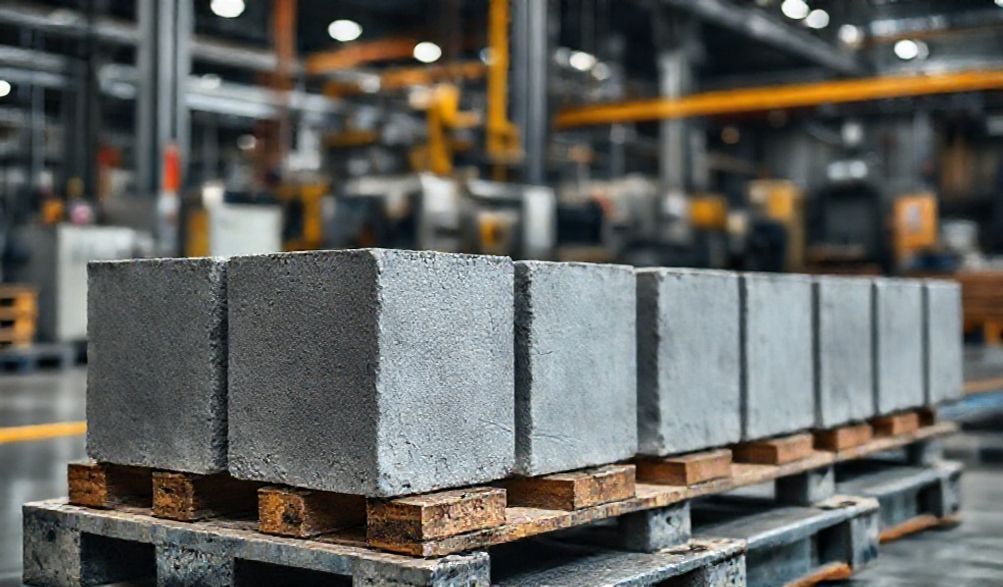
The Complete Guide to Concrete Block Manufacturing: Process, Machines, and Business Insights
Look around any city, suburb, or construction site. What do you see? From the foundations of skyscrapers to the retaining walls in your local park, concrete blocks are the unsung heroes of modern construction. Their durability, versatility, and cost-effectiveness make them a cornerstone of the built environment. But have you ever wondered how these ubiquitous building components are made?
This comprehensive guide dives deep into the world of concrete block manufacturing. Whether you’re a construction professional seeking a deeper understanding of your materials, an entrepreneur exploring a lucrative business opportunity, or a student of engineering, this expert-driven resource is for you. We will demystify the entire process, from raw material selection to the final cured block, explore the essential machinery, and provide key insights for quality control and even starting your own venture. By the end, you’ll have a thorough grasp of the step-by-step manufacturing process, the equipment required, the non-negotiable quality measures, and the practical business considerations behind every block.
Understanding Concrete Blocks: Types and Applications
Before delving into how they’re made, it’s crucial to understand what we’re making. “Concrete block” is a broad term encompassing several types, each engineered for specific applications and performance criteria.
Common Types of Concrete Blocks
- খালি কংক্রিট ব্লক: The most common type, featuring one or more large holes (cavities). These cavities reduce weight, improve insulation, and allow for reinforcing steel and grout placement. They are further categorized:
- Load-Bearing Blocks: Designed to carry structural loads from floors and roofs. They have higher compressive strength.
- Non-Load-Bearing Blocks: Used for partition walls, infill, and other applications where they carry only their own weight.
- সলিড কংক্রিট ব্লক: Dense, heavy blocks with no cavities. They offer superior strength, sound insulation, and weather resistance, making them ideal for foundational work, firewalls, and areas requiring high durability.
- Aerated Autoclaved Concrete (AAC) Blocks: A lighter, precast alternative. Created by introducing aluminum powder to create hydrogen gas bubbles, then cured under steam pressure (autoclaving). AAC blocks are lightweight, provide excellent thermal insulation, and are easy to cut and shape.
- Paving and Interlocking Concrete Blocks: Designed for horizontal surfaces. Paving blocks (pavers) are solid, dense units for driveways, walkways, and patios. Interlocking blocks have special edges that lock together without mortar, commonly used for retaining walls and erosion control.
নির্মাণ খাতে প্রধান অ্যাপ্লিকেশনসমূহ
The type of block dictates its use:
* Structural Walls & Foundations: Solid and high-strength hollow blocks form the backbone of buildings.
* Partition Walls & Infill: Lighter hollow or AAC blocks are perfect for creating interior room divisions.
* Retaining Walls & Landscaping: Interlocking and heavy-duty blocks are engineered to hold back earth for terraced gardens, basement walls, and highway dividers.
* Pavements & Driveways: Concrete pavers create durable, permeable, and aesthetically pleasing surfaces.
Raw Materials and Mix Design: The Foundation of Quality
The quality of a concrete block is determined at its very inception—in the selection of raw materials and the precision of the mix design. There is no room for guesswork here.
Essential Raw Materials
- সিমেন্ট: The binder that holds everything together. Ordinary Portland Cement (OPC) is standard, but Portland Pozzolana Cement (PPC), which incorporates fly ash, is popular for its improved workability and environmental benefits.
- সমষ্টি: The inert, granular filler that provides bulk and strength.
- Fine Aggregate: Typically clean, well-graded sand. It fills the voids between coarse aggregates.
- Coarse Aggregate: Gravel or crushed stone (usually 6mm-12mm). It provides the primary structural skeleton of the block.
- পানি: Must be clean and potable. Impurities can interfere with the chemical hydration of cement, leading to weak or stained blocks.
- Admixtures: Chemical additives used in small quantities to modify the properties of the fresh or hardened concrete.
- Plasticizers/Water Reducers: Increase workability without adding more water, which is crucial for achieving high strength.
- Accelerators: Speed up the early setting and strength gain, useful in cold weather or for faster production cycles.
- পিগমেন্টস: Iron oxide pigments are used to produce colored blocks for aesthetic applications.
Mastering the Mix Design
The “mix design” is the precise recipe for the block. A typical ratio for hollow blocks might be 1 part cement to 6 parts aggregate (a blend of sand and stone). However, this varies significantly based on:
- Block Type: Solid blocks require a richer mix (more cement) than some hollow blocks.
- Strength Requirement: Higher target compressive strength (e.g., 7 N/mm² vs. 4 N/mm²) demands a lower water-cement ratio and often more cement.
- ঘনত্ব: Lightweight blocks may use expanded clay or shale aggregates.
দ্যwater-cement (w/c) ratio is the most critical factor. Enough water is needed for the chemical hydration of cement, but excess water creates pores and weaknesses as it evaporates. A lower w/c ratio yields a stronger, more durable block, but the mix must still be workable enough to be molded. This is where experience and precise batching are paramount.
The Concrete Block Manufacturing Process: A Step-by-Step Breakdown
This is where theory meets practice. The manufacturing process is a symphony of machinery and controlled conditions, transforming raw materials into a precision building product.
Stage 1: Batching and Mixing
Accuracy is everything. Raw materials are precisely weighed according to the mix design using automated or manual batching systems. This ensures consistency in every batch. The materials are then fed into a mixer. Common types include:
- Pan Mixers: Efficient for stiff, low-slump concrete mixes typical in block making. They provide intense, forced mixing.
- Planetary Mixers: Similar to pan mixers but with rotating stars for thorough blending.
- Drum Mixers: More common in ready-mix operations but can be used for block production.
The goal is a uniform, homogeneous mix where every aggregate particle is coated with cement paste. Mixing time is critical—too short leads to uneven strength; too long is inefficient.
Stage 2: Molding and Compaction
The mixed concrete is fed into the কংক্রিট ব্লক তৈরির মেশিন, the heart of the plant. This is typically a vibratory press. The process involves:
- খাওয়ানো: The mix is dropped into a mold box (the “mold”) on a steel pallet.
- কম্প্যাকশন ও কম্পন: A hydraulic ram presses down from the top while the mold is subjected to high-frequency vibration. This dual action is crucial. The vibration expels trapped air voids and causes the concrete to flow into every corner of the mold, while the compression consolidates the material. A common mistake is insufficient vibration, which leads to “honeycombing”—visible voids on the block’s surface that compromise strength.
- বহিষ্কার: The mold is lifted, and the freshly formed, green block is pushed out onto a conveyor belt or curing rack.
Machines range from simple manual or egg-laying types (which produce blocks in place) to fully automatic stationary machines that produce blocks on a continuous moving pallet system.
Stage 3: Curing: The Critical Strength Development Phase
Curing is not just drying; it’s the controlled process of maintaining adequate moisture and temperature to allow the cement to fully hydrate and develop strength. Skipping proper curing results in weak, dusty blocks that will fail prematurely.
- Why it’s Non-Negotiable: Without curing, water evaporates too quickly, stopping the hydration reaction and leaving unreacted cement. This can reduce final strength by 50% or more.
- Methods:
- Steam Curing (Kiln Curing): The industrial standard. Fresh blocks are moved into a curing chamber or kiln where they are exposed to saturated steam at controlled temperatures (140°F – 180°F) for 12-24 hours. This accelerates strength gain, allowing blocks to be handled and shipped within a day.
- Water Curing: Blocks are immersed in or sprayed with water for an extended period (typically 14-28 days). Effective but slower and more space-intensive.
- Chemical Curing: Membrane-forming compounds are sprayed on blocks to seal in moisture. Often used as a supplement.
Stage 4: Cubing and Storage
After curing, blocks have reached sufficient “handling strength.” They are then:
1. Cubed: Automatically assembled into stable cubes (e.g., 10 blocks per layer, 5 layers high) using a cubing machine.
2. Palletized: The cube is strapped and placed on a wooden or metal pallet for easy transport with a forklift.
3. Stored: Pallets are stored in a dry area, protected from the elements, awaiting dispatch. Proper stacking prevents damage to edges and corners.
Essential Machinery for a Block Manufacturing Plant
Setting up a plant requires a strategic investment in equipment. The choice depends on your target scale and automation level.
Core Machinery
- Concrete Block Making Machine: The central investment. Options include:
- সম্পূর্ণ স্বয়ংক্রিয়: Computer-controlled, with automatic feeding, molding, curing, and cubing. High output (20,000+ blocks per shift) with minimal labor.
- সেমি-অটোমেটিক: Requires manual feeding of mix and removal of green blocks, but automates molding and vibration. Good for medium-scale production.
- Manual/Egg-Laying: Portable machines that produce blocks in place. Low output, high labor, suitable for very small-scale or on-site production.
- Mixer and Batching Plant: From a simple pan mixer with manual batching to a fully computerized batching plant with silos and conveyors.
- Conveyor Belts & Material Handling: Essential for moving raw materials (sand, stone) to the mixer and fresh mix to the block machine.
- Pallet & Stacker Systems: For moving pallets of green blocks into the curing kiln and finished blocks to storage.
Auxiliary and Support Equipment
- Crusher & Vibrating Screen: For processing your own aggregates to the correct size and grading.
- Cement Silos & Water Tanks: For bulk storage of key materials.
- Laboratory Equipment: Non-negotiable for quality control. A basic lab needs a slump cone for workability, cube molds, and a Compression Testing Machine (CTM) to verify the strength of sample blocks.
Quality Control and Testing in Block Manufacturing
Trust in construction is built on verified standards. A reputable manufacturer doesn’t just produce blocks; they certify their performance through rigorous testing.
Key Tests for Concrete Blocks
Blocks are tested according to standards like ASTM C140 (USA) or IS 2185 (India).
* Compressive Strength Test: The definitive test. Sample blocks are crushed in a CTM to measure the maximum load they can bear per unit area (N/mm² or psi). This must meet or exceed the grade specification.
* Water Absorption Test: Blocks are dried, weighed, immersed in water for 24 hours, and weighed again. Lower absorption indicates a denser, more durable block less susceptible to frost damage.
* Dimension and Tolerance Checks: Using calipers and straight edges to ensure blocks are within allowable size variations (±3mm is typical). Uniform dimensions speed up masonry work.
* Density and Moisture Content: Ensures the block meets weight specifications and is sufficiently dry for use.
Implementing a QC Protocol
Quality is built in, not inspected in. A robust protocol involves:
* কাঁচামাল পরিদর্শন: Testing incoming cement and aggregates.
* Fresh Mix Checks: Monitoring workability (slump) daily.
* Finished Block Testing: Regularly sampling blocks from the production line for compressive strength and absorption tests (e.g., once per week or per 50,000 blocks).
* Record-Keeping: Meticulous logs of all test results, mix designs, and production batches ensure traceability and continuous improvement.
Starting a Concrete Block Manufacturing Business: Key Considerations
For the entrepreneur, this industry offers a stable opportunity tied to construction growth. Success requires more than just technical knowledge.
Market Research and Business Plan
- Demand Analysis: Study local construction activity, competitors, and pricing. Who are your target customers? Homebuilders, contractors, government projects?
- Project Report: Create a detailed plan covering market analysis, manufacturing process, machinery list, financial projections (costs, revenue, break-even), and risk assessment.
Plant Setup and Investment
- Land & Shed: Requires 10,000 to 30,000 sq. ft. for a medium-scale plant, including space for raw material storage, production, curing, and finished goods.
- Machinery Cost: This is the major capital expenditure.
- Small Scale (Semi-Auto): $25,000 – $70,000
- Medium Scale (Auto): $100,000 – $250,000
- Large Scale (Fully Auto): $300,000+
- Working Capital: Budget for 3-6 months of operating expenses (raw materials, labor, utilities, maintenance) before consistent revenue flows.
Licenses, Regulations, and Sustainability
- Permits: Typically required from the local municipality, Pollution Control Board (for air/water discharge), and under the Factory Act. A GST/business registration is mandatory.
- টেকসই উন্নয়ন: Modern plants must be environmentally responsible.
- Water Recycling: Implementing systems to recycle water from the curing and washing processes.
- Dust Control: Using enclosures and bag filters at crushers and mixers.
- Sustainable Materials: Using fly ash (a byproduct of coal power plants) as a partial cement replacement is a major industry practice that improves block quality and reduces carbon footprint. Using recycled concrete as aggregate is another growing trend.
Frequently Asked Questions (FAQ)
Q1: What is the average cost to start a concrete block manufacturing plant?
A: The cost varies dramatically with scale. A very small, manual operation can start for under $20,000. A semi-automatic plant might require $50,000 to $150,000 for machinery and setup. A fully automated, high-capacity plant is a $300,000+ investment. Major costs include land, machinery, shed construction, and initial working capital.
Q2: What is the curing time for concrete blocks before they can be used?
A: With modern steam curing, blocks achieve enough handling strength to be moved and palletized in 12-24 hours. However, they continue to gain strength. For critical structural use, blocks should ideally reach 28 days of age (cured and air-dried) to achieve their design compressive strength as per standard specifications.
Q3: How do you calculate the compressive strength of a concrete block?
A: A sample block is placed in a Compression Testing Machine (CTM). A steadily increasing load is applied until the block fails. The compressive strength is calculated by dividing the maximum load (in Newtons or pounds) by the total cross-sectional area of the block (in mm² or in²). The result is expressed in N/mm² (MPa) or psi. For example, a block with a 100,000 N load capacity and a 20,000 mm² area has a strength of 5 N/mm².
Q4: What are the common defects in concrete blocks and how can they be prevented?
A:
* Cracking: Caused by improper curing (drying too fast) or excessive shrinkage. Prevention: Proper steam curing and correct mix design.
* Surface Voids (Honeycombing): Caused by insufficient vibration during compaction. Prevention: Ensure adequate vibration time and amplitude in the block machine.
* Dimensional Inaccuracy: Caused by worn-out molds or improper machine settings. Prevention: Regular mold inspection and machine calibration.
* Low Strength: Caused by incorrect water-cement ratio, poor-quality materials, or inadequate curing. Prevention: Strict QC on raw materials, mix design adherence, and a controlled curing process.
Q5: Can concrete block manufacturing be profitable?
A: Yes, it can be a highly profitable business with strong local demand. Profitability depends on key factors: operating at an efficient scale to lower unit cost, strategic location to minimize transport expenses, maintaining high plant efficiency and low waste, and executing a solid marketing plan to secure consistent customers. A well-researched business plan is essential to navigate these variables successfully.
উপসংহার
The journey from piles of sand, stone, and cement to a precision concrete block is a fascinating blend of material science, mechanical engineering, and disciplined process control. Successful concrete block manufacturing hinges on three pillars: technical expertise in mix design and curing, investment in the right equipment for your goals, and an unwavering commitment to quality control standards.
This industry is more than just a business; it provides the fundamental building blocks—quite literally—for housing, infrastructure, and community development. It is a vital, stable, and potentially rewarding field. If you are considering entering this market, let this guide serve as your foundation. Build upon it with thorough local research, consultations with equipment suppliers and industry experts, and a meticulous plan. By mastering the process outlined here, you can contribute to building a stronger, more durable world, one block at a time.
<