
The Ultimate Guide to Interlocking Brick Making Machines: Types, Benefits & How to Choose
ভূমিকা
Imagine constructing a durable, beautiful home while slashing material costs by up to 40% and completing the project in half the time. This isn’t a futuristic concept—it’s the reality enabled by modern interlocking brick technology. Across the globe, from sustainable housing projects in Africa to disaster-resilient builds in Asia, this method is revolutionizing how we think about construction.
Traditional brick construction, reliant on skilled masons, vast amounts of mortar, and energy-intensive fired bricks, faces significant challenges. It’s often costly, labor-intensive, generates substantial waste, and its quality can vary dramatically with the artisan’s skill. These pain points delay projects, blow budgets, and limit access to affordable, quality building.
Enter the interlocking brick making machine: a transformative piece of engineering that turns local soil, sand, and a small amount of cement into precision building blocks. This guide synthesizes insights from mechanical engineering principles, real-world construction project data, and hands-on operator experience to cut through the hype. By the end, you’ll have a clear, actionable understanding of how these machines work, their concrete advantages, and a definitive framework for making a smart investment decision for your project or business.
ইন্টারলকিং ব্রিক মেকিং মেশিন কী?
Core Definition and Basic Principle
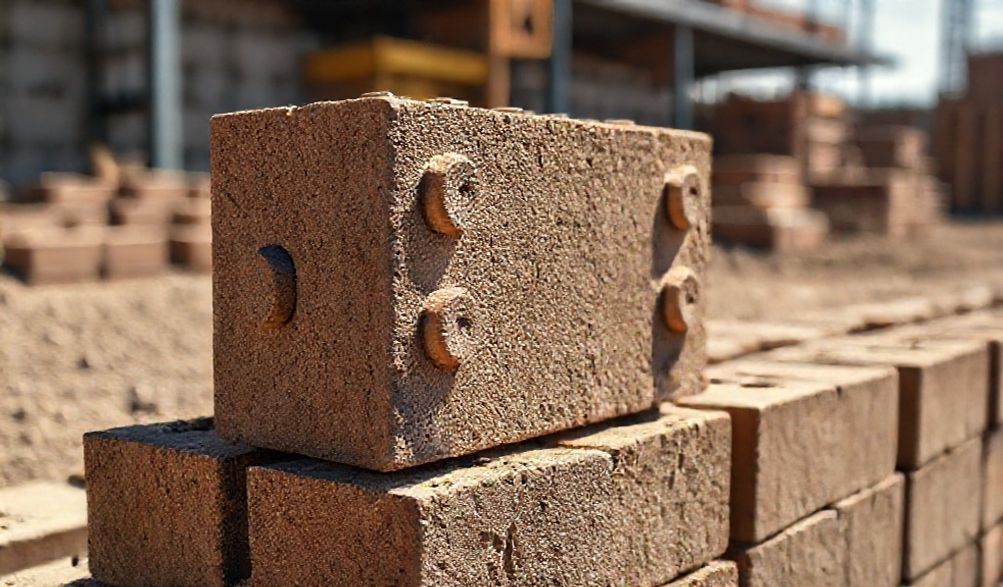
An interlocking brick making machine is a mechanical or hydraulic device designed to compress a specially prepared mixture—typically of soil, sand, cement, and sometimes other stabilizers—into bricks with engineered protrusions (knobs) and indentations (grooves). Unlike conventional rectangular bricks, these designs allow individual units to mesh together seamlessly.
The core principle is dry-stack or minimal-mortar construction. The interlocking geometry provides mechanical stability, transferring loads through friction and shear, drastically reducing or even eliminating the need for wet mortar joints. Think of it like advanced Lego blocks for construction: the connection is integral to the block’s design.
A Brief History and Technological Evolution
The concept of compressed earth blocks dates back centuries, but the modern interlocking brick machine has evolved rapidly. It began with simple manual lever presses, which required significant human effort and produced limited, inconsistent output. The introduction of semi-automatic vibratory machines marked a major leap, using electric motors to create compaction through vibration, ensuring higher density and more uniform bricks.
Today, we have fully automatic hydraulic machines. These computer-controlled systems handle feeding, compression, and ejection with minimal human intervention, offering unparalleled output and consistency. This evolution has democratized access, moving from large-scale industrial use to tools accessible for small entrepreneurs and community projects, all while continuously improving precision and efficiency.
How Does an Interlocking Brick Making Machine Work?
The Step-by-Step Production Process
The magic lies in a straightforward, repeatable process. Here’s how it unfolds:
- কাঁচামাল প্রস্তুতি: Success starts here. Suitable materials include laterite soil, crushed stone/aggregate, sand, and a stabilizer like cement (5-10% is common). The ideal mix ratio is critical for strength; a frequent recommendation is 60-75% soil, 15-30% sand, and 5-10% cement. The mix must be damp (typically 8-12% moisture content)—dry enough to hold form when squeezed, but wet enough to bind under pressure.
- Feeding the Hopper: The prepared mixture is loaded into the machine’s feed hopper. In manual and semi-automatic models, this is done by hand. In fully automatic systems, a conveyor or loader often handles this task.
- সংকোচন এবং ছাঁচনির্মাণ This is where the brick forms. The mix is fed into a mold cavity. Then, through one of three primary methods, it’s compressed:
- Manual/Lever: Physical force applied via a long lever.
- Mechanical/Vibratory: An electric motor creates high-frequency vibration, settling the mixture densely into the mold.
- হাইড্রোলিক: A hydraulic ram applies immense, programmable pressure (often measured in tons), creating the densest, strongest bricks.
- Ejection and Curing: The freshly formed brick is ejected from the mold onto a pallet or the ground. Now begins the most critical, yet most often neglected, phase: নিরাময়. The bricks must be kept moist (usually by covering with plastic sheeting and sprinkling with water) for 7-14 days. This allows the cement to hydrate fully, achieving its designed compressive strength. Proper curing can double the final strength of the brick.
The Science of Interlocking: Why It’s So Strong
The strength isn’t just in the brick; it’s in the system. The interlocking design leverages key engineering principles:
- Shear Strength & Friction: The knobs and grooves interlock, creating immense resistance to sliding (shear) between bricks. This friction is what allows dry-stacking to work.
- Load Distribution: The interlocking pattern helps distribute vertical loads (like the weight of a roof) more evenly across the entire wall, rather than concentrating stress on mortar joints.
- Monolithic Structure: When properly built, an interlocking brick wall behaves like a single, cohesive unit. This gives it remarkable flexibility and resilience against lateral forces, such as those experienced during earthquakes, making it superior to rigid, brittle traditional walls.
Key Benefits of Using Interlocking Bricks & Machines
Economic and Operational Advantages
- খরচ-দক্ষতা: The reduction in mortar use is staggering—up to 70% less than traditional masonry. This saves on material costs and the skilled labor required for mortar application. Construction speed can increase by 50% or more due to the simple laying process.
- High Productivity: A single semi-automatic machine can produce 300-500 bricks per hour, a rate impossible with hand-molding or traditional firing. This translates to faster project completion and quicker ROI for businesses.
- অন-সাইট উৎপাদন: Eliminate the cost and carbon footprint of transporting heavy bricks from a distant kiln. You can often use soil excavated directly from the construction site, turning a cost (disposal) into a primary resource.
Structural and Environmental Benefits
- উচ্চতর শক্তি ও স্থায়িত্ব: Properly made interlocking bricks often achieve compressive strengths exceeding those of standard fired clay bricks. The wall system offers excellent resistance to earthquakes, high winds, and thermal cracking. The dense blocks also provide better thermal mass, regulating indoor temperatures, and improved acoustic insulation.
- Sustainability Champion: The process uses a fraction of the water required for traditional brick production and requires no firing, saving trees and fossil fuels. It utilizes local, often subsoil materials, drastically reduces cement consumption, and can incorporate industrial by-products like fly ash. There’s no air pollution from kilns.
Types of Interlocking Brick Making Machines
Choosing the right type is your most critical decision. Here’s a breakdown:
Manual / Lever Press Machines
- সেরা জন্য: Small-scale personal projects, NGO-led community builds, pilot programs, and ultra-low-budget startups.
- সুবিধা: Lowest upfront cost, completely portable (no power needed), simple to maintain with readily available parts.
- অসুবিধাগুলো Highly labor-intensive, low output (50-100 bricks per hour), brick quality and strength are heavily dependent on the operator’s consistent effort.
Semi-Automatic (Vibratory) Machines
- সেরা জন্য: Small to medium-sized block-making businesses, regular production for housing projects, and contractors.
- সুবিধা: Excellent balance of affordability and output (300-500+ bricks/hour). Produces consistent, high-quality bricks due to mechanical vibration. More accessible than full-auto systems.
- অসুবিধাগুলো Requires a reliable electricity supply (usually single or three-phase). Involves manual feeding and brick removal, so some labor is still needed.
Fully Automatic (Hydraulic) Machines
- সেরা জন্য: Large-scale commercial production plants, supplying bricks for major developments, government infrastructure projects, and industrial users.
- সুবিধা: Highest output (1,000+ bricks/hour) and absolute consistency. Programmable for different brick designs and densities. Minimizes manual labor to supervision and maintenance.
- অসুবিধাগুলো High capital investment. Requires robust, stable power infrastructure. Maintenance is more complex and requires technical expertise. Not portable.
How to Choose the Right Machine: A Buyer’s Checklist
Assess Your Project & Business Needs
- স্কেল: Calculate your average daily and monthly brick requirement. Be realistic about growth. A machine operating at 50% capacity is better than one constantly overwhelmed at 120%.
- বাজেট Factor in the মোট খরচ: machine price, a pan or drum mixer, a dedicated power connection (if needed), space for production and curing, and labor.
- Labor & Skill: Do you have readily available unskilled labor for manual tasks, or do you need automation to reduce headcount? Is technical support for maintenance accessible?
Critical Machine Specifications to Evaluate
- উৎপাদন ক্ষমতা: Don’t just look at “bricks per hour.” Ask about the চক্র সময় (seconds per brick) for a true comparison.
- Brick Size & Design Flexibility: Does it produce the specific brick pattern you want? Can it be easily modified to produce different blocks (e.g., half-blocks, corner blocks) with mold changes?
- Power Source & Consumption: Verify your local power supply matches the machine’s requirements. Diesel options exist for areas with unreliable grids.
- Build Quality & After-Sales Support: A heavier machine often indicates robust steel construction. This is crucial: Prioritize suppliers who offer a clear warranty, readily available spare parts, and reliable technical support. The cheapest machine is a false economy if it breaks down in a month with no service available.
The Importance of Raw Material Testing
Your local soil is the star of the show—test it first. Conduct simple field tests:
* Sedimentation Jar Test: To understand soil composition (clay, silt, sand ratios).
* Drop Test: A freshly made brick dropped from waist height shouldn’t break.
* পানি শোষণ: A good brick should not disintegrate in water after curing.
The golden rule: Always request a production demo using your own local materials before finalizing any purchase. This proves the machine’s compatibility with your conditions.
FAQ: Your Interlocking Brick Machine Questions Answered
Q1: What is the typical cost range for an interlocking brick machine?
A: Prices vary enormously by type and region. Manual presses can start from $1,000-$3,000. Semi-automatic vibratory machines typically range from $3,500 to $15,000. Fully automatic hydraulic systems begin around $20,000 and can exceed $100,000. Focus on lifetime value—production cost per brick—not just the sticker price.
Q2: Can I use ordinary soil from my site?
A: Not always “as is.” Ideal soil has a balanced mix of clay (as a binder), silt, and sand. Pure clay will crack; pure sand won’t bind. A simple jar test will tell you. In almost all cases, you’ll need to add a stabilizer like cement (5-10%) or lime to achieve weather-resistant durability.
Q3: How strong are interlocking bricks compared to fired clay bricks?
A: When produced correctly, compressed stabilized interlocking bricks commonly achieve compressive strengths of 7 MPa to 20+ MPa, meeting or exceeding many national standards for fired bricks. Their greater advantage is the system strength—the interlocking wall’s superior performance under seismic and flexural loads.
Q4: Is special training needed to operate the machine?
A: Yes, but it’s not overly complex. Critical training areas include: achieving the correct, consistent mix ratio; operating the machine safely; and understanding the vital curing process. A reputable supplier should provide basic operational training. For structural design, consulting an engineer familiar with the system is non-negotiable for load-bearing walls.
Q5: What are the most common maintenance requirements?
A: Regular, simple maintenance prevents major downtime:
* Clean the mold cavity and hopper after every production run.
* Check and tighten all bolts and nuts weekly.
* Lubricate all moving parts (pivots, bearings) as per the manual.
* For hydraulic machines, regularly check oil levels, filters, and for any seal leaks.
Conclusion and Final Recommendations
Interlocking brick making technology represents a powerful convergence of affordability, strength, and sustainability. It empowers builders, entrepreneurs, and communities to take control of their construction destiny using local resources.
As you move forward, follow this trustworthy path:
1. Start Small if Unsure: Consider a manual machine or a small semi-automatic model for a pilot project. Master the material science and curing process on a small scale before scaling up.
2. Prioritize Supplier Reputation: Your relationship with the supplier is a long-term asset. Choose one with proven machinery and, critically, strong, responsive after-sales service and spare parts availability. Read reviews and ask for customer references.
3. Invest in Knowledge: The machine is just one part of the equation. Your success hinges on proper material selection, mix design, and curing. Treat these with equal importance.
View an interlocking brick making machine not merely as a purchase, but as a strategic investment in a smarter, more resilient, and more sustainable future for construction. Armed with this knowledge, you are now equipped to make a confident, informed decision that will build value for years to come.
<