
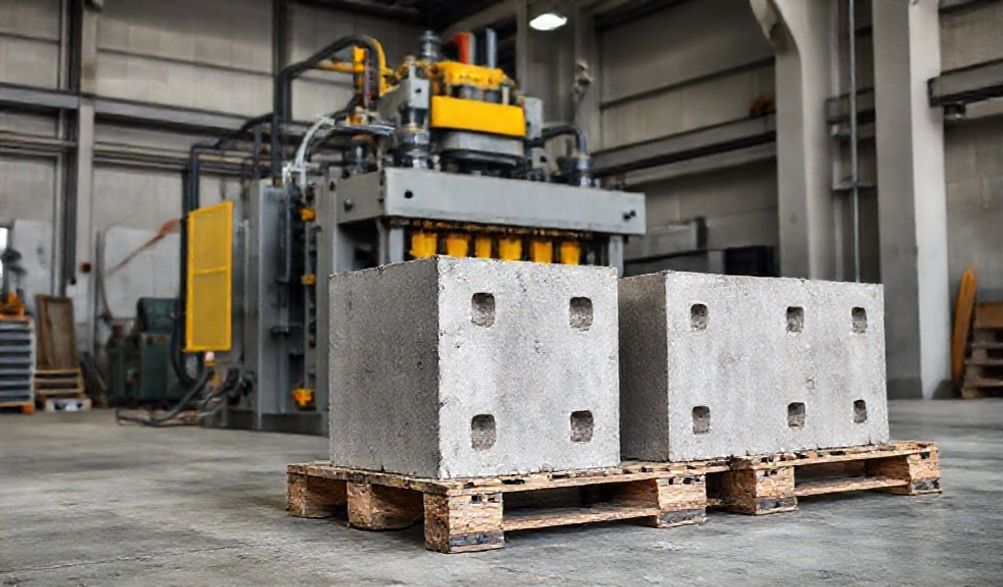
The Ultimate Guide to the QT4-15 Block Machine: Features, Benefits, and Operation
ভূমিকা
বিশ্বব্যাপী নির্মাণ শিল্প ৩০% এরও বেশি প্রাকৃতিক সম্পদ ব্যবহার করে।30 billion metric tons of concrete annually, with concrete blocks forming the backbone of countless residential, commercial, and infrastructure projects. In this landscape of relentless demand, the bridge between raw materials and reliable structures is often a single piece of equipment: the concrete block making machine. For entrepreneurs and construction firms seeking the sweet spot between affordability, output, and versatility, one model consistently stands out—the QT4-15.
The QT4-15 is a stationary, hydraulic press block machine renowned as a workhorse for small to medium-scale production. Its core function is to transform a standard concrete mix into precisely formed, high-density hollow blocks, solid blocks, paving stones, and more. This guide is crafted not as a sales pitch, but as a comprehensive, expert-driven resource. We will dissect its specifications, operational process, and real-world economics to empower you, the potential buyer or project manager, with the knowledge needed to make a supremely informed investment decision. You will learn everything from its technical guts to the critical questions you must ask any supplier.
What is a QT4-15 Block Making Machine?
At its heart, the QT4-15 is engineered for reliable, repeatable production. Understanding its fundamental design is key to appreciating its value.
মূল কার্যকারিতা এবং নকশা দর্শন
The QT4-15 is classified as a stationary hydraulic press machine. Unlike mobile block layers, it operates from a fixed location, typically within a production shed or plant. Its design philosophy centers on achieving optimal block density and strength through a combination of powerful vibration and substantial hydraulic pressure.
- Operation Cycle: The standard model is সেমি-অটোমেটিক. This means the core molding cycle—feeding, compacting, vibrating, and ejecting—is automated and controlled by a Programmable Logic Controller (PLC). However, tasks like feeding raw material into the hopper and removing finished blocks on pallets are done manually. It can be upgraded to a সম্পূর্ণ স্বয়ংক্রিয় system with the addition of automatic feeders, pallet circulators, and stackers.
প্রধান প্রযুক্তিগত বৈশিষ্ট্য এবং আউটপুট
Here are the critical numbers that define the QT4-15’s capabilities:
| স্পেসিফিকেশন | বিস্তারিত |
| :— | :— |
| উৎপাদন ক্ষমতা | Approx. 4,320 – 5,760 pieces per 8-hour shift (for standard 400x200x200mm hollow blocks). Output varies with block type and operator efficiency. |
| Block Sizes | Highly versatile. With different molds, it can produce blocks from 100mm to 300mm in height. Common products include 400x200x200mm, 400x150x200mm, and various paver sizes. |
| বিদ্যুৎ প্রয়োজনীয়তা | Total installed power is approximately 19.5 kW, requiring a stable three-phase electrical connection. |
| Machine Weight & Dimensions | Weighs around 5,500 kg, with a compact but robust footprint crucial for workshop planning. |
| Pressure System | Utilizes a reliable hydraulic system, with pressure typically reaching 20-21 MPa, ensuring high compaction and block strength. |
Common Products Manufactured
The true power of the QT4-15 lies in its versatility. By simply changing the mold (a process taking 10-15 minutes), the same machine can produce a product line to meet diverse market demands:
- হোলো ব্লক: The industry standard for load-bearing and non-load-bearing walls.
- সলিড ব্লক:ভিত্তি, পথচারী পথ এবং সর্বোচ্চ শক্তি প্রয়োজন এমন এলাকার জন্য।
- ইন্টারলকিং পেভারস:ড্রাইভওয়ে, হাঁটার পথ এবং প্যাটিওর জন্য।
- কার্ব স্টোনস:রাস্তার কিনারা এবং ল্যান্ডস্কেপিংয়ের জন্য।
- Other Interlocking Bricks: For retaining walls and decorative purposes.
Key Features and Advantages of the QT4-15 Model
Beyond the specifications sheet, several engineered features translate into tangible advantages on the production floor.
Robust Construction and Durability
The QT4-15 is built for the long haul in an industrial environment. Its frame is constructed from heavy-duty steel plates and profiles, welded and reinforced at stress points. Critical components like the vibration table, hydraulic cylinders, and mold heads are made from hardened materials to resist the immense wear and tear of daily compression cycles. This durability minimizes unexpected breakdowns and extends the machine’s operational life, protecting your capital investment.
High Production Efficiency and Consistency
Quality in block manufacturing is non-negotiable. The QT4-15 ensures this through its integrated vibration and compression system. High-frequency vibration settles the concrete mix densely into every corner of the mold, eliminating air pockets. Immediately following, the hydraulic press applies uniform top-down pressure. This dual-action process results in blocks that are not only strong but also dimensionally consistent. Batch-to-batch uniformity is critical for construction speed and material estimation, a key benefit for your customers.
Versatility Through Mold Changes
Market demands shift. A successful block yard must adapt. The QT4-15’s quick-change mold system is its primary strategic advantage. Switching from producing hollow blocks to pavers involves:
1. Removing a few bolts.
2. Lifting out the current mold set.
3. Inserting the new mold.
4. Re-tightening.
This 15-minute changeover means you can fulfill different orders on the same day without costly downtime, maximizing your machine’s utilization and return on investment (ROI).
Semi-Automatic vs. Automatic Configurations
Understanding the configuration options is vital for aligning the machine with your budget and labor model.
- Semi-Automatic (Standard): Lower initial investment. Requires 2-3 operators for material handling, feeding, and pallet management. Ideal for businesses with available labor and a focus on controlling upfront costs.
- Fully Automatic (Optional): Higher capital cost but significantly reduced direct labor. Systems include automatic concrete feeders, pallet circulators, and brick stackers. Ideal for operations aiming to maximize output per shift, improve consistency, and reduce long-term labor expenses and dependencies.
How the QT4-15 Machine Works: The Production Process
Knowing how the machine operates demystifies the production journey from powder to product.
Step-by-Step Operational Cycle
- কাঁচামাল প্রস্তুতি: It all starts with the right mix. A typical ratio might be 1 part cement, 3-6 parts sand/aggregate, and just enough water for a semi-dry consistency (too much water weakens the final block). This is usually prepared in a pan or planetary mixer.
- খাওয়ানো: The prepared mix is fed into the machine’s hopper, either manually with shovels or via an automated belt conveyor.
- মোল্ডিং ও কম্প্রেশন: The PLC initiates the cycle. The mix is drawn into the mold cavity. The vibration motor activates, densely packing the material. The hydraulic ram then descends, applying high pressure to form a solid block.
- বহিষ্কার ও নিরাময়: The hydraulic ram retracts, and the mold rises, leaving the freshly formed block on a wooden or steel pallet below. An operator removes the palletized block. Here, the most critical phase begins: curing. Blocks must be kept moist and at a stable temperature for several days (often in a dedicated curing rack or chamber) to allow the cement to fully hydrate and achieve its designed compressive strength.
Essential Supporting Equipment
The QT4-15 is the core, but it’s not a standalone island. For an efficient production line, consider these ancillary systems:
- কংক্রিট মিক্সার: A must-have for consistent raw material preparation.
- বেল্ট কনভেয়র: Drastically reduces labor and speeds up feeding (highly recommended).
- Block Stacker: Automatically stacks green blocks onto curing racks.
- Pallet Feeder/Circulator: Automates the flow of pallets into and out of the machine.
- Curing Racks & Shed: A controlled environment for blocks to gain strength.
Applications and Ideal Use Cases for the QT4-15
This machine isn’t for everyone, but it’s perfect for many. Its ideal applications include:
Small to Medium-Sized Block Production Plants
For established yards supplying local builders and hardware stores, the QT4-15 offers the perfect balance of output and flexibility to manage diverse orders.
Construction Companies for On-Site Production
Large projects can slash material costs and logistics by producing blocks directly on-site, ensuring just-in-time delivery and perfect quality control.
Entrepreneurs Starting a Block Manufacturing Business
Its relatively accessible price point and proven reliability make it the flagship machine for countless successful start-ups in the construction materials sector.
Government and Infrastructure Projects
For public works like low-cost housing developments, road kerbing, or park landscaping, the QT4-15 provides a controllable, local source of standardized materials.
Critical Considerations Before Buying a QT4-15
Due diligence separates a successful investment from an expensive mistake. Pause and consider these points.
Assessing Your Business Needs and Budget
নিজেকে জিজ্ঞাসা করুন:
* What is my required daily output to meet demand?
* What physical space do I have for the machine and curing area?
* Is my capital better spent on a semi-auto model + supporting equipment or an automatic line?
* What block types are in highest demand in my local market?
Supplier Evaluation and Factory Audit
This is the most critical step. Trustworthiness is paramount.
* Verify Credentials: Request business licenses, export records, and certifications.
* Demand References: Ask for contact information for past customers in your region and actually call them.
* Insist on Visual Proof: Request a live video call to see the machine operating in their factory. Be wary of suppliers who only offer stock footage.
* Price as an Indicator: A price suspiciously lower than the market average almost always reflects inferior materials, poor craftsmanship, or non-existent after-sales service.
Understanding the Total Cost of Ownership
The invoice price is just the beginning. Budget comprehensively for:
* Machine Cost
* Shipping & Insurance (FOB, CIF, etc.)
* Import Duties & Customs Clearance
* On-Site Installation & Commissioning (often by a supplier technician)
* Initial Spare Parts Kit (wear parts like springs, seals, filter elements)
* Ongoing Maintenance Costs
Installation, Maintenance, and Safety
Owning the machine is a commitment to its care and safe operation.
Proper Installation and Commissioning
Never attempt a DIY installation. A poorly leveled machine will produce defective blocks and suffer premature wear. Reputable suppliers include commissioning in the package, where a technician assembles the machine, calibrates the hydraulic and vibration systems, and trains your operators—this is non-negotiable for optimal performance.
Routine Maintenance Checklist
Preventive maintenance is cheap; breakdowns are costly.
* দৈনিক Lubricate all guide rods and moving parts, clean the mold and table, check hydraulic oil levels and for leaks.
* সাপ্তাহিক Inspect and tighten all bolts and electrical connections, check vibration motor mounts.
* Monthly: Change hydraulic oil filters, thoroughly inspect wear parts like mold liners and pressure heads.
Essential Safety Protocols for Operators
- প্রশিক্ষণ: No one should operate the machine without thorough training.
- PPE: Mandatory use of safety glasses, gloves, and steel-toe boots.
- Lockout/Tagout: Strict procedures must be in place for any cleaning, maintenance, or mold change to prevent accidental activation.
- Clear Workspace: Keep the area around the machine clean and free of trip hazards.
FAQ Section
Q1: What is the average production output of the QT4-15 per day?
For a standard 400x200x200mm hollow block, with one 8-hour shift and efficient operation, you can expect between 4,300 to 5,700 blocks. Output varies based on block type, operator speed, and level of automation.
Q2: Can one operator run the QT4-15 machine?
For the standard semi-automatic model, no. You typically need 2-3 people: one to manage the mixer/feeder, one to handle pallets with finished blocks, and one to oversee the cycle. A fully automatic line can significantly reduce this labor requirement.
Q3: What is the lead time for delivery and installation?
From a reputable supplier with standard models in stock, expect 30-45 days for production, shipping, and customs clearance, plus 3-5 days for installation and commissioning on-site. Always get a written timeline.
Q4: What kind of after-sales service and warranty should I expect?
A trustworthy supplier will offer a minimum 12-month warranty on core components (excluding wear parts). Crucially, they should provide clear technical manuals, online/video support, and a reliable supply of spare parts. Ask about their response time for technical queries.
Q5: How does the QT4-15 compare to mobile block machines or larger stationary plants?
The QT4-15 sits in the middle. It offers higher output and block quality than small mobile machines but at a higher initial cost and without mobility. It is more affordable and space-efficient than large, fully automated stationary plants, making it the ideal choice for the middle market.
Q6: What is the typical ROI (Return on Investment) period for this machine?
This is highly variable based on local block prices, material costs, and operational efficiency. However, with strong market demand and good management, many businesses report achieving full ROI within 12 to 24 months of operation.
উপসংহার
The QT4-15 concrete block making machine has earned its reputation as a versatile and reliable foundation for small to medium-scale production. It successfully bridges the gap between manual labor and full automation, offering a path to producing high-quality, in-demand construction materials efficiently.
This guide has provided you with the technical knowledge, operational insights, and critical buying considerations you need. Let it reinforce this final, expert advice: prioritize supplier credibility and long-term service over the allure of a low sticker price. Your block machine is a capital asset meant to generate profit for years. Conduct thorough due diligence, request factory audits, and choose a partner whose expertise and trustworthiness are as solid as the blocks their machine produces.
Ready to take the next step? Contact a reputable supplier today to request a detailed quotation, a live video demonstration of the QT4-15 in action, and a consultation to tailor a solution to your specific project needs.
<