
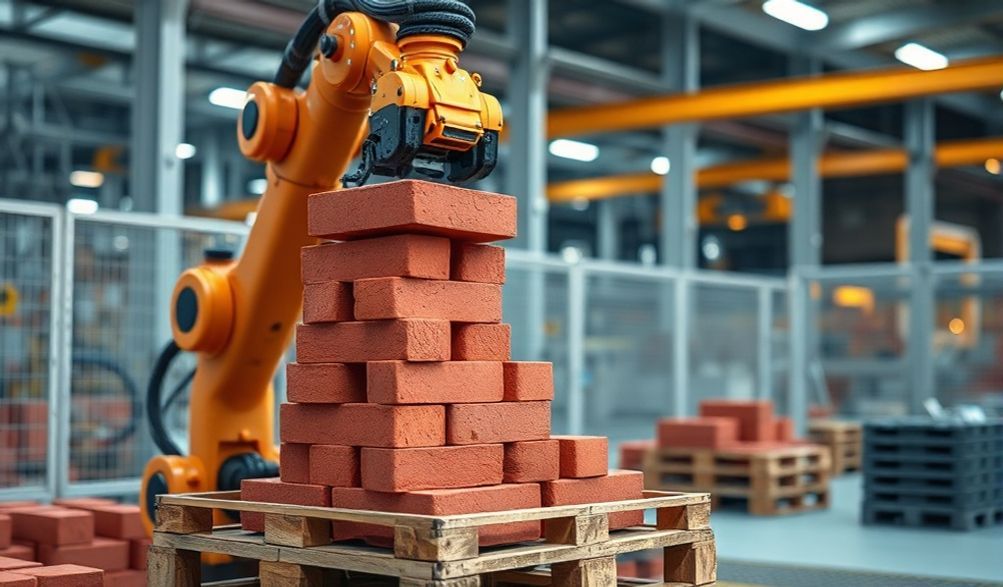
The Ultimate Guide to Brick Stacking Machines: Boosting Efficiency & Safety
ভূমিকা
If you manage a brickyard, oversee a masonry project, or run a construction supply chain, you know the drill. The back-breaking, repetitive task of manually stacking bricks is more than just tedious—it’s a significant bottleneck. It slows down production, drives up labor costs, and is a leading cause of workplace injuries like repetitive strain and debilitating back problems.
But what if there was a way to turn this chaotic, labor-intensive chore into a seamless, efficient, and safe process? Enter the brick stacking machine: the automated solution that is fundamentally reshaping material handling in construction and manufacturing. This guide is built on years of industry analysis and engineering insight, designed to provide you with trustworthy, actionable information.
This comprehensive guide will explore how brick stacking machines work, their undeniable key benefits, the different types available, the critical factors for choosing the right one, and how they represent a strategic investment for the future-proofing of any brick-related operation.
What is a Brick Stacking Machine? (Defining the Solution)
At its core, a brick stacking machine is an automated or semi-automated system engineered to pick, orient, and place bricks into stable, uniform stacks—often called packs or cubes—for curing, transport, or direct palletizing. It replaces the human hand and back with mechanical precision.
কোর ফাংশন এবং মৌলিক অপারেশন
The machine’s process is a cycle of consistent, programmed movements:
1. পছন্দ করুন: Using a specialized gripper (vacuum, mechanical, or hybrid), the machine lifts bricks from a conveyor or feed table.
2. Orient: It rotates or flips the bricks into the correct position for stacking.
3. Place: It deposits the bricks in a pre-determined, interlocking pattern onto a kiln car, pallet, or another conveyor.
4. Repeat: This cycle continues until a complete, stable stack is formed, ready for the next stage of its journey.
হাতের কাজ থেকে স্বয়ংক্রিয় নির্ভুলতা
The contrast is stark. Manual stacking is variable—subject to fatigue, inconsistency, and human error. A brick stacking machine, however, operates like a robotic artisan with perfect muscle memory. Think of it as a highly specialized robotic arm that never tires, never takes a break, and places every brick with identical pressure and alignment. This shift from brute force to intelligent automation is the cornerstone of modern industrial efficiency.
Key Benefits of Automating Your Brick Stacking Process
Investing in a brick stacking machine isn’t just about buying a piece of equipment; it’s about upgrading your entire operational DNA. The benefits cascade across your business.
Dramatically Increased Productivity & Output
- Eliminates Bottlenecks: The stacking station often becomes the slowest link in the production chain. Automation removes this constraint, allowing upstream processes (like extrusion and cutting) to run at full capacity.
- ২৪/৭ পরিচালনার সম্ভাবনা: Machines don’t work shifts. They can operate around the clock, dramatically increasing daily output without increasing labor headcount.
- Faster Cycle Times: A machine can stack hundreds, even thousands, of bricks per hour with unwavering speed, far surpassing even a team of skilled laborers.
Enhanced Workplace Safety & Ergonomics
This is perhaps the most compelling moral and financial argument for automation.
* Reduces Injuries: It virtually eliminates the leading causes of injury in brickyards: repetitive strain injuries (RSI), chronic back problems, and hand injuries from handling heavy, abrasive materials.
* Improves Morale: Employees can be upskilled to more rewarding roles like machine operation, maintenance, and quality control, leading to a safer and more positive work environment.
* Ensures Compliance: Automating this high-risk task makes it significantly easier to comply with stringent occupational health and safety (OHS) regulations, reducing liability.
Unmatched Consistency and Reduced Waste
- Perfect Stacks Every Time: Machines create uniform, interlocked stacks that are inherently stable. This minimizes movement and rubbing during transport, which is a primary cause of chipping and cracking.
- Direct Quality Improvement: Less handling damage means a higher percentage of first-quality bricks reaching your customer. This reduces cull rates, boosts your reputation for quality, and directly improves your bottom line.
- Predictable Logistics: Uniform packs are easier to count, store, and load, streamlining your entire supply chain.
Long-Term Cost Savings & ROI
While the upfront investment is significant, the total cost of ownership tells a different story:
* Labor Cost Reduction: Automating one of the most labor-intensive tasks allows for significant savings on wages and associated costs.
* Lower Insurance Premiums: A safer workplace with fewer injuries can lead to reduced workers’ compensation insurance costs.
* Material Waste Reduction: The savings from drastically reduced brick damage alone can be substantial.
* Faster Payback: When you calculate the combined savings from labor, waste, and increased output, most operations see a compelling return on investment (ROI) within a few years.
Types of Brick Stacking Machines
Not all stacking machines are created equal. The right choice depends on your scale, flexibility needs, and budget.
Robotic Arm Stackers
- বর্ণনা: These are versatile, multi-axis robots (like those used in automotive plants) fitted with a brick-specific gripper.
- সেরা জন্য: Operations requiring high flexibility, such as stacking multiple brick types, creating complex patterns, or working in a confined space. Their programmable paths allow for easy adaptation.
Gantry (Overhead) Stackers
- বর্ণনা: This system uses a bridge-like structure that moves on overhead rails. The stacking head travels in the X, Y, and Z planes over a large work area.
- সেরা জন্য: High-volume, large-scale production lines with heavy loads (like dense clay bricks). They excel at high-speed, repetitive stacking over a fixed, rectangular area.
Palletizing Machines
- বর্ণনা: A subset of stackers focused specifically on building stable loads on shipping pallets. They are often integrated with stretch wrapping or banding systems for a turnkey “ready-to-ship” solution.
- সেরা জন্য: Facilities where bricks go directly from production to distribution. They optimize the final shipping stage.
Semi-Automatic vs. Fully Automatic Systems
- সেমি-অটোমেটিক: Requires some human intervention, such as manually feeding bricks into a collator or initiating cycles. This is a lower-cost entry point ideal for smaller yards or lower production volumes.
- সম্পূর্ণ স্বয়ংক্রিয়: Integrated directly with the production line conveyor. Bricks are fed, stacked, and discharged without human touch. This maximizes speed and labor savings for high-output facilities.
How to Choose the Right Brick Stacking Machine: A Buyer’s Checklist
Selecting the ideal machine requires careful self-assessment and supplier vetting. Use this checklist to guide your decision.
Assess Your Production Requirements
প্রথমে এই মৌলিক প্রশ্নগুলোর উত্তর দিয়ে শুরু করুন:
* আউটপুট: What is your target stacking rate (bricks per hour)?
* Product Variety: Do you stack one standard brick type, or multiple sizes and shapes (e.g., pavers, hollow blocks, special shapes)?
* Space & Layout: What is the available floor space? How will the machine fit between your cutter and kiln car or palletizer?
গুরুত্বপূর্ণ মেশিনের বিবরণ যাচাই করার জন্য
When reviewing supplier proposals, pay close attention to:
* Payload Capacity: Can the gripper and arm handle the weight of your brick bundle?
* Cycle Time/Speed: Does the machine’s cycles-per-hour meet your output target?
* Working Envelope: Does the machine’s reach cover the required area for pickup and placement?
* End-of-Arm Tooling (EOAT): Is the gripper design (vacuum, mechanical claws, combination) suitable for your brick’s texture, weight, and shape?
Integration with Existing Workflow
A machine is an island if it can’t communicate. Ensure compatibility with:
* Upstream/Downstream Equipment: Your cutter, transfer cars, and kiln systems.
* নিয়ন্ত্রণ ব্যবস্থা: Can it interface with your existing Programmable Logic Controller (PLC) or plant management software? Seamless integration is key to data collection and overall equipment effectiveness (OEE).
Supplier Reliability and Support
এখানেইঅভিজ্ঞতা, দক্ষতা, কর্তৃত্ব এবং বিশ্বস্ততা (ই-ই-এ-টি) are non-negotiable. A machine is a long-term investment; the supplier is your long-term partner.
* Proven Industry Experience: Choose a manufacturer with a portfolio in the brick and block industry, not just general automation.
* Comprehensive Support: What does the warranty cover? Is there 24/7 technical support? How readily available are spare parts?
* Training & Documentation: Will they provide thorough on-site training for your operators and maintenance staff? Is the documentation clear and complete?
* Site References: Ask for and contact references from similar operations.
Implementing Your Brick Stacking Machine: Installation & Best Practices
Successful implementation goes beyond the purchase order. Proper planning ensures a smooth transition and optimal performance.
Site Preparation and Safety Planning
- Foundation: Ensure the floor can support the machine’s static and dynamic loads. This often requires a reinforced concrete pad.
- Utilities: Confirm power (voltage, phase), compressed air supply, and any data cabling requirements are in place.
- Safety Systems: Install necessary safety fencing, light curtains, or laser scanners to create a safe perimeter around the automated cell.
Operator Training and Maintenance Protocols
- Training is Critical: Invest time in comprehensive training. Operators should understand basic programming, routine operation, emergency stops, and troubleshooting.
- প্রতিরোধমূলক রক্ষণাবেক্ষণ: Establish and follow a daily/weekly maintenance schedule. This typically includes checking gripper pads, verifying vacuum pressure, lubricating moving parts, and inspecting for wear. This prevents costly unplanned downtime.
Optimizing for Different Brick Types
- Common Bricks/Pavers: Standard vacuum or mechanical grippers usually suffice.
- Hollow Blocks or Special Shapes: May require custom gripper designs with adjustable fingers or specialized vacuum cup layouts to ensure a secure grip without damage.
- Programmable Patterns: Ensure your machine’s software allows you to easily save and recall stacking patterns for different products to minimize changeover time.
সচরাচর জিজ্ঞাসিত প্রশ্নাবলী (এফএকিউ)
Q: What is the typical price range for a brick stacking machine?
এ Costs vary dramatically based on type and complexity. A semi-automatic system might start around $50,000, while a fully integrated, high-speed robotic or gantry solution can exceed $250,000. The most accurate method is to get a tailored quote based on your specific needs, focusing on the total ROI, not just the sticker price.
Q: Can one machine handle different sizes or shapes of bricks?
এ Yes, many modern machines are designed for flexibility. With programmable settings and quick-change tooling (like interchangeable gripper heads), you can switch between products. However, factor in the changeover time and potential need for additional gripper investments.
Q: How does a stacking machine improve brick quality?
এ By applying consistent, calibrated pressure and eliminating the bumps and drops inherent in manual handling, it significantly reduces edge chipping, surface scratches, and cracks. This leads to a higher yield of saleable, first-quality product.
Q: What is the expected payback period on this investment?
এ While it varies by operation, many facilities achieve a full return on investment within 1 to 3 years. This is realized through a combination of direct labor savings, reduced material waste, lower insurance costs, and increased production capacity. A detailed financial analysis with your supplier is highly recommended.
Q: Are these machines suitable for small brickyards?
এ Absolutely. The automation market isn’t just for giants. Semi-automatic systems or smaller-scale robotic cells are viable and cost-effective for small to medium-sized enterprises (SMEs). They offer a competitive edge by improving product consistency and creating a safer, more sustainable work environment.
উপসংহার
The evidence is clear: a brick stacking machine is a transformative investment, not a mere expense. It directly tackles the core challenges plaguing brick production—sluggish productivity, high labor costs, safety risks, and preventable waste. By automating this critical stage, you unlock new levels of efficiency, quality, and profitability.
From an authoritative standpoint, for any serious brick manufacturer or construction firm aiming to future-proof their operations, evaluating automation is no longer a luxury; it is a critical strategic step for remaining competitive and sustainable.
Your Next Step: Begin by conducting a thorough audit of your current stacking process. Identify your true bottlenecks, calculate your current labor and waste costs, and define your output goals. Then, contact a reputable, experienced supplier for a professional consultation and site assessment. This will provide you with a precise solution and a clear picture of your potential ROI.
Embracing this technology is more than an upgrade to a single process; it’s a commitment to the broader trend of Industry 4.0 and smart, responsible manufacturing. The future of construction material handling is automated, precise, and efficient. The time to build that future is now.
<