
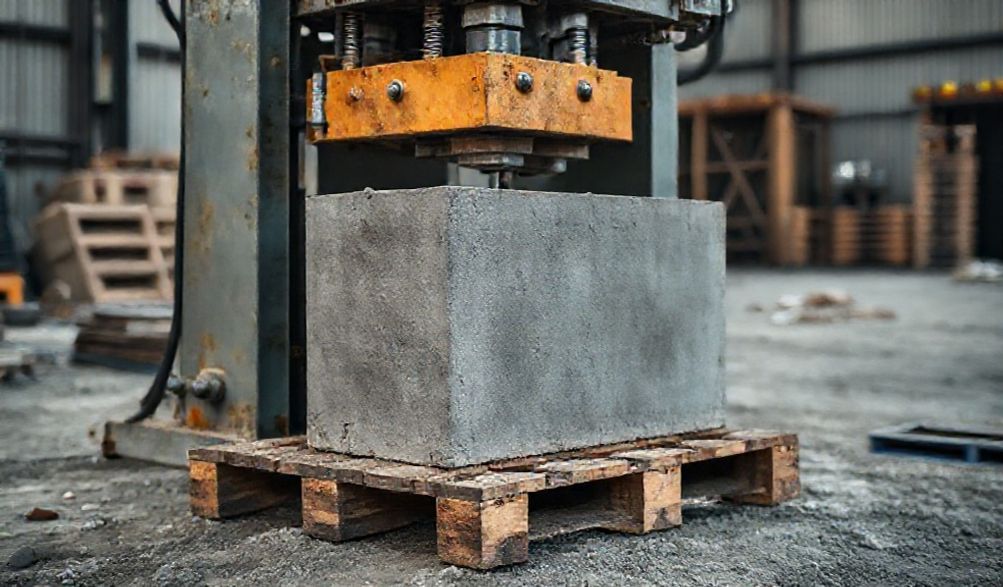
ইট তৈরির মেশিনের চূড়ান্ত নির্দেশিকা: প্রকার, খরচ এবং কীভাবে বেছে নেবেন
প্রাচীন মেসোপটেমিয়ার রোদে শুকানো কাদার ইট থেকে শুরু করে আধুনিক আকাশচুম্বী ভবনের সুনির্দিষ্টভাবে নির্মিত ব্লক পর্যন্ত, ইট সভ্যতা গড়ে তুলেছে সহজাতভাবেই। সহস্রাব্দ ধরে, এর উৎপাদন ছিল কষ্টকর, শ্রম-নিবিড় শিল্প। আজ, যান্ত্রিকীকরণের মাধ্যমে এই চিত্র সম্পূর্ণ রূপান্তরিত হয়েছে। আধুনিকইট তৈরির মেশিন is the unsung hero, the engine powering efficient, scalable, and affordable construction worldwide. Yet, for anyone looking to start a blockyard, supply a project, or simply understand the technology, navigating the world of brick making machines can be overwhelming. How do you choose the right one from countless models, brands, and promises?
This guide cuts through the noise. We’ll demystify brick making machines, drawing on industry standards, manufacturing principles, and aggregated expertise from engineers and successful operators. Whether you’re a budding entrepreneur, a construction project manager, or an industry enthusiast, consider this your comprehensive, expert-driven resource to making an informed decision.
What is a Brick Making Machine? Core Principles and Benefits
At its core, a brick making machine automates and standardizes the process of forming raw materials into solid, uniform building blocks. It replaces the variability of human labor with mechanical precision, unlocking new levels of productivity and quality.
How Does a Brick Making Machine Work? (The Basic Process)
While designs vary, most machines follow a core sequence:
- খাওয়ানো: Raw materials (like cement, sand, aggregate, or soil) are loaded into a hopper. In automated systems, this is often done via conveyor belts or feeders.
- মিশ্রণ: The materials are thoroughly blended, often with a precise amount of water, to achieve a homogeneous, workable consistency. Some machines have integrated mixers; for others, mixing is a separate, preceding step.
- কম্প্যাকশন ও ছাঁচনির্মাণ: This is the heart of the process. The mixed material is fed into a mold cavity. Here, a combination of high pressure (from hydraulic or mechanical rams) and often কম্পন compacts the material, removing air pockets and ensuring dense, strong blocks.
- বহিষ্কার ও নিরাময়: The freshly formed, “green” block is ejected from the mold onto a pallet, conveyor, or the ground. The blocks then enter a curing period, critical for strength development, especially for cement-based blocks. This can involve simple air curing or controlled steam curing chambers.
Key Advantages Over Manual Production
The shift from manual to mechanized production isn’t just about speed; it’s a fundamental upgrade:
- Dramatically Increased Output & Consistency: A single semi-automatic machine can produce more in an hour than a team of manual laborers can in a day. Every brick is identical in size and density, ensuring structural reliability.
- Lower Long-Term Costs & Reduced Strain: While the initial investment is higher, the cost per brick plummets. It also eliminates the severe physical toll and high labor turnover associated with manual molding.
- ডিজাইনের বহুমুখিতা Machines can easily produce complex interlocking pavers, hollow blocks for insulation, and decorative shapes that are virtually impossible to make consistently by hand.
- উপাদান দক্ষতা ও টেকসই উন্নয়ন: Precise compaction reduces waste and optimizes raw material use. Many machines are designed to use industrial by-products like fly ash, contributing to greener construction.
Types of Brick Making Machines: A Detailed Breakdown
Choosing the right machine starts with understanding the categories. They are typically classified by operation, process, and output.
অপারেশন পদ্ধতি দ্বারা
This classification is most tied to your budget, labor availability, and production goals.
-
ম্যানুয়াল ইট তৈরির মেশিন: Operated entirely by human power (lever systems). They are low-cost, portable, and require no electricity.
- সেরা জন্য: Very small-scale projects, community initiatives, or testing a market with minimal investment.
- সুবিধা: Very affordable, simple to use and maintain.
- অসুবিধাগুলো Very low output, physically demanding, quality heavily depends on the operator.
-
সেমি-অটোমেটিক ইট তৈরির মেশিন: The sweet spot for many small to medium businesses. Key processes like compaction and vibration are powered (by electricity or diesel), but an operator is needed to feed material and remove finished blocks.
- সেরা জন্য: Startups and growing blockyards with moderate, consistent demand.
- সুবিধা: Excellent balance of cost, output, and automation. Easier to operate and maintain than full-auto systems.
- অসুবিধাগুলো Still requires steady labor, output is limited by the operator’s pace.
-
সম্পূর্ণ স্বয়ংক্রিয় ইট তৈরির মেশিন: These are production lines. From feeding to mixing, molding, stacking, and palletizing, the process is controlled by programmable logic controllers (PLCs). They often integrate with conveyor systems and automatic pallet changers.
- সেরা জন্য: Large-scale commercial plants supplying major construction projects or distributors.
- সুবিধা: Maximum output with minimal manual labor, supreme consistency.
- অসুবিধাগুলো Very high capital cost, complex maintenance, requires reliable three-phase power and significant space.
By Production Process
This speaks to the machine’s core technology and the type of brick it’s engineered for.
- Static (Stationary) Brick Presses: These are workhorses for high-density blocks. They use immense hydraulic pressure to compact materials like fly ash, cement, and quarry dust into extremely strong bricks. They are not mobile and form the centerpiece of a production yard.
- মোবাইল ইট মেশিন: Mounted on a trailer or wheels, these are designed for on-site production, often for soil-cement stabilized blocks. They reduce transport costs for bricks and are ideal for large, remote projects like housing developments or road construction.
- Extrusion Machines: Primarily used for clay brick production. They work by forcing a continuous column of wet clay through a shaped die, which is then wire-cut into individual bricks. These require a downstream kiln for firing.
By Brick Type Produced
Most machines are defined by their mold, which can often be changed. Key categories include:
- Solid / Hollow Block Machines: The most common type. Hollow blocks reduce weight and material use while providing space for insulation and reinforcement.
- Paving / Interlocking Block Machines: Designed for high-strength, aesthetically pleasing pavers, kerbstones, and interlocking blocks used in landscaping and erosion control.
- Clay Brick Machines (with kiln systems): A specialized sector involving extruders or soft-mud molders paired with tunnel or clamp kilns for firing.
সঠিক মেশিন নির্বাচনের জন্য গুরুত্বপূর্ণ ফ্যাক্টর
Selecting a machine isn’t about finding the “best” one—it’s about finding the right one for you. Industry practice shows that asking these questions prevents costly mistakes.
Assessing Your Production Needs & Scale
Be brutally realistic. Ask yourself:
* What is my target output per 8-hour shift? (e.g., 1,000 vs. 10,000 blocks)
* Is this for a single project with a fixed quantity, or for an ongoing business?
* What is the current and projected demand in my local market?
Your answers will immediately point you toward manual, semi-auto, or fully-auto categories.
Raw Material Availability & Compatibility
This is a critical দক্ষতা point. The machine must match your locally abundant and affordable materials.
* Concrete Blocks: Require a machine designed for cement, sand, and aggregate mixes. Vibration and pressure are key.
* Fly Ash / Cement Blocks: Need a high-pressure static press to activate the pozzolanic properties of fly ash, creating strong, lightweight blocks.
* Soil-Cement Blocks: Often use mobile machines with moderate compression. The soil type must be suitable (low clay/organic content).
* ক্লে ইট: Require an extrusion or molding system and, crucially, a kiln for firing.
Power Source and Operational Costs
Consider your local infrastructure:
* ইলেকট্রিক মডেল: Cleaner, quieter, and generally cheaper to run, but require stable grid power (often three-phase for larger models).
* ডিজেল মডেল: Offer complete independence from the grid, essential in areas with frequent outages. Higher fuel and maintenance costs are the trade-off.
* হাইব্রিড মডেল: Offer flexibility to switch between power sources, providing a valuable backup.
Budget Analysis: Machine Cost vs. Total Investment
The machine’s price tag is just the start. Your total investment includes:
* Machine Price: The base unit.
* ছাঁচের খরচ: Additional molds for different block types can be a significant extra.
* ইনস্টলেশন ও ফাউন্ডেশন Larger machines need a solid, level concrete base.
* Training & Labor: Operator and maintenance technician costs.
* Maintenance & Spares: An initial inventory of wear parts (like liners, springs, and seals) is non-negotiable for uptime.
Understanding Costs and Investment Returns
Brick Making Machine Price Ranges (Manual to Fully Auto)
Prices are broad estimates and vary drastically by region, brand, capacity, and configuration.
* ম্যানুয়াল মেশিন: $1,000 – $5,000
* সেমি-অটোমেটিক মেশিন: $5,000 – $50,000
* সম্পূর্ণ স্বয়ংক্রিয় উদ্ভিদ: $50,000 – $500,000+
Crucial Caveat: Always get multiple, detailed quotations. A cheaper machine with no local service support can become the most expensive asset you own.
Calculating ROI (Return on Investment)
A simplified framework: ROI = (Revenue from Bricks Sold) - (Total Costs)
Breakdown:
* Total Costs: Machine amortization + Raw materials + Labor + Power/Fuel + Maintenance + Overheads.
* Revenue: (Number of bricks produced per month) x (Local market price per brick).
উদাহরণ: If your machine produces 5,000 bricks/day and your net profit per brick is $0.05, your daily profit is $250. A $25,000 machine could pay for itself in pure operational profit in roughly 100 working days, excluding other overheads. A detailed business plan is essential.
Hidden Costs and Essential Considerations
- Land & Space: You need ample area for the machine, raw material storage, block curing, and finished product inventory.
- নিয়ন্ত্রক সম্মতি: Check for local business licenses, environmental regulations (especially for clay kilns), and labor laws.
- Working Capital: You must finance raw material purchases and cover operating expenses long before you receive payment for your bricks.
Operation, Maintenance, and Best Practices
Setting Up for Success: Installation and Safety
- Foundation: Follow the manufacturer’s specs exactly. An uneven base will cause misalignment and rapid wear.
- Power Connection: Use a qualified electrician. Ensure voltage and phase match the machine’s requirements.
- Safety First: Operators must use safety glasses, hearing protection (for noisy machines), gloves, and steel-toe boots. Never clear jams or perform maintenance while the machine is powered on.
Routine Maintenance Checklist
Common challenges operators report are avoided by disciplined maintenance:
* দৈনিক Clean the machine thoroughly, especially the mold and hopper. Check hydraulic oil levels and for leaks.
* সাপ্তাহিক Lubricate all moving parts as per the manual. Check and tighten all bolts and vibrator mounts.
* Monthly: Inspect wear parts like mold liners, springs, and hydraulic hoses. Replace as needed.
Troubleshooting Common Issues
Demonstrating অভিজ্ঞতা, here are quick fixes for frequent problems:
* Poor Compaction/Weak Blocks: Incorrect water content in the mix is the #1 cause. Adjust the water ratio. Also check vibration motor function and pressure settings.
* Surface Cracks: Usually indicates too much water or insufficient curing (for cement blocks). Cover blocks with plastic sheeting to retain moisture during early curing.
* Blocks Sticking in Mold: The mold likely needs cleaning or lubrication. A worn or damaged mold liner will also cause sticking.
Leading Brands and Where to Source Machines
Overview of Reputable Global and Local Manufacturers
While we avoid specific brand endorsements, the market has tiers:
* High-End Engineering: German and Italian manufacturers are often renowned for precision, automation, and durability in large-scale plants.
* High-Value Volume Producers: Indian, Chinese, and Turkish companies offer a vast range of machines, from semi-automatic to full-auto, often with a strong balance of features and cost. Critical Note: Within every region, quality varies wildly. Due diligence is paramount.
Supplier Vetting Checklist
Your relationship with the supplier is as important as the machine. Ask:
* What is the warranty period and what does it cover?
* Do you provide installation supervision and operator training?
* Are spare parts readily available locally or from your warehouse? Can I see a price list for common wear parts?
* Can you provide contact information for 2-3 customers in my region who have run this model for over a year?
New vs. Used Equipment: Pros and Cons
- Used Machine Pros: Lower upfront cost.
- Used Machine Cons: Hidden wear, potentially outdated technology, no warranty, and difficulty finding parts. Only consider if you have a skilled mechanic to inspect it thoroughly or it comes from a verifiable, trusted source.
সচরাচর জিজ্ঞাসিত প্রশ্নাবলী (এফএকিউ)
Q1: What is the production capacity of a standard brick making machine?
এ There is no “standard.” Capacity ranges from 500-1,000 blocks per day for manual machines to over 20,000 blocks per day for large fully automatic lines. Always refer to the specific model’s cycle time and output specifications.
Q2: Can one machine produce different types of bricks and blocks?
এ Yes, by changing the mold. This is a major advantage. However, factor in the cost of additional molds and the time required for changeover, which reduces production time.
Q3: What is the lifespan of a brick making machine?
এ With proper maintenance and operation, a well-built machine can last 10-20 years or more. Lifespan depends entirely on build quality, maintenance rigor, and production intensity.
Q4: Are brick making machines profitable for small businesses?
এ Yes, they can be, but success is not automatic. It requires careful market research to confirm local demand, selecting the right (often semi-automatic) machine, managing costs diligently, and having a solid marketing plan. Start with a realistic business model.
Q5: What are the most common raw materials used?
এ For concrete blocks: Cement, sand (fine aggregate), and gravel (coarse aggregate). Fly ash is a common cement supplement. For compressed earth blocks: Soil with low clay content stabilized with a small amount of cement or lime.
উপসংহার
Choosing the right ইট তৈরির মেশিন is a journey from understanding core principles and machine types to a clear-eyed assessment of your own needs, resources, and market. There is no universal “best” machine—only the one that best fits your scale, raw materials, budget, and ambition.
Let this guide be your foundation. Use the vetting checklist to question suppliers. Insist on seeing a machine in operation and speak directly to its current owners. The goal is to move from being a passive buyer to an informed partner in the purchasing process. With the knowledge you now have, you can confidently take the next step toward building a more efficient, productive, and profitable future in brick production.
Ready to take the next step? Revisit the Supplier Vetting Checklist in Section 5 before you make any inquiries. For tailored local advice, consider contacting your national construction or small business development association.
<