
The Ultimate Guide to Clay Brick Making Machines: Types, Processes & Selection
For millennia, clay bricks have formed the backbone of human civilization, offering unparalleled durability, thermal comfort, and timeless aesthetic appeal. From ancient arches to modern skyscrapers, their legacy is built into our very landscape. Today, that legacy is powered not by manual labor alone, but by sophisticated machines for clay making bricks that enable efficient, large-scale, and consistent production. This comprehensive guide is designed for entrepreneurs, construction professionals, and manufacturers seeking to understand this vital equipment. Compiled from industry specifications, engineering principles, and manufacturer data, our goal is to provide you with the expert knowledge needed to navigate the world of clay brick machinery, from core principles to selecting the right system for a profitable and sustainable operation.
Understanding Clay Brick Making: Core Principles & Benefits
Before delving into machinery, it’s crucial to understand why clay bricks remain a premier building material and the fundamental process behind their creation.
Why Clay Bricks? Strength, Insulation, and Sustainability
Clay bricks are more than just building blocks; they are a performance material. Their benefits are rooted in material science:
* Exceptional Durability & Longevity: Fired clay bricks are resistant to weathering, corrosion, and pests. Buildings centuries old stand as testament to their lifespan.
* উচ্চতাপীয় ভর: Bricks absorb, store, and slowly release heat. This stabilizes indoor temperatures, reducing energy costs for heating and cooling.
* অগ্নি প্রতিরোধ: Being a fired ceramic product, clay brick is non-combustible and provides excellent fire protection.
* টেকসই উন্নয়ন: Clay is an abundant natural material. Modern production focuses on energy efficiency, and the brick itself is 100% recyclable and inert, contributing to healthier buildings.
The Basic Process: From Raw Clay to Finished Brick
The transformation of raw clay into a structural brick follows a disciplined sequence. Understanding this flow is key to understanding the machinery required.
1. মাটি প্রস্তুত করা: Raw clay is mined, crushed, and screened to remove stones and achieve a uniform particle size. Water is added, and the mixture is thoroughly homogenized in a পাগ মিল to achieve the perfect plasticity for molding.
2. মোল্ডিং/ফর্মিং: The prepared clay is then shaped. This is the primary function of the brick making machine, using methods like extrusion or pressing to form the “green” brick.
3. শুকানো: The soft, wet green bricks must be dried slowly and evenly to remove most of the moisture. Controlled drying prevents cracking and prepares the brick for the kiln.
4. বরখাস্ত Bricks are fired in a kiln at temperatures between 900°C and 1200°C. This vitrifies the clay, giving the brick its permanent strength, hardness, and color.
Types of Clay Brick Making Machines
Brick making machines are categorized by their level of automation, which directly correlates with output, labor requirement, and investment.
ম্যানুয়াল ইট তৈরির মেশিন
These are the simplest and most affordable entry point. They require significant human effort to operate.
* বর্ণনা: Typically, a lever-operated press where an operator fills a mold with clay and applies pressure to form a single brick at a time.
* আদর্শ ব্যবহারের ক্ষেত্র: Very small-scale projects, community-based initiatives, or pilot projects with extremely low capital.
* সুবিধা: Very low cost, simple to maintain, no power requirement.
* অসুবিধাগুলো Very low output (a few hundred bricks per day), labor-intensive, inconsistent brick quality.
সেমি-অটোমেটিক ইট তৈরির মেশিন
This category offers a balance, automating the core forming process while requiring manual handling for feeding or brick removal.
* বর্ণনা: Often electrically or diesel-powered, these machines automate the molding and compression process (e.g., via a hydraulic press). Operators may manually feed clay or remove finished green bricks for drying.
* আদর্শ ব্যবহারের ক্ষেত্র: Small to medium-sized businesses, rural construction projects, and manufacturers with moderate production goals.
* আউটপুট ক্ষমতা: Can range from 1,500 to 6,000 bricks per 8-hour shift, depending on the model and brick type.
সম্পূর্ণ স্বয়ংক্রিয় ইট তৈরির মেশিন
These represent the pinnacle of efficiency for high-volume commercial production, forming complete, integrated production lines.
* বর্ণনা: These systems are complete plants. They automate the entire process from clay feeding to extrusion, cutting, and palletizing green bricks onto racks for drying. They integrate seamlessly with conveyor systems and automated handling.
* আদর্শ ব্যবহারের ক্ষেত্র: Large-scale brick manufacturing plants, industrial construction material suppliers.
* Key Technology: They often employ vacuum extrusion (which removes air for denser, stronger bricks) and high হাইড্রোলিক চাপ for precise molding. Output can exceed 20,000 bricks per shift.
Key Components of an Automated Brick Making Plant
A modern automated plant is a symphony of interconnected machines. Here are its core components:
Clay Preparation Unit: Crushers, Feeders, and Pug Mills
Quality bricks start with perfectly prepared clay. This unit ensures raw material consistency.
* Crushers & Feeders: Break down large clay clumps and feed material at a consistent rate.
* Pug Mill: The heart of preparation. It mixes and kneads clay with water, achieving a homogeneous, plastic mass. A well-maintained pug mill should achieve a clay moisture content of between 18-22% for optimal extrusion.
The Brick Making Machine Core: Molding, Cutting, and Palletizing
This is where the brick takes shape.
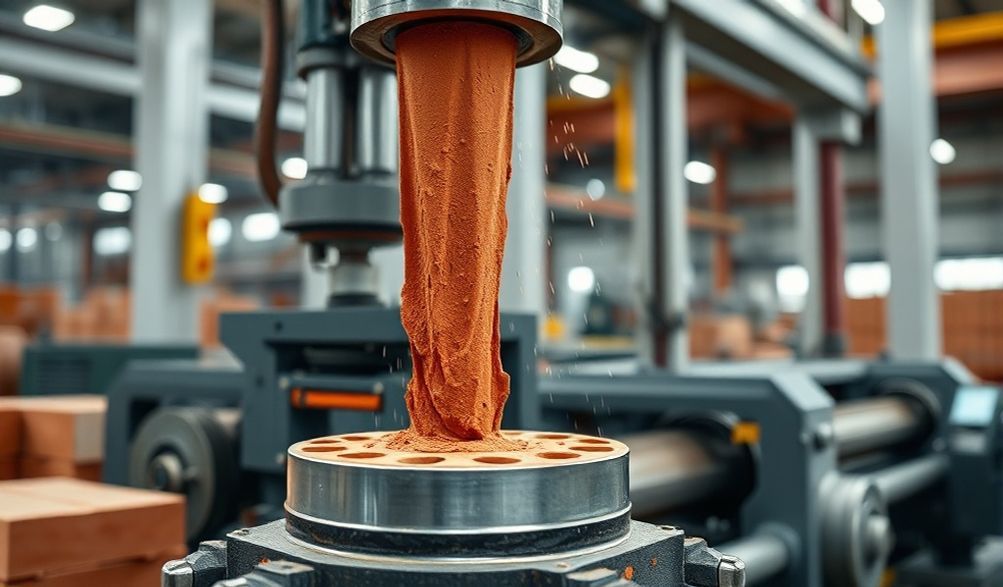
* মোল্ডিং/এক্সট্রুশন The prepared clay is forced through a die to create a continuous column of clay in the desired profile (solid, hollow, perforated).
* কাটিং সিস্টেম: Wires or blades slice the extruded clay column into individual “green” bricks with precise dimensions.
* Palletizing/Racking: An automated system gently places the soft green bricks onto pallets or racks for transport to the drying area.
Drying and Firing Systems: Dryers and Tunnel Kilns
These stages finalize the brick’s structural properties.
* Dryers: Controlled humidity and temperature chambers that slowly remove moisture from green bricks. Proper drying is critical to prevent cracking and explosions in the kiln.
* Tunnel Kilns: Bricks on carts slowly move through a long, temperature-zoned kiln. They are gradually heated to the peak temperature (firing zone) and then cooled. This process ensures uniform firing and the development of final strength and color.
How to Choose the Right Machine for Your Needs
Selecting equipment is a strategic decision. Consider these factors carefully.
Assessing Your Production Capacity Requirements
Be realistic about your current market demand and growth projections. A manual machine produces bricks per day; an automatic line produces per hour. Over-investing strains capital, while under-investing caps growth.
Brick Type and Size Specifications (Solid, Perforated, Hollow)
The machine must be capable of producing your intended product line. A standard solid brick machine differs from one designed for hollow blocks or specialized paving bricks. Ensure the machine’s mold library and extrusion capabilities match your catalog.
Power Source: Electric, Diesel, or Hybrid?
- বৈদ্যুতিক Cleaner, quieter, and lower operating cost where grid power is stable and affordable.
- ডিজেল: Essential for locations with unreliable electricity. Higher fuel cost but offers operational independence.
- হাইব্রিড: Offers flexibility, switching between power sources as needed.
Budget Analysis: Initial Investment vs. Operational Costs
Look beyond the sticker price. Factor in:
* প্রাথমিক খরচ: Machine price, shipping, installation, and commissioning.
* Operational Cost: Power/fuel consumption, spare parts, maintenance labor, and wear items (e.g., mold liners, cutting wires).
Supplier Reliability and After-Sales Service
This is paramount for long-term success. Choose a supplier with proven দক্ষতা and a strong track record.
* Do they provide comprehensive installation and training?
* Is there a clear warranty and a responsive service network for technical support and spare parts?
* Can they offer references from existing clients? A reputable partner is an investment in your operation’s uptime and longevity.
Operational Best Practices and Maintenance
Proactive care maximizes productivity, safety, and machine life.
Daily and Weekly Maintenance Checklists
- দৈনিক Lubricate all moving parts as per manual, check hydraulic oil levels and for leaks, inspect cutting wires/brakes for wear, clean excess clay from molds and conveyors.
- সাপ্তাহিক Tighten bolts and fasteners, inspect electrical connections, check wear parts like extruder augers and mold liners, perform a thorough system cleaning.
Common Operational Issues and Troubleshooting
- Poor Clay Consistency: Results in cracked or misshapen bricks. Remedy: Adjust water content in the pug mill and ensure proper crushing.
- Extrusion Defects (e.g., laminations): Often caused by air pockets or inconsistent clay feed. A vacuum extrusion chamber and proper pug milling prevent this.
- Mold Wear: Leads to bricks with out-of-spec dimensions. Implement a schedule for inspecting and replacing mold liners.
Ensuring Operator Safety
- Always follow lock-out/tag-out procedures during maintenance.
- Ensure all guards are in place on moving parts, especially around cutting mechanisms and presses.
- Provide proper training on machine operation and emergency stops.
- Use appropriate personal protective equipment (PPE) like gloves and safety glasses.
The Future of Clay Brick Machinery
The industry continues to innovate, focusing on efficiency and sustainability.
Trends in Automation and Industry 4.0
Integration of IoT sensors and data analytics is rising. Machines can self-diagnose issues, predict maintenance needs, and optimize production parameters in real-time for peak efficiency and quality control.
Energy-Efficient Kilns and Sustainable Practices
The firing process is energy-intensive. The future lies in:
* High-Efficiency Kilns: Designs that better recapture and reuse waste heat.
* Alternative Fuels: Using biomass, biogas, or other renewable energy sources for firing.
* উপাদান উদ্ভাবন: Incorporating recycled content into clay mixes and optimizing resource use from quarry to finished product.
সচরাচর জিজ্ঞাসিত প্রশ্নাবলী (এফএকিউ)
Q1: What is the average production output of a semi-automatic clay brick machine?
Output varies significantly by model and brick type. A typical semi-automatic hydraulic press can produce between 1,500 to 4,000 standard solid bricks per 8-hour shift. Always confirm output specifications with the manufacturer for your specific target product.
Q2: What is the difference between a hydraulic press and an extrusion machine for clay bricks?
A হাইড্রলিক প্রেস compacts clay into a mold with high vertical pressure, excellent for producing very dense, solid bricks or blocks. An extrusion machine forces plastic clay through a die using an auger, creating a continuous column that is then cut. Extrusion is better suited for producing hollow or perforated bricks and allows for higher continuous output in automated lines.
Q3: How important is the quality of raw clay for machine operation?
It is absolutely critical. Inconsistent clay—with stones, varying moisture, or incorrect mineralogy—will lead to machine jams, excessive wear on parts like the auger and mold, and a high percentage of defective bricks. Proper clay testing and preparation are non-negotiable for a smooth operation.
Q4: Can these machines produce different types of bricks (e.g., paving bricks)?
Yes, but it depends on the machine’s capability. Many semi- and fully-automatic machines are designed with interchangeable molds or dies. A single machine might produce solid wall bricks, hollow blocks, and paving bricks by switching the mold/die profile. Confirm this flexibility with your supplier.
Q5: What is the typical lead time and installation process for a full plant?
For a fully automatic plant, lead time from order to shipment can be 60-120 days, depending on complexity. Installation and commissioning by factory engineers can take 2-4 weeks on-site. This includes assembly, calibration, test runs, and comprehensive operator training. Proper site preparation (foundation, power, etc.) must be completed before the machine arrives.
উপসংহার
Selecting and operating machines for clay making bricks is a significant undertaking that blends traditional craftsmanship with modern engineering. The key to success lies in carefully matching the machine type—manual, semi-automatic, or fully automatic—to your specific production scale and goals. A deep understanding of the complete process, from clay preparation to firing, is essential for maintaining quality and efficiency. Most importantly, partnering with a reputable, knowledgeable supplier with robust after-sales support is an investment that protects your operation and ensures its sustainability.
For a successful venture, we strongly advise consulting with certified engineers or established machinery suppliers to conduct a detailed assessment of your local clay, market needs, and operational capabilities. Have more questions about optimizing your brick production? Share your thoughts in the comments below—let’s build a community of knowledge.
<