1. Core Principles and Operational Overview
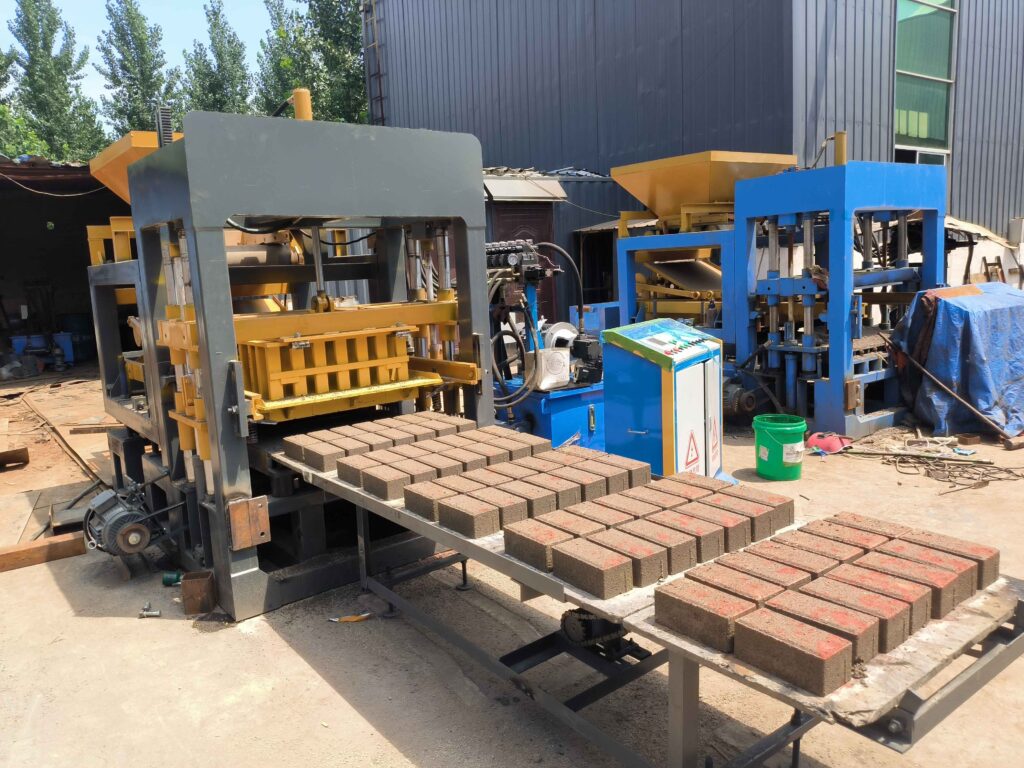
At its essence, a block machine is a system of coordinated force, vibration, and automation designed to densify a semi-dry concrete mix into a specific, stable shape. Unlike wet-cast concrete, block production uses a “no-slump” mix with just enough moisture to facilitate cement hydration but not enough to allow the form to collapse upon ejection. The process is cyclical and highly automated, with each machine cycle producing a “pallet” or “mold box” full of blocks. The core operational sequence can be summarized as: Feed > Compact > Mold > Eject > Cure.
2. Pre-Production: Raw Material Handling and Mixing
The machine’s performance is fundamentally dependent on the quality and consistency of the raw material prepared for it.
2.1. Material Handling and Storage
A plant begins with systems for receiving and storing bulk constituents:
- সমষ্টি: Sand, gravel, and crushed stone are stored in segregated bins or stockpiles. Advanced plants use automated conveying systems to transfer these to the mixing station.
- সিমেন্ট: Stored in sealed silos to prevent moisture absorption and clogging.
- Water and Additives: Precise water metering is critical. Chemical admixtures (plasticizers, accelerators, pigments) are stored in tanks and injected in precise doses.
- Supplementary Materials: Modern plants increasingly incorporate systems for handling fly ash, slag, or recycled concrete aggregate, which may require separate storage and feeding mechanisms.
2.2. The Batching and Mixing Process
Consistency is paramount. An automated batching system, often computer-controlled, weighs out the precise proportions of each material according to the mix design. These ingredients are then discharged into a mixer—typically a pan mixer or paddle mixer—which thoroughly blends the dry materials before introducing water and admixtures. The goal is a uniform, homogeneous “zero-slump” mix where every granule is coated with the cementitious paste.
3. The Block Machine: Key Subsystems and the Forming Cycle
This prepared mix is conveyed to the block machine proper, which executes a precise, high-speed forming cycle.
3.1. The Feeding System (Charging the Mold)
The mix is fed from an overhead hopper into the machine’s feed box, which moves over the empty mold cavities. The feed box deposits a measured, slightly excess amount of material into each mold cavity. The efficiency and evenness of this filling process directly impact the block’s final density and dimensional consistency.
3.2. The Compaction and Vibration System (The Heart of the Process)
This is the most critical phase, where loose aggregate is transformed into a solid mass.
- কম্পন টেবিল: The mold sits on a powerful vibration table. When activated, high-frequency, vertically-oriented vibrations fluidize the concrete mix, allowing particles to settle into the smallest possible volume and release entrapped air.
- Simultaneous Compression: As the mix vibrates, a hydraulic ram (the “head” or “compress”) descends from above, applying substantial pressure—often measured in hundreds of tons—to the material in the mold. The combination of intense vibration and simultaneous top pressure is what creates the high initial “green strength” of the block, allowing it to be immediately demolded and handled.
- মোল্ড ডিজাইন: The mold itself is a critical wear component, typically made of hardened steel. It defines the block’s shape, texture (split-face, rock-face), and core patterns. Cores reduce weight, provide insulation, and allow for rebar and grout in reinforced masonry.
3.3. Demolding and Pallet Handling
After compaction, the mold box rises. The newly formed blocks, now possessing sufficient cohesion, remain standing on a flat, portable steel pallet that had been positioned underneath the mold. A stripping plate gently pushes the blocks down onto the pallet as the mold ascends, ensuring a clean release. The loaded pallet is then mechanically transferred out of the machine.
4. Post-Forming Processes: Curing and Cubing
The blocks leaving the machine are stable but possess only a fraction of their ultimate strength. The curing process develops this strength.
4.1. Low-Pressure Steam Curing (The Standard Method)
Loaded pallets are automatically racked and moved into a controlled curing chamber.
- Pre-Steaming (Rest Period): Blocks may sit for 1-3 hours to allow for uniform hydration initiation.
- Steam Rise: Temperature is gradually increased to approximately 140-180°F (60-80°C) over 2-3 hours.
- Soaking: The blocks are held at this elevated temperature in a high-humidity environment for 5-12 hours. This accelerates the chemical hydration of the cement, allowing the blocks to achieve over 70% of their 28-day strength in less than a day.
- Cool Down: Temperature is gradually reduced over several hours to prevent thermal cracking. The entire cycle typically takes 18-24 hours.
4.2. Final Handling: Depalleting and Cubing
After curing, blocks are mechanically stripped from their pallets. The pallets return to the machine for reuse. The blocks then travel to a “cubing” station, where they are automatically stacked into a stable, interlocking cube (e.g., 10 blocks per tier, 5-6 tiers high) and tightly strapped with plastic or steel bands for shipment. These cubes are the standard unit handled by forklifts and delivered to distributors and job sites.
5. Machine Variations and Modern Advancements
Understanding the basic cycle allows for appreciation of key machine types and technological integrations.
5.1. Stationary vs. Mobile Plants
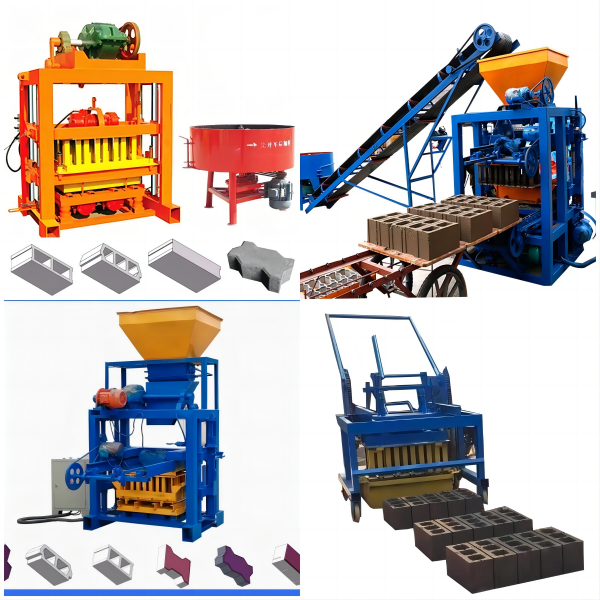
- স্থির মেশিন: High-output plants fixed in a factory setting. They produce pallets of blocks that are moved via conveyor to curing kilns. They offer the highest production rates (thousands of blocks per hour) and automation.
- Mobile Machines (Blockmakers): Self-contained units that form blocks directly on a concrete slab or prepared surface. After forming, the machine moves forward, leaving rows of blocks to cure স্থানীয়ভাবে under tarps. These are ideal for on-site production, reducing transport costs for large projects.
5.2. Integration of Control Systems and Sustainable Practices
- Programmable Logic Controllers (PLCs): Modern machines are governed by PLCs that control every aspect of the cycle—feed depth, vibration time, pressure, and pallet movement—ensuring repeatable quality and allowing for quick changeovers between different block products.
- Sustainable Production: Advanced machines are designed to work efficiently with high percentages of recycled aggregates and supplementary cementitious materials (SCMs). Some systems integrate real-time moisture sensors in the mix to optimize water usage, while others capture and reuse water from the process.
উপসংহার
The concrete block machine is a masterpiece of industrial engineering, a symphony of mechanical force, precise vibration, and automated control. Its operation transcends simple molding; it is a process of densification and accelerated material science that delivers a reliable, standardized product at scale. For professionals in the distribution chain, this knowledge is power. It enables a critical evaluation of a supplier’s capability based on their equipment’s age, automation level, and compatibility with innovative mixes. It informs conversations about quality control, production capacity, and the feasibility of custom orders. Furthermore, as the industry pivots towards greener materials and more efficient construction methods, the block machine’s capacity to adapt—to process new aggregates, to form new shapes for insulation or interlocking systems—will be the linchpin of its continued relevance. By understanding the machine, you understand the future of the block itself, positioning your business not just as a vendor, but as a knowledgeable partner in the built environment.
FAQ (Frequently Asked Questions)
Q1: What is the difference between a “block” machine and a “brick” or “paver” machine?
A: The core operating principle is identical. The primary differences are in the mold size and configuration, and often the pressure and vibration intensity. A block machine has a larger mold box to produce bigger units (e.g., 8x8x16 inch CMUs) and applies extremely high compression force. A brick or paver machine uses smaller cavities for smaller, denser units, often requiring even higher pressures and finer vibration for a smooth, tight surface finish. Many modern machines are “multipurpose” and can produce different product lines by changing the mold and adjusting machine parameters.
Q2: How critical is the raw material mix to the machine’s operation and final product quality?
A: It is the single most important factor. A poorly graded, inconsistent, or incorrectly proportioned mix will cause immediate problems: machine wear, block sticking in the mold, low green strength leading to collapse, or final products that fail to meet strength or absorption standards. The machine can only compact what it is given; it cannot correct a fundamentally bad mix design. Partnering with suppliers who have rigorous quality control on their raw materials is essential.
Q3: What are the key maintenance requirements for these machines, and how does that impact supply reliability?
A: Key wear parts include the molds, mixer blades, vibration tables, and হাইড্রোলিক সিস্টেম. Proactive manufacturers follow strict maintenance schedules for lubrication, part inspection, and replacement. For a distributor, a supplier with poor maintenance practices is a major risk, leading to unplanned downtime, production delays, and potential inconsistencies in block dimensions or strength. Inquiring about a supplier’s maintenance program is a prudent part of vendor assessment.
Q4: Can these machines produce “specialty” blocks like insulated concrete forms (ICFs) or architectural screen blocks?
A: Absolutely. Specialty products are primarily a function of মোল্ড ডিজাইন and sometimes secondary processes. Complex molds can form the interlocking shapes of ICF blocks or the intricate patterns of architectural screen blocks. The machine’s ability to consistently fill and compact these complex cavities is a mark of its sophistication. Some architectural finishes may also involve a secondary splitting or washing process after curing.
Q5: How does the production process affect the block’s structural performance and suitability for different applications?
A: The process is directly engineered for performance. The vibration and pressure determine the block’s density and compressive strength. The curing process ensures that strength is developed rapidly and consistently. The precision of the ଛାଞ୍ଚ dictates dimensional tolerances, which is critical for laid-up walls and reinforced masonry. A distributor should understand that blocks from a highly automated, controlled process will offer more reliable performance in structural, load-bearing, and veneer applications compared to those from less controlled operations.