
The Complete Guide to Block Making Machine Price in China (2026 Market Analysis)
Navigating the market for a block making machine from China can feel like deciphering a complex code. You’re likely here with one primary goal: to cut through the noise and find clear, reliable pricing information to make a sound investment. You’re not just looking for a number; you’re seeking to understand the মানতার পিছনে।
This guide is designed to do exactly that. Based on a comprehensive analysis of the 2026 market, direct manufacturer data, and industry expertise, we will demystify the cost structure of Chinese block making machines. The price tag you see is a culmination of multiple variables—machine type, automation level, brand reputation, and specific configuration. By the end of this article, you will possess the knowledge to evaluate quotes confidently, avoid common pitfalls, and make a purchase decision that aligns with your business goals for years to come. Let’s begin by breaking down what truly determines the cost.
Understanding the Factors That Determine Block Making Machine Prices in China
The first step to making an informed purchase is understanding why prices vary so dramatically. A “block making machine” can refer to a simple manual press or a fully robotic production line. The final price is a direct reflection of the engineering, materials, and capabilities built into the equipment.
মেশিনের ধরন ও আউটপুট ক্ষমতা
The fundamental driver of cost is what the machine is designed to do. Output capacity, measured in blocks per hour or per 8-hour shift, is the primary metric.
- ম্যানুয়াল ও সেমি-অটোমেটিক মেশিন: These are entry-level models. Operators manually feed raw material and remove finished blocks. Output is low, often between 300-1,000 blocks per day. They are priced for affordability and simplicity.
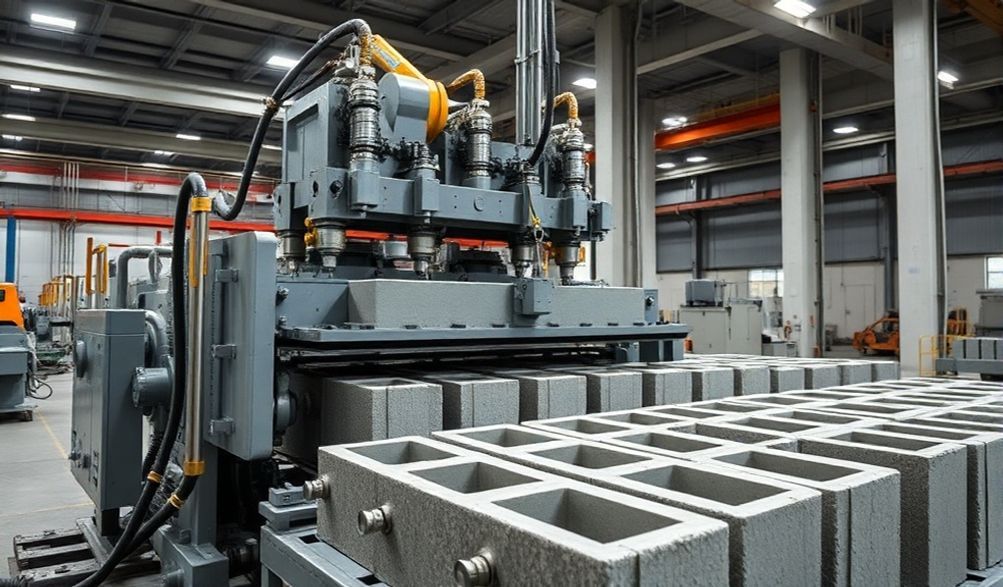
- সম্পূর্ণ স্বয়ংক্রিয় স্থির মেশিন: The workhorses of the industry. These machines automate the feeding, mixing, pressing, and curing processes. Output can range from 1,500 to over 10,000 blocks per 8-hour shift. The price increases significantly with higher output and durability.
- মোবাইল ব্লক মেশিন: These self-contained units can produce blocks directly on-site (like at a construction project), eliminating transport costs for the blocks themselves. Their price reflects this specialized mobility and convenience.
- সম্পূর্ণ উৎপাদন লাইন: This is the top tier. It includes automatic batching systems, mixers, conveyors, block makers, pallet stackers, and curing systems. Output can exceed 20,000 blocks daily. Pricing is for a turnkey solution.
স্বয়ংক্রিয়তার স্তর
Automation is a major cost multiplier, but it’s an investment in efficiency and consistency.
- ম্যানুয়াল: Lowest upfront cost, highest long-term labor cost and variability in product quality.
- সেমি-অটোমেটিক: A middle ground. Some processes (like pressing) are automated, but material handling is manual. Offers a balance of cost and output.
- Fully Automatic (PLC Controlled): The premium option. Programmable Logic Controller (PLC) systems manage the entire cycle with minimal human intervention. Benefits include:
- Consistent, high-quality output.
- Significant reduction in labor costs.
- Higher production speed and efficiency.
- The initial price is higher, but the Return on Investment (ROI) is often faster for serious businesses.
Brand Reputation & Quality Components
In the Chinese market, brand equity correlates strongly with reliability and after-sales support.
- Established Brands: Manufacturers with a 15-20 year history and a global client base command a 10-25% premium. You are paying for proven design, rigorous testing, and a reliable supply chain for spare parts.
- Newer Manufacturers: Often compete aggressively on price. While some offer excellent value, due diligence is critical.
- কোর কম্পোনেন্টস: The “guts” of the machine dictate its lifespan. Always ask about:
- হাইড্রোলিক সিস্টেম: Are pumps and valves from reputable brands like Rexroth, Kawasaki, or Yuken? Or are they unnamed, generic parts?
- Electrical Components: Are PLCs, sensors, and switches from Siemens, Schneider, or Mitsubishi?
- Structural Steel & Welding: Heavy-duty, properly stress-relieved frames cost more but prevent alignment issues.
- ছাঁচ: High-chromium alloy steel molds retain precision far longer than standard steel, affecting both price and long-term block quality.
Customization & Additional Features
The base model price is just the starting point. Custom requirements add cost.
- Special Molds: Producing unique shapes (interlocking pavers, grass blocks, decorative stones) requires custom mold design and machining.
- Enhanced Features: Add-ons like automatic color feeders, robotic palletizers, or integrated curing rooms increase the price.
- Material Adaptations: Machines configured for specific raw materials (e.g., fly ash, slag, lightweight aggregate) may need modified systems.
Current Price Ranges for Chinese Block Making Machines (2026)
The following price ranges are estimates for the machine itself, based on prevailing market conditions in early 2026. They are indicative and do not include shipping, duties, or installation. Always get a formal quotation.
Manual & Small Semi-Automatic Machines
- Price Range: $3,000 – $15,000 USD
- আউটপুট: 500 – 2,000 blocks per 8-hour shift.
- আদর্শ Entrepreneurs, very small construction firms, or community projects in remote areas with low labor costs and limited capital. These are a low-risk entry point but come with clear output and labor limitations.
Standard Fully Automatic Block Making Machines
- Price Range: $50,000 – $150,000+ USD
- আউটপুট: 2,500 – 10,000+ blocks per 8-hour shift.
- আদর্শ Small to medium-sized block manufacturing plants and growing businesses. This range covers the majority of industrial machines. A typical model in the $80,000-$100,000 range might be a PLC-controlled, stationary machine producing 4,000-6,000 solid/hollow blocks per shift with a standard set of molds.
High-Capacity Production Lines & Specialized Plants
- Price Range: $200,000 – $1,000,000+ USD
- আউটপুট: 10,000 – 30,000+ blocks daily.
- আদর্শ Large-scale commercial plants, government infrastructure projects, or producers of specialized products like aerated concrete (AAC) blocks. This is the price for a complete, synchronized system from raw material handling to finished block stacking, often requiring significant factory space and infrastructure.
Beyond the Sticker Price: Calculating Your Total Investment
The machine’s price is only part of your financial commitment. Failing to budget for these additional costs is a common and costly mistake.
Shipping, Logistics, and Import Duties
- Freight Costs: This depends on machine volume/weight (LCL vs. FCL), destination port, and current sea freight rates. A 40-foot container (FCL) from China to a major port can cost between $3,000 and $8,000.
- Incoterms are Crucial: Understand your quote’s terms.
- এফওবি (ফ্রি অন বোর্ড): You pay for and manage all shipping and insurance from the Chinese port onward.
- সিআইএফ (খরচ, বীমা এবং মাল পরিবহন খরচ): The supplier arranges and pays for shipping to your nearest port. You handle import clearance and onward transport.
- আমদানি শুল্ক ও কর: These vary widely by country. Contact a local customs broker to determine the exact HS code and applicable tariffs, VAT, and clearance fees for your nation. This can add 5-30% to your landed cost.
Installation, Commissioning, and Training
- Professional Installation: Machines must be leveled, anchored, and connected to power and hydraulics. Suppliers often offer installation services for an extra fee (covering technician travel, accommodation, and labor).
- Commissioning: This is the critical first-run and calibration process to ensure the machine produces quality blocks from your local raw materials.
- অপারেটর প্রশিক্ষণ: Proper training is non-negotiable for safety, efficiency, and basic maintenance. Factor in the cost of sending your staff for training or hosting the supplier’s technician.
Spare Parts and Long-Term Maintenance
- Initial Spare Parts Kit: Any reputable supplier will recommend (and you should purchase) an initial kit of wear-and-tear parts: seals, gaskets, filter elements, and commonly used hydraulic components. This can cost $1,000 – $5,000 but prevents weeks of downtime waiting for a $50 part.
- Ongoing Maintenance: Budget for regular oil changes, filter replacements, and periodic overhauls. The quality of the initial components directly impacts these long-term costs.
How to Get an Accurate Quotation and Avoid Costly Pitfalls
Armed with an understanding of costs, you can now engage suppliers from a position of strength.
Preparing a Detailed Inquiry Spec Sheet
To get comparable quotes, provide every manufacturer with the same detailed information:
* Desired block types (size, shape, hollow pattern).
* Required output per hour/shift.
* Available raw materials (cement type, aggregate size, etc.).
* Local power supply (voltage, phase, frequency).
* Desired level of automation.
* Available factory space.
Vetting Chinese Manufacturers: A Due Diligence Checklist
- Business Verification: Check the official business license. On platforms like Alibaba, look for “Verified” status and Gold Supplier tiers.
- Factory Audit Reports: Request recent third-party audit reports (e.g., from SGS, BV) that assess production capability and quality control.
- Client References & Case Studies: Ask for contact information for past clients in your region or a similar market. Speak to them directly.
- After-Sales Service Structure: Do they offer online technical support? Do they have a network of agents or partners in your country? What is their warranty policy (typically 12 months for core parts)?
The Importance of On-Site Factory Inspection & Testing
For any order above $50,000, a factory visit is highly recommended. It is the single best way to:
* Assess build quality and workshop organization.
* Meet the engineering team.
* Witness a Performance Test: Insist on a test using a sample of your own raw materials. This proves the machine can work with your local conditions and meet output/quality promises.
Frequently Asked Questions (FAQ) on Block Making Machine Prices
Q1: What is the cheapest block making machine I can get from China?
এ Basic manual machines can be found for as low as $3,000. However, the focus should be on “value for money” rather than the absolute cheapest price. Consider labor costs, output needs, and product consistency. A slightly more expensive semi-automatic model may pay for itself quickly in reduced labor and increased production.
Q2: Are cheaper Chinese machines reliable, or will I pay more in repairs?
এ The market offers a spectrum. Competitive pricing is China’s advantage, but extreme low cost often signals compromises on component quality and engineering. A machine with reputable brand-name hydraulics and electrical systems, even at a 15% premium, will almost always have lower lifetime costs and less downtime than a cheaper alternative with generic parts. Due diligence is key.
Q3: Does the quoted price usually include molds and shipping?
এ This is a vital clarification point. A standard quotation typically includes one basic set of molds (e.g., for a standard hollow block). Additional or custom molds cost extra. International shipping, insurance, and import duties are almost never included in the base machine price. Always confirm the Incoterms (e.g., FOB Shanghai) to know exactly what you are responsible for.
Q4: How can I ensure I’m not overpaying for a machine?
এ 1) Get 3-5 detailed quotes from pre-vetted suppliers. 2) Compare specifications line-by-line, not just the bottom-line price. 3) Be wary of any quote that is significantly (20%+) below the market average—it often indicates inferior quality or hidden costs. 4) Invest time in factory vetting and reference checks.
Q5: What are the payment terms typically offered by Chinese suppliers?
এ The most common structure is 30% deposit with order, 70% balance before shipment. For larger orders, you can negotiate terms like 30% deposit, 40% before shipment, and 30% after successful commissioning. For high-value purchases, using a Letter of Credit (L/C) or an escrow service (like through Alibaba Trade Assurance) provides security for both buyer and seller.
উপসংহার
Understanding the “block making machine price China” search is ultimately about understanding total investment value. It’s a journey from looking at a simple sticker price to evaluating a complete business solution that encompasses machine suitability, operational costs, supplier reliability, and long-term support.
The path to a successful purchase is built on thorough research, precise communication with suppliers, and a disciplined approach to due diligence. Prioritize partners who demonstrate transparency, quality, and a commitment to your success after the sale. By applying the insights in this guide, you are now equipped to move beyond price comparisons and make a strategic, informed decision that will build the foundation of your block manufacturing business for years to come.
<