
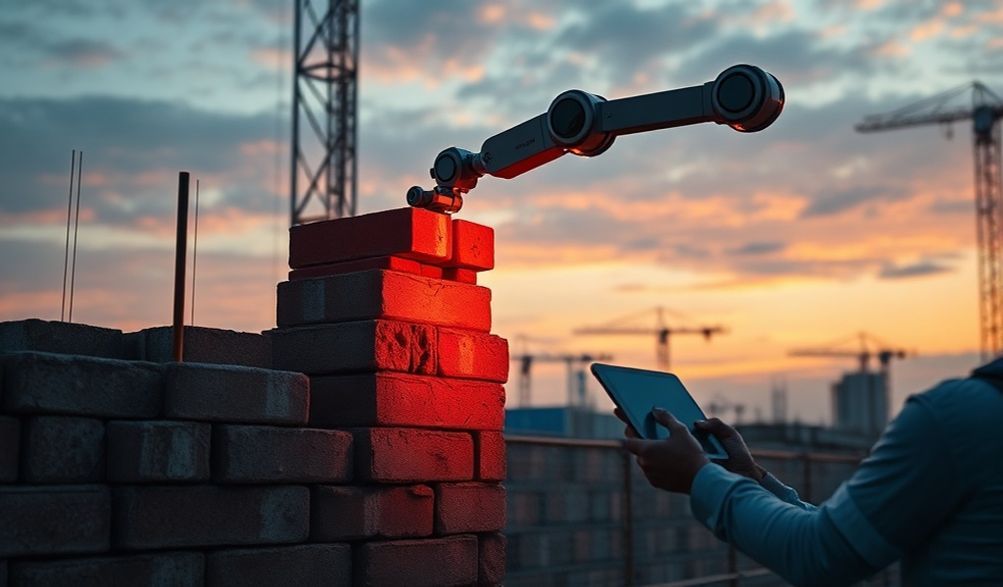
The Future of Construction: A Complete Guide to Robotics Brick Laying Machines
For centuries, the rhythm of a construction site has been set by the skilled mason. The sound of a trowel scraping mortar, the thud of a brick being set, and the careful eye measuring alignment are iconic. Yet, this scene is undergoing a profound transformation. Enter the robotics brick laying machine: a fusion of mechanical engineering, computer vision, and sophisticated software that is redefining the very craft of masonry. This technology promises not to erase the builder, but to augment human skill with superhuman precision, tireless productivity, and enhanced safety. This guide provides a comprehensive, expert overview of this transformative force, exploring its mechanics, benefits, challenges, and the inevitable impact it will have on the future of our built environment.
What is a Robotics Brick Laying Machine? Defining the Technology
At its core, a robotics brick laying machine is an automated system designed to place bricks or blocks with high precision, following a digitally programmed path. It is a solution born from the need to address construction’s persistent triad of challenges: labor shortages, variable quality, and tight project timelines. Unlike a simple mechanized tool, these systems integrate multiple advanced technologies to function as semi- or fully-autonomous masons.
মূল উপাদান এবং এটি কীভাবে কাজ করে
Understanding the machine requires breaking down its key anatomical parts and their synchronized function:
- The Robotic Arm: The “arm” of the system, typically a multi-axis industrial robot. This provides the dexterity and range of motion to pick, orient, and place each unit.
- Material Handling & Feeding System: This subsystem stores and supplies bricks or blocks to the robotic arm. It can be a conveyor belt, a magazine, or a palletized system, ensuring a continuous workflow.
- Mortar/Adhesive Dispensing System: A critical component that applies the bonding agent. This can be a traditional mortar pump and nozzle or a system designed for specialized adhesives, applying a precise, consistent bead every time.
- Vision and Guidance System: The “eyes” of the machine. Using a combination of lasers, LiDAR, and cameras, this system scans the work area. It identifies the position of previously laid bricks, checks for alignment, and ensures the robot’s movements match the digital blueprint in real-time, compensating for minor variances.
- Control Software & Interface: The “brain.” This is where the operator inputs or accesses the building design, monitors progress, and can make adjustments.
The process flow is a seamless loop: A digital design is loaded. The machine’s guidance system scans and maps the work area. The robotic arm picks a brick from the feeder, applies mortar via the dispenser, and then places the brick in its exact programmed location. The vision system verifies placement accuracy, and the cycle repeats—brick by brick, course by course—with relentless consistency.
From CAD to Wall: The Software Behind the Machine
The physical machine is only half the story. Its intelligence is derived from sophisticated software that bridges the gap between design and construction. The process is deeply integrated with Building Information Modeling (BIM).
- Design in BIM: An architect or engineer creates a detailed 3D model of the structure in BIM software. This model contains all the geometric and material data.
- Path Planning & Translation: Specialized software (often from the robot manufacturer) imports the BIM model. The software then “slices” the wall designs and calculates the optimal path for the robot—defining the pick-up point, mortar application, placement coordinates, and orientation for every single brick.
- Simulation & Error Checking: Before a single brick is laid, the process can be simulated to check for collisions, logistical issues, or sequence errors.
- Machine Code Generation: Finally, the software translates these instructions into machine-readable code (e.g., G-code) that drives the robotic arm and all peripheral systems, turning a digital model into a physical reality.
Key Benefits: Why the Industry is Adopting Robotic Bricklaying
The adoption of this technology is driven by tangible, bottom-line benefits that solve acute industry problems.
Unmatched Speed and 24/7 Productivity
The numbers are compelling. While a highly skilled human mason may lay 300-500 bricks in a day, a robotic system like কনস্ট্রাকশন রোবোটিক্সের এসএএম (সেমি-অটোমেটেড ম্যাসন) can assist a crew in laying over 3,000 bricks per day. Fully autonomous systems, such as এফবিআর-এর হ্যাড্রিয়ান এক্স, boast rates of laying over 200 blocks per hour. This isn’t just about raw speed; it’s about consistent, uninterrupted output. Machines don’t fatigue, take breaks, or are affected by weather (within operational limits), allowing for significant compression of project timelines, sometimes by 50% or more for masonry work.
Precision, Consistency, and Reduced Waste
Human skill varies, but a robot’s precision is programmable. These systems achieve millimeter-level accuracy (often ±1mm), ensuring every wall is perfectly plumb, level, and aligned. This results in:
* Flawless Aesthetics: Uniform mortar joints and perfect lines.
* গঠনগত অখণ্ডতা: Consistent mortar application and placement maximize strength.
* নাটকীয়ভাবে বর্জ্য হ্রাস Precise material application means less spilled mortar and fewer damaged or mis-cut bricks. This aligns with sustainable construction goals and directly cuts material costs.
Addressing Labor Shortages and Enhancing Safety
The construction industry globally faces a crippling shortage of skilled masons. Robotic bricklayers act as a বল গুণক, allowing existing skilled crews to manage multiple machines or focus on complex tasks. More importantly, they enhance safety by:
* Removing workers from the repetitive, physically taxing motion of lifting and placing heavy bricks, reducing long-term musculoskeletal injuries.
* Minimizing time spent on scaffolding and in other hazardous positions.
* Creating a more controlled and predictable worksite environment.
Long-Term Cost-Efficiency Analysis
The high initial investment must be evaluated against the total lifecycle cost. The ROI becomes clear through:
* দ্রুত প্রকল্প সমাপ্তি: Earlier occupancy and revenue generation for clients.
* Lower Labor Costs per Unit: Reduced overtime and higher output per worker.
* Minimized Rework: Precision building means virtually no cost for tearing down and rebuilding out-of-tolerance work.
* Material Savings: Reduced waste directly lowers one of the largest project cost centers.
* Predictable Scheduling: Reduced risk of delays due to labor availability or skill gaps.
Current Limitations and Practical Challenges
A trustworthy analysis requires a balanced view. Robotic bricklaying is powerful but not yet a universal panacea.
High Initial Capital Investment
The primary barrier is cost. These systems represent a significant capital expenditure, often ranging from hundreds of thousands to millions of dollars. This can be prohibitive for small and medium-sized contractors, making the technology initially more accessible to large-scale developers, specialist subcontractors, or through leasing models.
Site Adaptability and Complex Geometries
While excellent for long, straight runs of wall, current technology faces challenges with:
* Complex Corners and Openings: Programming for intricate details around windows, doors, and non-standard angles requires more setup time and sophisticated software.
* Site Logistics: Machines need a clear, stable, and prepared work area. Unprepared or cramped sites can limit effectiveness.
* পণ্য পরিচালনা: The system needs a steady supply of bricks and mortar delivered to its feeding mechanism, which requires rethinking traditional site logistics.
The Evolving Role of Human Workers
The narrative is not “robots vs. humans,” but “robots এবং humans.” These machines create new, often higher-skilled jobs:
* Robot Operators & Technicians: Skilled workers to oversee the machine, perform maintenance, and troubleshoot.
* Digital/BIM Technicians: Specialists who prepare and translate architectural models into machine instructions.
* Supervisory Masons: Craftsmen who focus on quality control, complex detailing, and finishing work that the robot cannot handle. The human role shifts from manual labor to cognitive oversight and skilled collaboration.
Real-World Applications and Leading Manufacturers
This technology is not science fiction; it is actively building our world today.
Case Studies: Where Robotic Bricklayers Are Building Today
- Large-Scale Residential: In the US and Australia, robotic bricklayers have been used to construct the exterior walls of housing estates and apartment complexes, drastically speeding up the enclosure phase.
- Commercial & Industrial Walls: They are ideal for building precise, high-quality perimeter walls, warehouse facades, and sound-barrier walls along highways.
- Specialist Projects: Companies like FBR have demonstrated their truck-mounted Hadrian X by building structurally sound test structures, including a three-bedroom home’s walls in under three days.
Major Players in the Robotic Masonry Space
Two companies often lead the conversation, representing different philosophies:
- Construction Robotics (USA) – SAM (Semi-Automated Mason): A collaborative robot. SAM works alongside a human crew. A worker feeds bricks and mortars joints, while SAM does the heavy lifting and precise placement. It’s designed to augment productivity and reduce fatigue for existing teams.
- FBR (Australia) – Hadrian X: A fully autonomous, truck-mounted system. It takes a digital file and builds structural walls from the back of a vehicle, using a dynamic stabilization system to compensate for wind and vibration. It focuses on large block construction and aims for complete task autonomy.
Other players include TyBot (for tying rebar) and various industrial robotics firms (like ABB or KUKA) partnering with construction tech startups to develop bespoke solutions.
The Future Outlook: What’s Next for Automated Masonry?
The current state is just the foundation. The future points toward deeper integration and intelligence.
Integration with Broader Construction Robotics Ecosystems
The bricklaying robot will not work in isolation. It will be one node in a connected “digital jobsite,” sharing data with:
* Autonomous Site Vehicles for material delivery.
* Drones for progress monitoring and site scanning.
* 3D Concrete Printers for complementary structural elements.
* Exoskeletons worn by human coworkers for enhanced strength.
AI, Machine Learning, and Increased Autonomy
Future systems will move from pre-programmed paths to adaptive intelligence:
* Real-Time Problem Solving: Using AI-powered vision to identify a defective brick and automatically discard it, or to adjust the mortar flow for a slightly irregular unit.
* Predictive Maintenance: Machine learning algorithms predicting component failures before they happen, minimizing downtime.
* Generative Design Integration: AI could design optimal wall layouts for both aesthetics and robotic constructability.
Potential Impact on Architectural Design
As the technology matures, it will influence design. Architects may explore new forms and patterns that are difficult or economically unfeasible for human masons but are simple for a robot—complex curved walls, intricate decorative brickwork, or highly optimized structural designs that minimize material use while maximizing strength.
FAQ Section
Q: Can a robotics brick laying machine build an entire house?
A: While incredibly advanced, most current systems are optimized for wall construction. A complete house requires integration with other trades (roofing, electrical, plumbing, finishing). However, the long-term goal of fully integrated robotic construction systems is to automate large portions of the structural envelope.
Q: How many bricklayers does one machine replace?
A: It’s not a simple 1:1 replacement. A collaborative system like SAM is designed to work with a crew, acting as a “partner” that handles the repetitive laying, potentially boosting the output of a team by 3-5x, not eliminating it. It changes the crew’s composition and skill requirements.
Q: What is the typical accuracy of a robotic bricklayer?
A: High-precision systems can place bricks or blocks with millimeter-level accuracy (e.g., ±1mm), far exceeding typical manual tolerances. This leads to perfectly plumb, level, and straight walls with uniform joint spacing.
Q: Are there different types of robotic bricklaying machines?
A: Yes. Primary categories include semi-autonomous systems that require human assistance (e.g., for feeding) and fully autonomous systems that work from a digital plan. There are also static gantry systems for factory settings and mobile truck-mounted solutions for on-site flexibility.
Q: Is the mortar used different from traditional methods?
A: Often, yes. Many systems use specialized high-adhesion, quick-setting mortars or adhesives compatible with their precise dispensing mechanisms. This ensures bond strength can keep pace with the rapid placement speed.
উপসংহার
The robotics brick laying machine is far more than a novel gadget; it represents a significant and necessary evolutionary step for the construction industry. Its core value lies in its ability to augment human capability—addressing critical shortages, elevating quality standards, and creating a safer work environment. While barriers to adoption like cost and adaptability exist, the trajectory is unmistakable: automation will play an ever-increasing role in how we build. The builders, contractors, and firms that proactively learn to integrate, manage, and collaborate with this technology today are not just keeping pace; they are actively defining the smarter, safer, and more efficient jobsites of tomorrow. The future of construction is being built, one precisely placed brick at a time.
<