
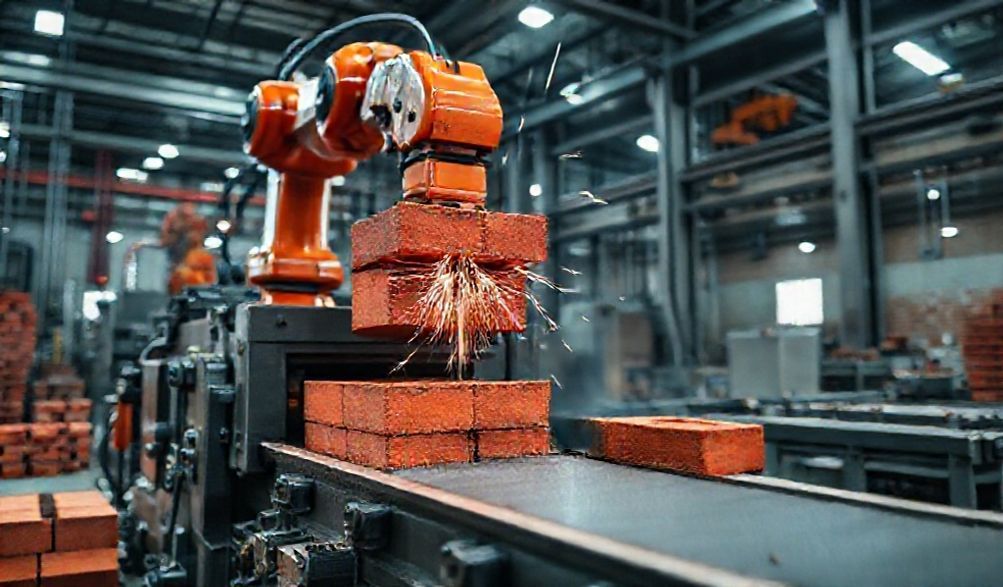
The Ultimate Guide to Automatic Brick Machines: Revolutionizing Construction
ভূমিকা
The global construction industry is projected to reach a staggering $15.2 trillion by 2030, driven by relentless urbanization and infrastructure development. At the heart of this growth lies a fundamental demand: efficient, sustainable, and high-quality building materials. For centuries, brick-making was synonymous with back-breaking labor, unpredictable results, and slow output. Even the advent of semi-automatic machines left significant gaps in consistency and scale.
প্রবেশ করোautomatic brick machine—the technological powerhouse redefining modern masonry. This guide, crafted from deep industry expertise and technical analysis, cuts through the noise. We will dissect how these machines work, quantify their transformative benefits, and provide a clear framework for making a strategic investment. Whether you’re a construction business owner, a project manager, or an entrepreneur, understanding this technology is key to building a more efficient and profitable future.
What is an Automatic Brick Machine? (Defining the Technology)
An automatic brick machine is a fully integrated, computer-controlled manufacturing system designed to produce bricks, blocks, and pavers with minimal human intervention. It automates the entire production cycle, from raw material handling to the final stacking of cured bricks, representing the pinnacle of mechanization in the construction materials sector.
Core Definition and How It Differs from Manual/Semi-Auto Machines
The distinction lies in the degree of automation and labor dependency.
- ম্যানুয়াল মেশিন: Require intensive physical labor for every step—mixing, feeding, compacting, and mold removal. Output is low, and quality heavily depends on the worker’s skill.
- সেমি-অটোমেটিক মেশিন: Mechanize one or two core processes, like compaction or molding, but still require manual feeding of raw materials and removal of finished products. They offer a middle ground in price and output.
- সম্পূর্ণ স্বয়ংক্রিয় মেশিন: Represent a closed-loop system. Once raw materials are loaded into the hopper, the entire process—proportioning, mixing, conveying, compacting, molding, curing, and palletizing—is managed by programmable logic controllers (PLCs) and synchronized mechanical systems. Human roles shift from laborers to machine operators and supervisors.
The Core Working Principle: From Raw Material to Finished Brick
While models vary, the standard automated process follows a logical, continuous sequence:
- Feeding & Weighing: Raw materials (e.g., sand, cement, fly ash, stone dust) are automatically fed from storage bins into a precise weighing system.
- মিশ্রণ: Materials are conveyed to a mixer (often a pan or twin-shaft type) where water and additives are blended to achieve a homogeneous, optimal-moisture mix.
- মোল্ডিং ও কম্প্যাকশন: The mix is transferred to the mold chamber. Here, a combination of high-pressure hydraulic force and/or high-frequency vibration compacts the material into a dense, precise shape.
- Ejection & Transfer: The freshly formed, “green” brick is automatically ejected from the mold onto a conveyor belt or pallet.
- কিউরিং Pallets of bricks are moved into a controlled curing chamber (steam, water spray, or air) where they gain strength over a defined period.
- স্ট্যাকিং ও প্যাকেজিং: Finally, robots or automatic stackers arrange the cured bricks onto pallets for shrink-wrapping and shipment.
This seamless flow is the engine behind the machine’s remarkable efficiency.
Key Benefits of Investing in an Automatic Brick Machine
Moving to full automation is a strategic decision with measurable, multi-faceted returns.
অতুলনীয় উৎপাদন দক্ষতা ও সামঞ্জস্য
- উচ্চ আউটপুট: Automatic machines produce thousands of bricks per hour, operating consistently 24/7 if needed. This translates to meeting large project deadlines with ease.
- Robotic Precision: Every brick is an identical copy of the last. This eliminates size variations, ensuring uniform courses, less mortar use, and faster bricklaying on-site.
শ্রম খরচ ও নির্ভরতা উল্লেখযোগ্যভাবে হ্রাস
Automation shifts the labor paradigm. A plant that once required 20-30 manual workers can often be run by 3-5 skilled operators. This dramatically cuts long-term wage bills, reduces management overhead, and mitigates risks associated with labor shortages.
Superior Quality and Strength of Bricks
The controlled, repeatable process yields superior products.
* Higher Density: Consistent, high-pressure compaction creates bricks with fewer voids, leading to greater compressive strength—often exceeding standards like ASTM C90.
* Better Durability: Uniform density means consistent resistance to weathering, water absorption, and wear, enhancing building longevity.
Material Versatility and Sustainability
These machines are key players in the green construction movement.
* Diverse Inputs: They can efficiently use fly ash (a coal power plant byproduct), slag, recycled construction waste, and quarry dust alongside traditional clay or cement.
* Eco-Friendly Output: By consuming industrial waste, they reduce landfill burden and the need for virgin clay quarrying, contributing to a circular economy.
Long-Term Cost Savings and ROI (Return on Investment)
While the initial capital outlay is higher, the total cost of ownership is lower. A simple ROI framework considers:
* প্রাথমিক খরচ: Machine price, installation, and setup.
* Recurring Savings: Drastic reduction in direct labor wages, lower waste from material precision, and reduced rework from quality defects.
* Increased Revenue: Ability to take on larger contracts and deliver faster.
For many operations, a well-planned automatic brick plant can achieve payback within 2-4 years through these combined efficiencies.
Types of Automatic Brick Machines: Choosing Your Configuration
Selecting the right machine depends on your product goals and raw materials.
By Operation Method: Hydraulic vs. Vibration Press Machines
- হাইড্রোলিক প্রেস মেশিন: Use immense, controlled hydraulic pressure (often hundreds of tons) to compress material. They excel at producing extremely dense, high-strength products like solid concrete blocks, heavy-duty pavers, and kerbstones. The process is slightly slower but yields premium structural quality.
- Vibration Press Machines: Utilize high-frequency vibration to settle the material into the mold, often combined with some pressure. This method is typically faster and excellent for producing hollow blocks, fly ash bricks, and lighter interlocking pavers where precise shape and good strength are paramount.
By Brick Output Type: What Can You Produce?
The true power lies in mold interchangeability. A single machine can be configured to produce:
* Solid & Hollow Concrete Blocks (4″, 6″, 8″ etc.)
* Paving Stones in various shapes and thicknesses
* Interlocking Bricks for dry-stack walls and landscaping
* Curbs, Grass Pavers, and Decorative Designer Bricks
By Production Scale: From Small Business to Mega Plants
- সম্পূর্ণ স্বয়ংক্রিয় স্থির উদ্ভিদ: These are fixed installations with integrated material handling, batching plants, and robotic palletizers. Designed for massive, continuous output (e.g., 20,000+ blocks per day), they supply large regions or major projects.
- Automatic Mobile Block Machines: Offer a “plug-and-produce” advantage. While still automatic in the molding cycle, they are more compact and can be relocated more easily, ideal for supplying multiple local sites or medium-scale production.
Critical Factors for Choosing the Right Automatic Brick Machine
Navigating the purchase requires a methodical assessment of your needs and the supplier’s capabilities.
Assessing Your Production Needs: Capacity & Brick Type
Start with the basics: How many bricks do you need to produce per 8-hour shift? What is your primary product (e.g., 80% hollow blocks, 20% pavers)? Your answers will directly point to the required machine model and its mold library.
Raw Material Analysis: What Will You Use?
The composition of your raw material is a decisive technical factor.
* Cement & Concrete Mixes: Best suited for হাইড্রোলিক machines for maximum strength.
* Fly Ash or Clay-Based Mixes: Often work very well with high-quality vibration press machines.
* Always conduct material tests with your potential supplier to ensure compatibility.
Power Requirements and Plant Infrastructure
Automatic machines are industrial equipment. Key considerations include:
* Stable 3-Phase Power Supply to run motors, hydraulics, and controls.
* Adequate Space not just for the machine, but for raw material storage, curing areas, and finished goods.
* Strong, Level Concrete Foundation to absorb operational vibrations.
* Auxiliary Equipment like feeders, mixers, and conveyors for a complete production line.
Automation Level and Control Systems
The “brain” of the machine matters. A পিএলসি-ভিত্তিক ব্যবস্থা with a touchscreen HMI (Human-Machine Interface) offers superior control, recipe storage, fault diagnostics, and production data tracking. Simpler control panels are less expensive but offer less flexibility and troubleshooting aid.
Supplier Evaluation: Reputation, Service, and Support
এখানেইবিশ্বস্ততা is paramount. Your relationship with the manufacturer lasts for decades.
* Experience & Portfolio: How long have they been building these machines? Ask for client references and project photos.
* বিক্রয়োত্তর সেবা: What is the warranty period? Is there local technical support or must engineers fly in?
* স্পেয়ার পার্টসের প্রাপ্যতা: Ensure critical spare parts (like hydraulic seals, vibration motors, PLCs) are readily available to minimize costly downtime.
* Training: A reputable supplier will provide comprehensive training for your operators and maintenance staff.
The Business Case: Cost, ROI, and Setting Up Your Operation
Understanding the Investment Range
Prices vary dramatically based on capacity, automation, and brand.
* Entry-Level Automatic Machines: For smaller outputs, prices can start around $50,000 – $100,000.
* Mid-Range Production Lines: A robust system with good automation might range from $150,000 – $300,000.
* Large-Scale Turnkey Plants: Fully integrated, high-capacity factories can cost $500,000 and above.
Always request a detailed, itemized quote based on your specific requirements.
Operational Workflow: From Setup to Daily Running
A successful setup follows a logical path:
1. Site Preparation: Ensuring power, foundation, and layout are ready.
2. ইনস্টলেশন ও কমিশনিং: Supplier engineers assemble, calibrate, and test-run the machine.
3. Raw Material Sourcing: Securing consistent, quality inputs from reliable local suppliers.
4. Production & Quality Control: Running the line while performing regular weight, dimension, and strength checks.
5. Storage & Dispatch: Organizing cured bricks for efficient loading and delivery.
Maintenance Essentials for Longevity
Protect your investment with disciplined maintenance:
* দৈনিক Clean the machine, check hydraulic oil levels and for leaks, inspect molds for wear.
* সাপ্তাহিক Tighten bolts and fasteners, check conveyor belt alignment, lubricate moving parts.
* Monthly/Annually: Change hydraulic filters and oil as recommended, perform a comprehensive check of electrical systems and vibration units.
The Future of Brick Making: Automation and Sustainability
The evolution is accelerating towards smarter, greener production.
Integration with Industry 4.0: IoT and Smart Factories
The next generation of machines features IoT sensors for remote monitoring of production stats, machine health, and energy consumption. Predictive maintenance algorithms can forecast part failures before they happen, maximizing uptime.
Advancing Green Building with Eco-Friendly Bricks
Automatic machines are the perfect tool for producing energy-efficient bricks. By optimizing mixes, they create blocks with better thermal insulation properties, reducing a building’s lifetime energy consumption. Their ability to use high volumes of recycled content is a major sustainability driver.
Global Market Trends and Opportunities
Rapid infrastructure development in Asia, Africa, and the Middle East is fueling demand. Governments promoting affordable housing and sustainable building codes are creating a fertile market for automated, eco-conscious brick production businesses.
Frequently Asked Questions (FAQ)
Q1: What is the average production capacity of a standard automatic brick machine?
Capacity varies widely. A standard machine can produce from 8,000 to over 24,000 bricks (standard 8″ blocks equivalent) per 8-hour shift, depending on the model and product type.
Q2: Can one machine produce different types and sizes of bricks?
Yes. This is a key advantage. By changing the mold box and adjusting the machine’s programming parameters (like pressure and fill depth), you can switch between various brick, block, and paver designs.
Q3: How many workers are needed to operate an automatic brick plant?
Typically, a fully automatic line requires only 3-5 personnel: a mixer operator, a machine supervisor, and laborers for handling raw material input and finished pallet movement.
Q4: What is the typical payback period for this investment?
With efficient operation and good market demand, the payback period generally ranges from 2 to 4 years, based on savings from labor, material efficiency, and increased sales capacity.
Q5: Are the bricks produced strong enough for load-bearing walls?
Absolutely. Bricks from automatic hydraulic presses, in particular, often exceed the compressive strength requirements for load-bearing masonry units as per international building codes (e.g., ASTM, IS).
Q6: What are the most common maintenance issues, and how can they be prevented?
Common issues include wear on mold liners, hydraulic seal leaks, and conveyor misalignment. These are largely prevented by following a strict daily and weekly maintenance schedule, using quality raw materials, and keeping the machine clean.
Q7: Do you offer training for our operators and technicians?
(A reputable supplier’s answer should be:) Yes, comprehensive training is a critical part of our delivery. We provide on-site training for your operational and maintenance teams during commissioning to ensure you can run the plant safely and efficiently from day one.
উপসংহার
The automatic brick machine is more than just a piece of equipment; it is a strategic asset that transforms construction material production. It delivers a powerful trifecta of unbeatable efficiency, superior quality, and compelling sustainability. By investing in this technology, you are not just buying a machine—you are future-proofing your business, building resilience against labor and quality challenges, and positioning yourself at the forefront of modern construction.
This journey, however, hinges on partnership. The importance of selecting an experienced, reputable manufacturer with proven technical support cannot be overstated. Use this guide as your foundational resource to ask the right questions and make an informed decision.
Ready to transform your brick production and build a more profitable, sustainable future? Contact our expert engineering team today for a personalized consultation and a detailed quote tailored to your specific production goals and raw materials.
<