
The Ultimate Guide to Hollow Block Molding Machines for Modern Brick Making
ভূমিকা
The global construction industry is in a perpetual race against time and budget. From affordable housing projects to sprawling commercial developments, the demand for durable, cost-effective, and sustainable building materials has never been higher. For centuries, the humble brick has been a cornerstone of construction, but traditional manufacturing methods are struggling to keep pace with modern demands for speed, volume, and consistent quality.
Manual brick-making is labor-intensive, slow, and prone to inconsistencies. The quest for a better solution leads us to engineered innovation: the hollow block molding brick making machine. This powerful equipment is revolutionizing how construction materials are produced, enabling the efficient, high-volume manufacture of precision hollow blocks that are stronger, lighter, and more versatile than their solid counterparts.
This ultimate guide is crafted from a foundation of industry engineering principles, direct manufacturer specifications, and decades of collective application knowledge. Our goal is to arm you, whether you’re a budding entrepreneur or a seasoned plant manager, with the critical information needed to make a confident, informed decision. We will navigate the different types of machines, dissect their key features, outline the production process, and provide a strategic framework for selecting the right equipment to maximize your return on investment.
হলো ব্লক মেশিন বোঝা: মূল প্রযুক্তি এবং সুবিধা
At its heart, the shift to machine-made hollow blocks represents a leap in construction efficiency and material science. Let’s break down what these machines do and why they offer a superior alternative.
What is a Hollow Block Molding Machine?
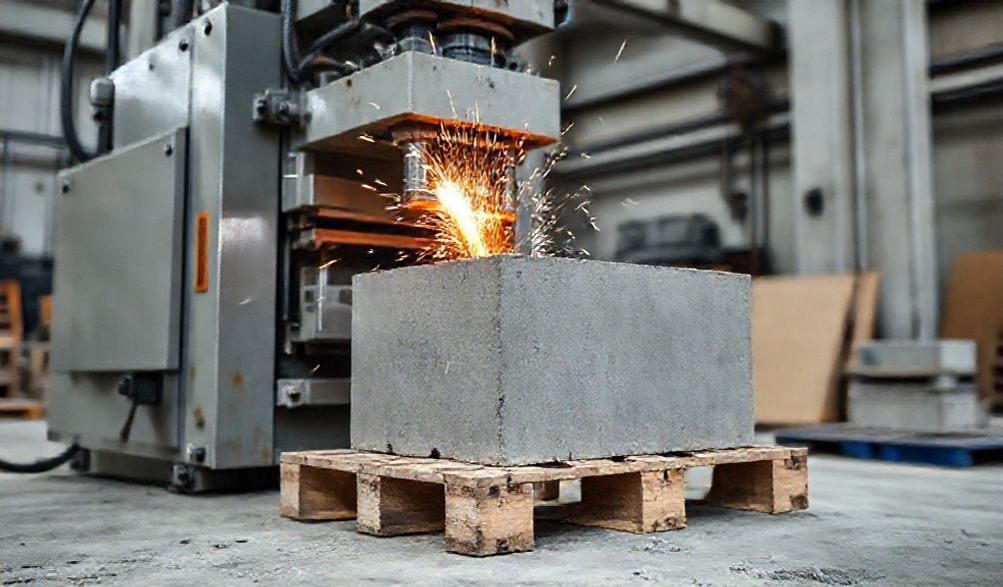
A hollow block molding machine is a purpose-built piece of industrial equipment designed to automate and optimize the production of hollow concrete blocks. It works by compressing a semi-dry mixture of raw materials—typically cement, aggregates (sand and stone dust), and often industrial by-products like fly ash—into a steel mold cavity under immense pressure and high-frequency vibration.
The defining characteristic of the output is the hollow core. This isn’t a compromise; it’s a deliberate engineering feature. The hollow design creates a block that is:
* Lighter: Reducing weight for easier handling, faster laying, and lower structural load.
* উপাদান-দক্ষ: Using less raw material per block, lowering costs and environmental impact.
* অন্তরক: The air pockets provide natural thermal and acoustic insulation.
* Strong: When properly manufactured, the reinforced webs and shells provide exceptional compressive strength for load-bearing walls.
ঐতিহ্যগত পদ্ধতির তুলনায় প্রধান সুবিধাসমূহ
The benefits of adopting this technology are tangible and transformative for any construction-related business.
- Superior Efficiency & Output: Compare a manual laborer producing a few hundred bricks per day to a semi-automatic machine producing 2,000-5,000 blocks in an 8-hour shift. Fully automatic plants can exceed 20,000 blocks daily. This scalability is impossible with manual methods.
- অতুলনীয় সামঞ্জস্য ও মান: Every block is identical. Machines ensure uniform dimensions, density, weight, and surface finish. This consistency simplifies construction, reduces mortar use, and results in structurally sound, aesthetically pleasing walls.
- Significant Cost Reduction: While the initial investment is higher, the long-term savings are substantial. Dramatically reduced labor costs, minimized material waste through precise batching, and faster project completion times all contribute to a healthier bottom line.
- Versatility in Design: With interchangeable molds, a single machine can produce a wide array of products: standard hollow blocks, solid blocks, paving slabs, interlocking bricks, and even custom-designed landscaping units. This allows businesses to cater to diverse market segments.
- টেকসই উন্নয়ন: These machines facilitate the use of recycled materials like fly ash (a coal combustion by-product), diverting waste from landfills. The hollow design itself is a form of sustainable construction, reducing the carbon footprint per block through lower material and transportation energy use.
Types of Hollow Block Making Machines: Choosing Your Class
Not all block-making operations are the same. The market offers machines tailored to different scales of production, investment levels, and automation desires. Choosing the right class is your first critical decision.
ম্যানুয়াল / হাত-চালিত মেশিন
These are the entry-point machines, relying primarily on human force for compaction.
- আদর্শ Micro-enterprises, very small-scale startups, community-led projects in off-grid locations, or producing specialty blocks in low volume.
- অপারেশন: Workers fill the mold by hand and use a lever mechanism to apply compaction pressure. Blocks are then manually ejected.
- সুবিধা:
- Very low capital investment.
- বিদ্যুৎ বা ডিজেলের প্রয়োজন নেই।
- সহজে বোঝা এবং মেরামত করা যায়।
- অসুবিধাগুলো
- Very low output (300-500 blocks/day).
- Physically demanding and labor-intensive.
- Quality heavily depends on operator skill and consistency.
সেমি-অটোমেটিক মেশিন
This category strikes the optimal balance for most small to medium-sized businesses (SMBs), offering mechanized power without the complexity of full automation.
- আদর্শ Growing block manufacturing businesses, construction companies supplying their own projects, and entrepreneurs entering the market with a clear demand.
- অপারেশন: An electric motor or diesel engine powers a vibration system (often with hydraulic compression). Operators manually feed the raw material mix into the hopper and may manually remove finished blocks, but the core compaction process is powered.
- সুবিধা:
- Excellent balance of cost, output, and capability.
- Significantly higher production (1,000-6,000 blocks/day) than manual machines.
- Delivers consistent, high-quality blocks.
- More energy-efficient than older, fully manual processes.
- অসুবিধাগুলো
- Requires a steady power supply (for electric models).
- Still requires several operators per shift.
- Output is limited by the speed of manual feeding and block removal.
সম্পূর্ণ স্বয়ংক্রিয় মেশিন
These are the pinnacle of production efficiency, designed for large-scale, continuous operation with minimal human intervention.
- আদর্শ High-volume commercial block manufacturing plants, industrial construction material suppliers, and government housing projects.
- অপারেশন: These are complete systems. A programmable logic controller (PLC) automates the entire cycle: batching raw materials, mixing, conveying the mix to the mold, high-pressure vibration, block ejection, curing (often via integrated steam chambers), and even palletizing. Operators primarily monitor the system and perform maintenance.
- সুবিধা:
- Maximum possible output (8,000 to 30,000+ blocks/day).
- Exceptional consistency and precision.
- Dramatically reduced direct labor costs per block.
- Integrated curing systems accelerate the strength-gain process.
- অসুবিধাগুলো
- খুব উচ্চ প্রাথমিক মূলধন বিনিয়োগ।
- Requires significant space and industrial-grade infrastructure (3-phase power, water supply).
- Requires skilled technicians for maintenance and troubleshooting.
Critical Features to Evaluate Before You Buy
Looking beyond the basic type, several technical features separate adequate machines from exceptional ones. Scrutinize these details when comparing models and suppliers.
Production Capacity (Blocks per Hour/Day)
Never take the “maximum output” in a brochure at face value. Capacity depends on block size and mold configuration (e.g., a 4-block mold produces four blocks per cycle).
* প্রধান প্রশ্ন:কীrealistic, sustained output for the specific block type you intend to produce? Match this number to your projected sales and business growth plan, allowing for a 20-30% buffer.
Power Source & Consumption
The choice affects operational costs, location flexibility, and environmental footprint.
* ইলেকট্রিক মডেল: Clean, quiet, and efficient for fixed locations with reliable grid power. Lower running costs but dependent on electricity availability.
* ডিজেল মডেল: Offer complete mobility and are ideal for remote sites or areas with unstable power. Higher fuel costs and require ventilation for exhaust.
* হাইব্রিড মডেল: Some offer dual-power capabilities, providing valuable flexibility. Always calculate estimated energy/fuel consumption as part of your operational cost analysis.
Mold Type and Interchangeability
The mold is the heart of the machine. It defines your product.
* উপাদান: Insist on molds made from high-carbon, hardened steel. They resist abrasion from the concrete mix and maintain precise dimensions far longer than mild steel.
* Interchangeability: A quick-change mold system is a valuable feature. It allows you to switch production from, say, standard 6-inch blocks to paving stones in under an hour, maximizing your market responsiveness. Check the cost and availability of additional molds from the supplier.
Vibration and Compaction System
This is the core technology that determines block strength and density.
* System Type: Look for machines that employ high-frequency, dual-axis (vertical and horizontal) vibration. This ensures the concrete mix is distributed evenly into every corner of the mold, eliminating voids and creating a dense, strong block.
* বিদ্যুতের উৎস Vibration can be driven by eccentric weights on rotating shafts (mechanical) or by hydraulic vibrator motors. Hydraulic systems often allow for more precise control of vibration frequency and amplitude.
Automation Level and Control Panel
The user interface dictates how easily you can operate and fine-tune the machine.
* Basic Machines: Have simple push-button or lever controls.
* Advanced Machines: Feature a প্রোগ্রামেবল লজিক কন্ট্রোলার (পিএলসি) panel with a digital touchscreen. This allows you to store recipes for different block types, control cycle times precisely, and monitor machine diagnostics. It reduces human error and simplifies operator training.
The Complete Raw Materials and Process Workflow
A great machine is only half the equation. Consistent raw materials and a disciplined process are what yield a premium product.
Optimal Raw Material Mix Design
The “recipe” is critical. A standard mix might be:
* 1 part Portland cement
* 3 parts fine aggregate (sharp sand, stone dust)
* 1 part coarse aggregate (6mm chips, optional for some blocks)
* Fly ash can replace 15-25% of the cement content, reducing cost and improving workability.
* পানি: The mix must be “semi-dry”—just enough water to allow compaction but not so much that the block slumps after ejection. Moisture content is typically 5-8%.
প্রো টিপ: The quality and gradation (particle size) of your sand are paramount. It must be clean, sharp, and well-graded for optimal strength.
Step-by-Step Operational Cycle
- ব্যাচিং ও মিক্সিং: Raw materials are measured by weight (not volume) for accuracy and fed into a pan or planetary mixer. Mixing continues until a homogeneous, consistent color is achieved.
- খাওয়ানো ও গঠন: The mixed material is fed into the machine’s hopper. From there, it is conveyed into the mold box, which is vibrating intensely to begin compaction.
- Compaction & Ejection: A hydraulic press head descends, applying high pressure (often 100+ tons) while vibration continues. This dual action compresses the mix into the mold’s shape. The press head retracts, and the freshly formed “green” block is ejected onto a wooden or steel pallet.
- কিউরিং This is the most critical phase for developing strength. The palletized blocks are moved to a curing area.
- Standard Curing: Blocks are kept moist by sprinkling water 3-4 times a day for 14-28 days. They should be covered with plastic sheeting to retain moisture.
- Steam Curing (Kiln Curing): Used in advanced setups. Blocks are subjected to controlled heat and steam (60-80°C) for 8-12 hours, allowing them to gain over 70% of their strength in a single day. This accelerates production cycles.
Quality Control Checks
Implement simple, regular checks to ensure product integrity:
* মাত্রিক নির্ভুলতা: Use calipers to randomly sample blocks for length, width, and height.
* সংকোচন শক্তি: Send samples to a materials testing lab periodically to verify they meet or exceed relevant standards (e.g., ASTM C90).
* Visual Inspection: Check for cracks, chips, or poor surface finish, which can indicate issues with the mix or machine settings.
Strategic Buying Guide and ROI Analysis
Purchasing a block-making machine is a strategic business investment. Follow this structured approach.
Assessing Your Needs: Project Scale, Budget, Location
নিজেকে জিজ্ঞাসা করুন:
* What is my target daily/monthly production volume?
* What is my total available investment (machine, molds, mixer, pallets, land, shed)?
* Do I have reliable access to electricity, water, and raw materials?
* What is the local demand for different types of blocks and pavers?
* Do I have skilled labor available, or will I need comprehensive training?
Supplier Vetting for E-A-T (Expertise, Authoritativeness, Trustworthiness)
Your supplier is a long-term partner. Vet them thoroughly:
* Experience & Expertise: How long have they been manufacturing these machines? Do they provide clear technical documentation and engineering drawings? Can their technical team answer deep, specific questions about vibration systems or hydraulic pressure?
* কর্তৃত্বপূর্ণতা: Do they hold relevant industry certifications (ISO, CE marking)? Do they have patents on their technology? Can they provide references from clients in your region?
* বিশ্বস্ততা: এটা আলোচনার বাইরে। What is the warranty period and what does it cover? Do they have a network for after-sales service and spare parts? Always prioritize suppliers who offer comprehensive installation and operator training. A machine without proper knowledge is a liability.
Calculating Your Return on Investment (ROI)
Create a simple financial model:
1. Total Investment: Cost of machine + shipping + installation + auxiliary equipment (mixer, loader, pallets) + shed/land preparation.
2. Operational Cost per Block: (Cost of raw materials + labor + power/fuel + maintenance) / Number of blocks produced.
3. Revenue per Block: Local market selling price.
4. Gross Profit per Block: Revenue – Operational Cost.
5. Payback Period: Total Investment / (Gross Profit per Block * Blocks Sold per Month).
Example: If your profit is $0.10 per block and you sell 50,000 blocks per month, your monthly profit is $5,000. A $30,000 machine would have a simple payback period of 6 months, not accounting for other fixed costs. This exercise makes the investment case clear.
Essential Maintenance for Longevity and Performance
Treat your machine as the valuable asset it is. Preventative maintenance prevents costly downtime.
Daily, Weekly, and Monthly Checklist
- দৈনিক Clean all mix residue from the mold, hopper, and mixer. Check hydraulic oil levels and for leaks. Inspect electrical connections.
- সাপ্তাহিক Tighten all bolts and nuts (vibration can loosen them). Lubricate all moving parts as per the manual. Inspect mold liners for wear.
- Monthly: Change hydraulic oil and filters as recommended. Conduct a thorough inspection of vibrator mounts, hydraulic hoses, and the press head.
Troubleshooting Common Issues
- Blocks Breaking or Chipping: Often caused by incorrect mix (too dry or poor aggregate grading), insufficient vibration time, or rough handling of green blocks.
- Poor Surface Finish or “Honeycombing”: Usually indicates a mix that is too dry or insufficient vibration during compaction.
- Machine Jamming or Slow Cycles: Can be due to low hydraulic pressure, contaminated oil, an overloaded hopper, or an electrical fault in the control system. Always refer to the manual and consult your supplier’s service team.
সচরাচর জিজ্ঞাসিত প্রশ্নাবলী (এফএকিউ)
Q1: What is the average cost range for a hollow block making machine?
এ Prices vary dramatically based on capacity and automation. Manual machines can start from as low as $2,000 – $5,000. Semi-automatic machines, the most popular choice for businesses, typically range from $15,000 to $50,000. Fully automatic production lines can cost anywhere from $80,000 to over $300,000. Always get detailed, itemized quotes that include shipping, installation, and training.
Q2: Can one machine produce different sizes and types of blocks?
এ Yes, this is a key advantage. By purchasing interchangeable molds, a single machine can produce hollow blocks, solid blocks, paving stones, and curbstones. However, changing molds takes time (from 30 minutes to a few hours), so it’s most efficient for batch production. Ensure your supplier offers the molds you need.
Q3: What is the typical curing time for blocks from these machines?
এ “Green” blocks gain enough strength to be handled and stacked within 24 hours of production. However, to achieve their full, specified compressive strength for construction, they require proper moist curing for a period of 14 to 28 days. Steam curing can reduce this to 24-48 hours for high early strength.
Q4: How much space is required to set up a small block manufacturing plant?
এ For a semi-automatic operation, you should plan for a minimum of 5,000 to 10,000 square feet. This space needs to accommodate the machine itself, raw material storage (covered), a mixing area, a large, level curing yard, and storage for finished blocks. Fully automatic plants with conveyor systems require significantly more space.
Q5: Are there safety precautions operators must follow?
এ Absolutely. Safety is paramount. Operators must wear personal protective equipment (PPE) including safety boots, gloves, goggles, and hearing protection. Machines must have safety guards in place. Strict lock-out/tag-out procedures must be followed during any maintenance or mold changes. Comprehensive training on all machine controls and emergency stops is mandatory before operation begins.
উপসংহার
The hollow block molding machine is more than just a piece of factory equipment; it is a catalyst for growth, efficiency, and quality in the construction materials sector. By automating the production of a superior building component, it addresses the core challenges of modern construction—speed, cost, and sustainability.
Investing in the right machine is a strategic business decision with long-term implications. It requires careful analysis of your needs, diligent vetting of suppliers based on their genuine Expertise, Authoritativeness, and Trustworthiness (E-A-T), and a commitment to proper operational and maintenance practices. The knowledge contained in this guide provides the foundation for that decision.
We encourage you to use this information as a benchmark. Analyze your market, calculate your ROI, and then consult with multiple reputable manufacturers. Always request a live demonstration using a raw material mix similar to your own. Seeing a machine in action is the best way to evaluate its performance and the supplier’s professionalism. Take the next step toward transforming your construction project or business with confidence.
<