
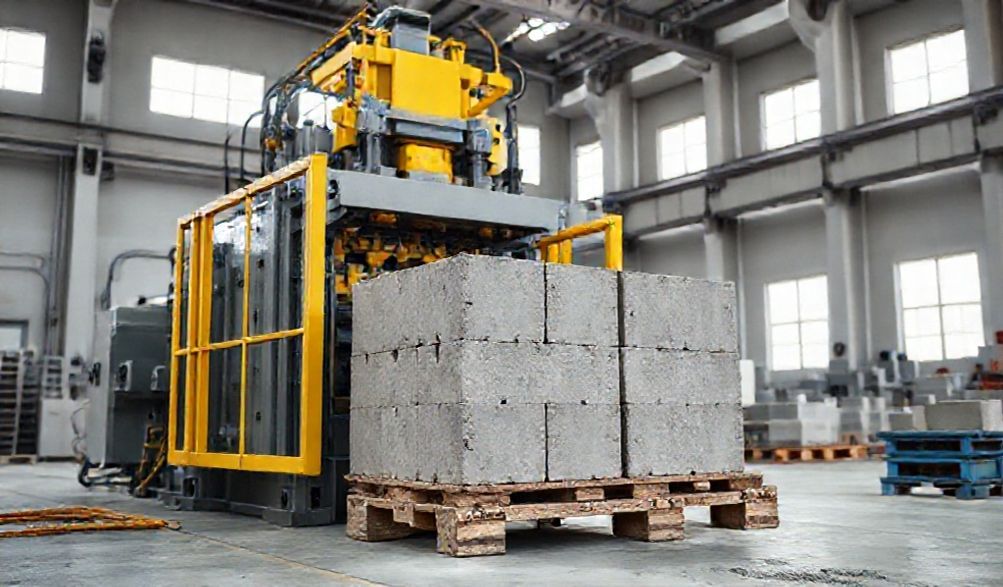
Your Ultimate Guide to Finding a Reliable China Blocks Machine Supplier
ভূমিকা
The global construction industry runs on concrete blocks. From foundational cinder blocks to elegant paving stones, these building materials are the literal bedrock of modern infrastructure. To meet this relentless demand, manufacturers worldwide turn to one primary source for their production equipment: China. As the undisputed global hub for heavy machinery manufacturing, China offers an unparalleled array of block-making machines. But herein lies the core challenge for a business owner or project manager: with a dizzying number of options, how do you identify a truly reliable China blocks machine supplier?
The stakes are high. Selecting the wrong partner can lead to catastrophic machine failure, endless production downtime, crippling repair costs, and missed project deadlines. It’s a decision that can make or break your profitability. This guide cuts through the noise. Drawing on deep industry experience and market knowledge, we provide a proven, actionable framework for vetting suppliers. Our goal is to transform your procurement process from a risky gamble into a strategic, informed decision that will fuel your business growth for years to come. Let’s navigate the path to finding a partner you can trust.
Why China is a Global Hub for Blocks Machinery Manufacturing
বোঝাকেন China dominates this market is the first step in learning how to navigate it successfully. Its position isn’t accidental; it’s built on formidable industrial pillars.
স্কেল এবং শিল্প সক্ষমতা
China’s manufacturing ecosystem is vast and deeply integrated. For block machine buyers, this translates into two key advantages: competitive pricing and incredible variety.
- You can find everything from simple, manual egg-laying machines for small-scale operations to colossal, fully automatic production lines capable of outputting thousands of blocks per hour.
- This scale fosters intense competition among suppliers, which generally benefits the buyer in terms of cost and feature innovation.
- Entire industrial clusters are dedicated to machinery production, creating a concentrated pool of expertise, labor, and component suppliers.
Technological Advancement
The outdated stereotype of Chinese manufacturers as mere copycats is just that—outdated. The industry has matured significantly.
- Leading Chinese block machine suppliers are now genuine innovators. They invest heavily in R&D to improve efficiency, durability, and ease of use.
- Modern machines feature Programmable Logic Controller (PLC) systems for precise operation, energy-efficient hydraulic and vibration systems, and even IoT connectivity for remote monitoring and diagnostics.
- This focus on technological advancement means you can access state-of-the-art automation without the premium price tag often associated with Western brands.
The Supply Chain Advantage
Perhaps the most critical factor is China’s complete, localized supply chain.
- Every core component—from high-tensile steel plates and precision hydraulic cylinders to industrial motors and electrical control panels—is readily available within the country.
- This integration drastically reduces lead times for both manufacturing new machines and sourcing spare parts.
- It also gives manufacturers greater control over quality at every stage of production, from raw material to finished assembly.
Critical Factors When Evaluating a China Blocks Machine Supplier
This is the heart of your due diligence. Moving beyond glossy brochures and slick websites requires a systematic evaluation of the supplier’s fundamentals.
Assessing Manufacturing Expertise and Experience
A company’s history is a strong indicator of its stability and capability.
- Years in Business: Prioritize suppliers with a track record of 8-10 years or more. They have likely survived market cycles and refined their products.
- বিশেষীকরণ Does the supplier make a wide range of machinery, or are they experts in specific types? A company focused on stationary block machines may have deeper expertise than a generalist. Look for a portfolio that matches your exact needs (e.g., hollow block machines, paver machines, interlocking brick machines).
- Case Studies & Portfolios: Always request real-world examples. A reputable supplier will gladly share photos, videos, and details of installed machines, often with client references or location information.
Verifying Quality Control and Certifications
Quality isn’t an accident; it’s a built-in process. You must verify this.
- In-House QC Processes: Ask about their quality control protocol. How many inspections does a machine undergo? Is there a final performance test before shipping? Answers to these questions are telling.
- Key Certifications: Look for valid, verifiable certifications.
- আইএসও ৯০০১: Indicates a certified quality management system.
- সিই মার্কিং: For machinery sold to Europe, this is a legal requirement and signifies compliance with EU safety, health, and environmental standards.
- While certifications are important, they are a baseline. Dig deeper.
- Core Component Standards: The quality of a machine is defined by its parts. Inquire about the brands used for critical components:
- Hydraulic systems (e.g., Bosch Rexroth, Kawasaki, Yuken)
- PLCs and electrical components (e.g., Siemens, Schneider, Mitsubishi)
- Bearings and vibration motors
A supplier using reputable brands is investing in your machine’s longevity.
Analyzing Communication and Professional Service
Your experience during the sales process is a preview of your after-sales support.
- Responsiveness & Proficiency: Gauge their communication speed and clarity. Are they proactive? Do they understand your technical questions, or do they provide vague answers? Good English proficiency is a significant advantage.
- প্রযুক্তিগত ডকুমেন্টেশন: Request a sample manual or specification sheet. Is it clear, detailed, and well-translated? This reflects their commitment to supporting you post-purchase.
- After-Sales Support Structure: This is non-negotiable. Clarify:
- ওয়ারেন্টি: Duration, scope, and what is excluded.
- স্পেয়ার পার্টস: Availability, pricing policy, and shipping time for common wear parts.
- Technical Assistance: Is support provided via email, WhatsApp, video call? Are on-site engineers available (at what cost)?
The Due Diligence Checklist
Turn your evaluation into actionable steps.
- Company Verification: Use Chinese business registry platforms like TianyanchaবাQichacha to check the supplier’s business license, registered capital, legal status, and any history of litigation. This confirms they are a legitimate entity.
- কারখানা নিরীক্ষা: সর্বদা conduct a virtual factory tour via live video call (e.g., Zoom, WeChat). Don’t accept pre-recorded videos. Ask to see:
- The workshop floor (is it organized or chaotic?)
- Welding and assembly stations
- The painting process
- The testing area where machines are run before shipment
- Sample and Testing: For standard machines, ask for a recent production video. For custom configurations, request a video of a machine producing blocks with your specific mold design and mixture. For large orders, insist on a Factory Acceptance Test (FAT) before shipment.
Navigating the Procurement Process Successfully
With a shortlist of vetted suppliers, you now enter the negotiation and logistics phase.
From Inquiry to Quotation: Getting Accurate Details
A vague inquiry gets a vague quote. Precision is key.
- Prepare a Detailed RFQ: Your Request for Quotation should include:
- Block type, size, and required compressive strength.
- Required output (blocks per hour or per 8-hour shift).
- Degree of automation (manual, semi-automatic, fully automatic).
- Local power supply details (voltage, phase, frequency).
- Available factory space and ceiling height.
- Compare Apples-to-Apples: When quotes arrive, line them up by specification, not price. A cheaper machine may use inferior components, have lower output, or exclude essential accessories. Create a comparison matrix.
Understanding Contracts and Payment Terms
Protect your investment with clear legal and financial terms.
- Trade Terms: Understand the incoterms.
- এফওবি (ফ্রি অন বোর্ড): You pay for the machine loaded on the ship; you handle and pay for sea freight and insurance.
- সিআইএফ (খরচ, বীমা এবং মাল পরিবহন খরচ): The supplier arranges and pays for shipping to your nearest port. Often simpler but may be less transparent on cost breakdown.
- EXW (Ex Works): You take ownership at the factory gate and handle all logistics. Offers lowest price but highest logistical complexity.
- Secure Payment Methods: Avoid 100% upfront payments.
- 30% T/T deposit, 70% against copy of Bill of Lading is a common, balanced approach.
- Letter of Credit (L/C) offers more security for both parties but adds banking costs.
- Key Contract Clauses: Ensure the contract explicitly covers warranty period and terms, delivery timeline, penalties for delay, liability for damage during shipping, and a dispute resolution mechanism (often arbitration).
Logistics, Shipping, and Customs Clearance
Plan this in parallel with your order.
- The Shipping Process: Your machine will be crated, transported to a Chinese port (like Ningbo or Shanghai), and loaded onto a container or RORO (Roll-on/Roll-off) vessel.
- Role of a Freight Forwarder: Engage a reliable freight forwarder, either your own or one recommended by your supplier. They handle booking, documentation, and coordination between all parties.
- Customs Clearance: You or your local agent will need to clear the machine through customs in your country. Your supplier should provide all necessary documents:
- Commercial Invoice
- Packing List
- Bill of Lading
- Certificate of Origin
- Any required declarations (e.g., CE Certificate)
Common Pitfalls and Red Flags to Avoid
Forewarned is forearmed. Steer clear of these common traps.
Price Traps and “Too Good to Be True” Offers
If a quote is significantly lower than all others, it’s a major red flag. The discount almost always comes from compromised quality—thinner steel, counterfeit components, or absent safety features. Remember, you’re buying a productivity asset, not a commodity.
Lack of Transparency and Vague Communication
A supplier that is evasive about providing a factory video, refuses to share a company registration document, or gives inconsistent answers to technical questions cannot be trusted. Transparency is the cornerstone of reliability.
Inadequate or Nonexistent After-Sales Support Plans
If the conversation ends at the sale, your problems are just beginning. A supplier who cannot detail their warranty process, spare parts supply, or technical support channels is setting you up for a costly, frustrating experience down the line.
Ignoring the Importance of a Proper Foundation and Installation Plan
Even the best machine will fail if installed incorrectly. A professional supplier will provide detailed foundation drawings and installation instructions specific to the machine model. Dismissing this step can lead to misalignment, excessive vibration, and premature wear.
সচরাচর জিজ্ঞাসিত প্রশ্নাবলী (এফএকিউ)
Q1: What is the typical lead time for a block machine from China?
এ Lead times vary significantly. Standard models may ship in 15-30 days. Large, fully automated custom production lines can take 60-90 days to manufacture and test. Always confirm and include the delivery timeline in your purchase contract.
Q2: Can I visit the supplier’s factory in China before ordering?
এ Absolutely. Reputable suppliers welcome serious buyers for factory audits. If travel isn’t feasible, insist on a comprehensive, live video tour of their entire production facility—not just a showroom.
Q3: How do I handle machine installation and training if I’m overseas?
এ Professional suppliers provide detailed installation manuals, video guides, and wiring diagrams. They offer real-time remote support via video call during commissioning. For complex lines, you can negotiate (and pay for) the dispatch of a factory engineer to oversee installation and provide on-site training.
Q4: What is the standard warranty for a blocks machine?
এ A typical warranty is 12 months from the date of shipment or arrival at port for the whole machine. Critical components like hydraulic pumps or PLCs may have longer warranties (e.g., 18-24 months). The exact terms must be explicitly stated in your contract.
Q5: Are spare parts readily available from Chinese suppliers?
এ A trustworthy supplier maintains an inventory of commonly worn parts (seals, springs, wear plates). They should provide a spare parts catalog with part numbers. Before ordering, confirm the availability and estimated delivery time for a shortlist of critical spares.
উপসংহার
Finding the right China blocks machine supplier is not about finding the cheapest option; it’s about identifying the most reliable partner for your business. It’s a systematic process that prioritizes rigorous verification, uncompromising quality assessment, and crystal-clear communication. The framework outlined here—from evaluating manufacturing expertise and conducting live factory audits to negotiating secure contracts—is designed to mitigate your risk and maximize your return on investment.
The due diligence you perform today is an investment in your tomorrow. It ensures that the machine you purchase becomes a pillar of productivity and profitability, not a source of endless headaches. Use this guide as your checklist. Your next step is to start compiling your list of potential suppliers, prepare your detailed RFQ, and begin the conversation, armed with the confidence and knowledge to build a successful partnership.
<