
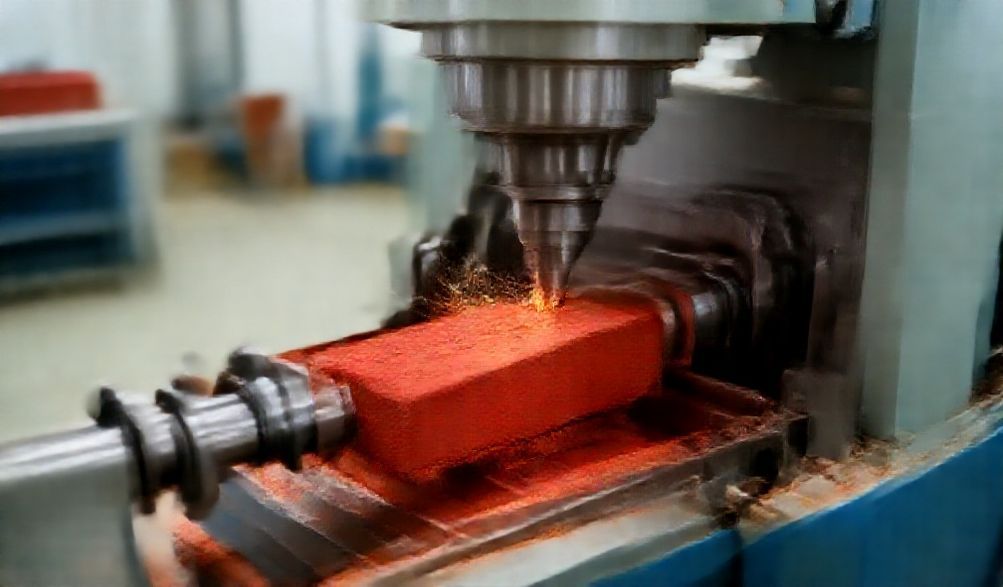
Clay Bricks Making Machine Price: A 2026 Guide from FUDA Block Making Factory
Introduction
Finding a reliable clay bricks making machine at a fair price that ensures long-term profitability can be a daunting task. The market is flooded with options, and the initial price tag can be misleading. A low upfront cost might lead to high operational expenses, while a premium machine requires a significant investment. How do you navigate this to make a choice that builds your business, not burdens it?
As a leading manufacturer with over two decades of experience in engineering block making machinery, FUDA Factory provides this transparent guide. Our goal is to help you navigate the complex market, understand the true factors behind clay bricks making machine price, and make an informed investment that delivers a strong return.
This post will demystify pricing structures, explain the critical elements that influence cost—from automation levels to build quality—and show you how to evaluate a machine’s total value far beyond the initial quote. Whether you are a budding entrepreneur comparing prices, a construction firm planning a budget, or a project manager seeking a trustworthy supplier, this guide offers actionable insights for 2026 and beyond.
Understanding Clay Brick Making Machines: Types & Capabilities
Before analyzing prices, it’s crucial to understand what you’re buying. A clay brick making machine is more than just a press; it’s a production system that transforms raw clay into standardized, high-strength building blocks. The right machine enhances efficiency, ensures consistent quality, and forms the backbone of a profitable operation.
The core difference between models lies in their degree of automation, which directly dictates output, labor needs, and, ultimately, price.
Manual vs. Semi-Automatic vs. Fully Automatic Machines
-
Manual Machines: These are the most basic, human-powered presses. Operators manually feed material, operate a lever, and remove finished bricks.
- Output: Low (100-500 bricks per 8-hour shift).
- Labor: High, physically intensive, and skill-dependent.
- Ideal For: Very small-scale projects, rural areas with low labor costs, or niche, artisanal production.
-
Semi-Automatic Machines: This category represents the sweet spot for many small to medium businesses. They use a mechanical or hydraulic system powered by electricity but require manual feeding of raw material or removal of bricks.
- Output: Medium (1,000 – 3,000 bricks per hour).
- Labor: Moderate, requiring 2-4 operators for feeding and handling.
- Ideal For: Growing block yards, construction companies supplying their own projects, and entrepreneurs with a steady market demand.
-
Fully Automatic Machines: These are industrial production lines. They integrate automatic material feeding, pressing, curing, and stacking, often controlled by a Programmable Logic Controller (PLC).
- Output: High (3,000 – 10,000+ bricks per hour).
- Labor: Low, primarily for supervision and maintenance.
- Ideal For: Large-scale commercial brick manufacturing plants, government infrastructure projects, and high-volume export businesses.
| Type | Output Capacity (Approx.) | Labor Needed | Ideal For |
| :— | :— | :— | :— |
| Manual | 100-500 bricks/shift | High (2-3 skilled workers) | Artisanal shops, micro-projects |
| Semi-Automatic | 1,000 – 3,000 bricks/hour | Moderate (2-4 operators) | SMEs, construction firms, block yards |
| Fully Automatic | 3,000 – 10,000+ bricks/hour | Low (1-2 supervisors) | Large plants, industrial production |
Key Machine Components That Impact Performance
The price and performance are embedded in the machine’s components. Here’s what to scrutinize:
- Mold Quality & Design: The heart of the machine. High-chrome, precision-engineered molds produce bricks with sharp edges and consistent dimensions. Cheap molds wear quickly, leading to defective products.
- Hydraulic System: The muscle. Reliable, branded hydraulic pumps and cylinders ensure consistent pressure for uniform brick density and strength. Leaks or failures in a cheap system cause major downtime.
- Vibration Motor: Essential for compacting the clay. A powerful, balanced motor ensures the brick is dense and void-free, which is critical for compressive strength.
- Control System: The brain. From simple relay panels to advanced touch-screen PLCs, this dictates ease of operation, precision, and diagnostic capabilities.
- Frame & Structure: The skeleton. A robust, welded steel frame withstands constant vibration and pressure. A flimsy frame will warp, causing misalignment and breakdowns.
What Determines the Price of a Clay Bricks Making Machine?
The clay bricks making machine price is not arbitrary. It’s a direct reflection of the machine’s capabilities, durability, and the support behind it. Understanding these factors allows you to compare apples to apples.
Level of Automation (The Biggest Cost Driver)
As outlined above, automation is the primary price determinant. A manual press is a simple tool. A fully automatic line is a factory in itself, with conveyors, mixers, and robotic stackers. Each step towards full automation adds complexity, more components, and sophisticated software, increasing the cost exponentially.
Production Capacity and Output Specifications
A machine rated for 2,000 bricks per hour will cost less than one rated for 5,000 bricks per hour, even within the same automation category. Furthermore, versatility commands a premium. A machine that can produce multiple brick sizes (solid, hollow, paving) by quickly changing molds is more valuable than a single-purpose model.
Build Quality and Material Durability
This is where hidden value—or cost—resides. Consider:
* Frame: Standard steel vs. reinforced, stress-relieved steel.
* Hydraulics: Generic parts vs. reputed brands like Rexroth or Parker.
* Electricals: Off-the-shelf components vs. industrial-grade Siemens or Schneider systems.
The latter in each pair costs more upfront but drastically reduces lifetime maintenance costs and downtime.
Brand Reputation and After-Sales Service
An established brand like FUDA invests in R&D, quality control, and support infrastructure. Our pricing reflects not just the physical machine, but also the peace of mind that comes with a comprehensive warranty, readily available spare parts, and access to technical support. A cheaper, no-name machine often comes with no safety net, turning a minor fault into a catastrophic business stoppage.
Price Ranges: What to Expect in 2026
To set realistic budgeting expectations, here are general price brackets for new equipment. Critical Note: These are indicative ranges for the machine itself. Final prices vary significantly based on specific configuration, optional features, shipping, duties, and local market conditions. Always contact us for a detailed, no-obligation quote.
Entry-Level (Manual/Small Semi-Auto) Machines
- Price Range: $3,000 – $20,000
- Specs & Projects: Ideal for starting a small block yard or supplying bricks for localized construction. Output is suitable for meeting the demand of a few housing projects or commercial builds annually.
Mid-Range (Semi-Automatic & Standard Automatic) Machines
- Price Range: $25,000 – $80,000
- Specs & Projects: The workhorse for serious businesses. These machines offer a balance of output and investment, capable of supplying multiple projects or establishing a strong regional supply presence. Often include better vibration systems and more durable components.
High-Capacity (Fully Automatic Production Lines)
- Price Range: $100,000 – $500,000+
- Specs & Projects: These are custom-engineered solutions. The price includes integrated systems: automatic clay mixers and feeders, high-pressure multi-cavity presses, conveyor systems, and automated pallet stackers. Designed for 24/7 industrial production to supply large-scale urban development or export markets.
Why Choose FUDA as Your Block Making Machine Factory?
As you evaluate clay bricks making machine price, the supplier’s credibility is as important as the spec sheet. Here’s why partnering with FUDA is a strategic investment.
Our Manufacturing Expertise & Experience
With a history spanning 20+ years, FUDA has evolved from a local workshop to an international exporter, shipping to over 40 countries across Africa, Southeast Asia, and South America. Our dedicated R&D team continuously refines designs based on real-world feedback from diverse clay types and climates.
Quality Assurance and Machine Longevity
Every FUDA machine undergoes a rigorous 72-hour production test before leaving our factory. We use CNC cutting for precision parts, stress-relieved steel for frames, and source key components from certified suppliers. The result is a machine built not just to work, but to endure for a decade or more.
Comprehensive After-Sales Support
We sell partnerships, not just products. Our support package includes:
* Detailed installation manuals and video guides.
* Optional on-site installation and commissioning by our engineers.
* Comprehensive operator and maintenance training.
* A clear warranty policy and a readily available inventory of spare parts.
* Remote troubleshooting support via video call.
Customizable Solutions for Your Needs
We understand that one size does not fit all. Whether you’re working with laterite soil, shale, or mixed clay, our engineers can recommend the optimal moisture content, pressure, and vibration settings. We tailor the machine configuration to your specific raw materials, budget constraints, and production goals.
Calculating Your True Investment: Beyond the Sticker Price
A savvy investor looks at Total Cost of Ownership (TCO). The machine price is just the entry ticket.
Analyzing Return on Investment (ROI)
Use this simplified framework:
ROI = (Annual Profit from Brick Sales - Annual Operational Costs) / Total Machine Investment
A higher-priced, efficient machine with low operational costs can have a faster ROI than a cheap, problematic one.
Factoring in Operational Costs
- Energy Consumption: Fully automatic lines are more energy-efficient per brick produced than running multiple manual presses.
- Maintenance: Scheduled maintenance with quality parts prevents costly breakdowns.
- Labor: Calculate the wage cost per thousand bricks. Automatic machines dramatically reduce this figure.
- Spare Parts: Consider the availability and cost of wear parts like molds and hydraulic seals.
The Hidden Cost of a “Cheap” Machine
The true expense of a low-quality machine reveals itself over time:
* Frequent Breakdowns: Unplanned downtime means missed orders and reputational damage.
* Poor Brick Quality: Inconsistent size or low strength leads to rejected batches and lost customers.
* Support Void: No technical help means paying high fees for local mechanics to reverse-engineer fixes.
* Short Lifespan: Replacing a machine in 3-5 years doubles your effective investment.
Frequently Asked Questions About Clay Brick Machine Prices
Q1: What is the cheapest type of clay brick making machine?
A1: Manual machines have the lowest upfront cost. However, their high labor requirement and low output mean the cost per brick can be high. For most businesses, a semi-automatic machine offers a better balance of initial investment and long-term productivity.
Q2: Does the price include installation and training?
A2: At FUDA, our base machine quote includes comprehensive digital resources: detailed installation manuals, wiring diagrams, and step-by-step video guides. On-site installation, commissioning, and hands-on training are available as part of a premium service package, which we can tailor to your needs and budget.
Q3: How long does a typical machine last, and what affects its lifespan?
A3: A well-maintained FUDA machine is engineered to last 10-15 years or more. Lifespan is directly tied to build quality, adherence to the maintenance schedule, the abrasiveness of the raw materials used, and proper operator training.
Q4: Can I get a machine that uses different raw materials (like fly ash or concrete)?
A4: Absolutely. Many of our block making machines are designed for versatility. We offer machines optimized for clay, concrete, fly ash, or even interlocking compressed earth blocks. Discuss your primary raw materials with our sales engineers to configure the perfect machine for your application.
Q5: How do I get an exact price quote from FUDA?
A5: Simply contact our team via email, phone, or our website contact form. Please provide your required output capacity (bricks per hour/day), desired level of automation, and the specific type/size of bricks you wish to produce. We will then prepare a detailed, customized proposal with a transparent price breakdown.
Conclusion
Navigating the clay bricks making machine price landscape requires looking at the complete picture. The final number is a synthesis of automation level, production capacity, uncompromising build quality, and the invaluable support of a reputable manufacturer. It’s an investment in your business’s productive capacity for the next decade.
At FUDA Block Making Factory, we combine decades of manufacturing expertise with a client-focused approach. We believe in building lasting partnerships by providing machinery that delivers genuine value and profitability, not just a one-time transaction.
Ready to Get a Precise Quote Tailored to Your Project?
Contact the FUDA engineering team today for a free, no-obligation consultation. Let’s discuss your needs and build a detailed proposal that maps the path to your success.
Want to explore our full range first?
Download our detailed specification catalog to compare all our clay brick and block making machine models at your own pace.