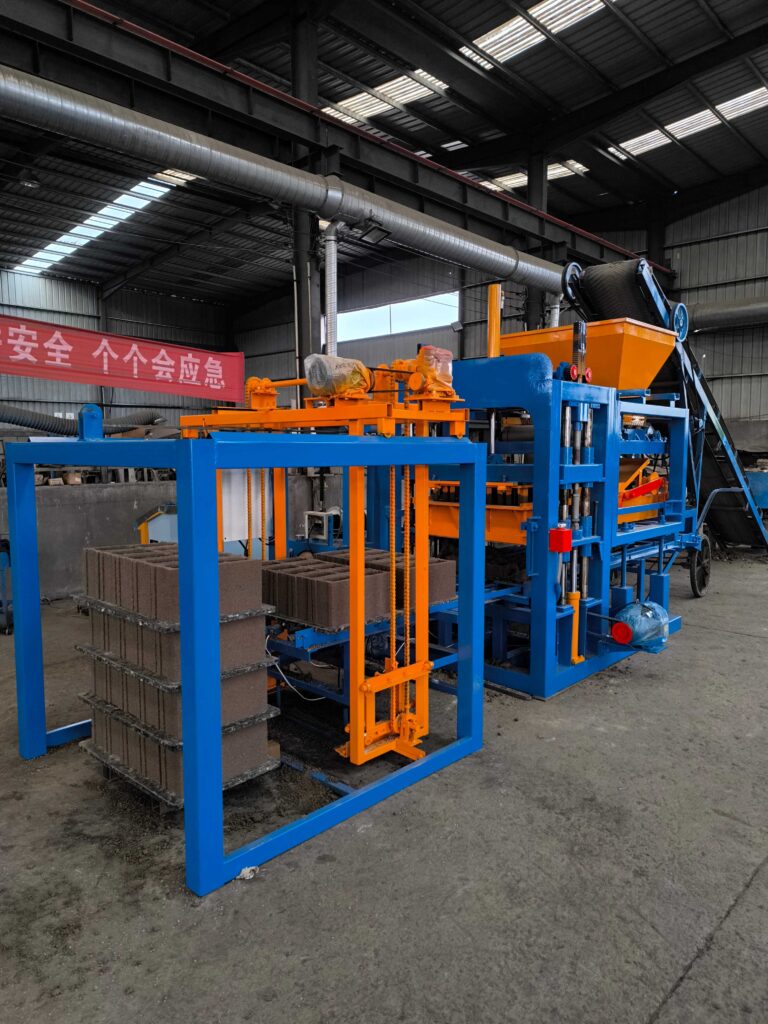
Die Anatomie der Kosten: Was treibt den Preis eines Fertigungssystems?
Das Preisspektrum für Flugasche-Ziegelmaschinen ist breit gefächert, von Zehntausenden bis zu mehreren Hunderttausend Dollar. Diese Schwankung ist nicht willkürlich, sondern direkt auf spezifische, quantifizierbare Faktoren zurückzuführen.
I. Kernmaschinenspezifikationen und technische Architektur
Die ingenieurtechnische DNA der Maschine ist der primäre Kostentreiber.
A. Produktionskapazität und -leistung
- Theoretische vs. nachhaltige Leistung:Der Preis steigt mit der angegebenen stündlichen Leistung (z. B. 1.000 gegenüber 10.000 Steinen). Allerdings müssen anspruchsvolle Käufer diesustainable output under real-world conditions, which depends on motor power, vibration efficiency, and cycle time reliability. A machine engineered for continuous 24/7 operation commands a premium over one designed for intermittent use.
- Level of Automation:
- Manual/Semi-Automatic Machines: Low price point, high operational labor cost. Suitable for micro-enterprises. Cost is driven by basic mechanics and a simple power system.
- Fully Automatic Standalone Machines: Higher price due to PLC-controlled systems, automated feeders, and synchronized hydraulic/vibration cycles. They offer consistency and lower per-unit labor cost.
- Fully Integrated Production Lines: The highest price segment. Includes automated batching plants, conveyor systems, robotic stackers, and palletizers. Cost reflects the integration of multiple subsystems into a seamless, high-volume operation.
B. Material and Component Hierarchy
- Structural Integrity: The cost of steel and the complexity of fabrication significantly impact price. Machines with reinforced, stress-relieved frames and thicker mold tables are more expensive to produce but offer far greater longevity and stability.
- Vibration System: The quality and configuration of the vibration motors and the design of the vibration table are critical. Machines with frequency converters for adjustable, multi-directional vibration are costlier but produce superior brick density and are more versatile with different mix designs.
- Hydraulic System: A major cost differentiator. Systems using internationally recognized hydraulic pump and valve brands (e.g., Bosch Rexroth, Kawasaki, Yuken) with precision control and cooling systems are priced higher than those with generic components. They offer better reliability, consistency, and energy efficiency.
- Control System: A basic relay-based panel is low-cost. A PLC (Programmable Logic Controller) with a color touchscreen HMI (Human-Machine Interface) that allows recipe storage, fault diagnostics, and production monitoring adds substantial cost but also immense value in terms of control and reduced downtime.
C. Versatility and Mold Technology
- Multi-Purpose Functionality: A machine capable of producing a wide range of products (solid blocks, hollow blocks, pavers, interlocks) using quick-change mold systems is more complex and costly than a single-purpose machine.
- Mold Quality and Durability: Molds fabricated from high-chrome, heat-treated steel with precise CNC machining are expensive. They withstand the abrasive nature of fly ash mix far longer than mild steel molds, reducing long-term replacement costs but increasing the initial machine price.
II. Beyond the Machine: The Complete Cost Framework
The supplier’s invoice is only the first layer of financial commitment.
A. Direct Ancillary Costs
- Logistics (FOB, CIF, DDP): The chosen Incoterm drastically affects landed cost. Free On Board (FOB) price requires the buyer to arrange and pay for main shipping and insurance. Cost, Insurance, and Freight (CIF) includes these to a named port. Door-to-Delivered Duty Paid (DDP) is the most inclusive but highest upfront price. Landlocked destinations incur additional haulage.
- Import Duties and Local Taxes: These vary by country and can add 5% to 25%+ to the landed cost. They must be factored into the final client price.
- Installation and Commissioning: Costs for foundation construction, electrical cabling, water line installation, and the potential cost of a technician from the supplier for commissioning.
- Essential Ancillary Equipment: A block machine cannot operate in isolation. The cost of a pan mixer, loader, raw material bins, brick pallets, and a transport trolley must be included in the total project budget.
B. Operational and Lifecycle Costs (The Hidden Calculus)
- Energy Consumption: A machine with high-efficiency motors and well-designed hydraulics will have a lower kWh-per-brick cost, impacting daily operating expenses.
- Maintenance and Spare Parts: The anticipated annual spend on wear parts (mold liners, hydraulic seals, vibration motor bearings) varies greatly with component quality. The availability and price of spare parts are critical.
- Labor Cost Differential: A fully automatic line may have a higher price but will operate with 2-3 workers, while a semi-automatic setup producing similar output may require 8-10. This labor cost difference is a recurring financial flow that fundamentally alters ROI.
- Downtime Cost: Machines prone to breakdowns or with poor after-sales support incur massive hidden costs from lost production. Reliability, backed by a strong warranty and service network, has a direct financial value.
Strategic Financial Modeling for B2B Decision-Making
For a distributor, the goal is to match the right machine price point to the right client business model, ensuring success and repeat business.
I. Modeling Total Cost of Ownership (TCO)
TCO is the most critical analytical tool. It should be calculated over a 5-year period and include:
- Initial Investment: Machine price + shipping + duties + installation.
- Ancillary Equipment Cost.
- Annual Operating Costs: Energy + labor + routine maintenance.
- Estimated Cost of Downtime & Major Repairs.
Presenting a TCO comparison between two machine options often reveals that the cheaper machine becomes more expensive within 2-3 years.
II. Calculating and Presenting Client ROI
A compelling business case for your client sells the machine. The model should be based on local figures:
- Revenue: (Selling Price per Brick) x (Annual Production Capacity).
- Variable Costs: (Cost of Raw Materials: Fly Ash, Cement, Sand) x (Annual Production). This is where fly ash’s low cost creates a major advantage.
- Fixed Costs: Depreciation of machinery, labor, utilities, rent.
- Net Profit: Revenue – (Variable + Fixed Costs).
- Payback Period: Total Investment / Annual Net Profit.
A machine with a 30% higher purchase price but a 50% faster payback period due to higher automation and lower labor is the superior investment.
III. Market Segmentation and Price Positioning
- Tier 1 (Entry-Level Entrepreneurs): Focus on robust, semi-automatic machines with the best possible TCO. The business case is about low entry barrier and proven, simple technology.
- Tier 2 (Growing Block Yards & Contractors): Position fully automatic machines. The price is justified by scale, consistency, and the ability to fulfill larger contracts. ROI is driven by volume and reduced per-unit cost.
- Tier 3 (Large-Scale Industrial Plants): Offer integrated production lines. The discussion moves from “machine price” to “project investment.” Value is in guaranteed output, minimal labor, and product consistency for supplying major developments or government contracts.
Conclusion
In the fly ash brick machinery market, an informed focus on cost structures and value delivery is the ultimate competitive advantage for B2B professionals. The cheapest machine is invariably the most expensive over its lifecycle. Success requires a disciplined approach that prioritizes analyzing the engineering and component quality behind the price, modeling the complete financial picture through TCO and ROI, and strategically aligning machine capabilities with specific client market segments. By evolving from a traditional sales approach to a consultative partnership based on financial viability and lifecycle value, distributors can build enduring client relationships, ensure the success of the projects they supply, and secure a dominant position in the growing sustainable construction materials industry.
FAQ (Frequently Asked Questions)
Q1: What is a realistic total project budget range for setting up a functional fly ash brick plant?
A functional plant requires more than just the block machine. A realistic budget range is:
- Micro-Unit (Semi-Auto): $4,000 – $12,000 (includes machine, mixer, basic equipment, installation).
- Small Industrial Plant (Fully Auto): $12,000 – $30,000.
- Large Automated Plant (Integrated Line): $30,000 – $50,000+.
These ranges include core machinery, essential ancillaries, installation, and a buffer for commissioning and initial raw material stock. Land and building costs are separate.
Q2: How significant are shipping and import duties in the final landed cost?
They are substantial and non-negotiable. For a standard 20ft or 40ft container from Asia to major global ports, sea freight can range from $2,000 to $6,000. Import duties vary wildly; for example, they might be 5% in some African nations, 10-15% in parts of the Middle East, and over 20% in some South American countries. Always clarify the CIF price to know the cost to your port, and then consult a local customs broker for exact duty calculations.
Q3: What are the most common “hidden costs” that new buyers overlook?
- Site Preparation: Cost of a level, reinforced concrete foundation, which can be several thousand dollars.
- Power Infrastructure: Upgrading electrical service to the site to handle the machine’s load.
- Initial Spare Parts Kit: Purchasing a recommended set of wear parts upfront avoids immediate downtime.
- Training Time: The cost of lost production during the learning curve for operators.
- Brick Testing & Certification: Fees for obtaining official strength and quality certifications from local building authorities to legally sell the bricks.
Q4: Is financing or leasing available for such equipment from manufacturers?
Many established manufacturers have partnerships with financial institutions or export credit agencies to offer financing solutions for qualified buyers, especially for large orders. Terms vary but may cover 50-80% of the equipment cost with repayment over 1-5 years. For smaller machines, suppliers may offer staged payment plans (e.g., 30% deposit, 40% before shipment, 30% upon completion of commissioning). It is a key question to ask during negotiations.
Q5: How does the cost of machinery for fly ash bricks compare to traditional clay brick kiln setups?
The capital investment structure is fundamentally different. A fly ash brick plant’s cost is concentrated in the pressing machinery and mixer. A traditional clay brick operation requires significant investment in land for clay mining, a kiln (which is a large civil structure), and kiln cars. The fly ash plant typically has a lower initial capital outlay, a much faster setup time (weeks vs. months), and avoids the high and volatile fuel costs associated with firing kilns. The operational cost advantage of using waste fly ash further strengthens the financial case for the machinery-based model.