1. Einleitung
As the global construction industry shifts toward carbon neutrality and circular economy principles, interlocking fly ash brick machines have emerged as a critical innovation—transforming industrial waste (fly ash) into high-performance, interlocking bricks. For distributors, distributors, and purchasers operating in B2B construction, infrastructure, and green building sectors, these machines represent a high-growth, purpose-driven product category. Unlike traditional brick-making equipment or machines using soil/concrete alone, interlocking fly ash brick machines are engineered to optimize the unique properties of fly ash (a byproduct of coal-fired power plants) for strength, durability, and interlocking precision.
2. Körper
2.1 Core Engineering and Fly Ash-Specific Design
Interlocking fly ash brick machines are precision-engineered to overcome the unique challenges of fly ash-based mixes—low natural cohesion, particle size variation, and the need for alkaline activation. Their design prioritizes ash-cement compatibility, uniform compaction, and interlocking structural integrity, setting them apart from general-purpose brick machines.
2.1.1 Key Structural Components Optimized for Fly Ash
The design of interlocking fly ash brick machines revolves around maximizing the performance of fly ash mixes:
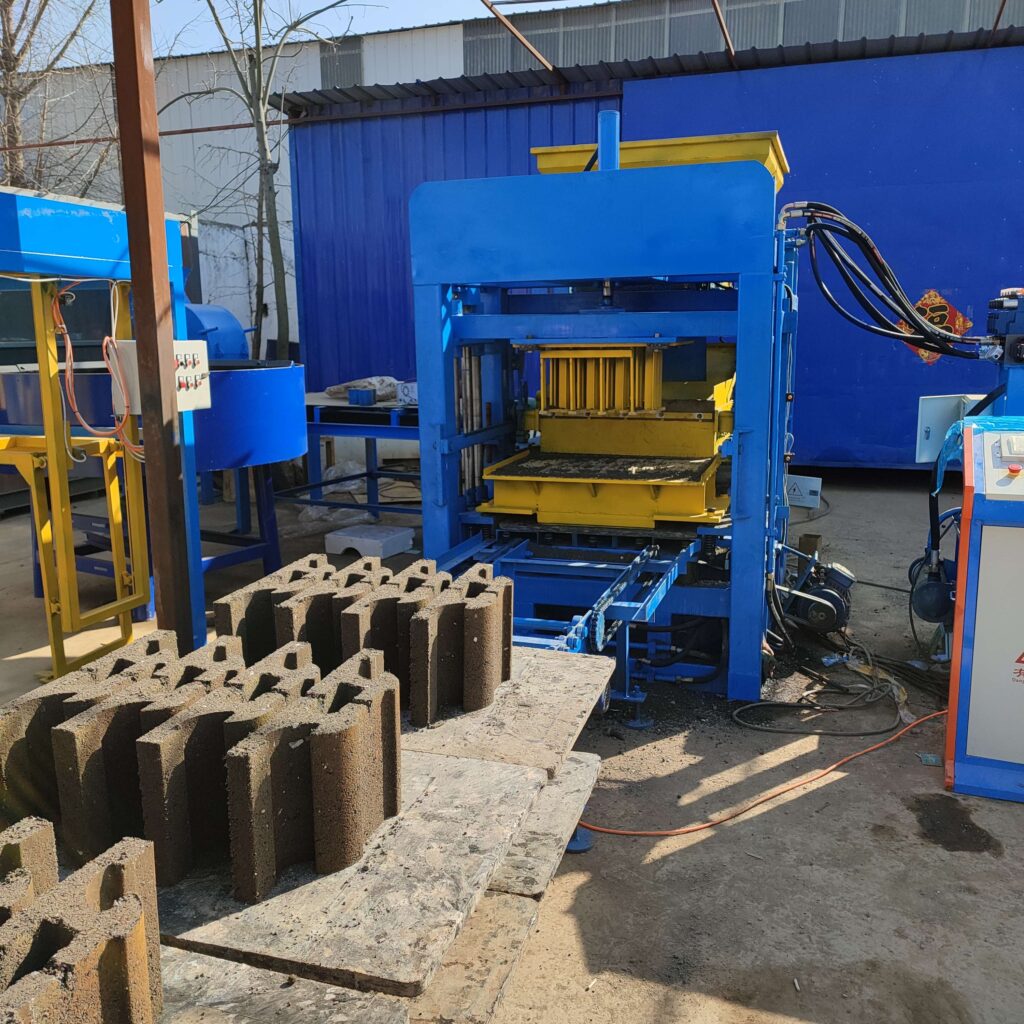
- Heavy-Duty Frame and Base: Constructed from 10-12 mm thick carbon steel, with reinforced cross-members to withstand high compaction pressures (30-50 MPa) required for fly ash bricks. The base features anti-vibration pads and anchor bolts to ensure stability, as fly ash mixes require more force to densify than concrete. Frames are available in industrial (3.0×2.2×2.8 meters) and medium-scale (2.0×1.8×2.2 meters) configurations, weighing 800 kg to 2,500 kg, suitable for factory settings or large construction sites.
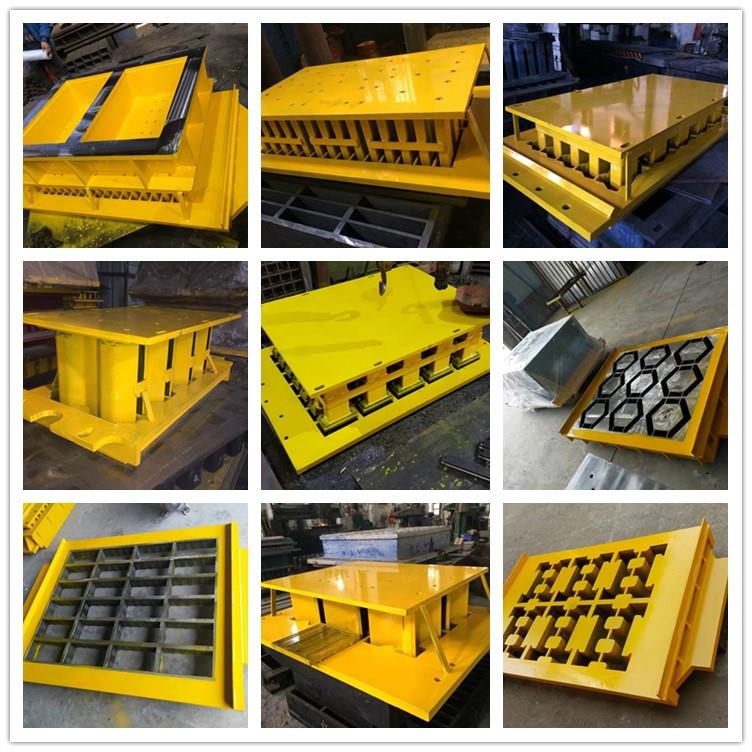
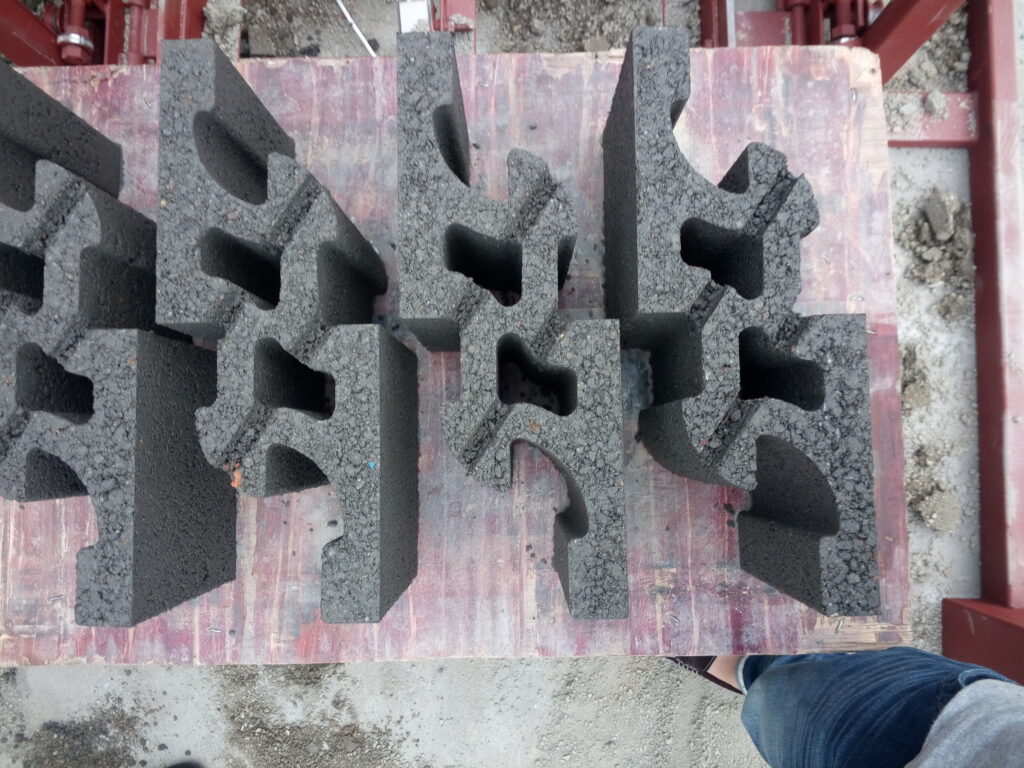
- Fly Ash-Specific Mold Assembly: Molds are CNC-machined from hardened tool steel (HRC 60-65) to achieve tight interlocking tolerances (±0.3 mm) and resist abrasion from fly ash particles. Interlocking geometries include stud-and-recess or tongue-and-groove designs, optimized to enhance mechanical bond strength without mortar. Molds are modular, allowing quick changes (15-20 minutes) between standard sizes (200x100x60 mm, 250x125x80 mm) and custom interlocking patterns. Critical mold features include:
- Ventilation channels to release trapped air during compaction (reducing brick porosity).
- Non-stick coatings (tungsten carbide or ceramic) to prevent fly ash adhesion.
- Replaceable wear inserts for high-stress areas (extending mold life to 30,000-60,000 cycles).
- Compaction Mechanism for Ash Mixes: Fly ash requires uniform, high-pressure compaction combined with alkaline activation (via cement or lime) to achieve strength. Machines use two primary compaction systems:
- Hydraulic (Semi-Automatic): Most common for medium-scale production (300-800 bricks/hour). Dual hydraulic cylinders generate 30-40 MPa pressure, with adjustable pressure profiles to accommodate varying fly ash-cement ratios. Equipped with vibratory compaction (50-60 Hz) to enhance particle rearrangement and density.
- Electric-Powered (Automatic): For high-volume industrial production (800-1,800 bricks/hour). 15-25 HP electric motors drive eccentric compaction plates, with PLC controls to regulate pressure, vibration, and cycle time. Integrated moisture sensors adjust water addition in real time to optimize fly ash activation.
- Feeding and Mixing Integration: Unlike traditional machines, interlocking fly ash brick machines often include a integrated twin-shaft paddle mixer to ensure homogeneous blending of fly ash (60-70%), sand (15-20%), cement (8-12%), lime (2-5%), and water (10-14% moisture content). The feeding system uses a screw conveyor with variable speed control to deliver consistent mix volumes to the mold, critical for brick uniformity.
2.1.2 Fly Ash Mix Science and Brick Production Workflow
Successful fly ash brick production relies on optimizing the mix design and curing process to activate the ash’s pozzolanic properties:
- Mix Design Fundamentals: Fly ash acts as a pozzolan, reacting with calcium hydroxide (from cement/lime) and water to form calcium silicate hydrate (CSH)—the same binding compound in concrete. Key mix considerations:
- Fly Ash Quality: Class F (low calcium) or Class C (high calcium) fly ash with fineness >300 m²/kg (to maximize reaction surface area).
- Alkaline Activator: 8-12% Portland cement or 5-8% lime + 3-5% cement to trigger pozzolanic reaction.
- Aggregate Ratio: 15-20% sand (0.15-4.75 mm) to improve workability and reduce shrinkage.
- Moisture Content: 10-14% (dryer than concrete mixes) to prevent excessive porosity.
- Production Workflow:
- Material Preparation: Fly ash is sieved (6 mm mesh) to remove clinkers and debris. Sand, cement, and lime are measured by weight (accuracy ±1%) for consistent mix quality.
- Mixing: Dry ingredients are blended for 2-3 minutes, then water is added gradually while mixing for another 3-5 minutes to achieve a homogeneous, non-sticky mix.
- Feeding and Compaction: The mix is conveyed to the mold, vibrated (50-60 Hz) to settle, and compacted at 30-50 MPa. Compaction time is 15-30 seconds per brick.
- Demolding: Bricks are ejected using hydraulic plates and transferred to curing racks (automatic conveyors in industrial models).
- Curing: Fly ash bricks require accelerated curing to activate pozzolanic reaction:
- Steam Curing: 60-80°C for 12-24 hours (industrial production) to achieve 70% of 28-day strength in 3 days.
- Moist Curing: Air-drying with periodic wetting for 14-28 days (small-scale production).
- Brick Performance Metrics: Properly cured interlocking fly ash bricks meet global standards (ASTM C62, IS 13757):
- Compressive Strength: 10-25 MPa (exceeds load-bearing wall requirements).
- Water Absorption: <15% (lower than traditional clay bricks).
- Durability: Resistant to freeze-thaw cycles, sulfate attack, and alkali-silica reaction.
2.1.3 Technical Specifications to Prioritize for B2B Procurement
When evaluating interlocking fly ash brick machines for distribution or purchase, key technical specifications include:
- Production Capacity: 300-1,800 bricks/hour (bph):
- Semi-Automatic Hydraulic: 300-800 bph (ideal for brick manufacturers and large contractors).
- Automatic Electric: 800-1,800 bph (industrial-scale production for brick plants).
- Compaction Parameters: 30-50 MPa pressure, 50-60 Hz vibration frequency (critical for fly ash activation).
- Mix Compatibility: Ability to process Class F/C fly ash with 60-70% mix ratio (verify with supplier-provided test reports).
- Dimensional Accuracy: ±0.3 mm for interlocking features (ensures tight fit during construction).
- Power and Utility Requirements:
- Semi-Automatic: 10-15 HP electric motor (3-phase, 380V) or diesel engine (for off-grid sites).
- Automatic: 15-25 HP electric motor, steam boiler (for curing, optional), 100-150 L/min water supply.
- Efficiency Metrics: Energy consumption (kWh/1000 bricks) <50 kWh, material waste <2%.
2.2 B2B Market Value Propositions: Driving Demand for Interlocking Fly Ash Brick Machines
Interlocking fly ash brick machines offer compelling value propositions for B2B customers, combining sustainability compliance, cost savings, and performance—key decision drivers for contractors, brick manufacturers, and government agencies.
2.2.1 Environmental Compliance and Circular Economy Credentials
Fly ash brick production addresses two critical environmental challenges: industrial waste management and carbon emissions reduction—making machines highly attractive to regulated B2B markets:
- Waste Diversion: One interlocking fly ash brick machine processing 1,000 bricks/hour diverts 8-10 tons of fly ash from landfills daily (based on 70% fly ash mix ratio). For power plants and waste management firms, this creates revenue from waste while reducing landfill fees ($50-$100/ton in developed countries).
- Carbon Footprint Reduction: Fly ash bricks reduce CO₂ emissions by 30-40% compared to concrete bricks (replacing cement with fly ash). A single machine producing 1 million bricks/year reduces emissions by 500-800 tons of CO₂—helping B2B customers meet green building certifications (LEED, BREEAM, GRIHA) and corporate sustainability targets.
- Regulatory Compliance: In regions with strict waste management laws (EU, US, India, China), using fly ash in brick production qualifies for tax incentives, subsidies, or priority in government tenders. For example, India’s Ministry of New and Renewable Energy offers a 15% subsidy on fly ash brick making equipment.
- Example: A brick manufacturer in the EU using an automatic interlocking fly ash brick machine qualifies for ETS (Emissions Trading System) credits, generating additional revenue of $10,000-$20,000/year while reducing waste disposal costs by $50,000/year.
2.2.2 Cost Savings and Profitability for B2B Customers
Interlocking fly ash brick machines deliver significant cost advantages over traditional brick production, improving profit margins for B2B buyers:
- Raw Material Cost Reduction: Fly ash is often available for free or at low cost (transportation only) from power plants, reducing raw material costs by 40-60% compared to concrete bricks (which rely on expensive cement and virgin aggregates). A 70% fly ash mix reduces cement usage by 60-70%, translating to $0.03-$0.05 savings per brick.
- Energy Efficiency: Automatic fly ash brick machines use 20-30% less energy than traditional concrete brick machines, thanks to optimized compaction and curing processes. For industrial-scale production (1 million bricks/year), this saves $8,000-$12,000 in energy costs annually.
- Labor Savings: Interlocking design eliminates mortar, reducing construction labor costs for B2B customers (contractors) by 25-30%. A 10-person crew can build a 100 m² wall in 2 days with fly ash interlocking bricks, compared to 4 days with traditional bricks.
- Profit Margin for Brick Manufacturers: Fly ash bricks have a production cost of $0.08-$0.12 per brick and a selling price of $0.20-$0.35 per brick (premium for green products), delivering a 60-70% profit margin—higher than concrete bricks (40-50% margin).
2.2.3 Superior Performance and Application Versatility
Interlocking fly ash bricks offer performance benefits that appeal to B2B customers requiring durable, low-maintenance solutions:
- Structural Strength: With compressive strength of 10-25 MPa, fly ash interlocking bricks exceed the requirements for load-bearing walls (8 MPa minimum in most countries) and are suitable for commercial buildings, bridges, and retaining walls. The interlocking design enhances lateral stability, making walls resistant to seismic activity and wind loads.
- Durability and Low Maintenance: Fly ash bricks have low water absorption (<15%) and high resistance to weathering, chemical attack, and biological growth. For infrastructure projects (roads, pavements, retaining walls), this reduces maintenance costs by 30-40% over the asset’s lifespan.
- Thermal Insulation: Fly ash bricks have a thermal conductivity of 0.8-1.0 W/mK (lower than concrete bricks: 1.2-1.5 W/mK), improving building energy efficiency. For commercial buildings, this reduces heating/cooling costs by 15-20%, a key selling point for contractors and developers.
- Application Versatility: B2B customers use interlocking fly ash bricks for:
- Construction: Load-bearing walls, non-load-bearing walls, foundations, and columns.
- Infrastructure: Road pavements, footpaths, retaining walls, and drainage channels.
- Landscaping: Patios, driveways, and garden edging (decorative interlocking designs available).
2.3 Target B2B Customer Segments and Market Positioning
Interlocking fly ash brick machines appeal to distinct B2B segments, each with unique procurement drivers and needs. Distributors who tailor their positioning to these segments can maximize sales and long-term partnerships.
2.3.1 Brick Manufacturers and Building Material Suppliers
This is the largest B2B segment, consisting of established brick plants and building material distributors looking to expand into green products:
- Procurement Drivers: Profit margin expansion, sustainability compliance, and product diversification.
- Needs: High production capacity (800-1,800 bph), automated processes (PLC controls, steam curing), and custom mold capabilities. Require reliable after-sales support and spare parts.
- Market Regions: Industrial zones in China, India, US, EU, and Southeast Asia (where fly ash is abundant).
- Positioning Strategy: Emphasize profit margins from low-cost fly ash, green product premium (15-20% higher selling price), and regulatory incentives. Offer turnkey solutions including machine installation, mix design training, and green certification support. Provide case studies of competitors who increased margins by 20% after adopting fly ash brick production.
2.3.2 Large Construction Firms and Infrastructure Contractors
Construction companies handling commercial, industrial, and government projects form a high-value segment:
- Procurement Drivers: Green building compliance, labor cost savings, and project efficiency.
- Needs: Medium-scale machines (300-800 bph) for on-site production, durability in harsh conditions, and compatibility with project-specific brick sizes.
- Market Regions: Urban centers with active infrastructure development (Dubai, Singapore, Mumbai, Houston, Berlin).
- Positioning Strategy: Highlight on-site production cost savings (eliminating brick transportation: $0.05-$0.10 per brick), faster construction (30-50% time reduction), and LEED/BREEAM certification points. Offer rental or lease-to-own options to reduce upfront capital expenditure. Provide on-site technical support during project execution.
2.3.3 Government Agencies and Public Works Departments
Government bodies implementing infrastructure, affordable housing, and waste management projects are key institutional buyers:
- Procurement Drivers: Sustainability mandates, waste reduction goals, and public budget efficiency.
- Needs: Durable, low-cost machines (300-800 bph), compliance with local building codes, and bulk pricing for multiple units (5+ machines).
- Market Regions: India, China, US, EU, and developing countries with fly ash management policies (e.g., Indonesia, Vietnam).
- Positioning Strategy: Align with government sustainability goals (e.g., net-zero 2050 targets), emphasize waste diversion from landfills, and cost savings for public projects (10-15% lower material costs). Provide technical documentation including brick strength tests, carbon footprint reports, and local code compliance certificates. Partner with local distributors to bid on government tenders and participate in public-private partnership (PPP) projects.
2.3.4 Power Plants and Industrial Waste Management Firms
Power plants generating fly ash and waste management companies are a niche but high-potential segment looking to monetize waste:
- Procurement Drivers: Waste disposal cost reduction, revenue generation from byproducts, and environmental compliance.
- Needs: Medium-scale machines (300-600 bph), integration with existing waste handling systems, and training for non-brick-making personnel.
- Market Regions: Coal-fired power plant hubs (US Midwest, China’s Shanxi Province, India’s Gujarat, EU’s Poland).
- Positioning Strategy: Emphasize revenue from waste ($50-$100/ton of fly ash), reduced landfill fees, and positive environmental branding. Offer custom integration with existing fly ash storage and handling systems. Provide end-to-end training for power plant staff to operate the machine and sell bricks to local contractors.
2.4 B2B Procurement and Distribution Strategies for Success
For distributors and purchasers, successful B2B procurement and distribution of interlocking fly ash brick machines require strategic focus on quality, reliability, and long-term partnership building.
2.4.1 Sourcing Reliable Manufacturers (For Distributors)
Selecting a manufacturer with fly ash-specific expertise is critical to avoiding costly quality issues:
- Manufacturer Evaluation Criteria:
- Experience: Minimum 5 years of specialized fly ash brick machine production (not general brick machines). Request references from 3+ B2B customers in your target region.
- Certifications: ISO 9001 (quality), ISO 14001 (environmental), and compliance with local safety standards (CE, OSHA, CCC).
- Technical Capabilities: In-house mold design (CNC machining), mix design expertise (test laboratory for fly ash compatibility), and after-sales support infrastructure.
- Quality Control: Conduct factory audits to verify:
- Mold precision (tolerance testing via coordinate measuring machine).
- Compaction pressure consistency (calibration certificates).
- Fly ash mix testing (compressive strength, water absorption reports).
- Negotiation Levers:
- Minimum Order Quantity (MOQ): Negotiate MOQs of 3-5 machines for wholesale pricing (10-20% discount).
- Spare Parts: Secure a 2-year spare parts supply (molds, hydraulic seals, compaction plates) at discounted rates.
- Training and Support: Demand free on-site installation, operator training, and 1-year warranty on mechanical/electrical components.
2.4.2 Pricing and Margin Optimization (For Distributors)
B2B pricing requires balancing competitiveness with profitability, considering the value-added nature of fly ash machines:
- Cost Structure Breakdown:
- Manufacturer Price (FOB/CIF): $15,000-$50,000 USD (semi-automatic to automatic).
- Shipping and Import Duties: 10-40% of CIF value (varies by country; research duty exemptions for green technology).
- Local Costs: Installation ($1,000-$3,000), training ($500-$1,500), and storage ($500-$1,000).
- Pricing Strategy:
- Semi-Automatic Machines: $25,000-$40,000 USD (40-50% markup).
- Automatic Machines: $50,000-$80,000 USD (35-45% markup).
- Bulk Orders (5+ machines): 10-15% discount to secure institutional customers.
- Value-Added Services: Charge $2,000-$5,000 for custom mold design, $1,500-$3,000 for steam curing integration, and $1,000-$2,000 for annual maintenance contracts.
- Margin Protection: Highlight the green premium (15-20% higher brick selling price) to justify machine costs to B2B customers. Position machines as a long-term investment (5-10 year lifespan) with ROI of 12-24 months.
2.4.3 B2B Distribution Channel Optimization
Reach target B2B segments through channels that align with their procurement processes:
- Direct Sales Teams: Hire industry-experienced sales representatives to target large brick manufacturers, construction firms, and government agencies. Equip teams with technical brochures, mix design test reports, and ROI calculators. Conduct on-site demonstrations at customer facilities.
- Industrial Trade Shows: Participate in sector-specific trade shows (Bauma, CONEXPO, GreenBuild, Infratech) to showcase machines and network with B2B buyers. Host live demonstrations of fly ash brick production and distribute case studies.
- Partnerships with Complementary B2B Providers: Collaborate with:
- Power plants and waste management firms to bundle machine sales with fly ash supply contracts.
- Green building consultants and certification bodies to recommend your machines to clients.
- Construction equipment rental companies to offer machine rentals for short-term projects.
- Digital Marketing for B2B Lead Generation: Invest in:
- LinkedIn advertising targeting construction managers, procurement directors, and sustainability officers.
- Content marketing (whitepapers on fly ash mix design, case studies, ROI calculators) to generate qualified leads.
- Search engine optimization (SEO) for keywords like “interlocking fly ash brick machine,” “green brick making equipment,” and “fly ash waste recycling machine.”
2.4.4 After-Sales Support and B2B Customer Retention
B2B customers prioritize reliable after-sales support—critical for long-term loyalty and repeat business:
- Technical Support: Establish a dedicated B2B support team (phone, email, video call) available 24/7 for critical issues. For international customers, provide support in local languages.
- Training Programs: Offer advanced training for maintenance staff (1-2 days) covering:
- Machine calibration and troubleshooting.
- Fly ash mix optimization for different ash qualities.
- Curing process control to ensure brick performance.
- Spare Parts Logistics: Maintain a local inventory of high-wear parts (molds, hydraulic seals, compaction plates) to reduce delivery time to 2-3 days. For remote regions, partner with local industrial supply distributors.
- Loyalty Programs: Offer repeat customers:
- 5-10% discount on machine upgrades or additional units.
- Free annual maintenance checks.
- Priority access to new mold designs or technology upgrades.
3. Conclusion
Interlocking fly ash brick machines represent a transformative B2B product category—aligning industrial waste recycling, sustainable construction, and profitability for distributors, purchasers, and end-users. For B2B professionals operating in construction, infrastructure, and green building sectors, these machines offer a unique opportunity to capitalize on global trends toward carbon neutrality and circular economy, while meeting the evolving needs of regulated markets and sustainability-focused customers. By understanding the fly ash-specific engineering, material science, and B2B value propositions of these machines, distributors can position themselves as trusted partners for brick manufacturers, construction firms, government agencies, and waste management companies—delivering not just equipment, but comprehensive solutions that drive environmental, economic, and social value.
The future of interlocking fly ash brick machines is poised for significant growth, fueled by stricter environmental regulations, increasing demand for green building materials, and the need to monetize industrial waste. Distributors who invest in sourcing reliable manufacturers, optimizing B2B distribution channels, and delivering exceptional after-sales support will secure a competitive advantage in this high-potential market. For purchasers, these machines offer a long-term, sustainable investment that improves profit margins, complies with regulations, and enhances brand reputation as a leader in sustainable construction. In a B2B landscape where purpose and performance are equally critical, interlocking fly ash brick machines are more than just equipment—they are a strategic tool for building a more sustainable, profitable, and resilient construction industry.
4. FAQ
4.1 What is the production capacity and ROI of an interlocking fly ash brick machine?
- Production Capacity: 300-1,800 bricks/hour (bph):
- Semi-Automatic Hydraulic: 300-800 bph (ideal for medium-scale operations).
- Automatic Electric: 800-1,800 bph (industrial-scale production).
- ROI: 12-24 months for B2B customers, based on:
- Production cost: $0.08-$0.12 per brick (fly ash + sand + cement + lime + energy).
- Selling price: $0.20-$0.35 per brick (15-20% green premium over concrete bricks).
- Production volume: 500,000-1.5 million bricks/year (semi-automatic to automatic).
- Additional savings: Waste disposal cost reduction ($50-$100/ton of fly ash) and regulatory incentives.
4.2 What type of fly ash is compatible with these machines?
Interlocking fly ash brick machines work with Class F (low calcium, SiO₂ + Al₂O₃ + Fe₂O₃ >70%) and Class C (high calcium, SiO₂ + Al₂O₃ + Fe₂O₃ >50%) fly ash— the two most common types generated by coal-fired power plants. Key requirements:
- Fineness: >300 m²/kg (measured via Blaine air permeability test).
- Carbon Content: <5% (to avoid reducing brick strength and increasing water absorption).
- Moisture Content: <10% (to prevent clumping during mixing).Manufacturers provide mix design guidelines for different fly ash qualities, and most machines include adjustable compaction and moisture control to accommodate variations.
4.3 Are interlocking fly ash bricks compliant with building codes and green certifications?
Yes—interlocking fly ash bricks meet global building codes and qualify for major green certifications:
- Building Codes: Compliant with ASTM C62 (US), IS 13757 (India), EN 771-3 (EU), and GB/T 2542 (China) for compressive strength, water absorption, and durability.
- Green Certifications: Earn points for LEED (USGBC), BREEAM (UK), GRIHA (India), and DGNB (Germany) for waste recycling, carbon emissions reduction, and sustainable material use.Distributors should provide customers with third-party test reports (compressive strength, water absorption, carbon footprint) to facilitate code compliance and certification.
4.4 What maintenance is required for an interlocking fly ash brick machine?
Maintenance requirements are moderate, with routine tasks focused on preserving mold precision and hydraulic/electrical components:
- Daily Maintenance:
- Clean molds to remove fly ash residue (use compressed air or non-abrasive tools).
- Check hydraulic fluid levels and filter condition.
- Inspect mix feeding system for clogs.
- Weekly Maintenance:
- Lubricate moving parts (hinges, conveyor belts, compaction plates) with high-temperature grease.
- Calibrate compaction pressure and vibration frequency.
- Inspect mold wear inserts for damage.
- Monthly Maintenance:
- Replace hydraulic filters and check for leaks.
- Test electrical connections and PLC controls.
- Verify dimensional accuracy of produced bricks (using calipers).
- Annual Maintenance:
- Replace worn mold inserts or entire molds (if needed).
- Overhaul hydraulic pumps and motors.
- Conduct a full machine calibration by a certified technician.Annual maintenance costs are approximately 5-8% of the machine’s purchase price.
4.5 Can these machines produce custom brick sizes or interlocking patterns?
Yes—interlocking fly ash brick machines use modular, CNC-machined molds that can be customized to:
- Sizes: Standard sizes (200x100x60 mm, 250x125x80 mm) or custom dimensions (minimum 100x50x25 mm, maximum 400x200x100 mm).
- Interlocking Patterns: Stud-and-recess, tongue-and-groove, puzzle, or project-specific designs (e.g., for retaining walls or pavements).
- Decorative Features: Textured surfaces, colored mixes (using pigments), or branded logos (for building material suppliers).Custom mold design costs $3,000-$8,000 USD per set, with lead times of 3-6 weeks. Most manufacturers offer mold exchange programs to reduce downtime when switching between designs.
4.6 What power and utility requirements are needed for operation?
Power and utility needs vary by machine type:
- Semi-Automatic Hydraulic:
- Power: 10-15 HP electric motor (3-phase, 380V) or 15-20 HP diesel engine (for off-grid sites).
- Water: 50-80 L/min (for mix preparation and mold cleaning).
- Compressed Air: 0.6-0.8 MPa (for mold cleaning, optional).
- Automatic Electric:
- Power: 15-25 HP electric motor (3-phase, 380V) + 5-10 HP for steam curing boiler (optional).
- Water: 100-150 L/min (mix preparation, curing, cleaning).
- Compressed Air: 0.6-0.8 MPa (mold cleaning, conveyor operation).
- Steam Curing (optional): Boiler capacity 50-100 kg/hour (for accelerated curing).For regions with unreliable power, dual-power (electric + diesel) options are available to ensure uninterrupted production.
4.7 How does the cost of interlocking fly ash bricks compare to traditional bricks?
Interlocking fly ash bricks offer significant cost advantages over traditional options:
| Brick Type | Production Cost per Brick | Selling Price per Brick | Profit Margin |
|---|---|---|---|
| Fly Ash Interlocking | $0.08-$0.12 | $0.20-$0.35 | 60-70% |
| Concrete Interlocking | $0.15-$0.20 | $0.25-$0.35 | 40-50% |
| Clay Bricks (Fired) | $0.12-$0.18 | $0.20-$0.30 | 30-45% |
| The lower production cost of fly ash bricks (due to free/low-cost fly ash) and higher selling price (green premium) deliver 15-25% higher profit margins for B2B customers. Additionally, interlocking design reduces construction labor costs by 25-30% for end-users. |
4.8 What is the lifespan of an interlocking fly ash brick machine and its molds?
- Machine Lifespan: 10-15 years with proper maintenance, depending on usage intensity:
- Semi-Automatic: 10-12 years (medium-scale production).
- Automatic: 12-15 years (industrial-scale production).
- Mold Lifespan: 30,000-60,000 cycles (equivalent to 30-60 million bricks) for standard steel molds:
- Replaceable wear inserts: Extend mold life by 50-70% (cost-effective vs. full mold replacement).
- Mold maintenance: Regular cleaning and lubrication can extend life by 20-30%.Manufacturers typically offer a 1-year warranty on machine components and a 6-month warranty on molds, with optional extended warranties available for B2B customers.