
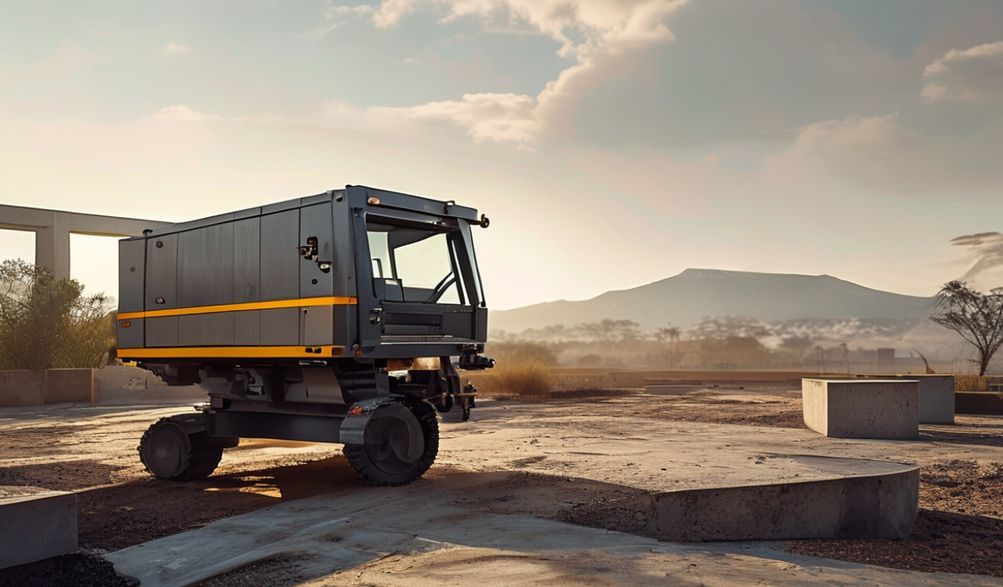
Precios de Máquinas para Fabricar Bloques en Sudáfrica: Una Guía para 2026 de los Expertos de la Fábrica FUDA
"Con base en nuestros más de 15 años suministrando máquinas para fabricar bloques en toda Sudáfrica, la pregunta más común que recibimos es sobre los precios, y por qué varían tanto." Esa es la observación directa de nuestro ingeniero principal, que refleja la experiencia de todo nuestro equipo en la Fábrica de Bloques FUDA.
Esta guía está diseñada para aclarar esa confusión. Compilada por nuestros expertos técnicos y de ventas, ofrece el desglose transparente que necesitas para realizar una inversión con confianza. Como fabricante líder con certificaciones ISO y un historial comprobado desde instalaciones en Gauteng hasta el Cabo Occidental, entendemos las demandas únicas del mercado sudafricano.
Prometemos no solo una lista de precios, sino una explicación clara de los factores que influyen.Precios de máquinas para hacer bloques en Sudáfrica - Fábrica de bloques FUDAPor favor, ten en cuenta que todos los precios aquí son indicativos; para obtener una cotización final y precisa, se requiere una consulta basada en tus necesidades específicas.
Sabemos que probablemente eres un dueño de negocio, emprendedor o gerente de proyecto que busca una solución confiable y rentable para iniciar o expandir un negocio de producción de blocks. Esta guía detallará nuestra gama de máquinas, los factores clave de costo, rangos de precios realistas para 2026 y, lo más importante, cómo asegurar que obtengas el mejor valor a largo plazo para tu inversión.
Comprendiendo Tu Inversión: Más Que Solo el Precio de la Máquina
Comprar una máquina para hacer bloques es una inversión estratégica para el negocio, no simplemente un gasto. Verlo a través de este lente es crucial para la rentabilidad y sostenibilidad a largo plazo en el competitivo sector de la construcción de Sudáfrica.
El Costo Total de Propiedad (CTP) para Máquinas de Bloques
El precio de compra inicial es solo una parte del panorama financiero. Una planificación real implica el Costo Total de Propiedad (CTP), que incluye:
- Costos Iniciales:Precio de la máquina, envío, seguro, despacho aduanal e instalación.
- Costos Operativos:Consumo de electricidad, mano de obra, materias primas (cemento, agregados).
- Costos de Mantenimiento:Mantenimiento de rutina, reemplazo de piezas de desgaste (como aspas de mezcladora o revestimientos de moldes) y posibles reparaciones.
- Costos de Soporte:Capacitación para operadores y cualquier contrato de soporte técnico en curso.
Una máquina robusta y bien diseñada de un fabricante directo como FUDA suele tener un costo inicial más alto que una máquina usada de dudosa procedencia o una importación de baja calidad. Sin embargo, esta inversión se compensa a través de:
- Durabilidad:Averías menos frecuentes y mayor vida útil de las máquinas.
- Eficiencia:Mayor producción por hora y menor desperdicio.
- Soporte Local:Tiempo de inactividad reducido gracias a piezas de repuesto accesibles y conocimiento técnico.
Factores Clave que Influyen en los Precios de las Máquinas para Hacer Bloques en Sudáfrica
¿Por qué una máquina cuesta R150,000 y otra R1.5 millones? Estas son las principales variables:
- Tipo de Máquina y Nivel de Automatización:Este es el principal impulsor del precio.
- Manual/Semi-Automático:Menor costo, mayor necesidad de mano de obra, perfecto para nuevas empresas.
- Completamente Automático:Mayor inversión, mano de obra mínima, producción constante de alto volumen.
- Móvil vs. Estacionario:Las máquinas móviles (ponedoras de huevo) ofrecen flexibilidad para proyectos en sitio, mientras que las plantas estacionarias son para patios de bloques dedicados.
- Capacidad de Producción:Una máquina que produce 1,000 bloques por hora tiene un precio muy diferente a una que produce 10,000. El tamaño de tu mercado objetivo dicta esta necesidad.
- Tipo y Tamaño del Bloque:Los bloques huecos estándar son la línea base. Las máquinas configuradas para adoquines de enclavamiento, bordillos o bloques arquitectónicos especiales requieren moldes y sistemas diferentes, lo que afecta el precio.
- Personalización y Características:Los complementos como alimentadores automáticos de color, apiladores robóticos, sistemas de retorno de paletas o diseños de moldes especializados aumentan la capacidad y el costo.
- Dinámicas del Mercado Local:Para importaciones como las máquinas FUDA, el costo final de desembarque se ve afectado por:
- Costos de envío y logística hacia puertos como Durban, Ciudad del Cabo o Gqeberha.
- Derechos de importación e IVA de Sudáfrica.
- El tipo de cambio USD/ZAR al momento de la compra.
- The cost of establishing and maintaining a local service network.
FUDA Block Making Machine Range & South Africa Price Guide (2026)
This section provides a transparent overview of our core ranges and estimated pricing for the South African market. Use it as a framework for your planning.
Disclaimer: The following price ranges are estimates for the South African market as of early 2026. Final quotations are provided after a free, no-obligation consultation based on your specific needs, location, and configuration. Prices are in US Dollars (USD) for international reference and are subject to change due to raw material costs and exchange rates.
Máquinas de nivel inicial y manuales/semiautomáticas
- Target User: Small-scale builders, startup entrepreneurs, community co-ops, and for on-site production for specific projects.
- Modelos de Ejemplo: QMJ4-45 (Manual egg-layer mobile), QCM4-30 (Semi-automatic mobile machine).
- Estimated Price Range: $3,000 – $12,000 USD.
- Key Features & Output:
- Ideal for learning the business with lower capital risk.
- Output ranges from 800 to 3,000 blocks per 8-hour shift.
- High flexibility; can be moved around a site or small yard.
- Perfect for producing blocks for own use or very local supply.
Mid-Range Semi-Automatic & Automatic Machines
- Target User: Growing block manufacturing yards, SME construction companies supplying local retailers and contractors.
- Modelos de Ejemplo: QTF4-25 (Stationary automatic machine), QMJ4-35A (Semi-automatic with integrated pan mixer).
- Estimated Price Range: $15,000 – $45,000 USD.
- Key Features & Output:
- Excellent balance between automation, cost, and output.
- Can produce 4,000 to 10,000+ blocks per day with a small team.
- More consistent product quality and higher efficiency than manual options.
- Often includes features like automatic vibration and feeding systems.
High-Capacity Fully Automatic Production Lines
- Target User: Large block manufacturing plants, industrial suppliers targeting major construction firms, hardware chains, and government contracts.
- Modelos de Ejemplo: QTY10-15 (Fully automatic line with robot stacker), QFT12-15 (High-speed paver production line).
- Estimated Price Range: $50,000 – $200,000+ USD.
- Key Features & Output:
- Turnkey plants with high automation: automatic batching, mixing, pressing, curing, and stacking.
- Minimal manual labor required, primarily for supervision and maintenance.
- Maximum output, capable of 15,000 to 30,000+ blocks per day.
- Essential for businesses competing on large-scale contracts and requiring absolute consistency.
Why Choose FUDA for Your South African Block Making Business?
In a market with many options, our value proposition is built on expertise, durability, and unwavering support.
Proven Expertise & Experience in African Conditions
FUDA isn’t new to Africa. We have a documented history of successful installations across the continent, including numerous projects in South Africa, Ghana, Nigeria, and Kenya. Our engineers understand the characteristics of local aggregates and South African cement specifications. Our machines are designed to perform reliably in the local climate, from the Highveld to the coastal regions.
Built for Durability & Ease of Maintenance
We use high-grade steel and internationally sourced, quality components in our manufacturing. Beyond that, we prioritize intelligent, robust design. Our machines are built to withstand the rigors of daily production, with service points that are accessible. This design philosophy means local technicians can be easily trained to perform most maintenance, keeping your life-cycle costs low.
Comprehensive After-Sales Support in South Africa
This is our cornerstone. We have invested in a support structure to ensure your success:
* Local Parts Stock: We maintain a strategic inventory of critical wear parts in Johannesburg for rapid dispatch across SADC.
* Technical Network: We have trained technicians on the continent who can provide remote support or, when needed, on-site service visits.
* Warranty & Training: Our machines come with a clear warranty. We offer comprehensive installation supervision and operator training—either at your site or via detailed digital guides and live video support.
Customization for Local Market Demand
We don’t just sell a standard catalog. We provide machines configured for South African demand. This includes:
* Moulds for the most popular block sizes (e.g., 140mm hollow block, 60mm & 80mm pavers).
* Adaptations for local three-phase power standards.
* Configurations optimized for the mix of materials readily available to you.
Maximizing Your ROI: Tips from FUDA Experts
Transition from thinking about cost to focusing on value and return on investment.
Conducting a Realistic Needs Analysis
Before you look at a single price, ask:
* Who is my target market? (Individual homeowners, contractors, retailers?)
* What is my realistic daily/weekly sales volume?
* What block types are most in demand in my area?
* What is my available space, power supply, and budget?
Answering these will point you to the correct machine category.
The Importance of Factory Direct Quotes & Verification
Always contact the factory directly. Dealing with unauthorized middlemen can lead to markups, miscommunication, and support issues. As a factory, we encourage you to:
* Request a live video call to see the machine in operation.
* Ask for customer references from similar projects in Africa.
* Verify our company certifications and export history.
Planning for Logistics & Installation
Factor in these steps to avoid delays:
* Shipping: We prepare machines for container shipping and can recommend reliable freight forwarders experienced with South African ports.
* Customs: Ensure you have a reliable clearing agent. We provide all necessary shipping documents (invoice, packing list, certificate of origin).
* Site Preparation: We will provide foundation drawings and utility connection requirements (power, water) well in advance so your site is ready upon arrival.
Frequently Asked Questions (FAQ) About Block Machine Prices
Q1: What is the cheapest block making machine available in South Africa?
A: Small, manual machines offer the lowest entry cost (from ~$3,000 USD). However, consider the trade-offs: very low output, high physical labor, and inconsistent quality. For a serious startup, a basic semi-automatic FUDA model offers far better productivity and is still a very accessible investment.
Q2: Are FUDA machines more expensive than local used machines?
A: Often, a new FUDA machine has a higher upfront cost than a used one. But you are investing in certainty: a full warranty, known maintenance history, modern efficiency, and guaranteed technical support. A used machine carries risks of hidden defects, obsolete parts, and zero support, which can lead to costly downtime and ultimately a higher Total Cost of Ownership.
Q3: Do prices include delivery to my city in South Africa?
A: Our standard quotes are FOB (Free On Board) from our factory port in China. This means the price includes delivery to and loading onto the ship. Shipping, marine insurance, and customs clearance in South Africa are additional. We provide freight estimates and can assist in coordinating the process with trusted partners.
Q4: Can I get financing for a FUDA block making machine?
A: Our standard payment terms are via bank transfer (T/T), typically with a deposit and balance before shipment. Many of our South African clients successfully utilize local business loans, equipment financing from banks, or government SME development programs. We are happy to provide any required proforma invoices or machine specifications to support your financing application.
Q5: How do I get spare parts in South Africa if my machine breaks down?
A: This is a critical advantage of partnering with FUDA. For urgent needs, we express ship parts from our main stock. For common wear items, we hold inventory in our Johannesburg depot for next-day delivery within South Africa. Our support team will always guide you to the fastest, most cost-effective solution to minimize your downtime.
Conclusión
Investing in a blocks making machine is a significant step, but it becomes a manageable and exciting venture when you understand the variables: machine type, capacity, and the non-negotiable importance of after-sales support.
At FUDA Block Making Factory, we combine decades of manufacturing expertise with a deep, practical understanding of the South African construction sector. Choosing us means more than buying a machine; it’s partnering for long-term profitability.
Ready to move forward with confidence? Contact the FUDA Africa Sales Team today for a free, no-obligation consultation and a detailed quotation tailored to your specific location and production goals in South Africa. We’ll help you navigate the investment and build a successful block manufacturing business.
Contact Us:
* Email: africasales@fudamachinery.com
* WhatsApp (SA): +27 [Example Number – to be provided]
* Online Form: [Link to FUDA Contact Page]
This guide was produced by the FUDA Technical Advisory Panel, with insights from David van Niekerk, Regional Sales Manager for Africa with 12 years of experience in construction machinery supply and support across the SADC region.
<