
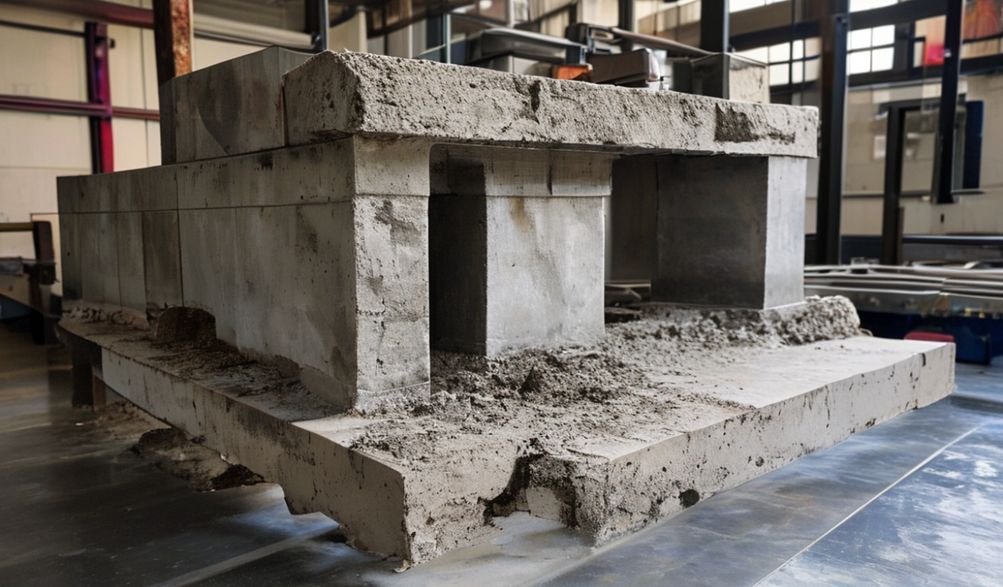
Precio de la Máquina para Hacer Bloques de Cemento en India 2026: Una Guía Completa por FUDA Fábrica de Máquinas para Bloques
Introducción
¿Eres un constructor, contratista o emprendedor confundido por la amplia gama dePrecio de la máquina para hacer bloques de cemento en IndiaNo estás solo. Encontrar el equilibrio adecuado entre el costo inicial, la calidad a largo plazo y la productividad constante es una de las decisiones más críticas para el éxito de tu proyecto de construcción o negocio de manufactura.
En FUDA Block Making Factory, con más de dos décadas de experiencia diseñando, fabricando y dando soporte a maquinaria robusta para fabricación de bloques en toda la India, comprendemos estos desafíos íntimamente. Hemos visto cómo una compra mal informada, basada únicamente en el precio más bajo, puede resultar en costosos tiempos de inactividad, bloques de mala calidad y un crecimiento empresarial limitado.
Esta guía integral está basada en nuestra experiencia práctica. Nuestro objetivo es desmitificar el mercado para usted. Desglosaremos los factores clave que influyen en los precios de las máquinas para hacer bloques de cemento, proporcionaremos un análisis transparente de los rangos actuales del mercado y, lo más importante, explicaremos cómo evaluar sus opciones más allá de la factura inicial. Al final, estará preparado para hacer una inversión que garantice valor a largo plazo, confiabilidad y un sólido retorno.
Comprensión de las Máquinas para Hacer Bloques de Cemento: Tipos y Aplicaciones
Antes de adentrarnos en los precios, es esencial comprender los diferentes tipos de máquinas disponibles. El nivel de tecnología dicta directamente el costo, la producción y el caso de uso ideal.
Máquinas Manuales vs. Semiautomáticas vs. Automáticas
-
Máquinas Manuales para Fabricar Bloques:
- Descripción:Operado completamente por mano de obra humana utilizando un sistema de palanca para comprimir la mezcla de concreto en moldes. Simple, mecánico y portátil.
- Salida Típica:300 – 800 bloques por turno de 8 horas.
- Requerimiento de Mano de Obra:Alto. Requiere de 2 a 3 operadores dedicados.
- Contexto de Costo Inicial: Bajo.El punto de entrada más asequible a la producción de bloques.
-
Máquinas Semiautomáticas para Fabricar Bloques:
- Descripción:Un modelo híbrido. Los procesos clave, como la vibración y la compresión, se accionan (eléctrica o hidráulicamente), pero la expulsión de bloques, la alimentación de paletas y el movimiento suelen ser manuales o semimanuales.
- Salida Típica:800 – 2,500 bloques por turno de 8 horas.
- Requerimiento de Mano de Obra:Medio. Requiere de 1 a 2 operadores.
- Contexto de Costo Inicial: Medio.Ofrece un aumento significativo en la productividad en comparación con las máquinas manuales, con un incremento de precio moderado.
-
Máquinas Automáticas para Fabricar Bloques:
- Descripción:Plantas computarizadas o controladas por PLC donde todo el proceso—desde la alimentación y mezcla de materias primas hasta el moldeado, curado y apilado—está automatizado. Se requiere mínima intervención humana.
- Salida Típica:2,500 – 10,000+ bloques por turno de 8 horas.
- Requerimiento de Mano de Obra:Bajo. Principalmente para supervisión y monitoreo.
- Contexto de Costo Inicial: Hola.Representa una inversión industrial importante con capacidades de alta producción correspondientes.
Tipos Comunes de Bloques Producidos (Huecos, Macizos, Adoquines, Entrelazados)
La versatilidad de una máquina impacta significativamente su precio. La función principal es la misma, pero el molde y, en algunos casos, la capacidad de presión de la máquina determinan el producto final.
- Bloques Huecos y Macizos:El estándar para la construcción de muros. La mayoría de las máquinas pueden producirlos con un simple cambio de molde.
- Adoquines y Bloques de Entrelazado: These require higher vibration frequency and pressure to achieve the necessary density and strength for load-bearing surfaces. Machines designed for these products are often more robust and priced higher.
- Punto clave: A machine that can produce multiple block types (with quick mold changes) offers more business flexibility but may come at a premium compared to a single-purpose model.
Key Factors Influencing Cement Block Making Machine Price in India
The price tag on a machine is a sum of its parts, capabilities, and the brand behind it. Understanding these factors will help you compare apples to apples.
Especificaciones Principales de la Máquina
- Capacidad de Producción (Bloques por Hora): This is the most direct driver of price. A machine rated for 1,000 blocks per hour will cost significantly less than one rated for 4,000 blocks per hour. Higher output requires more powerful motors, larger frames, and more sophisticated systems.
- Grado de Automatización: The jump from a manual lever to a hydraulic system, and further to a PLC with a touch-screen interface, adds layers of cost. Automation improves consistency, reduces labor, and increases output, but you pay for that technology upfront.
- Power Type & Consumption: Options include standard electric, diesel-engine powered (for areas with unreliable electricity), or hybrid models. Diesel engines add to the initial cost. Consider the long-term operational cost (tariffs vs. diesel prices) as part of your calculation.
Build Quality & Component Source
This is where hidden cost differences emerge. A cheaper machine often cuts corners here.
- Frame Strength & Vibration System: The frame must withstand constant, heavy vibration without warping. High-quality, high-frequency vibration tables ensure dense, strong blocks. Inferior components lead to weak blocks and machine breakdowns.
- Hydraulic & Electrical Components: Are the pumps, valves, and PLCs from reputable international or domestic brands (e.g., Siemens, Schneider) or unknown, low-cost alternatives? Component quality dictates reliability, maintenance intervals, and lifespan.
- Imported vs. Domestic Parts: Some manufacturers import critical components, which can add cost due to duties but may ensure quality. Others manufacture entirely in-house, like FUDA, allowing for better cost control and customization without sacrificing quality.
Brand Reputation & After-Sales Service
You’re not just buying a machine; you’re entering a long-term partnership.
- Brand Premium: Established brands like FUDA command a price point that reflects years of R&D, proven performance, and market trust. This is often an investment in peace of mind.
- The Value of Support: A machine will need maintenance. What is the warranty period? Is there a local service technician available? How quickly can you get spare parts? A lower-priced machine from a company with no service network can become a very expensive paperweight when it breaks down.
Current Price Range Analysis for the Indian Market (2026)
Please note: The following price ranges are indicative for 2026 and can vary based on exact configuration, location, GST, and raw material market fluctuations. Contact FUDA for a detailed, customized quotation.
Entry-Level (Manual & Small Semi-Automatic) Machines
- Rango de Precios: ₹ 1.5 Lakhs – ₹ 5 Lakhs
- Ideal Para: Individual homeowners, very small-scale contractors, rural development projects, and entrepreneurs testing the market with minimal capital.
Mid-Range (Semi-Automatic & Basic Automatic) Machines
- Rango de Precios: ₹ 5 Lakhs – ₹ 25 Lakhs
- Ideal Para: Growing block manufacturing businesses, medium-scale housing projects, contractors looking to significantly boost in-house production, and municipal corporations. This is the most competitive and popular segment.
High-Capacity (Fully Automatic & Stationary Plant) Machines
- Rango de Precios: ₹ 25 Lakhs – ₹ 2 Crores and above
- Ideal Para: Large-scale commercial and infrastructure projects, dedicated block manufacturing plants supplying to cities or districts, and businesses focused on high-volume production of pavers and interlocking blocks.
Beyond the Price Tag: Calculating Total Cost of Ownership (TCO)
Smart buyers look at the Total Cost of Ownership, not just the purchase price. This long-term view separates a cost from an investment.
Initial Investment vs. Long-Term Operational Costs
Consider these expenses over a 5-year period:
* Mantenimiento y Reparaciones: A robust machine needs routine servicing; a frail one needs frequent, costly repairs.
* Consumo de Energía: An efficient motor can save lakhs in electricity bills over time.
* Costos de Mano de Obra: A fully automatic plant may cost more upfront but can reduce labor costs by 60-70% compared to manual operations.
Importance of Machine Durability & Uptime
Downtime is lost revenue. A machine that operates at 95% uptime (like FUDA’s engineered machines) will produce significantly more saleable blocks over its life than one that is frequently under repair. The slightly higher initial cost for durability pays for itself by ensuring consistent cash flow.
Return on Investment (ROI) Considerations
Your machine’s ROI depends on:
* Block Quality: High-density, precisely dimensioned blocks command a better market price and reduce construction waste.
* Velocidad de Producción: Meeting large orders on time builds your reputation and allows you to take on more business.
* Demanda Local: Align your machine’s capacity with the demand in your target market to avoid under or over-investment.
Why Choose FUDA Block Making Factory? Our Value Proposition
When you partner with FUDA, you invest in more than steel and hydraulics.
Our Manufacturing Expertise & Quality Assurance
Every FUDA machine is born from in-house design and R&D. We control the entire manufacturing process, using premium-grade materials and subjecting each machine to rigorous performance testing before it leaves our factory. This vertical integration is our guarantee of quality.
Comprehensive After-Sales Support Network
Our commitment begins after the sale. We offer:
* Professional installation and commissioning.
* Hands-on training for your operators and maintenance staff.
* A clear and comprehensive warranty.
* A pan-India network for service and readily available genuine spare parts, minimizing your downtime.
Customizable Solutions for Your Specific Needs
We understand that every project is unique. Whether you need a machine tailored for a specific block design, a unique power configuration, or a phased automation plan, FUDA’s engineering team works with you to develop the optimal solution. This collaborative approach ensures the final price reflects true value, not just a standard catalog item.
Frequently Asked Questions (FAQ)
Q1: What is the cheapest cement block making machine available in India?
A: The cheapest options are manual block making machines, starting around ₹ 1.5 lakhs. However, it’s crucial to consider their limitations: low output and high physical labor requirements. They are suitable only for very small, intermittent projects.
Q2: How much does a fully automatic block making machine cost?
A: Prices for fully automatic plants in India have a wide range, typically from ₹ 25 lakhs to over ₹ 2 crores, depending on the level of automation, output capacity (blocks per hour), and included features like automatic pallet feeders and stackers. A detailed consultation is needed for an accurate quote.
Q3: Are there any government subsidies for buying block making machines in India?
A: Various state and central government schemes, often under MSME (Micro, Small & Medium Enterprises) or rural development initiatives, may offer subsidies or soft loans. We advise checking with your local District Industries Centre (DIC) or relevant industry association for the most current programs.
Q4: What is the typical lead time for delivery and installation?
A: For standard models, FUDA typically delivers within 4-6 weeks after order confirmation. Installation and commissioning are scheduled promptly thereafter. For large, fully customized plants, the timeline is discussed and agreed upon during the project planning phase.
Q5: Can FUDA provide training on operating and maintaining the machine?
A: Yes, absolutely. At FUDA, we provide comprehensive hands-on training for your operators and maintenance team as a standard part of our commissioning process. Our goal is to ensure you are confident and self-sufficient in running your machine for optimal productivity.
Conclusión
Navigating the Precio de la máquina para hacer bloques de cemento en India landscape requires looking at the complete picture: machine type, production capacity, underlying build quality, and the invaluable support of the brand behind it. The cheapest option can often become the most expensive mistake through downtime and poor output.
Choosing the right partner is as critical as choosing the right machine. With FUDA Block Making Factory’s proven engineering expertise, reliable and durable machinery, and unwavering nationwide support network, you’re not just purchasing equipment—you’re investing in long-term productivity, profitability, and peace of mind.
Ready to get an accurate price for a machine that fits your specific project goals and budget? Contact the FUDA Block Making Factory experts today for a free, no-obligation consultation and a detailed quotation.
METADATA_START—
DISPLAY_TITLE: Cement Block Making Machine Price in India 2026: The Ultimate Buyer’s Guide
SEO_TITLE: Cement Block Machine Price in India 2026 | FUDA Guide
META_DESC: Confused by cement block machine prices in India? Get a complete 2026 price breakdown, key buying factors & expert advice from FUDA Block Making Factory.
IMG_PROMPT: A hyper-realistic photograph of a modern, fully automatic cement block making machine in a clean Indian factory, producing perfect concrete blocks on a conveyor belt, with soft industrial lighting and a focused engineer in the background checking a digital panel.
—METADATA_END—