
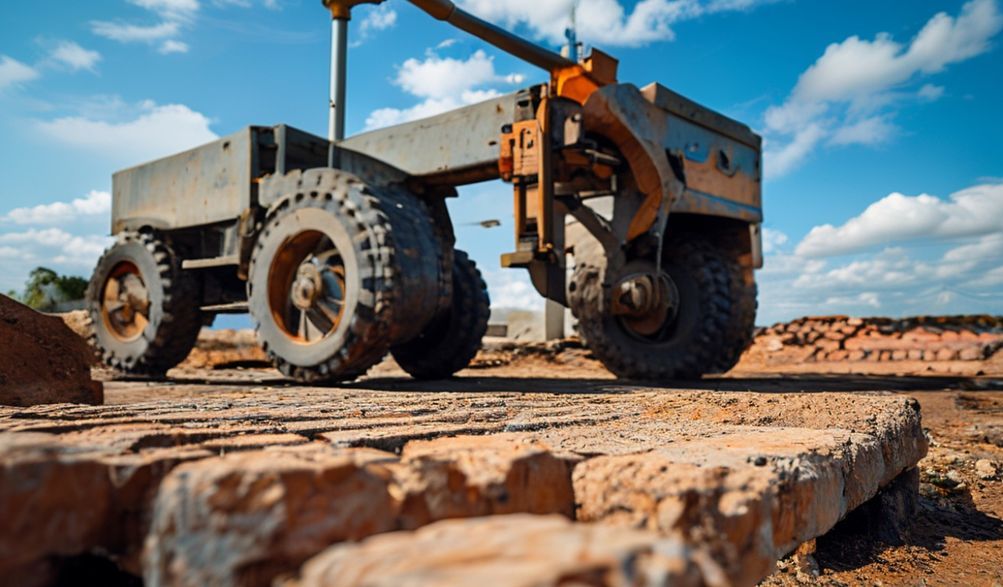
Tu Guía Completa sobre la Máquina para Hacer Bloques de Concreto FUDA en Uganda
Introducción
El horizonte de Uganda se está transformando. Desde los bulliciosos centros urbanos en Kampala hasta los municipios en crecimiento en todo el país, hay un auge de la construcción en marcha, impulsado por la urbanización y el desarrollo de infraestructura. Pero este crecimiento depende de una pregunta fundamental:¿De dónde vendrán los millones de bloques de construcción confiables y asequibles?
Durante años, constructores y empresarios han lidiado con las limitaciones de la producción manual de ladrillos: lenta, intensiva en mano de obra y propensa a una calidad inconsistente. La maquinaria importada a menudo viene con precios desorbitantes, mantenimiento complejo y escaso soporte local. ¿El resultado? Retrasos en los proyectos, sobrecostos y un potencial de negocio sofocado.
EntrarFUDAun gigante global en la fabricación de maquinaria para construcción. Esta guía se centra en lasMáquina para hacer bloques de concreto FUDAcomo una solución personalizada, eficiente y rentable para el mercado ugandés. Iremos más allá de las presentaciones de ventas para ofrecer un análisis integral y experto, fundamentado en conocimientos de la industria y el contexto práctico de Uganda. Nuestro objetivo es simple: proporcionarle el conocimiento necesario para realizar una inversión segura e informada que impulse sus proyectos de construcción o emprendimiento comercial durante los próximos años.
Comprender la Marca FUDA y su Reputación en África
Antes de invertir en maquinaria, es crucial comprender al fabricante detrás de ella. Una máquina es un socio a largo plazo en tu productividad, y la reputación de su marca es un indicador directo de tu éxito futuro.
¿Quién es FUDA Machinery?
- Herencia y Experiencia:FUDA Machinery Co., Ltd. no es un recién llegado. Con décadas de especialización en el diseño y fabricación de equipos de construcción, han forjado una reputación formidable. Su enfoque principal radica en máquinas para fabricar ladrillos, bloques y adoquines, las cuales están diseñadas para ser duraderas y eficientes.
- Alcance Global:Aunque está arraigada en sólidos principios de fabricación, FUDA tiene una presencia internacional significativa. Sus máquinas están operativas en todos los continentes, lo que demuestra su adaptabilidad a diversos mercados y estándares de construcción.
La Huella de FUDA en el Mercado Ugandés
FUDA no es solo otro nombre importado en Uganda. Han cultivado una presencia tangible, lo cual es un factor crítico para los compradores.
- Asociaciones Locales:FUDA ha establecido redes con distribuidores y concesionarios autorizados en toda África Oriental, incluyendo Uganda. Estos agentes locales son vitales para las ventas, demostraciones y, crucialmente, para el soporte postventa.
- Antecedentes Comprobados:Numerosas pequeñas y medianas empresas (PYMES) y firmas constructoras más grandes en Uganda han integrado las máquinas FUDA en sus operaciones. Su uso continuo y compras repetidas hablan mucho sobre el rendimiento de las máquinas y la viabilidad del servicio local.
¿Por qué es importante la confianza en la inversión en maquinaria?
En el entorno práctico de Uganda, la confianza en una marca de maquinaria se traduce en tres beneficios tangibles:
- Servicio Postventa:¿Puedes obtener ayuda cuando la la necesitas? Una red de servicio local significa tiempos de respuesta más rápidos para problemas técnicos.
- Disponibilidad de Refacciones: Machines require maintenance. Genuine, readily available spare parts prevent costly downtime.
- Soporte Técnico: Proper installation and operator training ensure you achieve the machine’s advertised output from day one.
FUDA’s investment in local presence directly addresses these concerns, reducing the risk for Ugandan investors.
Key Features & Technical Specifications of FUDA Block Making Machines
FUDA offers a range of machines designed to cater to different scales of operation, from a start-up entrepreneur to an established construction company.
Machine Types and Models Available
Choosing the right model depends on your capital, desired output, and labor strategy.
- Modelos Manuales y Semiautomáticos: Ideal for small-scale contractors and startups. These models, like the QMY series, require more manual labor for feeding and block removal but have a lower initial cost. They are perfect for producing high-quality blocks for individual housing projects or small commercial builds.
- Fully Automatic Models: Suited for medium to large-scale production. Machines like the QFT series automate the entire process—mixing, molding, and stacking—using a programmable logic controller (PLC). They offer high output with minimal manual intervention, maximizing efficiency for block supply businesses or large developers.
Capacidad de Producción y Producción
Capacity is a key purchasing decision. FUDA machines are rated for impressive outputs.
- Scale Examples: A semi-automatic model might produce 800-1,500 bloques por turno de 8 horas, depending on block type and crew efficiency. A fully automatic line can produce 5,000 to 20,000+ blocks in the same period.
- Block Versatility: These machines can produce a wide array of products essential to Ugandan construction:
- Standard Hollow Blocks (4”, 5”, 6”)
- Bloques de Concreto Sólidos
- Interlocking Stabilized Soil Blocks (ISSBs)
- Pavement Slabs and Kerbstones
- Project Match: This means one machine can supply everything from a single residential plot to a multi-acre commercial development.
Core Technical Advantages
What makes FUDA machines stand out in Uganda’s specific conditions?
- Construcción Robusta: Built with heavy-duty steel and quality components to withstand the rigors of continuous production, ensuring a long operational lifespan.
- Eficiencia Energética: Designed to operate effectively, with many models compatible with standard industrial power supplies or even generator power, a crucial consideration for areas with intermittent grid supply.
- Facilidad de Operación y Mantenimiento: User-friendly controls and accessible components mean your team can be trained quickly. Simplified mechanics make routine maintenance straightforward.
- Flexibilidad de Materias Primas: Engineered to work efficiently with locally available materials—Ugandan quarry dust, river sand, and aggregates—optimizing your input costs.
The Business Case: Cost, ROI, and Profitability in Uganda
Investing in a block making machine is a business decision. Let’s break down the financials with a Ugandan perspective.
Initial Investment and Pricing Factors
The price of a FUDA machine in Uganda varies significantly based on:
- Model & Automation Level: Manual machines start at a more accessible entry point, while fully automatic lines represent a larger, strategic investment.
- Shipping, Customs, and Local Logistics: These costs are factored into the final price quoted by local dealers.
- Dealer Markup & Support Package: A reputable dealer includes value through training, warranty, and initial support.
As a guide, expect a price range from several thousand USD for basic models to tens of thousands for high-capacity automated systems. Always request a detailed, all-inclusive quotation from an authorized dealer.
Calculating Your Return on Investment (ROI)
A simplified ROI framework helps visualize profitability.
- Estimate Daily Revenue: (Blocks produced per day) x (Selling price per block in UGX).
- Calculate Daily Operational Costs: Cement + Sand/Aggregate + Labor + Power + Miscellaneous.
- Determine Gross Daily Profit: Revenue – Operational Costs.
- Project Payback Period: (Total Machine Investment Cost) / (Gross Daily Profit).
Hypothetical Example: A semi-automatic machine producing 1,000 hollow blocks/day, sold at UGX 1,500 each, with daily operational costs of UGX 600,000, yields a gross daily profit of UGX 900,000. This could see a significant portion of the investment recouped within a year, depending on the initial machine cost and consistent operation.
Operational Costs and Efficiency
FUDA machines are designed to keep running costs low:
- Trabajo: Automating processes reduces the number of workers needed per block, lowering long-term wage expenses.
- Poder: Efficient hydraulic and vibration systems consume less electricity per block produced.
- Optimización de Materiales: Precise molding and high-pressure compaction reduce material waste, ensuring more blocks from your bags of cement.
Practical Guide: Installation, Operation, and Maintenance in Uganda
Success depends not just on buying the machine, but on implementing it correctly.
Site Requirements and Installation
- Espacio: You need a clear, level, and covered area for the machine, raw material storage, and block curing. A 100-200 sqm yard is typical for small-scale operations.
- Cimiento A solid, level concrete foundation is mandatory for stable operation and vibration control.
- Poder: Ensure your site has the correct voltage and phase power supply as required by your specific model. Consult with your dealer during site planning.
- Dealer Role: A good local dealer will assist with site inspection and provide guidance or services for proper installation.
Sourcing Raw Materials Locally
The beauty of concrete block production is its use of local materials.
- Ideal Mix Ratio: A common starting mix is 1 part cement to 6-8 parts combined sand/aggregate (quarry dust). The exact ratio should be tested based on your material quality.
- Control de Calidad: Source sand and aggregate from reliable quarries. Ensure they are clean, free of excessive clay or organic matter, and properly graded. Test different mixes to achieve the optimal strength and finish.
Routine Maintenance and Troubleshooting
Proactive care prevents major breakdowns.
- Diariamente Clean the machine thoroughly after use, especially the mold and feeding hopper. Check for loose bolts or nuts.
- Weekly/Monthly: Lubricate all moving parts as per the manual. Check hydraulic oil levels and hose connections.
- Common Issues & Fixes:
- Blocks not ejecting smoothly: Check mold alignment and lubrication.
- Inconsistent block density: Verify the raw material mix consistency and feeding quantity.
- Hydraulic pressure issues: Inspect for leaks and check oil levels.
- Crucial Advice: Always use genuine FUDA spare parts. Non-original parts may cause improper fit, reduced performance, and can void your warranty.
Comparing FUDA with Other Options in the Ugandan Market
FUDA vs. Other Imported Brands
- Price: FUDA often offers a competitive price-to-performance ratio, positioning itself between premium European brands and lower-cost, lesser-known imports.
- Service Network in Uganda: This is FUDA’s potential stronghold. Their established dealer network can be a decisive advantage over brands with no local presence, where servicing requires international calls and long part wait times.
FUDA vs. Local Fabrication/Manual Methods
- Calidad y Consistencia: FUDA machines produce uniform, high-strength blocks that meet engineering standards. Manual methods struggle with consistency, affecting structural integrity.
- Labor & Scale: A machine replaces a large manual labor team and produces exponentially more, enabling you to take on larger contracts.
- Long-Term Cost: While the initial outlay is higher, the per-block cost of machine production is lower than manual labor when scaled, offering greater profit margins.
Making the Right Choice for Your Needs
- Small Contractor / Individual: A manual or semi-automatic FUDA machine is ideal for controlling project costs and quality.
- Growing Block Supply Business: A semi-automatic or entry-level automatic model can help you scale up output reliably.
- Large-Scale Developer / Industrial Producer: A fully automatic FUDA production line is necessary for supplying major projects or dominating regional supply.
Frequently Asked Questions (FAQ)
Q1: What is the price of a FUDA concrete block making machine in Uganda?
A: Prices vary widely based on the model’s automation level and capacity. Manual machines can start from a few thousand USD, while high-output automatic lines cost significantly more. For an accurate price, contact an authorized FUDA dealer in Uganda for a detailed quotation inclusive of all local charges.
Q2: Where can I buy a genuine FUDA machine and get spare parts in Uganda?
A: Purchase only from authorized FUDA dealers or distributors. You can find these by contacting FUDA directly through their official international channels or searching for established construction machinery suppliers in Kampala and major regions. Verify their authorization to ensure you get a genuine machine with a valid warranty.
Q3: What training is provided for operating the machine?
A: Reputable local dealers typically provide basic operational and safety training upon installation. This may be conducted at your site or their facility. Ensure this training is part of your purchase agreement.
Q4: Can the machine produce different types of blocks (interlocking, pavement, etc.)?
A: Yes. The key component is the mold. FUDA machines support interchangeable molds. You can purchase additional molds for producing interlocking blocks, pavement slabs, decorative blocks, and more, making one machine highly versatile.
Q5: What kind of after-sales service and warranty can I expect?
A: Standard warranties often cover core parts for 6-12 months from the date of installation, subject to proper use and maintenance. The critical factor is the local dealer’s commitment. Clarify what on-site support they offer, their spare parts stock, and the response time for service calls before purchasing.
Conclusión
Uganda’s construction sector demands solutions that are reliable, efficient, and grounded in local reality. The FUDA concrete block making machine emerges as a compelling answer, combining robust engineering with a growing support network within the country. From its adaptability to local raw materials to its scalable models for different business sizes, it presents a clear path to improving construction quality and building a profitable enterprise.
If you are an entrepreneur looking to capitalize on the building materials deficit, or a builder seeking to control project costs and timelines, investing in a FUDA machine warrants serious consideration. It represents more than just equipment; it’s a tool for growth and quality assurance.
Take the next step with confidence. Use the knowledge from this guide to engage local authorized dealers. Request a live demonstration, ask detailed questions about service support, and get a formal quotation. See for yourself how the right machinery can lay a solid foundation for your success.
<