
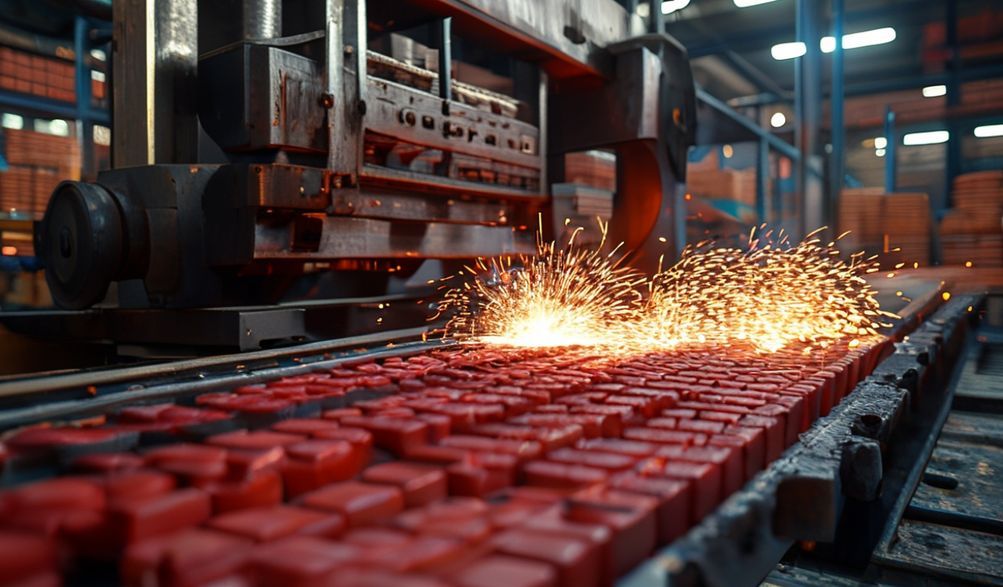
La Guía Definitiva sobre Máquinas para Fabricar Ladrillos: Tipos, Costos y Cómo Elegir
Introducción
La industria de la construcción global está construida, literalmente, sobre una base de ladrillos. Con la urbanización acelerándose y los proyectos de infraestructura expandiéndose en todo el mundo, la demanda de materiales de construcción de alta calidad y consistentes nunca ha sido mayor. Sin embargo, el método tradicional de producción manual de ladrillos—intensivo en mano de obra, lento y propenso a inconsistencias—tiene dificultades para satisfacer esta demanda moderna de manera eficiente. Para los dueños de negocios, constructores y emprendedores, navegar la transición hacia la automatización puede ser abrumador, con una desconcertante variedad de maquinaria, especificaciones técnicas y consideraciones de inversión.
Ingresa la máquina para fabricar ladrillos: el motor transformador de la albañilería moderna. Estos sistemas están revolucionando los pisos de producción, convirtiendo materias primas en ladrillos precisos, duraderos y con una velocidad y uniformidad notables. Este cambio no se trata solo de mantener el ritmo; se trata de desbloquear beneficios significativos, como aumentos dramáticos en la producción, una calidad de ladrillo superior y consistente, ahorros de costos sustanciales a largo plazo y un camino hacia prácticas de construcción más sostenibles.
Esta guía integral está diseñada para ser tu recurso definitivo. Compilada a partir de estándares de la industria, datos de fabricantes y las mejores prácticas operativas, desmitificaremos el mundo deMáquinas para fabricar ladrillosAprenderás sobre los diferentes tipos, cómo funcionan, las características clave a evaluar, un análisis de costos realista y un marco paso a paso para elegir la máquina perfecta para tus objetivos específicos. Construyamos tu conocimiento desde los fundamentos.
¿Qué es una Máquina para Fabricar Ladrillos? Principios Fundamentales y Beneficios
Definición de la Maquinaria Moderna para la Producción de Ladrillos
Una máquina para fabricar ladrillos es un sistema automatizado o semiautomatizado diseñado para mezclar materias primas, darles forma de ladrillos y, a menudo, asistir en el proceso de curado. Reemplaza las tareas manuales de mezclado, moldeado y secado con precisión y potencia mecánicas, transformando un oficio artesanal en un proceso industrial escalable. El objetivo principal es producir grandes volúmenes de ladrillos con dimensiones, densidad y resistencia idénticas, lote tras lote.
¿Cómo Funciona una Máquina para Hacer Ladrillos? (El Proceso Básico)
While complexities vary, most machines follow a fundamental production cycle:
- Alimentación de Materias Primas: Pre-processed raw materials (like clay, fly ash, cement, or sand) are loaded into the machine’s hopper.
- Mixing & Homogenizing: The materials are thoroughly blended, often with a precise amount of water, to create a uniform, workable mixture.
- Compactación y Moldeo: This is the heart of the process. The mixture is fed into a mold cavity and subjected to extreme pressure (hydraulic or mechanical) and often vibration. This compacts the material, removes air pockets, and forms the brick’s shape.
- Eyección: The newly formed, “green” brick is gently pushed out of the mold onto a pallet, conveyor belt, or curing rack.
- Curado: While some advanced plants have integrated curing chambers, this step is often separate. The bricks are stored under controlled conditions (temperature and humidity) to gain their final strength through chemical reaction or drying.
Key Advantages Over Traditional Manual Methods
The move from manual to mechanized production offers compelling, tangible benefits:
- Alta Capacidad de Producción:Las máquinas pueden producir cientos a miles de ladrillos por hora, una tasa imposible de lograr manualmente.
- Consistent Brick Quality and Strength: Automated pressure and mixing ensure every brick has uniform density, dimensions, and structural integrity, leading to safer, more reliable construction.
- Reducción Significativa de los Costos Laborales: One machine operated by a small team can replace a large manual workforce, drastically cutting long-term payroll expenses and reducing dependency on skilled labor.
- Versatilidad de Materiales: Modern machines can be configured to use a wide range of raw materials, including traditional clay, eco-friendly fly ash (a waste product), and concrete mixes, allowing for product diversification and adaptation to local material availability.
Types of Bricks Manufacturing Machines: A Detailed Breakdown
Choosing the right machine starts with understanding the categories. They are typically classified in three ways.
Classification by Operation Mode
- Máquinas Manuales para Fabricar Ladrillos: These are the simplest and most affordable entry point. They require an operator to manually feed material, lever the compression mechanism, and remove the finished brick. Output is low, making them suitable for very small-scale or community-based projects.
- Máquinas Semiautomáticas: This category offers a balance. Key processes like mixing and compaction are automated, but tasks like feeding raw materials or removing bricks may still be manual. They offer a significant boost in output over manual machines at a moderate cost, ideal for small to medium-sized businesses.
- Plantas Completamente Automáticas para la Fabricación de Ladrillos: These are high-volume production lines. From material conveying and mixing to molding, stacking, and sometimes even curing, the entire process is controlled by programmable logic controllers (PLCs). They require minimal labor, deliver the highest output and consistency, and represent a major capital investment for large-scale commercial production.
Classification by Brick Type Produced
The raw material dictates the machine design.
- Máquinas para Fabricar Ladrillos de Arcilla: Designed for traditional fired bricks. They process natural clay, form bricks, which are then dried and fired in a kiln. These are common where clay is abundant.
- Máquinas para Fabricar Ladrillos de Ceniza Volante: A key player in ecológico construction, these machines use fly ash (a byproduct from coal power plants) mixed with lime, gypsum, and water. The bricks are cured, not fired, saving energy and repurposing industrial waste.
- Concrete Block/Brick Machines: Extremely versatile, these produce a wide array of hollow blocks, solid blocks, and pavers. They use a mix of cement, aggregates, and water, applying high vibration and pressure.
- Máquinas para Ladrillos de Encaje: These produce specially designed bricks that lock together without mortar. Popular for mortar-less construction, they offer speed and are noted for good seismic resistance. They can be made from soil-cement or concrete.
Classification by Driving System
This refers to the core mechanism that provides the forming pressure.
- Sistemas Hidráulicos: Use hydraulic cylinders to apply immense, controllable pressure. Known for producing very dense, high-strength bricks (like concrete blocks) with a smooth finish. They are powerful and relatively quiet.
- Sistemas Mecánicos: Use a crank and lever mechanism, often driven by an electric motor. They are typically faster in cycle time than hydraulic presses but may apply slightly less pressure. Common for certain clay and fly ash bricks.
- Sistemas de Vibración/Presión: Primarily used for concrete brick machines. A combination of high-frequency vibration to consolidate the mix and applied pressure to form the block. This is crucial for achieving the required strength in concrete products.
Critical Features to Evaluate When Buying a Machine
Looking beyond the type, these features will determine your daily operational success.
Capacity & Output: Bricks Per Hour/Day
This is the most critical specification. Don’t just look at peak capacity; consider sustainable output. Match this number to:
* Your current order book.
* Realistic market demand growth.
* Your operational hours (single vs. double shift).
Brick Size & Mold Versatility
Your ability to diversify your product line depends on molds.
* Does the manufacturer offer a wide range of standard mold sizes?
* Can custom molds be fabricated?
* How quickly and easily can molds be changed over? A quick-change system minimizes downtime.
Power Requirements & Energy Efficiency
- Determine if your site has reliable access to the required electrical supply (e.g., 3-phase power) or if a diesel engine option is necessary.
- Consider long-term power consumption; an energy-efficient motor may have a higher upfront cost but lower operating expenses.
Build Quality & Durability: What to Look For
This is where you assess the machine’s backbone. Prioritize:
* Marco: A heavy-duty, welded steel frame resists the constant stress of operation.
* Componentes Críticos: The reputation of the hydraulic system, electrical controls (e.g., Siemens, Mitsubishi), and vibration motors. Branded components often ensure reliability and easier servicing.
* Finish & Protection: Quality paint and rust protection are indicators of care in manufacturing.
Automation Level & Ease of Use
- Panel de Control: A user-friendly PLC with a touchscreen interface allows for precise parameter setting (pressure, cycle time) and fault diagnostics.
- Safety Features: Emergency stop buttons, safety guards, and automatic shutdowns in case of a fault are non-negotiable.
- Accesibilidad de Mantenimiento: Are lubrication points, filters, and wear parts easy to access? Good design reduces maintenance time and cost.
Understanding the Investment: Cost Analysis of Brick Machines
Price Range Breakdown (Manual to Fully Automatic)
Prices vary wildly based on type, capacity, and automation.
* Máquinas Manuales:$1,000 – $5,000
* Máquinas Semiautomáticas: $10,000 – $50,000
* Plantas Completamente Automáticas: $50,000 – $500,000+
Factors causing variance: brand, production capacity, level of automation, quality of components, and country of manufacture.
Beyond the Sticker Price: Operational & Hidden Costs
The machine cost is just the beginning. A realistic budget must include:
* Land Requirement & Site Development: Cost for a concrete foundation, shed, and material storage yard.
* Raw Material Cost & Sourcing: Establishing a reliable, cost-effective supply chain for clay, fly ash, cement, or aggregates.
* Labor for Operation & Management: Wages for machine operators, maintenance staff, and supervisors.
* Maintenance Cost: Regular spare parts (like mold liners, seals), lubricants, and potential major overhauls.
* Servicios públicos Ongoing power consumption and water usage.
* Logística: Cost of transporting finished bricks to market.
ROI Calculation: When Will It Pay for Itself?
A simplified framework:
1. Total Investment: Machine cost + setup costs (land prep, installation).
2. Annual Operating Cost: Raw materials + labor + utilities + maintenance.
3. Annual Revenue: (Number of bricks produced per year) x (Sale price per brick).
4. Annual Profit: Annual Revenue – Annual Operating Cost.
5. Simple Payback Period: Total Investment / Annual Profit.
Ejemplo: If your total investment is $100,000 and your annual profit is $25,000, the machine would pay for itself in approximately 4 years. Always factor in local market prices and demand stability.
How to Choose the Right Machine for Your Business: A Step-by-Step Guide
Step 1: Assess Your Project Needs & Scale
Are you supplying a local housing project, starting a commercial plant, or producing bricks for your own construction company? Define your daily/weekly brick requirement in concrete numbers.
Step 2: Define Your Primary Raw Material
Your locally available and most economical material is key. The choice between clay, fly ash, or concrete will immediately narrow down your machine type options.
Step 3: Set a Realistic Budget (Machine + Setup + Operating)
Calculate your total available capital, not just for the purchase, but for the first 6-12 months of operation, including all the hidden costs outlined above.
Step 4: Research and Shortlist Reputable Manufacturers
This is crucial for E-E-A-T (Experience, Expertise, Authoritativeness, Trustworthiness).
* Look for companies with a long industry history.
* Verify certifications and ask for detailed client references, preferably in a similar region or market.
* Scrutinize their after-sales service promise: Is there a warranty? Do they provide installation guidance and training? Is technical support readily available?
Step 5: Request a Live Demo or Visit a Running Plant
Never buy based on brochures alone. Seeing the machine in action allows you to:
* Gauge build quality and noise levels.
* Assess the final brick quality.
* Observe the ease of operation.
* Speak directly to current owners about their experience and the machine’s performance.
Installation, Maintenance & Safety Best Practices
Proper Site Preparation and Machine Installation
Follow the manufacturer’s foundation plan precisely. A level, strong concrete base is essential to prevent vibration and misalignment. Ensure all utilities (power, water) are routed to the correct points before the machine arrives.
Essential Daily, Weekly, and Monthly Maintenance Checklist
Proactive maintenance is the cheapest insurance.
* Diariamente Clean the machine thoroughly, check hydraulic oil levels, inspect for loose bolts, and lubricate all moving points as per the manual.
* Semanal Check pressure settings, inspect mold liners and wear plates for damage, clean filters.
* Monthly: Perform a comprehensive check of the hydraulic system, electrical connections, and vibration motors. Tighten all structural bolts.
Operator Training and Critical Safety Protocols
- Ensure all operators are fully trained on startup, shutdown, and emergency procedures.
- Mandate the use of personal protective equipment (PPE): safety glasses, gloves, and steel-toe boots.
- Establish lock-out/tag-out procedures for any maintenance work.
- Keep the work area clean and free of trip hazards.
Frequently Asked Questions (FAQ)
Q1: What is the average production capacity of a standard bricks manufacturing machine?
Capacity varies immensely. A small semi-automatic machine may produce 800-1500 bricks per 8-hour shift, while a large fully automatic plant can produce 20,000+ bricks in the same time.
Q2: Can one machine produce different types and sizes of bricks?
Yes, if it is designed for mold versatility. By changing the mold box and potentially adjusting the mix formula and machine pressure, a single machine can produce different sizes and styles (e.g., solid vs. hollow) of the same brick type (e.g., concrete).
Q3: What is the typical lifespan of a brick making machine?
With proper maintenance and operation, a well-built machine from a reputable manufacturer can last 10 to 20 years or more. Critical components like hydraulic pumps or motors may need refurbishment or replacement during this time.
Q4: How much space (land) is required to set up a small brick plant?
For a small to medium semi-automatic operation, you should plan for at least 5,000 to 10,000 square feet. This accommodates the machine shed, raw material storage, curing area, and space for finished product inventory.
Q5: Are there eco-friendly or sustainable brick machine options?
Absolutely. Máquinas para fabricar ladrillos de cenizas volantes are a prime example of ecológico technology, as they utilize industrial waste. Additionally, machines that produce interlocking soil-cement bricks minimize the use of energy-intensive cement and eliminate the need for mortar.
Q6: What after-sales support should I expect from a reliable manufacturer?
Expect a clear warranty (often 1 year on key parts), detailed installation manuals and drawings, comprehensive operator training (on-site or at their facility), and readily available technical support via phone or video call. Access to a spare parts catalog and a commitment to supply parts is essential.
Conclusión
Navigating the world of bricks manufacturing machines is a significant but manageable journey. We’ve moved from understanding the core principles and benefits, through the detailed landscape of machine types and critical features, to a realistic analysis of costs and a step-by-step selection guide. The key takeaway is that the “best” machine does not exist in a vacuum; it is the one that aligns perfectly with your specific business goals, local raw material availability, production scale, and financial parameters.
Investing in a brick making machine is an investment in the future of your business. Its success hinges on two final, critical pillars: partnering with an experienced, reputable manufacturer who stands behind their product with robust support, and committing to the proper training and maintenance that ensures your machine operates safely and profitably for years to come. By conducting thorough due diligence, requesting live demonstrations, and planning for the full scope of the venture, you are laying the strongest possible foundation for a sustainable and prosperous brick-making operation.
Ready to take the next step? Consult with industry experts, request detailed quotations from your shortlisted manufacturers, and visit operational plants to see your potential investment in action.
<