
Precio de la Máquina Block Gal en Sri Lanka 2026: Una Guía Completa para Compradores
Introducción
Todo constructor, contratista y empresario en Sri Lanka conoce la lucha. Tienes un proyecto en puerta o un plan de negocio listo, pero conseguir maquinaria confiable y rentable se siente como navegar por un laberinto. El mercado de maquinaria de construcción en Sri Lanka es un panorama complejo de precios fluctuantes, afirmaciones de calidad variables y el desafío siempre presente de encontrar un proveedor confiable. La búsqueda de una Máquina de Bloques Gal—el corazón de cualquier producción de bloques huecos—a menudo está llena de más preguntas que respuestas. ¿Cuál es un precio justo? ¿Qué tipo es el adecuado para mis necesidades? ¿Cómo evito errores costosos?
Esta guía elimina la confusión. Elaborada con un profundo conocimiento de la industria local, ofrecemos un desglose detallado y transparente de los precios de las máquinas Block Gal (Máquinas para hacer Bloques Huecos) en Sri Lanka para 2026. Te ayudaremos a ir más allá del precio de etiqueta para que comprendas el verdadero valor de tu inversión. Al final de este artículo, tendrás una comprensión clara de los rangos de precios según el tipo de máquina, capacidad y marca, junto con consejos cruciales y prácticos para realizar una compra de la que no te arrepentirás. Considera esto tu lista de verificación definitiva para invertir con inteligencia en el futuro de la construcción de Sri Lanka.
Comprendiendo las Máquinas de Galería de Bloques: Tipos y Aplicaciones
Antes de adentrarse en los precios, es esencial comprender lo que está comprando. La máquina adecuada para un desarrollador de viviendas a gran escala es muy diferente de lo que necesita un albañil local para unos cuantos proyectos en casas.
¿Qué es una Máquina de Gal en Bloque?
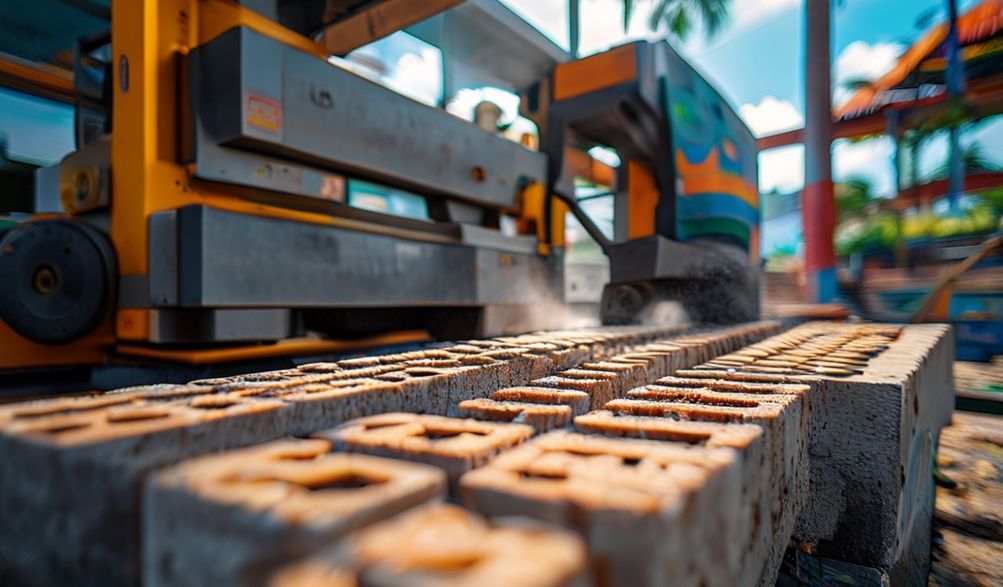
Una Máquina de Bloques Gal, conocida internacionalmente como Máquina para Hacer Bloques Huecos, es una pieza de equipo especializada diseñada para fabricar bloques de concreto huecos.“Gál” in Sinhala). These blocks are the fundamental building units for walls and partitions in modern Sri Lankan construction. The machine automates and standardizes the process of mixing, molding, and compacting concrete (a blend of cement, sand, and aggregate) into precise, strong, and uniform blocks.
El principio de funcionamiento central implica:
* Vibración: High-frequency vibrations remove air pockets and compact the concrete mix thoroughly into the mold.
* Compresión: A hydraulic or mechanical press applies significant pressure to form a dense, durable block.
* Moldeo: Steel molds define the block’s size and shape (e.g., 4″, 5″, 6″ hollow blocks, paving blocks, or solid blocks).
Common Types Available in Sri Lanka
The Sri Lankan market offers a spectrum of machines, broadly categorized by their level of automation and output.
- Manual / Hand-Operated Block Machines: These are the most basic, low-cost entry points. They require significant physical labor to operate the lever for compression and vibration. Output is low (typically 100-400 blocks per 8-hour shift), making them suitable only for very small-scale, occasional use, such as a personal home build.
- Máquinas Semiautomáticas para Fabricar Bloques:Esto es elmost popular and common category for small to medium-sized businesses (SMEs) in Sri Lanka. They feature an electric motor for vibration and hydraulic compression, requiring an operator to feed the mix and remove the finished block. They offer an excellent balance between affordability, output (300 to 1,500+ blocks per hour), and reliability.
- Plantas de Fabricación de Bloques Completamente Automáticas: These are industrial-grade systems designed for high-volume, continuous production. They are computer-controlled, with automatic feeding, mixing, molding, curing, and stacking. While representing a major capital investment, they minimize labor and maximize consistency for large contractors or dedicated block manufacturing plants.
- Máquinas de Bloques Móviles: A niche category, these machines are mounted on trailers for on-site production. This eliminates block transportation costs for large, remote projects, but they are less common in the general Sri Lankan market.
Key Factors Determining Block Gal Machine Price in Sri Lanka
The price tag on a Block Gal Machine isn’t arbitrary. It’s a direct reflection of several key engineering and commercial factors. Understanding these will help you decode any quotation you receive.
1. Level of Automation (Manual vs. Automatic)
This is the single biggest price driver. The leap from manual to semi-automatic involves adding motors, hydraulics, and a control system. The jump to fully automatic integrates conveyors, programmable logic controllers (PLCs), and sophisticated material handling.
* Máquinas Manuales:Costo inicial más bajo.
* Semiautomático: Moderate investment, offering the best value for productivity gains.
* Completamente Automático: Highest capital expenditure, justified only by very high output requirements.
2. Capacidad de Producción (Bloques Por Hora)
Within each automation category, price scales with capacity. A semi-automatic machine rated for 800 blocks per hour will cost less than an identical model from the same brand rated for 1,500 blocks per hour. Higher capacity requires a more powerful motor, a larger vibration system, a sturdier frame, and often a bigger hydraulic pump.
3. Brand and Country of Origin
The market has distinct price tiers based on provenance:
* Locally Assembled Machines: Often the most budget-friendly option. Quality can vary dramatically depending on the manufacturer’s expertise and the components used (e.g., quality of the imported hydraulic system or motor).
* Imported Brands (India & China): Dominate the mid-range market. Offer a wide spectrum from economical to high-end semi-automatic models. Well-known brands often provide better consistency and some level of after-sales support through local agents.
* Imported Brands (Europe/Other): Represent the premium segment. Command significantly higher prices due to perceived superior engineering, durability, and advanced technology. Parts and service can be more expensive and slower.
Crucial Insight: A brand’s reputation is only as good as its local service network in Sri Lanka. A slightly cheaper machine with no local technical support can become a very expensive paperweight.
4. Machine Features and Build Quality
Look beyond the brochure’s headline specs:
* Motor Power & Quality: A reputable brand (e.g., Siemens, ABB) 3-phase motor will outlast and perform better than an unbranded one.
* Sistema de Vibración: The number, power, and placement of vibrators affect block density and quality.
* Mold Material & Engineering: High-carbon, hardened steel molds resist wear far longer than mild steel, saving on frequent replacement costs.
* Marco y Construcción: Heavy-duty steel channels and welded construction ensure stability and longevity, especially important given the intense vibrations.
* Panel de Control: Simple relay-based systems are cheaper; PLC-based panels offer better reliability and sometimes diagnostic features.
5. After-Sales Service & Warranty
This factor is often hidden in the price. A supplier who includes comprehensive installation, training, a solid warranty (typically 1 year on major parts), and has readily available technicians will likely have a slightly higher price. This is almost always worth the premium. The lowest-priced machine with no service backup is a high-risk purchase.
Block Gal Machine Price Ranges in Sri Lanka (2026)
Aviso Importante:Los siguientes rangos de precios sonindicative estimates based on current market trends and projections for 2026. Actual prices are subject to change due to fluctuations in import duties, foreign exchange rates (USD/LKR), raw material (steel) costs, and individual supplier pricing strategies. Always obtain direct, itemized quotations from multiple suppliers.
Entry-Level / Manual Machines
- Rango de Precios: LKR 150,000 – LKR 350,000
- Ideal Para: Individuals undertaking a single home construction project, very small-scale masons, or as a secondary, low-output machine.
Semi-Automatic Machines (Most Popular Range)
This is the workhorse category for Sri Lankan SMEs. Prices vary significantly with capacity and brand origin.
* Basic Model (Capacity: ~500-800 blocks/hr): LKR 800,000 – LKR 1.8 million.
* Standard Model (Capacity: ~1000-1500 blocks/hr): LKR 1.8 million – LKR 3.5 million. This range includes many popular Indian and Chinese brands with local agent support.
* High-Capacity/Advanced Semi-Auto (Capacity: 2000+ blocks/hr): LKR 3.5 million – LKR 6 million+. These bridge the gap to full automation.
Plantas Completamente Automáticas para la Fabricación de Bloques
- Rango de Precios: LKR 8 million – LKR 25+ million
- Nota: These systems are highly customized. The price depends on the level of automation (e.g., with or without automatic pallet return, robotic stackers). Suppliers often work with banks to provide financing or leasing options for such large investments.
Beyond the Price Tag: Crucial Considerations for Buyers
Your due diligence shouldn’t end with comparing price quotes. Based on feedback from local operators and industry experience, here are the practical factors that determine long-term success.
Costo Total de Propiedad
The purchase price is just the beginning. Factor in:
* Consumo de Energía: A 10-15 HP machine running 8 hours daily will significantly impact your electricity bill.
* Maintenance & Spares: Regular greasing, hydraulic oil changes, and replacement of wear parts (mold liners, vibrator mounts) are ongoing costs.
* Capacitación de Operadores: A poorly trained operator can damage the machine and produce sub-standard blocks.
Supplier Reputation and Support in Sri Lanka
This is non-negotiable. Vet your supplier by:
* Visiting their physical workshop or yard.
* Asking for contact details of 2-3 previous customers and actually calling them.
* Specifically asking: “If the machine breaks down on a Tuesday, how quickly can a technician be at my site?”
* Checking if they stock commonly needed spare parts.
Compatibilidad de Materias Primas
Not all machines work perfectly with all aggregate types. Sri Lankan crusher dust (quarry dust) can have varying moisture and silt content. A good supplier should demonstrate their machine using your local sand and aggregate to ensure the block quality meets standards.
Space, Power, and Labor Requirements
Plan your setup practically:
* Espacio: You need space for the machine, raw material storage, block curing, and finished product storage. A semi-automatic setup typically requires a 3,000-5,000 sq. ft. covered area.
* Poder: Ensure your site has stable 3-phase power. Given Sri Lanka’s grid fluctuations, a voltage stabilizer is a wise investment to protect the machine’s electronics.
* Trabajo: A semi-automatic machine needs 2-3 trained personnel for efficient operation (feeding, operating, removing blocks).
Where to Buy & How to Get the Best Deal
Major Machinery Suppliers in Sri Lanka
Suppliers generally fall into three types:
1. Authorized Dealers/Distributors: For international brands (e.g., from India, China).
2. Local Manufacturers/Assemblers: Who build machines using imported and local components.
3. Used Equipment Sellers: Found in specific industrial areas.
Key industrial hubs for machinery in Sri Lanka include Peliyagoda, Kadawatha, Negombo, and the outskirts of Colombo and Galle. Searching in these areas allows for physical inspections.
Tips for Negotiating and Finalizing Your Purchase
- Insist on a Live Demo: Never buy based on a video or brochure alone. See the machine run.
- Scrutinize the Warranty Document: Understand what is covered, for how long, and what the response time commitments are.
- Compare “All-In” Quotes: Ensure quotes include delivery, basic installation, and operator training. A cheaper quote that excludes these adds hidden costs.
- Ask About Mold Availability: Check the cost and lead time for additional block size molds.
The Viability of Used Block Gal Machines
A used machine can be a cost-effective entry point, but caution is paramount.
Pros:
* Lower initial investment.
* Possibly higher capacity for your budget.
Contras:
* No or limited warranty.
* Unknown maintenance history.
* Potential for hidden wear and tear.
Key Inspection Points:
* Check for cracks or welds on the main frame.
* Inspect the mold for excessive wear and deformation.
* Run the machine and listen for unusual noises from the motor or hydraulics.
* Verify the condition of the hydraulic cylinders for leaks.
* Red Flag: A seller unwilling to run the machine under load for your inspection.
FAQ Section
Q1: What is the cheapest Block Gal machine price in Sri Lanka?
A: You can find basic, new manual machines starting around LKR 150,000. However, we caution that for any commercial or frequent use, the low output and high labor requirement make them a false economy. A semi-automatic machine is a far more viable starting point for a business.
Q2: Which brand of block making machine is most reliable in Sri Lanka?
A: Rather than one “best” brand, reliability in the Sri Lankan context comes from a combination of robust machine design and unmatched local service support. Reputable origins include well-established Indian brands and certain Chinese manufacturers with a long-term presence in Sri Lanka. Prioritize suppliers who have been in the market for years, have a visible service network, and can provide genuine client references.
Q3: Can I get a loan or financing scheme for a block machine in Sri Lanka?
A: Yes, financing is commonly available. Many machinery suppliers have tie-ups with commercial banks to offer hire-purchase or leasing schemes. Additionally, government SME development programs through institutions like the Sri Lanka Enterprise Development Authority or regional development banks may offer concessional loans. It’s best to consult directly with your bank and the supplier.
Q4: How much profit can I make from a block making business in Sri Lanka?
A: Profitability isn’t guaranteed by the machine alone; it’s a business that depends on production efficiency, material cost control, and sales volume. As a simplified model: If your total cost to produce a standard 6″ hollow block is ~LKR 110 and you sell it for ~LKR 130, your gross margin is LKR 20 per block. A semi-automatic machine producing 1,000 blocks per day could therefore generate a gross profit of ~LKR 20,000 per day, before deducting fixed costs like rent, labor, and electricity. Market demand and your business acumen are critical.
Q5: What are the main hidden costs after buying the machine?
A: The main ongoing costs include:
* Mold Replacement: Worn molds affect block quality and need periodic refurbishment or replacement.
* Vibrator Maintenance: Vibrator motors and bearings are subject to high stress.
* Sistema Hidráulico: Oil changes, hose replacements, and seal kits.
* Consumo de Energía: A significant and often underestimated monthly expense.
* Pallets/Curing Space: Wooden or steel pallets for block setting and space for proper 14-28 day curing.
Conclusión
Choosing a Block Gal Machine in Sri Lanka is a significant decision where price is just one piece of the puzzle. As we’ve explored, the final cost is a direct function of the machine’s automation, capacity, build quality, and the after-sales ecosystem that supports it. The goal is not to find the absolute cheapest option, but to identify the machine that offers the best valor—optimal productivity, reliability, and local support for your specific budget and business scale.
For the vast majority of small and medium entrepreneurs in Sri Lanka, a robust semi-automatic machine from a supplier with a proven track record and strong service history represents the smartest investment. It provides the perfect balance between automation and affordability.
Use this guide as your checklist. Take your time. Visit multiple dealers in Peliyagoda or Negombo. Demand live demonstrations. Speak to other block manufacturers. By making an informed decision based on total project needs—not just the lowest sticker price—you’re not just buying a machine; you’re laying a solid foundation for your own success in Sri Lanka’s vital construction industry.
<