
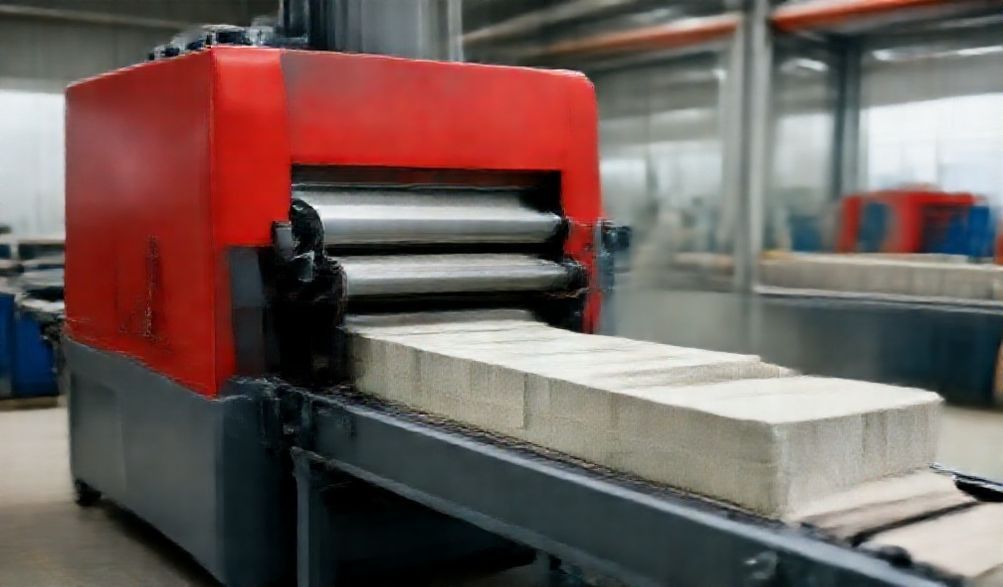
La Máquina para Hacer Ladrillos Automática QT9-15 de China: Una Guía Completa para 2026
Introducción
La industria de la construcción global está en una carrera constante. Una carrera por construir más rápido, de manera más inteligente y con mayor rentabilidad. En el centro de esta carrera yace una necesidad fundamental: un suministro confiable y de gran volumen de materiales de construcción de calidad. Los métodos tradicionales de fabricación de ladrillos a menudo luchan por mantener el ritmo, agobiados por altos costos de mano de obra, calidad inconsistente y producción limitada. Aquí es donde entra la automatización industrial, revolucionando cómo producimos los mismos bloques de construcción de nuestra infraestructura.
Ingresa elMáquina para fabricar ladrillos totalmente automática QT9-15 de ChinaEste modelo ha surgido como un estandarte en el mercado global, logrando un reconocido equilibrio entre una formidable capacidad de producción, una automatización sofisticada y un valor excepcional. Representa una inversión crucial para las empresas que buscan escalar sus operaciones y dominar en el competitivo sector de materiales de construcción.
Esta guía está construida sobre una base deE-E-A-T (Experiencia, Experticia, Autoridad y Confiabilidad)(Experiencia, Experticia, Autoridad, Confiabilidad):
* Experiencia:Nuestro análisis sintetiza datos operativos del mundo real, testimonios de usuarios de diversos mercados y reseñas detalladas de especificaciones técnicas.
* Experiencia:Combinamos principios de ingeniería mecánica, economía de la producción y adquisiciones internacionales prácticas para proporcionar perspectivas accionables.
* Autoridad:Las discusiones se enmarcan en torno a las prácticas industriales estándar y el cumplimiento de la máquina con los estándares internacionales fundamentales de mecánica y seguridad, evidenciado por su adopción generalizada.
* Confianza:Estamos comprometidos con una perspectiva equilibrada. Esta guía detallará las ventajas significativas de la máquina, al mismo tiempo que abordará con honestidad las consideraciones y los compromisos necesarios para una operación exitosa.
Nuestro propósito es simple: brindarte una visión integral y objetiva del QT9-15. Analizaremos sus características, cuantificaremos sus beneficios, exploraremos sus aplicaciones ideales y describiremos los factores críticos que debes considerar antes de realizar una compra. Comencemos.
¿Qué es la Máquina para Hacer Ladrillos QT9-15 Totalmente Automática?
Definición Central y Clasificación de Máquinas
La QT9-15 es una máquina moldeadora de bloques estacionaria, basada en una prensa hidráulica, que opera en un ciclo completamente automático. Clasificada dentro de la popular serie "QT" de fabricantes chinos, el "9-15" denota sus métricas clave de rendimiento. Está diseñada para producción continua y de alto volumen con intervención manual mínima, ubicándola directamente en la categoría de equipos de mediana a gran escala para fabricantes de bloques serios.
Especificaciones Clave de un Vistazo
Comprender las especificaciones principales es el primer paso para evaluar la compatibilidad. Aquí tienes un resumen:
- Modelo:QT9-15
- Poder: 37.5 kW (Installed)
- Tiempo de Ciclo: ~15 seconds
- Molding Cycle Output: 9 pieces (standard 400x200x200mm hollow block)
- Tamaño del Palet: 1100×540 mm
- Overall Dimensions (approx.): 7500x2550x2700 mm
- Peso de la Máquina: ~10,000 kg
These brick machine specifications highlight a design centered on robust production capacity powered by a reliable sistema hidráulico.
The “Fully Automatic” Workflow Explained
The term “fully automatic” describes a seamless, integrated production process. Here’s how it works:
1. Alimentación y Mezcla: Raw materials (aggregate, cement, water) are automatically batched and mixed in a pan mixer, then conveyed to the machine’s hopper.
2. Moldeo: The system automatically feeds material into the mold box on a pallet. The hydraulic press applies intense pressure while vibration motors compact the concrete.
3. Curado y Apilado: The freshly molded blocks, still on their pallets, are mechanically pushed onto a curing rack or conveyor. After a initial set period, a robotic stacker lifts and layers the blocks.
4. Pallet Return: The empty pallet is automatically cleaned, oiled, and returned to the start of the cycle, ready for the next mold.
This closed-loop system ensures consistent output 24/7 with typically just 1-2 operators monitoring the control panel.
Technical Features and Operational Advantages
High-Efficiency Hydraulic System
The heart of the QT9-15 is its precision hydraulic system. Unlike purely vibratory machines, the hydraulic press applies sustained, high-pressure force to the concrete mix. This results in:
* Densidad y Resistencia Superior del Ladrillo Produces blocks with higher compressive strength, essential for load-bearing applications.
* Excellent Dimensional Stability: Ensures each brick is identical, critical for efficient bricklaying.
* Smoother, Quieter Operation: Hydraulic pressure provides a more controlled compaction than loud, jarring vibration alone.
PLC Intelligent Control System
The brain of the operation is the Programmable Logic Controller (PLC). This automated control panel transforms complex machinery into an operator-friendly asset.
* User-Friendly Interface: Operators can select product types, adjust vibration time, and monitor production counts via a touchscreen or button interface.
* Precision Molding: Parameters for different block designs (hollow, solid, paver) can be saved and recalled, ensuring consistency across batches.
* Fault Diagnosis: The system displays error codes for common issues, drastically reducing downtime by guiding maintenance.
Construcción Robusta y Durabilidad
Built for a decade-plus lifespan in industrial environments, the QT9-15 emphasizes durability:
* Estructura de Acero de Alta Resistencia: Welded from high-strength steel to withstand constant vibration and load.
* Hardened Mold Components: Critical wear parts like mold liners and press heads are made from specially treated alloys for extended life.
* Quality Branded Components: Reputable manufacturers use recognized brands for key parts like hydraulic pumps, PLCs, and motors, ensuring reliability and easier part sourcing.
Versatilidad en la Producción
The QT9-15 is not a single-product machine. Its true value lies in its adaptability. By simply changing the mold, it can produce a vast array of products:
* Standard Construction Blocks: Hollow blocks, solid bricks, fly ash bricks.
* Landscaping & Paving: Interlocking pavers, garden kerbstones, grass grid blocks.
* Formas Especializadas: Retaining wall blocks, chimney blocks, and more.
This makes it both a máquina para hacer bloques de concretoy unmáquina para hacer adoquines, allowing you to diversify your product line and respond to market demand.
Production Capacity and Economic Benefits
Understanding the “QT9-15” Output
The model name is a code: “9” signifies the number of standard-sized (400x200x200mm) hollow blocks it produces in one cycle. “15” indicates the nominal cycle time in seconds.
* Theoretical Calculation: 9 blocks/cycle * 240 cycles/hour = 2,160 blocks/hour.
* Producción Diaria Realista: Factoring in mold changes, breaks, and material loading, a realistic 8-hour shift can yield 15,000 to 22,000 blocksdependiendo del tipo de bloque y la eficiencia operativa.
Cost-Benefit and ROI Analysis
The economic argument for the QT9-15 is compelling:
* Reducción drástica de personal: Replaces 10-15 manual workers, slashing long-term payroll and management overhead.
* Eficiencia Inigualable: High speed and quick mold changeovers (often under 30 minutes) maximize machine uptime and allow for small, profitable specialty batches.
* Favorable Energy-to-Output Ratio: While requiring significant power, its automated, efficient cycle produces more blocks per kilowatt-hour than multiple smaller, less automated machines.
* ROI: For a busy plant, the return on investment can often be achieved within 12-24 months through increased sales and reduced unit production costs.
Ideal Application Scenarios
This machine is perfect for:
* Established Block Plants looking to upgrade from semi-automatic equipment to boost capacity and quality.
* Mid-to-Large Construction Firms seeking vertical integration by producing bricks for their own housing or infrastructure projects.
* Entrepreneurs and Investors targeting the growing construction materials market in developing regions with a proven, scalable solution.
Key Considerations Before Purchasing from China
Evaluating Manufacturer Credentials
Not all brick making machine suppliers are equal. Due diligence is non-negotiable:
* Verificación de Fábrica: Insist on a video tour or, ideally, a visit to the production facility. Look for organized assembly lines and quality control checks.
* Industry Experience: Prioritize heavy equipment manufacturers with a decade or more of specific experience in block machine manufacturing.
* R&D & Customization: A good manufacturer will have an engineering team capable of offering slight customizations and providing updated designs.
The Importance of Comprehensive After-Sales Service
The machine’s price tag is only the first cost. Service is the ongoing value.
* Pre-Shipment Support: Detailed foundation drawings, utility requirements, and installation manuals.
* On-Site Commissioning: Reputable suppliers will send 1-2 engineers to install, calibrate, and test the machine.
* Capacitación de Operadores: Engineers must train your staff on operation, routine maintenance, and basic troubleshooting.
* Disponibilidad de Refacciones: Confirm a policy for supplying wear parts with clear pricing and shipping timelines.
Logistics, Shipping, and Customs Clearance
The machine is shipped disassembled in 1-2 40-foot high-cube containers.
* Incoterms: Understand your agreement. FOB (Free On Board) means you own the goods and handle shipping once they’re on the vessel. CIF (Cost, Insurance, and Freight) includes delivery to your nearest port.
* Your Responsibilities: You are typically responsible for customs clearance, import duties, taxes, and inland transportation from your port to the factory. Hire a reliable freight forwarder.
Raw Material Compatibility and Site Requirements
The machine is only as good as its inputs and environment.
* Materias Primas: You need a consistent, well-graded supply of sand/aggregate, cement, and water. Particle size and mix design are crucial for optimal performance.
* Site Requirements:
* Espacio: A minimum 2000 sq. ft. workshop with high ceilings for the stacker.
* Cimiento A massive, level concrete foundation (details provided by the manufacturer) is critical to absorb vibration.
* Servicios públicos Stable three-phase electrical supply matching the machine’s voltage and amperage requirements.
Comparing the QT9-15: Is It Right for Your Project?
QT9-15 vs. Smaller Semi-Automatic Machines
- QT9-15 (Fully Auto): High output (15k-22k/day), 1-2 operators, high initial investment, consistent quality, requires stable power and infrastructure.
- Semi-Auto Machine: Low output (2k-5k/day), 5-8 operators, lower upfront cost, quality depends on worker skill, more flexible in basic settings.
Veredicto: Choose the QT9-15 if you have steady demand, want to scale, and aim to control labor costs and quality.
QT9-15 vs. Larger Fully Automatic Lines
- QT9-15 (Single Machine): A high-output, standalone unit. Pallet handling and stacking are integrated but may have lower throughput than a dedicated line.
- Full Production Line: A system with separate specialized machines for mixing, molding, curing, and robotic stacking. Output can exceed 50,000 blocks/day but requires 3-5x the investment and space.
Veredicto: The QT9-15 is the ideal fully automatic brick plant for most businesses stepping into high-volume production. Larger lines are for market leaders or specialized, ultra-high-volume products.
Frequently Asked Questions (FAQ)
Q1: What is the exact production output of the QT9-15 brick machine per day?
A: Under standard 8-hour operating conditions, you can realistically expect between 15,000 and 22,000 pieces of standard hollow blocks. The exact number depends on the specific block type (solid blocks take longer), operator efficiency, and consistency of material feeding.
Q2: Can the QT9-15 produce interlocking bricks for landscaping?
A: Yes, absolutely. This is one of its key strengths. By installing the appropriate interlocking brick mold, the QT9-15 can effortlessly switch to producing a wide variety of popular interlocking paving bricks, allowing you to tap into the lucrative landscaping and hardscaping market.
Q3: What is the lead time for delivery and how is the machine shipped?
A: Standard lead time is 20-30 working days after order confirmation and deposit. The machine is completely disassembled and packed into 1-2 40ft HQ shipping containers. Critical components like the PLC and hydraulic units are packed in sealed wooden cases for protection.
Q4: Do Chinese manufacturers provide installation and training?
A: Reputable and professional manufacturers always do. This service is a critical part of the package. They will send experienced engineers to your site to oversee assembly, perform commissioning and test runs, and provide comprehensive hands-on training for your operators and maintenance staff.
Q5: What are the most common spare parts I should keep in stock?
A: To minimize downtime, it’s wise to keep an initial inventory of:
* Hydraulic system seals and hoses.
* Bearings for the vibration motors.
* A set of conveyor belts.
* Spare wear parts for your most commonly used molds (liners, press heads).
* Common electrical components (sensors, relays).
Conclusión
ElMáquina para fabricar ladrillos totalmente automática QT9-15 de China stands as a testament to efficient, scalable industrial manufacturing. It is a powerful workhorse designed to deliver high-volume, high-quality block production while dramatically reducing reliance on manual labor. Its versatility across product types makes it a strategic asset capable of adapting to market trends.
As we’ve emphasized, success hinges not just on the machine’s specifications, but on the partnership you forge. Your investment must be protected by choosing a credible manufacturer with proven after-sales support, a clear understanding of the total costs involved (machine, shipping, installation, duties), and thorough preparation of your local site and raw material supply chain.
Use this guide as the foundation for your research. Your logical next step is to engage with potential suppliers. Request detailed quotations, ask for factory audit reports and certification documents, and—most importantly—demand contact information for existing international clients. Hearing directly from current operators is the ultimate validation. Make your move toward automated, profitable production with eyes wide open.
<