Introducción
Para los distribuidores, especialistas en adquisiciones y partes interesadas de la industria, comprender la capacidad de producción de una máquina de ladrillos no es simplemente cuestión de citar un número de un folleto. Es la métrica central sobre la cual se construyen decisiones de inversión sólidas, estrategias de mercado y planificación operativa. Esta cifra representa la producción potencial del motor, pero su materialización en un contexto comercial está influenciada por una compleja interacción de diseño mecánico, variables del proceso y realidades operativas.
I. Definición y Medición de la Capacidad de Producción: Más Allá del Folleto
La capacidad declarada de una máquina de ladrillos es un máximo teórico bajo condiciones óptimas. Para un análisis empresarial práctico, debe entenderse a través de varios enfoques.
A. Métricas Estandarizadas y Unidades de Medición
La capacidad se cuantifica mediante métricas específicas y estandarizadas que permiten la comparación entre diferentes tipos de máquinas.
- Unidades por Ciclo:Esta es la métrica fundamental, que indica cuántos ladrillos, bloques o adoquines se producen en un solo ciclo de prensado. Una máquina puede tener una configuración de molde de "4 bloques por ciclo" o "12 adoquines por ciclo".
- Ciclos por Hora:Esto mide la velocidad operativa, representando cuántos ciclos completos de moldeo y expulsión puede realizar la máquina en una hora bajo operación continua.
- Producción Teórica Máxima:Este es el producto deUnidades por CicloyCiclos por HoraPor ejemplo: 8 bloques/ciclo x 150 ciclos/hora = 1,200 bloques/hora. Esta es la cifra que aparece con mayor frecuencia en los materiales promocionales.
- Turno o Capacidad Diaria: A more practical figure, this extrapolates hourly output over a standard work period (e.g., 8-hour shift), often incorporating an efficiency factor. It provides a clearer picture of daily production potential for business planning.
B. The Critical Distinction: Theoretical vs. Operational Capacity
The gap between these two concepts is where business success or failure is often determined.
- Theoretical (or Technical) Capacity: The maximum possible output under flawless, uninterrupted conditions with optimal material and perfect operator timing. It serves as a benchmark for the machine’s mechanical and hydraulic capability.
- Operational (or Realistic) Capacity: The actual output achievable in a real-world production environment. It is always lower than the theoretical maximum due to inevitable disruptions. A widely used rule of thumb applies an efficiency factor of 75-85% to theoretical capacity to estimate realistic output. This accounts for:
- Mold changes for different products.
- Routine cleaning and minor adjustments.
- Scheduled operator breaks.
- Raw material refilling intervals.
II. Primary Determinants of Machine Capacity
The inherent output potential of a machine is engineered into its design. Several core technical factors are non-negotiable drivers of capacity.
A. Machine Type and Core Technology
The fundamental operating principle sets the baseline output range.
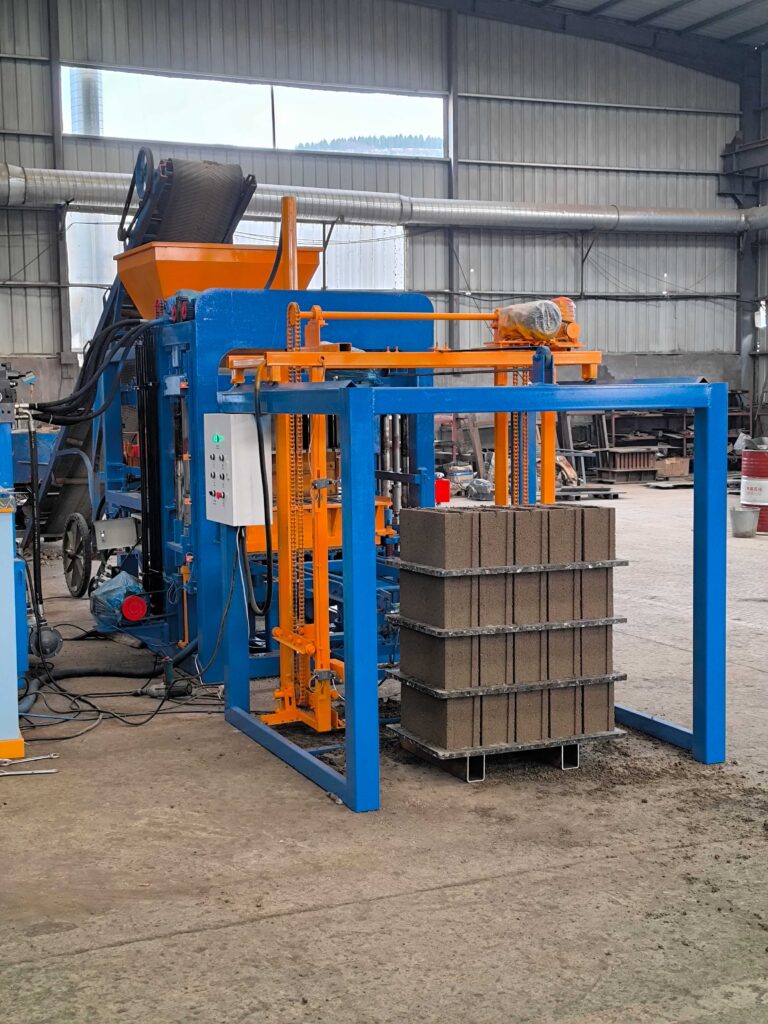
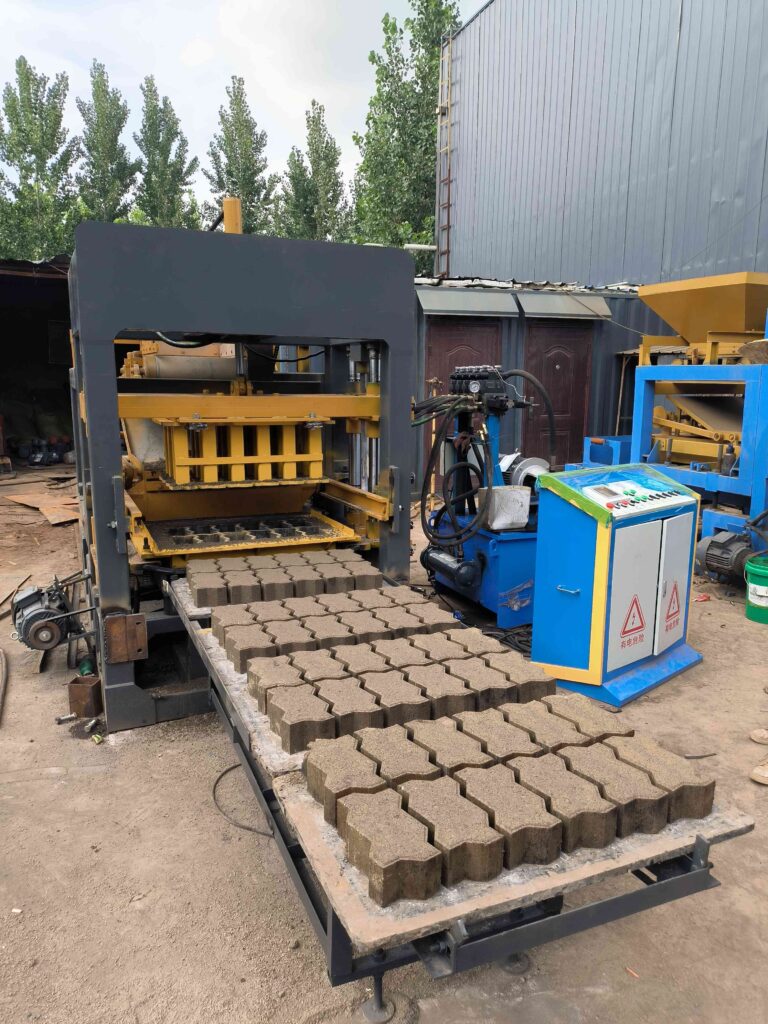
- Hydraulic Press Machines (Concrete): Capacity is heavily influenced by tiempo de ciclo (the time for filling, compaction, vibration, and ejection). High-speed models with optimized hydraulic circuits achieve faster cycles. Stationary plants with pallet circulation systems are designed for maximum continuous throughput.
- Extrusion Machines (Clay): Capacity is measured in linear meters of extruded column per hour. The speed of the extruder auger and the wire-cutting mechanism define output. It is a continuous process, offering steady, high-volume production when paired with automated cutting and setting.
- Máquinas Móviles "Ponedoras de Huevos": Their capacity is defined by cycles per hour and the time taken to move the machine between strokes. Their output is typically lower than stationary plants of similar size but offers unparalleled logistical advantages.
B. Level of Automation and Integration
Automation is the single greatest multiplier of consistent, high-volume output.
- Máquinas Manuales y Semiautomáticas: Their capacity is dependiente del operador. The speed and stamina of the personnel feeding material and removing finished products create a bottleneck. Output is inconsistent and scales directly with labor intensity.
- Máquinas Completamente Automáticas: These systems remove the human bottleneck. Integrated with Programmable Logic Controllers (PLCs), automated material feeders, and robotic pallet handling, they maintain a consistent, pre-programmed cycle time for hours. Their capacity is a function of engineering and programming, not human speed, guaranteeing output close to its theoretical maximum.
C. Mold Design and Product Specifications
The product being manufactured directly dictates the machine’s output figures.
- Número de Caries: A mold producing 4 standard blocks per cycle will have half the hourly output of an 8-cavity mold on the same machine.
- Product Size and Complexity: Producing a large, thick interlocking block requires a longer vibration and compaction time than a thin paving stone. Similarly, intricate designs with fine details may require slower ejection to prevent damage, reducing cycles per hour.
- Tipo de Bloque: Solid bricks, with less material to compact, can often be produced on a slightly faster cycle than hollow blocks, which require more precise vibration to fill all webs and voids completely.
III. External and Operational Factors Influencing Realized Output
Even the most capable machine cannot reach its potential in a suboptimal environment. These external factors are crucial for distributors to communicate to clients.
A. Raw Material Properties and Preparation
The quality and consistency of the input mix are paramount.
- Mix Design & Consistency: A well-graded, properly proportioned mix with optimal moisture content will flow smoothly into the mold, compact evenly, and eject cleanly. A poor, inconsistent mix leads to block sticking, incomplete filling, and increased machine jams—all drastically reducing hourly output.
- Pre-Mixing and Feeding: The speed of the entire operation depends on a continuous, ready supply of mixed material. A machine will sit idle if the mixer cannot keep pace. Automated batching and feeding systems are essential for unlocking the full capacity of high-output machines.
B. Operational Efficiency and Human Factors
The human element remains critical, even in automated settings.
- Operator Skill and Training: A skilled operator can optimize cycle timing, perform quick mold changes, and conduct proactive maintenance to minimize downtime. Inadequate training leads to slow operation, frequent stoppages, and improper machine handling.
- Maintenance Regime: A poorly maintained machine will suffer from increased breakdowns, slower hydraulic response, and uneven vibration. A rigorous, preventive maintenance schedule is an investment in sustained capacity.
- Workspace Layout and Logistics: An inefficient yard layout, where cured blocks are not moved promptly or raw materials are far from the feeder, creates hidden delays that accumulate over a shift, choking overall production flow.
C. Ancillary Equipment and Process Integration
A brick machine is the heart of a production system; its performance depends on the health of the supporting organs.
- Mixer Capacity: The mixer’s batch size and cycle time must be synchronized with the brick machine’s consumption rate.
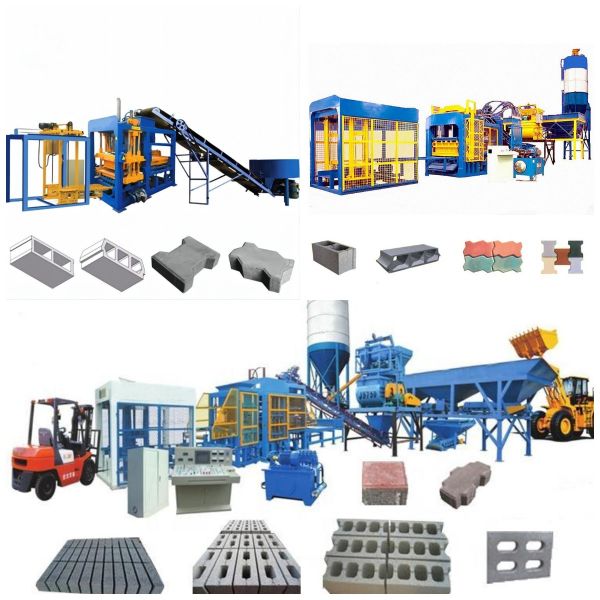
- Curing and Handling Systems: If green bricks cannot be moved quickly from the machine to the curing area, the machine must stop. Automated stackers, conveyor belts, and curing rack systems are not optional for high-capacity operations; they are integral components of the production line.
IV. Strategic Implications for B2B Decision-Makers
Understanding capacity dynamics allows distributors and buyers to make strategic, rather than speculative, choices.
A. Matching Machine Capacity to Business Objectives
Capacity selection is a strategic business decision.
- Market Entry & SMEs: A machine with a realistic output of 2,000-4,000 blocks per 8-hour shift allows for manageable growth, testing market response, and building a customer base without overwhelming capital outlay or operational complexity.
- Growth-Oriented Suppliers: Targeting 6,000-12,000 blocks per shift requires a semi- or fully-automatic system. This capacity level is necessary to supply multiple construction sites, tender for municipal projects, and achieve economies of scale that justify the investment.
- Producción Industrial a Gran Escala: Capacities exceeding 15,000 blocks per shift necessitate fully integrated, automated production lines. This is the domain of suppliers to national infrastructure projects and major developers, where consistent, massive output is the primary business driver.
B. Calculating True Economic Viability: Capacity vs. Cost
The key metric is cost per unit produced. A cheaper, lower-capacity machine may have a higher per-block production cost due to higher labor and energy input per unit. A more expensive, high-capacity automated machine may produce each block at a significantly lower cost, offering a superior return on investment over its lifetime. The analysis must always tie capacity to lifetime operational economics.
C. Communicating Value to End-Clients
Distributors must educate clients to look beyond the peak output number. The conversation should focus on:
- Operational Capacity: “Based on a standard mix and with proper operation, you can reliably expect X thousand blocks per shift from this model.”
- Total System Requirements: “To achieve this output, you will need a Y cubic meter mixer and approximately Z square meters of curing space.”
- Escalabilidad: “This model allows you to start with a 4-cavity mold and later upgrade to an 8-cavity mold, increasing your capacity by 100% as your business grows.”
Conclusión
The production capacity of a brick machine is a dynamic and contextual metric, not a static promise. It is a function of engineering design, process integration, and operational discipline. For the B2B professional, expertise lies in the ability to deconstruct the advertised “peak output” and reconstruct a realistic, achievable production profile that aligns with a specific client’s market, resources, and growth trajectory.
The most successful partnerships in this industry are forged when distributors move beyond selling hardware to selling a viable production solution. This involves a honest assessment of how theoretical capacity translates into operational reality, given the client’s unique constraints and ambitions. By focusing on the interplay between machine capability, raw materials, and human factors, and by guiding clients to select capacity that offers the optimal economic return, you position yourself as an indispensable strategic advisor. In doing so, you ensure that the machine’s capacity translates directly into your client’s business capacity for success, stability, and market leadership.
Frequently Asked Questions (FAQ)
Q1: Why is there such a large difference between the “theoretical” and the “realistic” capacity I can expect?
A: The theoretical capacity assumes zero downtime—no mold changes, no cleaning, no breaks, perfect material flow, and instantaneous operator actions. In reality, even the best-run operation has inevitable interruptions. The realistic capacity (typically 75-85% of theoretical) factors in these real-world efficiencies. It is the number you should use for business planning, cash flow projection, and client commitments.
Q2: How does the choice of product affect the machine’s output speed?
A: Significantly. Consider two extremes on the same machine:
- Adoquines: Thin, solid, and simple to eject. Can often run on a fast cycle (e.g., 180 cycles/hour).
- Large Hollow Blocks: Require longer vibration time to ensure all voids are filled and longer, more careful ejection to prevent cracking the delicate webs. Cycle time may drop (e.g., to 120 cycles/hour).
Always request capacity data from the manufacturer for the specific product you intend to produce.
Q3: Can we increase the capacity of our existing machine in the future?
A: In many cases, yes, through strategic upgrades. Common capacity-enhancing upgrades include:
- Mold Replacement: Switching from a 4-cavity to an 8-cavity mold can double output per cycle.
- Hydraulic System Tuning: Optimizing pressure and flow settings can sometimes reduce cycle time.
- Adding Ancillary Automation: Installing an automatic feeder or pallet stacker eliminates manual bottlenecks, increasing overall operational efficiency.
Consult with the machine manufacturer or a qualified technician about upgrade pathways for your specific model.
Q4: For a new business, is it better to buy a machine at the upper limit of our projected need or start smaller?
A: A prudent strategy is to select a machine that meets your proven, near-term demand with approximately 20-30% spare capacity for growth, and that has a clear upgrade path. Overbuying leads to underutilization, poor ROI, and unnecessary financial strain. Underbuying leads to lost market opportunities and operational frustration. The ideal machine is one you can grow into, not one you are immediately dwarfed by or lost within.
Q5: What single question should we ask a manufacturer to get the most honest assessment of capacity?
A: Instead of asking “What is the capacity?”, ask: “What is the average daily output in blocks [state your specific product] achieved by your typical client operating this model in an 8-hour shift with a standard concrete mix, and what size mixer do they use to support that output?” This question forces an answer based on real-world application and reveals the necessary supporting infrastructure.