
Bricks Makers: Your Ultimate Guide to Manufacturing, Types, and Choosing the Right Supplier
Introducción
From the sun-baked walls of ancient Jericho to the sleek, modern facades of today’s sustainable skyscrapers, the humble brick has been a cornerstone of human civilization. It is a testament to durability, versatility, and timeless aesthetic appeal. Yet, behind every brick in a wall lies a critical decision: choosing the right bricks maker.
This choice impacts everything—from the structural integrity and weather resistance of a building to its final character and color. Whether you are an architect specifying materials, a contractor sourcing for a major project, a procurement manager vetting suppliers, or a DIY enthusiast planning a garden wall, navigating the world of brick manufacturers can be complex.
This guide serves as your definitive resource. We will demystify the entire process, moving from the raw materials on the factory floor to the finished product on your site. Our goal is to arm you with the industry knowledge needed to evaluate bricks makers with confidence, ask the right questions, and ultimately select a partner whose products and practices align perfectly with your project’s demands.
Cubriremos:
* The intricate art and science of modern brick manufacturing.
* The different types of bricks and the makers who specialize in them.
* A practical checklist for evaluating a manufacturer’s quality and reliability.
* The latest trends shaping the industry.
Construyamos una base de conocimiento.
The Art and Science of Modern Brick Manufacturing
Understanding how bricks are made is the first step in appreciating quality. Modern manufacturing is a blend of traditional principles and advanced technology, where controlled processes determine strength, color, and longevity.
From Raw Clay to Molded Form: The Initial Stages
It all begins with the earth. The quality of the final brick is intrinsically linked to the quality and composition of the raw materials.
- Sourcing Raw Materials: Primary materials include clay, shale, and sometimes sand or fly ash. Reputable bricks makers carefully select deposits for their chemical and mineral content, which influences the brick’s color and firing properties.
- Preparación: The raw material is crushed, ground, and screened to achieve a fine, uniform consistency. This step removes rocks and debris.
- Mixing and Tempering: Water is added to the powdered clay in a process called “tempering.” This is done in a pugmill—a heavy-duty mixer that kneads the material into a homogeneous, plastic consistency, ready for molding. The precise moisture content is critical for the next stage.
Shaping the Future: Molding and Forming Techniques
This is where the brick gets its shape. The chosen method significantly affects the brick’s final appearance and texture.
- Extruded (Wire-Cut) Bricks: This is the most common method for modern, high-volume production. The tempered clay is forced through a rectangular die to form a continuous column. Wires then slice the column into individual brick units. This creates precise, consistent bricks with a potential for perforations (holes) that reduce weight and improve kiln firing.
- Soft-Mud Process: Used for creating textured or “sand-faced” bricks. Moist clay is pressed into individual molds. To prevent sticking, the molds are lubricated with water (water-struck) or sand (sand-struck), giving the brick a rustic, traditional texture.
- Dry-Press Process: Here, a much stiffer clay mix with low moisture content is pressed into steel molds under extremely high pressure. This results in very dense, sharp-edged bricks, often used for facing bricks where precise dimensions are key.
The Crucial Phase: Drying and Firing in Kilns
Shaping is only half the battle. Drying and firing transform soft clay into a hard, durable ceramic material.
- Controlled Drying: Freshly molded “green” bricks contain significant moisture. They must be dried slowly and evenly in dryer chambers to prevent warping or cracking from rapid shrinkage. This can take 24 to 48 hours.
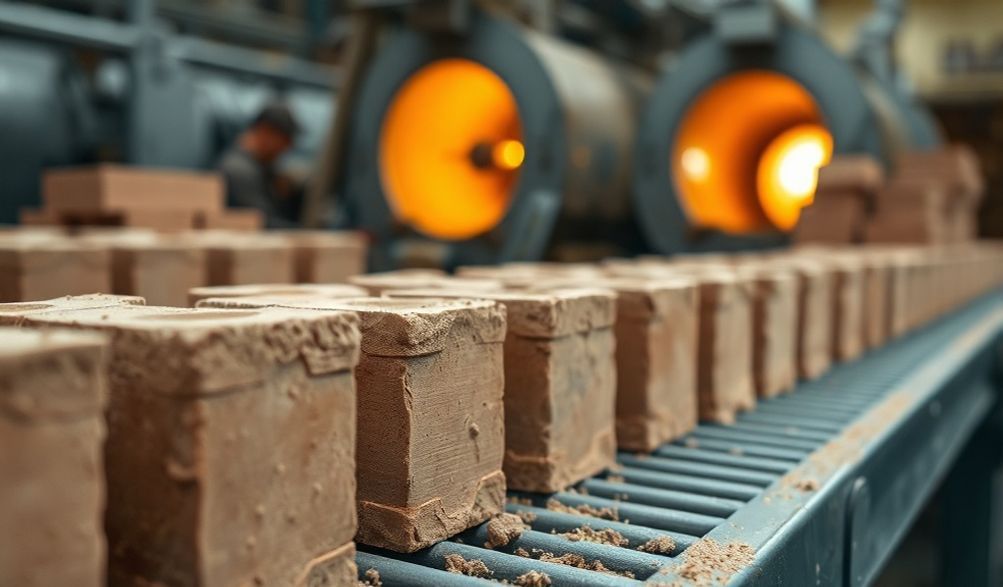
- The Kiln Firing: This is the alchemy of brick making. The dried bricks are fired in kilns at temperatures between 1,800°F and 2,400°F (approx. 1,000°C to 1,300°C).
- Kiln Types: Modern bricks makers primarily use Tunnel Kilns, where bricks move slowly on carts through different temperature zones—a continuous, efficient process. Periodic Kilns (or intermittent kilns) are loaded, fired, cooled, and unloaded in batches, often used for specialty products.
- Vitrification: During firing, minerals in the clay melt and fuse in a process called vitrification. This creates the brick’s permanent hardness, strength, and color. The firing atmosphere and temperature profile are meticulously controlled to achieve the desired results.
A Guide to Types of Bricks and Their Makers’ Specialties
Not all bricks are created equal. Different projects demand different brick types, and manufacturers often develop specialties. Matching your need to the right maker is essential.
Facing Bricks: The Aesthetic Champions
These bricks are designed to be seen. They are used on exterior walls where appearance and durability against the elements are paramount.
- Defining Traits: Excellent color consistency, low water absorption, and high resistance to weathering and frost.
- Sub-Types:
- Smooth/Textured: Achieved through the molding process or surface treatments after extrusion.
- Glazed: Have a ceramic glaze applied before firing, offering a vast color range and easy-clean surface.
- Handmade: Replicate historic methods for a unique, variable appearance with soft folds and creases.
- Choosing the Maker:Buscarbricks makers with strong quality control for color consistency, a portfolio of aesthetic finishes, and technical data proving weather resistance.
Engineering Bricks: Strength and Resilience
Where strength and low porosity are non-negotiable, engineering bricks are the solution. They are defined by performance, not looks.
- Defining Traits: Very high compressive strength and extremely low water absorption. They are dense, durable, and often used in harsh conditions.
- Common Classes:
- Class A: Highest strength (>125 N/mm²) and lowest absorption (<4.5%). Used for damp-proof courses, sewers, and retaining walls.
- Class B: High strength (>75 N/mm²) and low absorption (<7%). Used for civil engineering projects and groundworks.
- Choosing the Maker: Prioritize manufacturers who can provide certified test data for strength and absorption. Their process control for density and firing must be exceptional.
Common Bricks: The Workhorse for Internal Use
Also known as utility or building bricks, these are used where they will not be exposed to the weather, such as internal walls, backing layers, or temporary construction.
- Defining Traits: They are functional and cost-effective, with less strict requirements for color consistency or frost resistance.
- Choosing the Maker: The focus here is on reliable supply, consistent dimensions for laying, and competitive pricing from high-volume producers.
Sustainable and Speciality Bricks
The market is evolving, and innovative bricks makers are leading the charge.
The Rise of Eco-Friendly Bricks
Conscious manufacturers are reducing their environmental footprint through:
* Using recycled content like fly ash (a byproduct of coal combustion) or crushed glass.
* Implementing energy-efficient kilns, sometimes powered by biogas or landfill methane.
* Sustainable quarrying and land reclamation practices.
* Obtaining Environmental Product Declarations (EPDs) that transparently report a product’s lifecycle impact.
Fire Bricks, Pavers, and Thin Brick Veneers
- Fire Bricks (Refractory): Made from special clays to withstand extreme heat for fireplaces, furnaces, and kilns.
- Adoquines: Denser, thicker bricks designed for horizontal load-bearing in driveways and walkways.
- Thin Brick Veneers: Lightweight slices of brick for cladding over existing structures, offering the aesthetic with less weight and cost.
How to Evaluate and Choose a Reputable Bricks Maker
This is where your research pays off. Moving beyond brochures and websites to assess true quality is key.
Key Indicators of Quality and Reliability
A trustworthy bricks maker will have quantifiable metrics for their product.
- Consistencia: Bricks from the same batch and across batches should have minimal variation in color, size, and texture. Ask to see samples from different production runs.
- Resistencia a la Compresión: Measured in N/mm² or psi. This indicates the load-bearing capacity. Higher is not always better for all applications, but the rating should meet or exceed your project’s structural requirements.
- Absorción de Agua: A critical factor for durability, especially in freeze-thaw climates. Lower absorption generally means better frost resistance. Test methods like ASTM C67 (USA) or EN 771-1 (EU) provide standardized measurements.
- Durability Ratings: Many regions have classification systems (e.g., Severe Weathering, Moderate Weathering) based on simulated freeze-thaw tests.
Essential Questions to Ask Your Potential Supplier
Turn the tables and interview the manufacturer. Their answers are telling.
- “Where do you source your raw materials, and how do you ensure their consistency?” This speaks to their control over the supply chain.
- “Can you provide independent technical data sheets and test certificates for the specific product I’m interested in?” Never accept generic claims. Ask for product-specific proof.
- “What is your production capacity and current lead time?” This helps plan your project schedule and gauges their ability to handle your order volume.
- “Do you offer physical samples, and what is your policy for bulk order color matching?” Seeing and feeling the brick is irreplaceable.
- “Can you walk me through your quality control protocols at each stage of production?” A confident maker will detail their checks for moisture, dimension, and firing.
Beyond the Product: Service, Logistics, and Certification
The relationship doesn’t end at the factory gate.
- Logistics & Delivery: Do they have a reliable fleet or partners? Can they handle delivery to your site with care and on schedule?
- Certificaciones de la Industria: Look for certifications like ISO 9001 (Quality Management Systems) or BSI Kitemarks. These indicate a commitment to standardized, audited processes.
- Soporte Técnico: Will they provide guidance on mortar compatibility, laying patterns, or technical details? A true partner adds value beyond the pallet.
The Business of Bricks: Industry Trends and Innovations
The brick industry is not stuck in the past. Forward-thinking bricks makers are embracing change.
Technological Advancements in Manufacturing
- Automation & Robotics: From automated material handling to robotic palletizing, technology increases precision, reduces waste, and improves worker safety.
- AI and Process Control: Advanced sensors and AI algorithms monitor kiln temperatures and atmospheres in real-time, optimizing fuel use and ensuring perfect, consistent firing cycles.
- Green Kiln Technology: Investments in more efficient kiln designs and alternative fuels (like biomass) are drastically reducing the carbon footprint of manufacturing.
Meeting Modern Architectural Demands
- Personalización: Digital design and adjustable extrusion dies allow makers to offer custom colors, unique shapes, and special sizes for signature architectural projects.
- Prefabrication: The growth of prefabricated brick panels—where bricks are pre-laid and mortared off-site into large sections—speeds up construction, improves quality control, and reduces on-site labor costs.
Frequently Asked Questions (FAQ) About Bricks Makers
Q1: What is the main difference between a brick “manufacturer” and a “supplier”?
A: A fabricante (or bricks maker) operates the factory where bricks are produced from raw materials. A proveedor or distributor is a reseller that may stock products from multiple manufacturers. For large or specific projects, dealing directly with a manufacturer can offer better pricing, technical insight, and quality assurance.
Q2: How can I verify the quality claims of a bricks maker?
A: Always request recent, independent third-party test certificates. Physically inspect samples for cracks, laminations, or inconsistencies. Check for compliance with recognized national or international standards (e.g., ASTM, EN, IS). Visit their plant if possible—a transparent maker will often welcome this.
Q3: Are locally-made bricks a better choice than imported ones?
A: Local bricks typically have a lower transportation carbon footprint and may be formulated to perform better in your specific regional climate (e.g., freeze-thaw cycles). Imported bricks can offer unique styles or colors. The crucial factor is evaluating the individual manufacturer’s quality, regardless of location. Always weigh the environmental impact of transport against the project’s specific aesthetic needs.
Q4: Can bricks makers produce custom colors or sizes for a project?
A: Yes, many modern makers, especially those using extrusion, can accommodate custom orders. However, this usually involves minimum order quantities (MOQs) to justify production line changes, will increase cost, and extend lead times. Discuss your needs early in the project timeline.
Q5: What sustainable practices should I look for in an eco-conscious bricks maker?
A: Seek out makers who:
* Use recycled materials (fly ash, processed glass) in their clay mix.
* Utilize renewable energy or waste-derived fuels (landfill gas) in their kilns.
* Have a verified water recycling system in their plant.
* Hold an Environmental Product Declaration (EPD) for their products.
* Practice responsible quarry restoration.
Conclusión
Choosing the right bricks maker is a foundational decision that reverberates through the entire lifecycle of a structure. It influences aesthetics, structural performance, environmental impact, and long-term durability. This guide has taken you from the geology of raw clay to the cutting edge of kiln technology, providing the framework you need to be an informed buyer.
Remember, your due diligence is the best investment you can make. Use the insights here as a checklist. Prioritize manufacturers who are transparent with their data, welcome your questions, and can provide certified proof of their quality claims. Request samples, visit facilities if you can, and never underestimate the value of a maker who acts as a true technical partner.
By taking these steps, you move beyond simply purchasing bricks—you forge a partnership with a bricks maker that will help bring your vision to life, solidly and beautifully, for generations to come.
<