
The Ultimate Guide to Mini Brick Machines: Types, Benefits & How to Choose
Introducción
The cost of building a home, a boundary wall, or even a garden shed can be staggering. A significant portion of that budget is eaten up by materials, with bricks and blocks representing a recurring, substantial expense. For small contractors, aspiring entrepreneurs, and dedicated DIYers, this often means scaling back dreams or compromising on quality.
What if you could turn the tables? What if you could produce durable, custom bricks on-demand, right where you need them, and at a fraction of the cost? This isn’t a theoretical idea—it’s the practical reality offered by mini brick machines.
This definitive guide is built on industry insights, technical analysis, and real-world application. Whether you’re a builder looking to cut costs, an entrepreneur spotting a business opportunity, or a homesteader seeking self-sufficiency, this post will equip you with the knowledge you need. We’ll demystify the different types of machines, break down their concrete benefits, and provide a step-by-step framework for choosing and operating the right one for your goals. Our focus is always on safety, realistic return on investment, and practical, actionable advice.
What is a Mini Brick Machine? Understanding Compact Brick Production
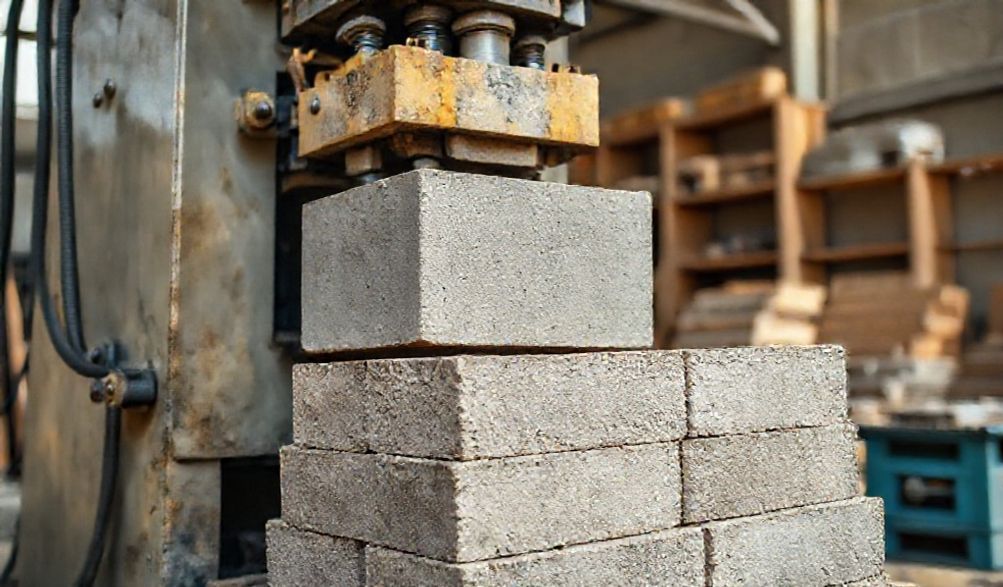
A mini brick machine is a compact, often portable device designed to manufacture bricks, concrete blocks, or pavers on a small to medium scale. It bridges the gap between purely manual, time-consuming methods and massive, capital-intensive industrial plants. By bringing production in-house or on-site, it puts control directly into the hands of the user.
Función y Operación Principal
At its heart, a mini brick machine automates and amplifies the age-old process of brickmaking. The core stages are consistent across most models:
- Mezcla: Raw materials (like soil, sand, cement, and water) are blended to a specific, consistent ratio.
- Moldeo: The mixture is fed into a mold cavity that defines the brick’s shape and size.
- Compactación: This is the critical step. The machine applies intense mechanical pressure (via a lever, screw, or hydraulic ram) to compress the mixture, removing air pockets and creating a dense, strong unit.
- Expulsión y Curado: The freshly formed, “green” brick is ejected from the mold. It then undergoes a curing process, where it is kept moist to gain strength over days or weeks before use.
This mechanized process ensures uniformity, higher strength, and much greater efficiency than hand-molding.
Usuarios Ideales y Aplicaciones
This technology is remarkably versatile, serving a wide range of users:
- Small Construction Firms & Contractors: Produce bricks for your own projects to slash material costs and guarantee supply. Perfect for housing projects, community buildings, or perimeter walls.
- Emprendedores y Startups: Launch a small-scale brick manufacturing business with relatively low capital. Supply bricks to local builders, landscapers, and homeowners.
- Entusiastas del Hazlo Tú Mismo y Granjeros Autosuficientes: Build your own structures—from garden paths and patios to sheds and even small homes—with bricks you make yourself.
- NGOs & Community Projects: Ideal for sustainable development work, disaster relief housing, and projects emphasizing local materials and skill-building.
- Landscapers & Garden Designers: Create custom pavers, edging stones, and retaining wall blocks to offer unique, high-margin design elements.
Key Benefits of Investing in a Mini Brick Machine
Moving from theory to practice, the advantages of owning a mini brick machine are tangible and transformative.
Eficiencia en Costos y Retorno de la Inversión
El argumento financiero es convincente.
- Dramatically Lower Material Costs: The raw materials for a brick (soil, sand, a little cement) are far cheaper than a finished, purchased brick. You pay for the material, not the manufacturing markup and transport.
- Positive Cash Flow & Business Potential: For entrepreneurs, each brick produced represents potential profit. By controlling production, you can compete effectively on price while maintaining healthy margins.
- Gastos Reducidos: Eliminate costs associated with brick delivery, on-site storage, and breakage during transport.
Unmatched Flexibility and Control
This is where a mini machine truly shines.
- Producción Bajo Demanda: Make bricks as you need them. This reduces waste, frees up storage space, and improves cash flow by minimizing large, upfront material purchases.
- Customization at Your Fingertips: Change the mold, and you change the product. Produce standard house bricks, interlocking blocks for dry-stack walls, decorative pavers, or specialty shapes for unique architectural features. You can even integrate pigments for colored bricks.
- Site-Based Operation: Set up production directly where the bricks will be used. This is a game-changer for remote sites or projects where transport logistics are challenging or expensive.
Sustainability and Eco-Friendly Building
In an era of conscious construction, mini brick machines offer a greener path.
- Materiales Locales: Utilize locally sourced soil, sand, and aggregates. This supports the local economy and slashes the carbon emissions from long-distance material transport.
- Compressed Earth Blocks (CEBs): Many machines can produce strong, beautiful bricks using stabilized earth (soil with a small amount of cement or lime), one of the most ancient and sustainable building materials on earth.
- Residuos Reducidos: Precise, on-demand production means you only mix what you need. Any leftover material or imperfect bricks can often be crushed and recycled back into the production cycle.
Types of Mini Brick Machines: A Detailed Comparison
Not all mini brick machines are created equal. Your choice will fundamentally shape your production capacity, workflow, and investment. Here’s a clear breakdown of the main types.
Manual Press Machines
These are the simplest and most affordable entry point into brickmaking.
- Cómo Funcionan: Operated purely by human power using a lever or a screw mechanism to generate compression. The operator fills the mold, applies pressure, and releases the brick.
- Pros:
- Costo inicial más bajo.
- Zero energy requirements—perfect for off-grid locations.
- Simple design means easy maintenance and repair.
- Contras:
- Low output (typically 200-500 bricks per day with a dedicated operator).
- Physically demanding labor.
- Brick quality can vary more with operator fatigue.
- Mejor Para: Ultra-low-budget startups, NGOs in remote areas, DIYers with very small, intermittent projects, or as a proof-of-concept before scaling up.
Semi-Automatic Electric/Hydraulic Machines
This category represents the sweet spot for most small businesses and serious builders.
- Cómo Funcionan: An electric motor powers a hydraulic pump or a vibratory mechanism. The operator feeds the mix, but the machine performs the high-pressure compaction and ejection automatically or with minimal effort.
- Pros:
- Excellent balance of output (800-2500+ bricks/day) and price.
- Consistent, high-quality bricks due to uniform, machine-applied pressure.
- Significantly less physically demanding than manual presses.
- Contras:
- Requires a reliable power source (single-phase or three-phase electricity).
- Inversión inicial más alta que las máquinas manuales.
- More complex components require basic mechanical knowledge for maintenance.
- Mejor Para: Small to medium brick-making businesses, contractors undertaking sustained projects, and anyone needing reliable, efficient production.
Máquinas Móviles para Fabricar Bloques
For the ultimate in flexibility, mobile units are the top-tier solution.
- Cómo Funcionan: These are often integrated systems on a trailer, combining a pan mixer, conveyor, and block-making machine. They are towed to a site, and production begins immediately.
- Pros:
- Maximum mobility and fast setup—your “factory” goes to the project.
- Highest output potential in the “mini” category.
- Integrated mixing streamlines the entire process.
- Contras:
- Highest cost of the three types.
- Requires a vehicle capable of towing it.
- Needs more space and a level, stable site for operation.
- Mejor Para: Construction contractors who move between job sites, businesses supplying bricks across a region, and large-scale homestead or farm projects.
How to Choose the Right Mini Brick Machine: 5 Critical Factors
Selecting your machine is not about finding the “best” one overall, but the best one for you. Use this five-factor framework to guide your decision.
1. Assess Your Production Needs & Scale
Be brutally honest with your numbers. Ask yourself:
* What is the scale of my immediate project? (Total bricks needed)
* How many bricks do I need to produce per day to stay on schedule?
* Is this for a one-off project or an ongoing business?
* What is my expected growth over the next 2-3 years?
Consejo Profesional: Always buy a machine with 20-30% more capacity than your current calculated need. This accommodates growth and avoids running the machine at absolute maximum capacity every day, which reduces wear and tear.
2. Understand Raw Material Requirements
The machine must be compatible with what you have.
* Calidad del Suelo: If you plan to use local soil, get it tested. Its clay, silt, and sand content will determine if it’s suitable and what stabilizer (cement or lime) it needs.
* Cement & Aggregates: Standard concrete block machines require specific aggregate sizes (e.g., crushed stone, sand). Ensure your local supply matches the machine’s specifications.
* Diseño de Mezcla: The best suppliers will provide proven mix ratios (e.g., 1:7 cement to soil for CEBs, or standard concrete mixes) for their machine.
3. Evaluate Key Machine Specifications
Look beyond the sales brochure. Focus on:
* Tiempo de Ciclo: How many seconds/minutes to produce one brick? This directly dictates daily output.
* Compressive Pressure: Measured in tons or MPa. Higher pressure generally produces stronger, denser bricks.
* Mold Options & Changeover: Are additional mold sizes/shapes available and easy to swap?
* Calidad de Construcción: Inspect the frame (solid steel is best), the quality of the hydraulic cylinders, and the wear plates in the mold. Thicker steel lasts longer.
4. Consider Operational Practicalities
Think about your day-to-day reality.
* Espacio: Do you have a level, covered area for production and curing?
* Poder: Does the machine match your available electrical supply (110V/220V, single/three-phase)?
* Trabajo: How many people are needed to operate it efficiently? What skill level is required?
* Support: Does the supplier offer a clear warranty, detailed manual, video tutorials, and reliable after-sales service? Are spare parts readily available?
5. Budget and Total Cost of Ownership
The purchase price is just the beginning.
* Upfront Cost: Includes the machine, any essential accessories, and delivery.
* Running Costs: Factor in electricity/fuel, raw materials, and labor.
* Lifetime Cost: Consider maintenance, part replacement, and potential downtime. A slightly more expensive, robust machine from a reputable supplier often has a lower total cost of ownership than a cheap, fragile one.
Operating Your Mini Brick Machine: Tips for Success
Owning the machine is step one. Operating it effectively is what leads to success. Here’s how to start strong.
Site Preparation and Safety First
A good setup prevents problems.
* Workspace: Choose a flat, solid surface (concrete slab is ideal). Ensure there’s ample space for material storage, mixing, production, and brick stacking for curing.
* Organización: Keep raw materials (sand, aggregate, cement) covered and separated. Have tools (shovels, buckets, measuring tins) close at hand.
* Safety Gear: Non-negotiable. Always wear safety glasses, sturdy gloves, steel-toe boots, and a dust mask, especially when handling cement or dry soil.
Mastering the Mix: Formula for Perfect Bricks
The quality of your brick is 90% determined by the mix.
* Consistency is Key: Measure your materials by volume or weight for every batch. Guessing leads to weak or crumbly bricks.
* Contenido de Humedad: This is critical. The mix should be damp enough to hold its shape when squeezed in your fist, but not so wet that water seeps out. A “soil moisture meter” is a valuable tool.
* Curing is Not Optional: Fresh bricks are fragile. They must be kept moist (by covering with plastic sheeting and sprinkling with water) for at least 7-14 days. Full strength develops over 21-28 days. Do not rush this process.
Routine Maintenance Checklist
A little care prevents major breakdowns.
* Diariamente Clean all excess material from the mold, hopper, and press head. Check for loose bolts or nuts. Lubricate all moving pins and joints as per the manual.
* Semanal Inspect hydraulic hoses for leaks. Check the oil level in the hydraulic reservoir. Tighten any fasteners on the frame.
* Monthly: Clean or replace air filters on motors. Give the entire machine a thorough inspection for wear, especially on high-friction parts like mold liners.
Frequently Asked Questions (FAQ) About Mini Brick Machines
Q: How many bricks can a mini machine produce per day?
A: This varies wildly. A manual press might produce 300-500. A semi-automatic machine can range from 800 to 3,000+, depending on its cycle time, mold size, and operator efficiency. Be skeptical of extreme claims and ask suppliers for realistic, verified numbers.
Q: Can I make bricks without using cement?
A: For certain soil types with high clay content, you can use alternative stabilizers like lime to produce Compressed Earth Blocks (CEBs). However, a small percentage of Portland cement (5-10%) is most common as it reliably increases strength, durability, and water resistance for a wide range of soils.
Q: What is the typical payback period for a business?
A: It depends entirely on your local brick price, production volume, and overhead. As a realistic example: If a machine costs $3,000 and you produce 1,000 bricks daily with a profit margin of $0.10 per brick, you could recover your investment in 30 working days. Most small businesses see a full return in 6 to 18 months.
Q: Are the bricks produced strong enough for load-bearing walls?
A: Absolutely. A quality machine providing sufficient compression (e.g., 10+ tons) and the correct cement-stabilized mix will produce bricks with compressive strength exceeding that of many fired clay bricks. They are perfectly suitable for single and even multi-story load-bearing walls when used in accordance with good building practices.
Q: Where can I find reliable suppliers and training?
A: Research is key. Look for manufacturers with a long track record and transparent customer reviews. Request references. A good supplier will provide comprehensive operation manuals, instructional videos, and responsive technical support. Some offer on-site training. Industry trade shows and online construction equipment forums are also excellent resources.
Conclusión
The mini brick machine is more than just a tool; it’s an empowerment device. It democratizes the production of one of construction’s most fundamental materials, placing control over cost, quality, and sustainability directly into your hands. Whether your goal is financial savings, business creation, or building a legacy with your own hands, this technology provides a viable and powerful path.
Success, however, hinges on informed decisions. It requires carefully matching the machine to your specific needs, committing to the science of your material mix, and adhering to the disciplined practices of operation and maintenance.
Use this guide as your checklist. Audit your project requirements, contact suppliers with informed and probing questions, and if possible, start by testing your local soil. The first step toward building something great is often making the very brick it will stand on.
<