
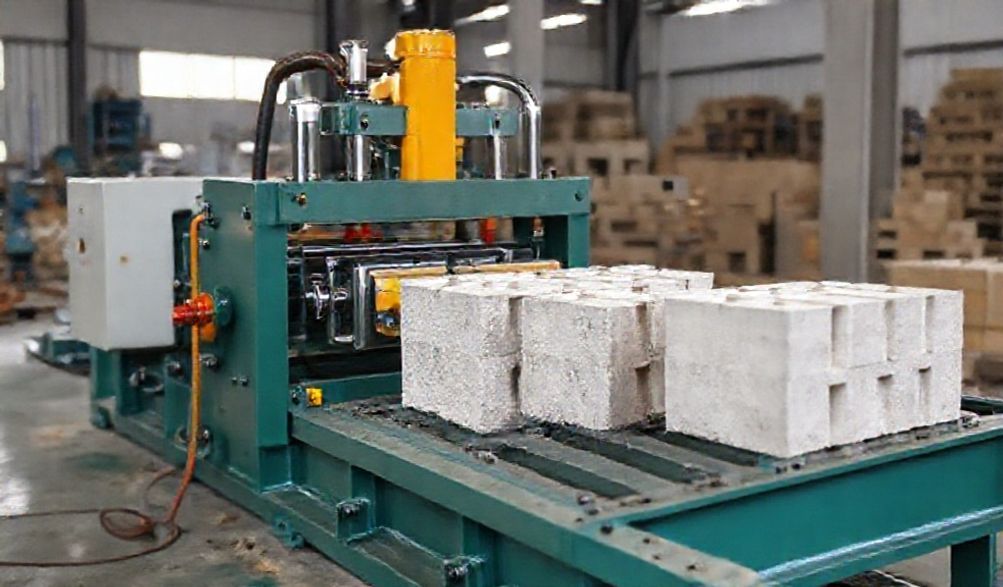
The Complete Guide to Fully Automatic Block Making Machines: Efficiency, Cost & Selection
The global construction industry is projected to reach a staggering $15.2 trillion by 2030, driven by relentless urbanization and infrastructure development. At the heart of this growth lies a fundamental demand: efficient, consistent, and high-quality building materials. Concrete blocks, the backbone of modern masonry, are at the forefront of this demand. Yet, many manufacturers and construction businesses find themselves constrained by the limitations of outdated production methods.
If you’re grappling with labor shortages, inconsistent block quality, soaring operational costs, or an inability to scale output to meet market opportunities, you’re not alone. Manual and semi-automatic block production are often synonymous with these very challenges. The solution? A technological leap forward with a fully automatic block making machine.
This comprehensive guide is designed for business owners, plant managers, and construction professionals ready to make a strategic investment. We synthesize decades of industry expertise, deep technical analysis, and practical economic insights to cut through the noise. Our goal is to provide you with the authoritative knowledge needed to make a confident, informed decision that will future-proof your operations.
This guide will demystify how these advanced machines work, quantify their transformative benefits, outline the critical factors for selection, and demonstrate how they deliver a superior return on investment. Let’s build a more efficient future.
¿Qué es una Máquina de Fabricación de Bloques Completamente Automática?
Moving beyond basic mechanization, a fully automatic block making machine represents an integrated, intelligent production system. It is engineered to automate the entire block manufacturing process—from raw material feeding to final palletizing—with minimal human intervention. The operator’s role evolves from manual labor to supervisory control and system oversight, marking a paradigm shift in production philosophy.
Definición del Núcleo y Principio Operativo
At its core, a fully automatic machine is a self-contained production line. It takes raw materials (cement, aggregate, sand, water) at one end and outputs neatly stacked, high-density blocks at the other. The process is governed by a pre-programmed cycle, ensuring relentless consistency.
The core production cycle follows these key stages:
- Lotes y Mezcla Automáticos: Precisely measured materials are fed into an integrated mixer.
- Moldeo y Compresión: The homogeneous concrete mix is transferred to a mold cavity, where simultaneous high-frequency vibration and immense hydraulic pressure form the block.
- Curado: Fresh blocks are automatically transferred onto pallets and moved to a curing chamber (often a separate, optimized system like a curing rack or room).
- Stacking/Palletizing: Once cured, blocks are automatically stacked and prepared for transport or storage.
This closed-loop cycle repeats every 15-30 seconds, 24 hours a day if required.
Componentes Clave y Sus Funciones
Understanding the major components clarifies the sophistication of these systems.
- Automatic Batching & Mixing System: This is the foundation of quality. Using load cells and automated gates, it ensures a precise ratio of cement, aggregates, and water for every batch, eliminating the variability of manual measurement.
- Vibrating and Pressing Mechanism: The heart of the machine. A powerful hydraulic system applies pressure (measured in tonnes) while high-amplitude vibrations consolidate the mix, removing air pockets. This dual action is what creates blocks with exceptional compressive strength (Mpa) and uniform density.
- Controlador Lógico Programable (PLC): The “brain” of the operation. This industrial computer automates every sequence—from mold filling and vibration timing to pallet movement. It allows operators to store recipes for different block types (e.g., hollow, solid, paving) and switch production with a few button presses.
- Automatic Pallet Feeder and Stacker: These robotic handlers manage the output. An empty pallet is fed into position to receive a fresh block, and a stacker arm neatly organizes cured blocks, saving immense manual labor and preventing damage.
Advantages of Upgrading to a Fully Automatic System
Investing in full automation is a strategic business decision with tangible, multi-faceted returns. The advantages extend far beyond simple labor replacement.
Productividad y Rendimiento Inigualables
The numbers speak for themselves. Where a semi-automatic machine might produce 2,000-4,000 blocks in an 8-hour shift with a large crew, a mid-range fully automatic machine can produce 8,000 to 15,000 blocks in the same timeframe with just 2-3 personnel.
- Capacidad Operativa 24/7: These machines are built for endurance. With proper maintenance, they can operate across multiple shifts, dramatically increasing your plant’s annual capacity and allowing you to capitalize on large contracts.
- Zero “Human Pace” Limitations: Production speed is determined by machine cycle time, not worker fatigue or shift changes, leading to predictable and maximized output.
Calidad Superior y Consistencia
Automation is the enemy of inconsistency. In block manufacturing, consistency is synonymous with quality.
- Eliminación del Error Humano: Every batch has identical proportions. Every block receives the exact same pressure and vibration time. This results in blocks with uniform dimensions, weight, and, most critically, compressive strength.
- Enhanced Market Reputation: Delivering consistently high-specification blocks builds trust with contractors, engineers, and developers, allowing you to command premium pricing and secure repeat business.
Reducción Significativa en Costos Laborales y Dependencia
This is often the most immediate and calculable benefit.
- Direct Labor Reduction: A fully automatic line can reduce direct production labor by 70-80%. You reallocate your workforce to supervision, maintenance, quality control, and logistics.
- Mitigation of Labor Risks: The construction industry worldwide faces skilled labor shortages. Automation reduces your dependency on a large, hard-to-find workforce and minimizes costs associated with recruitment, training, and turnover.
Enhanced Operational Safety and Working Conditions
A safer factory is a more productive and sustainable one.
- Removal from Hazardous Tasks: Workers are no longer required to perform strenuous mold handling, heavy lifting, or prolonged exposure to high-vibration stations.
- Improved Factory Environment: Enclosed systems and automated material handling reduce dust exposure and noise levels, contributing to better overall worker health and regulatory compliance.
Critical Factors for Choosing the Right Machine
Selecting the ideal machine is not about buying the biggest or cheapest option. It’s about finding the perfect match for your specific business goals and constraints.
Evaluando Sus Requerimientos de Producción
Start by asking the fundamental questions:
- What is my current and projected daily block output need?
- What types of blocks will I produce? (Solid, hollow, paving, interlocking, kerbstones?)
- What are the standard sizes and thicknesses in my market?
- Do I need the flexibility to switch between products frequently?
| Machine Model Type | Approx. Output (Standard Blocks/ 8 hrs) | Suitable Block Types | Ideal For |
| :— | :— | :— | :— |
| Entry-Level Fully Auto | 6,000 – 10,000 | Solid, Hollow, Basic Paving | Small-to-medium plants, diversifying product lines |
| Standard Fully Auto | 10,000 – 18,000 | Full range (Hollow, Solid, Paving, Interlocking) | Growing businesses, medium-large scale projects |
| High-Capacity Plant | 18,000 – 30,000+ | All types, including specialty blocks | Large precast yards, dedicated block supply companies |
Understanding Machine Specifications
Decode the technical sheet to make an informed comparison.
- Pressure Capacity (Tonnes): This directly dictates the final block density and strength. For high-strength blocks (e.g., for load-bearing walls), seek machines with higher pressure (e.g., 150+ tonnes).
- Tiempo de Ciclo: The time to produce one pallet of blocks. A shorter cycle means higher hourly output.
- Consumo de Energía: Calculate operational costs. A machine with a 40KW system running 20 hours/day has a significant power cost that must be factored into your ROI.
- Nivel de Automatización: Clarify if the system is truly fully automatic (integrated batching, mixing, molding, stacking) or a robot-aided system where some processes are still manual.
Raw Material Considerations
The machine must work with your available inputs.
- Material Compatibility: Confirm the machine can effectively process your local aggregates, fly ash, or slag. Some systems are optimized for specific mix designs.
- Moisture Sensitivity: Advanced systems have moisture probes to auto-adjust water addition, which is crucial for consistency, especially in humid climates.
Manufacturer Credibility and Support (Your Most Important Decision)
Aquí es dondeExperiencia, Experticia, Autoridad y Confiabilidad (E-E-A-T) become non-negotiable. Your relationship with the manufacturer lasts for the machine’s 15+ year lifespan.
- Experience & Expertise: Choose a manufacturer with a long track record and a portfolio of successful installations. Ask for detailed case studies and client references you can contact.
- Autoridad:Buscarrecognized certifications (ISO, CE) that validate manufacturing quality and safety standards. Patents on specific technologies can also indicate innovative expertise.
- Confianza: This is paramount. Scrutinize the after-sales service offering:
- Is there a clear warranty period and scope?
- Are spare parts readily available, and what is the guaranteed supply timeline?
- Do they provide comprehensive installation supervision and operator training?
- Is there local technical support or must engineers fly in for every issue?
A trustworthy partner is invested in your success, not just the initial sale.
Cost Analysis and Return on Investment (ROI)
Let’s translate the advantages into hard numbers. While the upfront cost is significant, the total cost of ownership and ROI profile is compelling.
Initial Investment Breakdown
Be prepared for these capital expenditures:
- Machine Cost: The largest component, varying by capacity and brand.
- Shipping, Insurance, and Customs: For international purchases, this can be substantial.
- Installation & Foundation: Requires a perfectly level, reinforced concrete foundation. Factor in local civil works costs.
- Utility Setup: Electrical connections (often high-voltage), water lines, and possibly compressed air.
Operational Cost vs. Semi-Automatic/Manual
This is where the automatic machine shines. Consider these ongoing costs:
| Cost Factor | Semi-Automatic/Manual Plant | Fully Automatic Plant | Advantage |
| :— | :— | :— | :— |
| Labor | High (8-12 workers per shift) | Low (2-3 supervisors) | Massive Savings |
| Power Consumption | Lower | Higher | Increased Cost |
| Material Waste | Higher (inconsistent mixing, handling damage) | Very Low (precision control) | Savings |
| Maintenance | Moderate | Planned, preventive schedule | Comparable |
| Output/Quality | Lower, Variable | Higher, Consistent | Higher Revenue Potential |
The net effect is a significantly lower cost per block produced at a much higher, consistent quality.
Calculating Your Potential ROI
A simplified ROI framework provides clarity:
- Calculate Increased Annual Profit:
- (Increased Annual Block Output × Your Profit Margin per Block) + (Premium from Quality/Consistency)
- Calculate Total Investment Cost: Machine + Shipping + Installation + Setup.
- Apply the Formula: ROI Timeline (Years) = Total Investment Cost / Increased Annual Profit.
Industry practice shows that well-utilized fully automatic plants often achieve a full ROI within 1 to 3 years. After this period, the significantly lower operational costs translate directly into expanded profit margins and a formidable competitive edge.
FAQ: Your Questions on Fully Automatic Block Machines Answered
Q1: What is the typical production capacity of a fully automatic block making machine?
A: Capacities vary widely based on model and block type. A standard machine for hollow blocks might produce 8,000-15,000 units per 8-hour shift. High-capacity plants for paving stones can exceed 30,000 units. The key is to match the “blocks per hour” specification to your specific product mix.
Q2: Can one machine produce different types and sizes of blocks?
A: Yes, flexibility is a major advantage. Most machines allow for quick mold changes (often within 30-60 minutes). The PLC can store programs for different products, automatically adjusting vibration time and pressure. This lets you respond dynamically to market demand.
Q3: How much space and what kind of foundation is required?
A: Space needs include the machine footprint, raw material storage, curing area, and finished block yard. A strong, perfectly level reinforced concrete foundation is critical—often 300-500mm thick—to absorb vibrations and prevent settling. Your manufacturer will provide detailed foundation drawings.
Q4: What is the expected lifespan and maintenance required?
A: With proper care, a robust machine can last 15-20 years. Preventive maintenance is crucial:
* Daily: Lubrication, cleaning, visual checks.
* Weekly: Tightening bolts, checking hydraulic lines.
* Annually: In-depth inspection of hydraulics, motors, and wear parts.
Following the manufacturer’s schedule prevents costly downtime.
Q5: Do you provide installation and operator training?
A: Reputable and trustworthy manufacturers understand that your success is their success. A complete package should include supervised installation by factory engineersycomprehensive, hands-on training for your operators and maintenance staff on machine operation, basic troubleshooting, and safety protocols. Always confirm this before purchasing.
Conclusión
The journey from manual labor to fully automated production is a transformative one. As we’ve explored, fully automatic block making machines deliver a powerful combination of unmatched productivity, bulletproof consistency, drastic operational savings, and a safer workplace. They are the engines that allow modern construction material businesses to scale, compete, and thrive in a demanding market.
For the business owner looking beyond short-term fixes, this investment is a strategic necessity. It’s about building resilience, ensuring quality, and securing long-term profitability.
Ready to transform your block production and build a competitive advantage that lasts?
Contact our team of experts with over two decades of industry experience for a personalized consultation. We don’t just sell machines; we provide solutions. We’ll work with you to analyze your needs, provide transparent quotes and detailed factory layout plans, and support you with unparalleled technical service and training. Let us be your trusted partner in ensuring your investment delivers maximum value for years to come.
Reach out today to schedule a consultation and request detailed brochures or client case studies.
METADATA_START—
DISPLAY_TITLE: The Complete Guide to Fully Automatic Block Making Machines
SEO_TITLE: Fully Automatic Block Making Machine Guide | Cost & ROI
META_DESC: Explore our ultimate guide to fully automatic block making machines. Learn how they boost output, cut costs, ensure quality, and calculate your ROI. Make an informed investment.
IMG_PROMPT: A hyper-realistic, wide-angle photograph inside a modern industrial factory. A massive, sleek fully automatic block making machine is in sharp focus, with robotic arms placing fresh concrete blocks onto a pallet. The scene is clean, well-lit, and efficient, showcasing advanced manufacturing technology.
—METADATA_END—